Padel scoring can feel oddly awkward at first, not because the system is complicated, but because you have to say it out loud while four people are moving, chatting and getting ready for the next serve. A clear routine removes most of the confusion.
The simplest habit is this: the server calls the score before every serve, always saying their own team’s score first. If anyone is unsure, pause before the serve rather than trying to fix it two rallies later.
What to know first
- Points go love, 15, 30, 40, then game.
- The serving team’s score is called first.
- At 40-40, your group should know whether you are playing advantage or golden point.
- Games are counted towards the set, usually first to six games with a two-game lead.
- At 6-6, many matches use a tie-break, but club formats can vary.
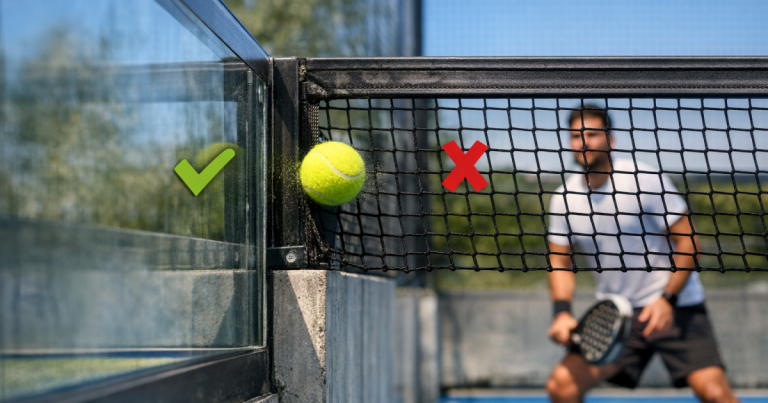
Beginners often lose track when a rally is replayed, when someone questions whether a ball caught the line, or when the serving order changes. If line calls are adding to the confusion, it is worth revisiting what counts in or out on a padel court so the score does not get muddled with the rule itself.
The basic point sequence
Padel uses the same familiar point language as tennis. A game starts at love-all. The first point won makes it 15-love or love-15. The next point takes one team to 30, then 40, then game if they are ahead by enough.
Here are simple examples:
- If the server’s team wins the first point, the call is 15-love.
- If the receiving team wins the first point, the call is love-15.
- If both teams have won one point, the call is 15-all.
- If both teams reach 40, the call is deuce.
The important part is not how polished you sound. It is that everyone hears the same score before the next serve. Say it clearly, face the court, and give the receiving pair a moment to question it before you start your service motion.
Who calls the score?
The server should call the score before each first serve. That matters because the server controls when the next point begins, and the score also tells everyone which side the serve should come from.
In friendly games, there is nothing wrong with a receiver asking, “What’s the score?” or a partner quietly confirming it. What causes problems is serving before the score is settled. Once the point has started, it is much harder to agree what came before.
A good beginner routine is:
- Collect the ball and move into position.
- Check the score with your partner if needed.
- Call the score loudly enough for all four players.
- Serve only once the receivers look ready.
This also helps pace. Club sessions can feel rushed, especially when there are players waiting, but a two-second score call is quicker than a two-minute argument.
Calling games and sets
Points build a game. Games build a set. Matches are often played as best of three sets, although beginner sessions, club ladders and social events may use shorter formats to fit court time.
A normal set is usually won by the first pair to reach six games with at least a two-game lead. So 6-4 wins the set, but 6-5 does not usually finish it because the lead is only one game. If the score reaches 6-6, a tie-break is commonly played unless the organiser has set a different format.
When calling the match score between games, keep it plain:
- “Three-two to us, second set.”
- “Four-all.”
- “They lead five-three.”
You do not need formal umpire language in a beginner club match. You do need agreement. A quick game-score check at every change of ends keeps everyone aligned.
Deuce, advantage and golden point
Deuce happens at 40-40. From there, there are two common ways to finish the game.
Advantage scoring
With advantage scoring, a pair must win two points in a row from deuce. If the serving team wins the next point, the call is “advantage server” or “advantage us”. If they win again, they win the game. If they lose the next point, the score returns to deuce.
Golden point
With golden point, the next point after deuce decides the game. The receiving pair normally chooses which side will receive the serve. This keeps games shorter and is popular in some organised formats.
Before starting a match, agree which version you are using. Padel scoring is much easier when nobody is discovering the deuce rule at 40-40 in a tight game.
Which side should you serve from?
The serve alternates sides during a game. The first point of every game is served from the right-hand service box. After that, the side changes after every point.
A useful way to remember it is to count how many points have been played in the game. If the total number of points played is even, serve from the right. If it is odd, serve from the left.
- Love-all: right side.
- 15-love: left side, because one point has been played.
- 15-all: right side, because two points have been played.
- 30-15: left side, because three points have been played.
- Deuce: right side, because six points have been played.
This is one of the easiest ways to catch a scoring mistake. If the point score and serving side do not match, pause and reconstruct the last few points before continuing.
Keeping track in doubles
Because padel is doubles-based, you are not only tracking points. You are also tracking who serves next and which player should receive from each side. At beginner level, confusion often comes from players drifting around after a rally rather than resetting calmly.
The serving order rotates by game, not by point. One player serves the whole game, then the serve passes to the other team for the next game. Partners on each team alternate their service games through the set.
Receiving positions should stay consistent within a set unless the format allows a change at the start of a new set. If you start the set receiving on the right side, you normally keep receiving on that side for that set.
Good movement habits make the score easier to manage because everyone resets to recognisable positions. If you are still working out where to stand with your partner, the guide to moving together in padel doubles is a useful next step.
How tie-break scoring works
A tie-break normally uses simple numbers: 1-0, 2-1, 4-4 and so on. The first pair to reach seven points with a two-point lead wins the tie-break. If it reaches 6-6, keep playing until one pair leads by two.
The player whose turn it is to serve starts the tie-break with one point from the right side. After that, service usually changes every two points, following the same serving order. Players change ends after every six points in the tie-break.
Because club formats can vary, check the organiser’s rules before the match starts. Some sessions use championship tie-breaks, timed matches, sudden-death games or shortened sets. None of these is wrong in a social setting, but they should be clear before the score becomes close.
Simple habits that prevent score disputes
- Call the score before every serve, not only when it feels important.
- Use “all” for tied scores, such as 15-all or 30-all.
- Say the game score at changeovers.
- Agree deuce rules before the first point.
- Replay a point only when all players agree that a clear interruption or uncertainty affected play.
- If nobody can agree on the score, go back to the last score everyone remembers and continue from there.
For first-time club sessions, it can help to arrive with the basics already in your head: scoring, court etiquette, what to bring and how bookings usually work. The padel starter checklist pulls those beginner essentials together without overcomplicating them.
FAQ
Do you always say the server’s score first in padel?
Yes. The server calls their own team’s score first, then the receiving team’s score. If the server’s team is losing 15-30, the correct call is still 15-30.
What does love mean?
Love means zero points in the current game. Love-all means neither pair has won a point yet in that game.
What happens if we forget the score?
Stop before the next serve and reconstruct the points together. If you cannot agree, return to the last score all four players remember.
Is golden point used in every padel match?
No. Some matches use golden point at deuce, while others use advantage scoring. Agree the format before the match starts or follow the organiser’s rules.
Do you call the set score before every point?
No. Call the point score before each serve. Check the game or set score between games, at changeovers, or whenever anyone is unsure.
Why it matters
Clear score calling makes beginner padel feel calmer and fairer. It keeps the match moving, reduces awkward disagreements and helps everyone focus on the next rally rather than the last mistake.
Good scoring habits also make mixed-level games more welcoming. Newer players often worry about asking basic questions, especially when they are sharing a court with more experienced players. A clear score call gives everyone the same reference point and removes the guesswork, so a beginner can focus on positioning, shot choice and recovery rather than quietly trying to remember whether it is 30-15 or 15-30.
It matters even more when the match format is tight. In timed club sessions, one forgotten game score can affect who rotates courts next. In ladders or box leagues, a single disputed game can change the result that gets recorded. That does not mean every social match needs to feel serious, but it does mean the score should be treated as shared information, not something one player is expected to carry alone.
A simple way to keep the atmosphere friendly is to separate score questions from blame. If someone says, “I thought it was 30-all,” treat it as a reset moment rather than a challenge. Walk back through the last few points together, agree the most likely score, and then move on. The quicker the group normalizes those small checks, the less awkward they become.
Over time, calling the score clearly becomes part of your rhythm, just like bouncing the ball before serving or resetting with your partner after a rally. It is a small habit, but it makes every point feel cleaner and easier to play.
You do not need to sound like an umpire. Call the server’s score first, agree the match format early, and pause whenever the score is unclear. Those small habits make club games much easier to enjoy.