The glass walls in padel can feel unfair in your first few matches: the ball seems to disappear behind you, rebound at odd angles, and make easy shots feel rushed. The good news is that you do not need advanced technique to start using them better. A few simple waiting, positioning, and decision habits make the walls much less intimidating.
Think of the wall as extra time, not extra trouble. When you learn which balls to let rebound and which balls to take early, you will defend longer rallies and stop giving away points through panic swings.
At a glance
- Let the ball hit the back wall when it is travelling past you and still has enough pace to rebound.
- Do not turn your whole body away from the court; open your shoulders and keep the opponents in view where possible.
- Use small adjustment steps after the bounce rather than planting your feet too early.
- Aim for a simple deep return before trying clever angles or hard counter-attacks.
- In the corners, read the side wall and back wall as a sequence, not as one random bounce.
Step 1: Know when the wall is your friend
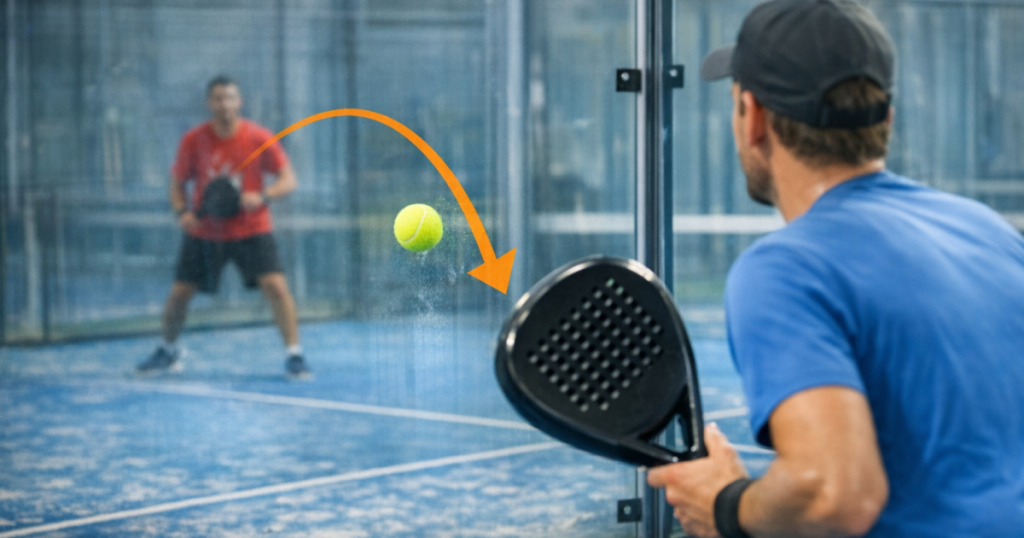
The first skill is deciding whether to play the ball before or after it reaches the glass. As a beginner, you will usually be safer letting the ball rebound when it is deep, fast enough to come back out, and heading behind your body line.
If you swing too early at every deep ball, you often make contact while moving backwards. That leads to framed shots, weak lobs, or balls into the net. Letting the ball rebound gives you a moment to move forward into the shot instead.
A useful rule is this: if the ball is still rising or travelling strongly as it passes you, prepare to use the wall. If the ball is dying low, spinning heavily, or dropping close to the back glass, you may need to take it before it reaches the wall or play a very controlled low shot after the rebound.
If you are still unsure where the walls, lines, and player zones fit together, it helps to revisit the basics of padel court lines, walls, and player positions before trying to read trickier rebounds.
Step 2: Move back, then come forward
Many new players make the same mistake: they chase the ball to the back glass, stop too close to it, and then have no room to swing. Instead, move back early, leave a small gap between you and the wall, then let the rebound come out towards you.
Your aim is not to stand where the ball hits the glass. Your aim is to stand where the ball will be playable after it rebounds. That usually means giving yourself space to step into the shot with a short, controlled swing.
A simple movement pattern
- As the opponent hits deep, turn your shoulders and start moving back.
- Keep your racket prepared in front or slightly to the side, not hanging low behind you.
- Let the ball pass, watch the contact with the glass, then take small steps to adjust.
- Move forward into contact if the rebound comes out far enough.
- Finish with a balanced recovery step back towards your defensive position.
This rhythm matters more than power. In early matches, the player who stays balanced after the wall bounce usually wins more defensive points than the player who swings hardest.
Step 3: Keep the shot boring on purpose
Once the ball comes off the back wall, your first target should be a calm, playable return. Do not feel you have to hit a winner just because you survived the rebound.
For most beginners, the safest options are a medium-height ball back through the middle, a controlled lob over the net player, or a slower cross-court return that gives you time to recover. The right choice depends on where your opponents are standing and how comfortable you feel at contact.
If both opponents are close to the net, a lob can reset the rally. If one player has left a gap in the middle, a steady ball between them can create confusion without needing much risk. If you are stretched or late, just lifting the ball deep and staying in the point is a good result.
Step 4: Read the back-wall bounce
Back-wall rebounds become easier when you watch three things: the speed of the incoming ball, the height at which it reaches the wall, and whether it has spin. A fast, waist-height ball usually rebounds more clearly. A slow ball dropping low may barely come out at all.
Early on, avoid guessing too soon. Watch the ball all the way to the glass, then adjust. You will start to notice patterns: flatter drives tend to rebound more predictably, while sliced or softer balls can stay lower and make you bend more.
When the rebound is high, resist the urge to smash from the back of the court. A controlled lob or deep return is often smarter. When the rebound is low, shorten the swing, bend your knees, and aim higher over the net. Trying to whip a low ball hard from near the glass is one of the quickest ways to lose the point.
Step 5: Handle corner rebounds calmly
Corners are where beginners often freeze. The ball may hit the side wall first, then the back wall, or the back wall first, then the side wall. Those two sequences behave differently, so try to identify which pane the ball will reach first.
If the ball hits the back wall first and then moves towards the side wall, it may come back into the court with enough space to play. If it hits the side wall first, it can angle sharply and feel like it is running away from you. In both cases, your job is to create room rather than crowd the glass.
Beginner corner routine
- Call “leave” or “mine” early with your partner so you do not both chase the same ball.
- Turn your shoulders towards the expected rebound path.
- Take short steps instead of lunging into the corner.
- Let the second bounce pattern reveal itself before swinging.
- Choose a high, safe return if you are not perfectly balanced.
Good corner defence is not about looking stylish. It is about staying patient enough to make the opponent hit one more ball.
Step 6: Use the wall in the rhythm of a real game
Walls feel different in drills and matches because the score adds pressure. At 30-30 or break point, many beginners stop trusting the rebound and go back to snatching at the ball. Try to keep the same decision process regardless of the score: read the depth, move early, wait for the rebound, then choose a simple target.
It also helps to understand the scoring rhythm around you. If you are still getting used to games, sets, and match tie-breaks, this guide to padel match format and winning conditions will make club matches feel less rushed.
Common mistakes to avoid
- Standing too close to the back glass: leave enough room for the rebound and your swing.
- Turning your back completely: rotate enough to move, but keep awareness of the court.
- Swinging before the rebound has come out: wait long enough to meet the ball in front of you.
- Trying to hit winners from deep defence: use height and placement before power.
- Forgetting your partner: call clearly, especially when the ball travels through the middle or into a corner.
A simple practice drill for your next court booking
Spend five minutes with one player feeding gentle deep balls from the opposite side while the defender practises letting the ball rebound from the back glass. The defender’s only target is to return the ball deep through the middle. No winners, no fancy angles, no rushing.
After that, add movement: one feed to the back wall, one feed to the corner, then swap roles. Keep the pace friendly. The point is to build recognition, not to test who can survive the hardest shot.
If you are playing regular club games and still feel stuck, a short coaching session can speed things up because a coach can show you exactly where to stand before and after the rebound. For London players weighing up beginner-friendly lessons, the Park Sports padel coaching review explains who that type of session is likely to help.
Helpful questions
Should beginners always let the ball hit the back wall?
No. Let it rebound when it is deep and has enough pace to come back out. If the ball is slow, low, or dropping very close to the glass, playing it before the wall may be safer.
Can the ball hit the glass before I return it?
Yes, once the ball has bounced on your side of the court, it can hit the glass and still be returned before its second bounce. You cannot let it bounce twice.
Why do my wall returns keep going into the net?
You are probably hitting late, standing too close to the glass, or using too big a swing. Give yourself space, wait for the rebound to come forward, and aim higher over the net.
What is the safest shot after a wall rebound?
A controlled deep ball through the middle is usually the safest. If the opponents are tight to the net and you are balanced, a lob can also be a sensible reset shot.
How long does it take to feel comfortable with wall rebounds?
Most beginners improve noticeably after a few focused sessions. Comfort comes from seeing repeated bounces, learning which balls come out, and staying calm enough not to rush.
What stands out
Using the walls well is less about bravery and more about timing. Let the ball do some work for you, create space from the glass, and keep your first return simple. Once you trust the rebound, you will defend longer, panic less in corners, and feel far more at home in early padel matches.