If you’re starting to play more than once a month, a padel bag quickly stops being an optional extra. A useful padel bags guide should help you decide how much space you need, what deserves its own pocket, and whether the bag will be annoying at a busy club. The right choice is usually the one that makes match night simpler, not the biggest one on the shelf.
The short version
- Occasional players can usually manage with a backpack or compact racket bag, especially if they travel light.
- Weekly club players tend to benefit from a medium padel bag with space for one or two rackets, shoes, balls, a towel and spare clothing.
- Oversized bags are not automatically better. They can be awkward on public transport, in small changing rooms and beside packed courts.
- Separate wet and dry storage matters more than flashy styling if you play outdoors or travel after work.
- Comfortable straps are worth checking if you walk, cycle or take the train to your club.
What size bag do new players actually need?
Most beginners overestimate bag size because they picture tournament players carrying several rackets, multiple outfits and recovery kit. Early-stage players usually need something more modest: one racket, a tube of balls, shoes, a water bottle, a towel, keys, phone and perhaps a spare top.
A compact racket bag works if you drive to the court and arrive already changed. It keeps the racket protected and gives you just enough room for small accessories. The compromise is that shoes, wet clothing and a bottle may end up loose in your car or another bag.
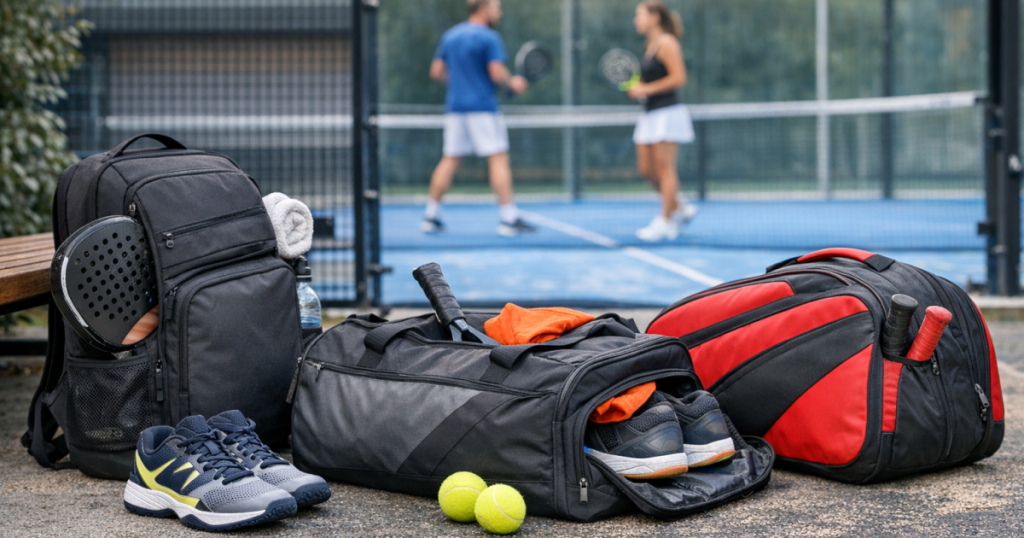
A padel backpack is a good middle ground for many beginners. It is easier to carry through town, fits better on public transport and does not take up much space beside the court. The trade-off is that the racket handle often sticks out, and the main compartment can become crowded if you add shoes and a hoodie.
A medium padel bag is the safest step up for regular club play. It gives you more organised storage without becoming a travel suitcase. If you book coaching, join mix-ins or play after work, this size usually feels more practical because you can keep court shoes, clothing and accessories together.
Large multi-racket bags only make sense once you genuinely use the extra space. If you carry two rackets, extra layers, food, grip tape and shower kit, a larger format can be comfortable. If not, it can become a half-empty bag that is bulky for no real gain.
Storage that genuinely helps on match night
The best storage layout is not about having the most pockets. It is about separating the items that cause problems when they mix. Damp socks should not sit against your grip. Loose keys should not scrape your racket. Opened ball tubes should not roll around under clothing.
Racket compartment
Look for a padded racket area that holds the racket securely rather than letting it bend or rattle inside the bag. Some bags have a dedicated side compartment, while others use a sleeve inside the main section. Either can work, but check how easy it is to remove the racket when the bag is full.
Shoe or wet-kit section
A separate shoe pocket is helpful if you change at the venue or travel home in trainers. It also gives you somewhere to put damp clothing after an outdoor session. If the bag does not have a dedicated shoe section, use a simple drawstring shoe bag inside the main compartment.
Ball storage
Beginners often forget how much a reliable tube of balls affects a session. Keep balls in a consistent pocket so you are not searching just as your court time starts. If you are unsure when balls are past their best, the site’s guide to padel ball speed, bounce and replacement explains the practical signs to watch for.
Small valuables pocket
A zipped pocket for keys, phone, wallet and earbuds keeps court-side faff down. It also stops hard items sitting against your racket face. On busy evenings, it is much easier to keep track of your things when they live in the same pocket every time.
Court practicality matters more than you think
A bag can look sensible at home and still be frustrating at the club. Padel venues often have narrow walkways, shared benches and limited storage beside the court. A bag that falls over, blocks the gate or spills into the playing area will annoy you and everyone else.
Before choosing a size, picture your normal journey. Are you walking from the office? Taking a train with peak-time crowds? Cycling with a racket on your back? Driving straight to an indoor centre? A backpack or medium bag will usually suit mixed travel better than a huge holdall-style bag.
Also think about where the bag sits during play. It should stand or lie neatly by the bench, away from doors and walkways. Keep water bottles upright, zip valuables away and avoid leaving loose clothing where players might step on it between games.
Wet weather and outdoor courts
For UK players, damp kit is part of the reality. Even if the court is playable, the walk from the car park, a wet bench or a post-match drizzle can leave clothing and towels damp. A bag that handles wet items cleanly is more useful than one with a few extra decorative pockets.
Pack a small plastic-free wet bag, spare grip, dry socks and a lightweight towel if you regularly play outdoors. Keep the dry items in a separate section until you need them. For a fuller match-day routine, use the site’s advice on packing a padel bag for wet weather matches.
After the session, do not leave damp kit sealed inside the bag overnight. Empty it when you get home, air the main compartments and let shoes dry naturally. This protects the bag lining, reduces odour and makes your next session easier to prepare for.
Backpack, racket bag or larger holdall?
There is no single format that suits every beginner. The best fit depends on how often you play, how you travel and how much kit you genuinely carry.
- Backpack: Easy to carry, neat beside court and good for public transport. Best when you carry one racket and light kit.
- Compact racket bag: Better racket protection than a general gym bag, but limited space for shoes and clothing.
- Medium padel bag: The most useful all-round size for weekly players who carry shoes, balls, towel and spare layers.
- Large padel holdall: Useful for players with several rackets or longer sessions, but bulky if your kit list is still small.
If you are weighing up branded formats, the site’s Bullpadel and Head padel bag comparison is a useful next step because it looks at how beginner-friendly storage choices feel in real use.
Small checks before you commit to a bag
A bag can seem perfect online but feel wrong once loaded. If possible, check these details before buying or keep them in mind when reading product pages and reviews.
- Racket fit: Make sure your racket sits securely and the zip closes without forcing the handle or frame.
- Strap comfort: Padded shoulder straps help if you walk more than a few minutes to court.
- Base stability: A bag that tips over easily is annoying when you are changing shoes or grabbing balls.
- Zip quality: Smooth zips matter because padel bags are opened and closed repeatedly during a session.
- Easy-clean lining: Useful if you store shoes, damp clothing or dusty balls after drills.
- Realistic capacity: Load the bag mentally with your usual kit, not an idealised version of what you might carry one day.
Example setups for common beginner routines
The casual taster-session player
If you are borrowing a racket or only playing now and then, a normal sports backpack is enough. Pack a water bottle, towel, comfortable clothing and any borrowed racket carefully. Once you start booking courts regularly, move to a proper racket sleeve or padel-specific backpack.
The after-work club player
This player needs organisation. A medium bag with a shoe section, clean top, towel, ball tube and valuables pocket will make the changeover from work to court much smoother. It also stops office items mixing with sweaty kit on the way home.
The outdoor evening player
Prioritise wet and dry separation. Bring a spare layer, dry socks and a small pouch for damp items. A bag with a wipeable interior or separate shoe area will save you frustration after rainy sessions.
The player travelling by train or bike
A backpack-style bag is usually more manageable than a wide shoulder bag. Check that it sits comfortably when loaded and does not swing around awkwardly. If you cycle, make sure the racket position does not interfere with your helmet, balance or visibility.
Common mistakes beginners make
The first mistake is buying too big too soon. Large bags can look serious, but they are only practical if you fill them in a useful way. Otherwise, you are carrying empty space.
The second mistake is using a general gym bag with no racket protection. It might work for a couple of sessions, but rackets can be pressed against shoes, bottles or keys. A simple padded compartment reduces that problem.
The third mistake is not having a system. Put balls, grips, towel and valuables in the same places each time. Good organisation saves minutes before your booking and helps you focus on warming up rather than rummaging.
Questions people ask
Can I use a tennis bag for padel?
Sometimes, yes. A tennis bag can work if the racket fits securely and the compartments suit your kit. Padel-specific bags are usually shaped and organised with padel rackets and club sessions in mind, so they may feel neater.
Do beginners need a bag with thermal lining?
Not always. It can be a useful feature, but it should not matter more than comfortable straps, sensible storage and good racket protection. Check whether the bag’s overall layout suits how you actually play.
How many rackets should my bag hold?
Most new players only need space for one racket, with room for a spare later if they start playing more often. Do not buy a large multi-racket bag unless you genuinely expect to carry extra rackets.
Should shoes go inside the main compartment?
They can, but it is cleaner to keep them separate. Use a shoe pocket or a simple shoe bag so dirt and moisture do not spread to clothing, towels or grips.
Is a padel backpack enough for weekly play?
Yes, if you travel light. If you carry shoes, spare clothes, wet kit and balls every week, a medium padel bag will usually feel less cramped.
Main lessons
The right bag should match your routine, not the image of a professional player. For most beginners, that means secure racket storage, a sensible place for shoes or damp kit, a reliable valuables pocket and a size that is easy to carry to your usual venue.
Use this padel bags guide as a reality check before you upgrade: list what you carry now, add one or two items you will soon need, then choose the smallest bag that keeps everything organised. That approach will serve you better than buying the biggest option and hoping your kit catches up later.