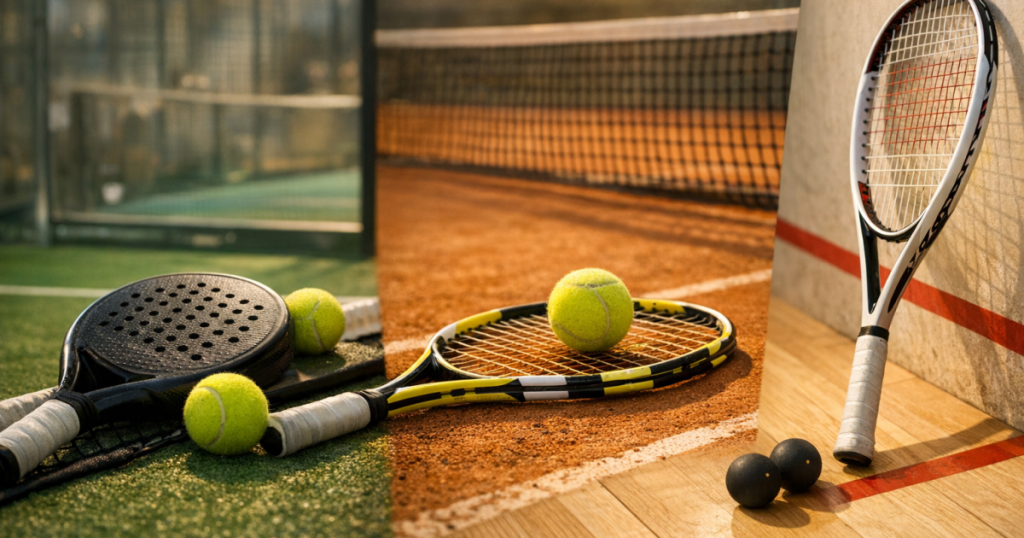
If you already know a little tennis or have played squash at a leisure centre, padel can feel familiar at first glance. Understanding padel vs tennis and squash helps you adjust faster, avoid early mistakes, and choose the sport that best fits how you like to play. The biggest differences are not just the walls or the smaller court; they affect serving, positioning, shot choice, rallies, fitness demands, and how quickly a beginner can join a proper game.
For most new players in the UK, padel is the easiest of the three to start socially. It rewards control more than power, the doubles format makes rallies feel collaborative, and the court design keeps the ball alive for longer. That said, players coming from tennis or squash often bring useful habits with them, provided they know which ones to keep and which ones to soften.
Main points
- Padel is normally played as doubles on an enclosed 20 m x 10 m court with glass and mesh walls.
- Tennis uses a larger open court and usually rewards a bigger serve, wider movement, and more topspin.
- Squash is played indoors on a four-walled court, with faster reactions and more continuous movement.
- Padel scoring is similar to tennis, but the serve, walls, and positioning make the rhythm of play very different.
- Beginners often find padel more forgiving because rallies last longer and clean technique matters more than raw power.
The court changes everything
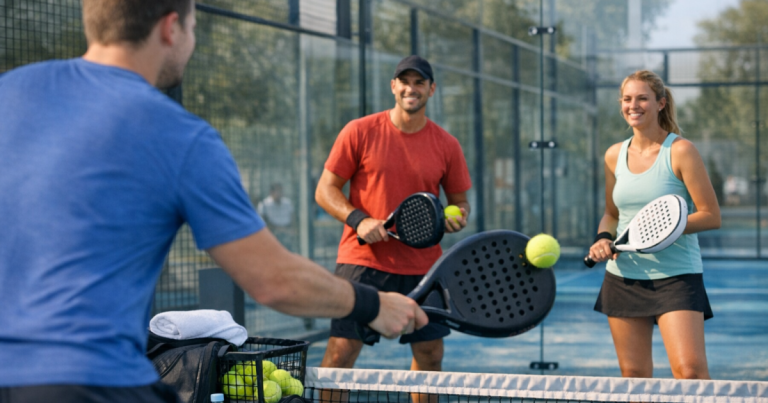
The most obvious difference is the playing space. A padel court is smaller than a tennis court and enclosed by walls, so the ball can rebound and remain in play after bouncing once on your side. This single feature changes the whole feel of the sport. Instead of treating every deep ball as an emergency, you can let it pass, use the back glass, and play a calmer return.
A tennis court is much larger: 23.77 m long, with different widths for singles and doubles. There are no walls to rescue a misjudged ball, so court coverage and depth control matter immediately. Tennis players need to defend more open space and produce more pace themselves, especially from the baseline.
Squash sits at the other end of the spectrum. The court is compact, around 9.75 m by 6.4 m, but the front, side, and back walls are all part of the tactical puzzle. The ball can come back at awkward angles, and because players share the same space, movement, clearing the shot, and avoiding interference become major parts of the game.
If you are starting from zero, padel’s court often feels less intimidating. You still need footwork, but you are not sprinting across a full tennis baseline or reacting to squash-speed rebounds from every direction.
Serving: the first rule difference beginners notice
Serving in padel is deliberately less dominant than in tennis. You drop the ball, let it bounce, and hit it underarm below waist height into the diagonal service box. The aim is not to blast an ace; it is to start the point with control and give your team a chance to move forward.
In tennis, the serve is a major weapon. It is struck overarm, from above the head, and can decide points quickly at higher levels. Even for beginners, learning the serve can be one of the hardest technical hurdles because the movement involves timing, coordination, toss control, and shoulder rotation.
Squash serving is different again. You serve from a service box, the ball must hit the front wall above the service line, and it must land in the opposite back quarter unless volleyed. The serve matters, but it is rarely as decisive as a strong tennis serve.
For a clear beginner-friendly breakdown of padel’s serve, wall rebounds, and common faults, read Serving, Walls and Faults: Padel Rules New Players Need.
Rallies feel different in each sport
Padel rallies tend to be tactical rather than explosive. Because the walls keep the ball alive, beginners often get more touches per rally than they would in tennis. The winning shot is not always the hardest one; it is often the ball placed low, angled into space, or played at a pace that gives opponents no clean counterattack.
Tennis rallies usually involve more open-court hitting. Players create angles, attack short balls, defend wide shots, and use spin to push opponents back. A beginner can enjoy tennis quickly, but sustained rallies can be harder at first because mishits fly long, into the net, or out of reach.
Squash rallies are intense and direct. The ball moves quickly off the walls, the players are close together, and there is little downtime between shots. A good squash rally can feel like a physical puzzle: hit, recover, clear space, and prepare for the next ball almost instantly.
This is why padel is often popular with mixed-ability groups. A newer player can contribute by keeping the ball in play, defending with the glass, and choosing sensible lobs, while a stronger partner can cover and organise the point.
Doubles is central to padel
Padel is usually played as doubles. Singles courts exist in some places, but standard club padel is two against two. That makes communication a core skill from the first session. Calling “mine”, “yours”, “leave”, or “switch” can prevent more errors than an extra hour of trying to hit harder.
Tennis can be singles or doubles, and the two formats feel very different. Singles tests movement and stamina across a wide court. Doubles rewards net play, serving patterns, and fast reactions. Squash is normally singles, although doubles squash exists in some formats and locations.
For padel beginners, the doubles format is one of the sport’s biggest advantages. You can learn through rallies, watch your partner’s positioning, and build confidence without feeling isolated. The downside is that poor positioning can affect both players, especially if one person rushes forward too early or leaves the middle exposed.
Scoring: familiar, but not identical in feel
Padel uses the same familiar scoring language as tennis: 15, 30, 40, game, with deuce in many formats. Sets and tie-breaks are also common. That makes it easier for tennis players to follow a match immediately.
The way points develop, though, feels different. In tennis, a strong serve or return can shape the point from the first two shots. In padel, the serve normally starts the rally rather than ending it, and the team that controls the net often has the advantage. You are not just counting points; you are trying to win court position.
Squash scoring is usually point-a-rally, meaning a point is scored on every rally regardless of who served. Matches are commonly played to 11 points per game, with a two-point margin needed if the score reaches 10-all. This gives squash a very direct rhythm: every rally immediately changes the scoreboard.
If the tennis-style scoring terms are new to you, How Scoring Works in Padel for Complete Beginners explains the basics without assuming previous racket-sport experience.
Technique: power matters less than control in padel
One common mistake from tennis players moving into padel is swinging too big. A full tennis forehand can be useful occasionally, but on a smaller enclosed court it often creates errors or easy rebounds for opponents. Padel rewards shorter swings, soft hands, and compact preparation.
Squash players often adapt well to the idea of using walls, but they may need to adjust to padel’s bounce and doubles spacing. In squash, you can use the side wall constantly and drive the ball deep. In padel, the glass is usually part of your defensive and tactical toolkit, but you still need to respect the net, the fence, and your partner’s position.
For complete beginners, the best early padel skills are simple: make contact in front of the body, keep the racket face stable, use a controlled follow-through, and recover to a sensible position. You do not need a huge swing to play a useful ball.
Fitness and movement: which sport feels hardest?
There is no single answer, because intensity depends on level, match length, and playing style. Still, each sport tends to stress the body differently.
- Padel: short accelerations, quick changes of direction, lunges, overhead recovery, and repeated movement as a pair.
- Tennis: wider court coverage, longer sprints, serving load, baseline endurance, and explosive starts.
- Squash: constant movement, deep lunges, fast reactions, and very little rest between shots.
Many beginners find padel less punishing at first because the court is smaller and doubles sharing reduces the amount of ground each player covers. However, as the level rises, padel becomes far more demanding than it looks. Long points, repeated lobs, and transitions from defence to net position can be tiring.
Squash is often the most physically intense for new players, especially because rallies happen in a confined space and recovery time is short. Tennis can be demanding in a different way, particularly if you play singles outdoors and have to cover the full court repeatedly.
Which habits transfer well?
Players from tennis and squash often arrive with useful instincts. Tennis players may already understand scoring, volleys, lobs, and basic spin. Squash players may feel comfortable reading rebounds and staying balanced in compact spaces. Those skills help, but they need adapting.
Good habits that transfer into padel include watching the ball closely, recovering after each shot, staying light on your feet, and aiming for consistency before winners. Habits that often need changing include taking oversized swings, trying to finish points too early, standing too close to the back glass, or forgetting that your partner is part of every tactical decision.
This is where the debate around padel vs tennis becomes more interesting than simply asking which is easier. Tennis gives you more room to generate power; padel gives you more ways to stay in the point. Tennis punishes technical errors quickly; padel can hide some mistakes early on, then expose them as rallies become more tactical.
Why padel feels beginner-friendly
Padel has grown quickly in the UK partly because the first session can be enjoyable even before you have polished technique. The serve is manageable, the court is compact, rallies are social, and doubles means you are not carrying every point alone.
The learning curve is also rewarding. In your first few games, you might focus on simply returning the ball and understanding the glass. Soon after, you start noticing the value of lobs, net position, softer volleys, and patient defending. There is always another layer, but the entry point is welcoming.
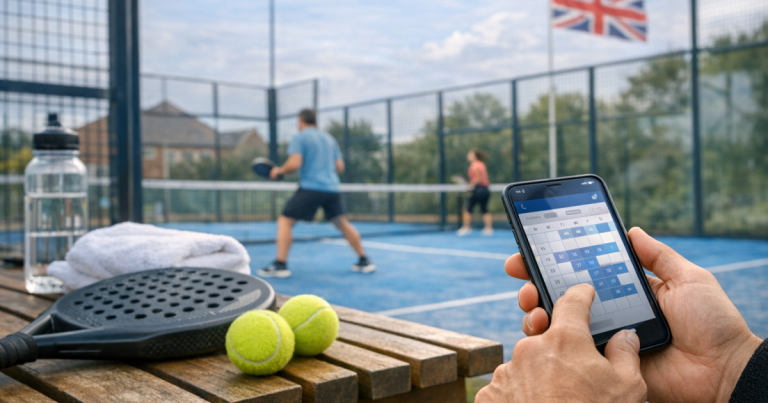
If you are ready to move from curiosity to your first court booking, How to Start Playing Padel in the UK covers the practical next steps, including finding places to play and what to expect.
Final thoughts
Padel, tennis, and squash all reward timing, movement, and good decision-making, but they ask for those skills in different ways. Tennis is more open and serve-driven. Squash is faster, more enclosed, and physically relentless. Padel sits between them: tactical, social, wall-based, and usually easier for beginners to enjoy from day one.
If you are choosing where to start, think less about which sport is “hardest” and more about the experience you want. Choose tennis if you like open-court rallies and developing a bigger technical game. Choose squash if you enjoy intense indoor movement and rapid reactions. Choose padel if you want a social doubles sport with quick rallies, clever angles, and a learning curve that feels welcoming without becoming shallow.
The best news is that none of the experience is wasted. Skills from one racket sport can sharpen another, and many players enjoy mixing them. Just give padel its own rhythm: smaller swings, smarter positioning, better communication, and a willingness to let the walls help.