A ball clipping the net can make everyone pause: replay, fault, or keep going? The padel let rules are mainly about serves and genuine interruptions, not every awkward bounce. Once you know the difference between a service let, a live net cord, and a replayed point, you can call games more calmly and avoid stopping rallies that should continue.
For new players, the tricky part is that padel has two ideas that sound similar. A service let usually means the server repeats that same serve. A replayed point means the whole point starts again because something outside normal play affected it. A ball that hits the net during a rally, however, is usually just part of the game.
At a glance
- A serve that touches the net and then lands legally in the correct service box is normally a let and is served again.
- If the net-touch serve lands outside the correct service box, it is a fault, not a let.
- If the serve touches the net, lands in the correct box, then hits the wire mesh before the second bounce, it is normally a fault.
- During a rally, a ball that clips the net and goes over is still live if it lands in or is otherwise played legally.
- A whole point is replayed only for a proper interruption, serious uncertainty, or an agreed let situation.
What a let actually means in padel
A let is not a point for either pair. It means play is stopped and the relevant part is repeated. In padel, you will hear it most often on serve, when the ball brushes the net and still appears to land in the correct diagonal service box.
The important word is “relevant”. If it is a first-serve let, the server takes the first serve again. If it is a second-serve let, the server takes the second serve again. The server does not get promoted back to a first serve just because the second serve clipped the net and was a let.
There is also no special reward or penalty for hitting several service lets in a row. It can be annoying, but the same serve is repeated until the serve is either good, a fault, or the server double-faults.
For a broader service refresher, including where to stand and how the ball must be struck, read our guide to serving legally in your first padel game.
Service lets: the calls beginners get wrong most often
The serve is where most let confusion happens. That is because the serve has extra rules that do not apply in the same way during a normal rally.
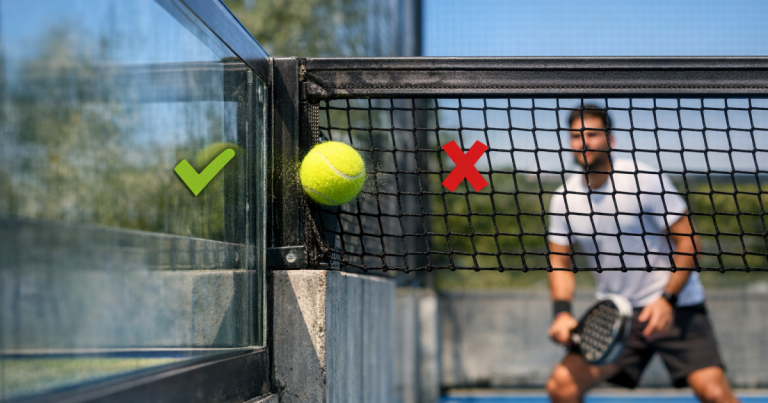
Serve clips the net and lands in the correct box
This is the classic service let. The ball touches the net, crosses over, and lands in the correct diagonal service box. If nothing else makes it a fault, the server repeats that serve.
Example: you serve from the right-hand side. The ball clips the tape, drops into the receiver’s right service box, and is otherwise legal. Call “let” and take the same serve again.
Serve clips the net but lands out
This is not a let. If the serve touches the net and then lands outside the correct service box, it is a fault. The net touch does not rescue an illegal serve.
Example: the serve catches the tape, floats long past the service line, and lands beyond the receiving box. If it was your first serve, you now have a second serve. If it was your second serve, it is a double fault.
Serve clips the net, lands in, then hits the wire mesh
This is one of the most useful beginner distinctions. On serve, after the ball lands in the correct service box, it must not hit the wire mesh before the second bounce. If a net-touch serve lands in and then goes straight into the side mesh, it is normally a fault rather than a let.
Glass is different from mesh in how beginners often read the court, so it helps to build a clear picture of what each surface means. Our explainer on what happens when the ball hits the glass in padel is a helpful next step once the serve rules feel comfortable.
Serve clips the net and the receiver plays it too early
In beginner games, the receiver sometimes volleys or catches a serve that might have landed in. That can make the call messy. The clean habit is to let the serve bounce unless it is obviously heading out or there is a safety reason to stop. If the ball touched the net and the players cannot agree whether it would have landed correctly, replaying the serve is often the fairest social solution.
Net cords during a rally are usually live
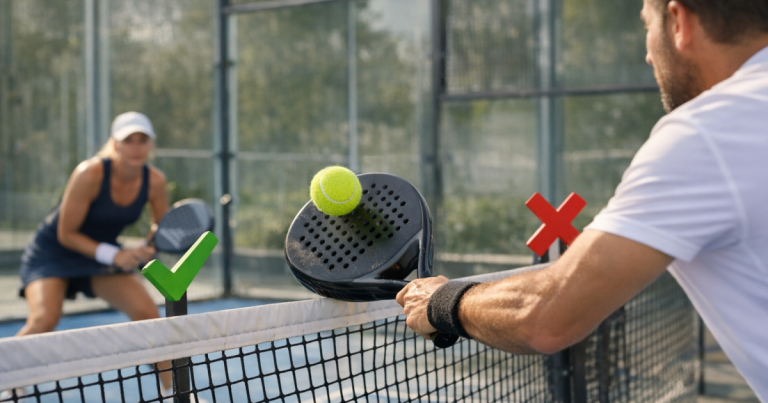
Once the serve has been returned and the rally is underway, the net is not a reason to stop by itself. If the ball clips the net cord and drops over, the point continues. It may feel lucky, but it is still part of padel.
So, if your opponent hits a soft volley, the ball hits the net tape, rolls over, and lands on your side, you still need to try to play it. If it bounces twice before you reach it, your opponent wins the point. There is no automatic let just because the bounce was awkward.
The same idea applies when your shot clips the net and still goes over. You do not apologise and replay it as a rule requirement, though a quick friendly “sorry” is common in club play. The ball remains live unless another rule has ended the point.
When the whole point should be replayed
The padel let rules are not limited to serves, but full replay points are much less common than new players sometimes think. A point is usually replayed only when something outside normal play stops or unfairly affects the rally.
Common examples include:
- A ball from another court enters your court. This is common at busy indoor centres and multi-court clubs. Stop play early and call a let if the stray ball could affect movement, visibility, or shot choice.
- A genuine external interruption distracts players. For example, a person unexpectedly walks into the playing area or a loose item rolls onto court.
- The ball breaks or becomes clearly unplayable during the point. This is rare, but if it happens during active play, replaying the point is the normal fair outcome.
- Both pairs agree that a decisive call cannot be made. In social padel without an umpire, if nobody can honestly tell whether the ball was in, out, or touched a player, replaying the point keeps the match moving.
Not every distraction deserves a replay. A shout from the next court, a player slipping slightly, or a badly judged bounce is usually part of club play unless it directly interferes with the rally. The best test is simple: did something outside the normal point materially affect play?
Situations that are not lets
Many stoppages in beginner matches are caused by uncertainty rather than an actual let. These are the ones worth learning early because they prevent unnecessary arguments.
The ball hits the net and drops dead
If a rally shot hits the net and stays on the hitter’s side, that pair loses the point. It is not a let. The same applies if the ball hits the net and does not cross into the opponent’s court.
A player touches the net during the point
If a player, racket, clothing, or anything they are carrying touches the net while the ball is in play, that player’s pair normally loses the point. You do not replay it just because the touch was accidental.
A player is surprised by spin off the glass
Padel rewards reading the rebound. If the ball takes a strange angle off the glass, that is normally live play, not a replay. It may feel unlucky, but learning those bounces is part of improving.
Someone changes their mind after calling out
Good etiquette matters here. If a player calls the ball out, then immediately realises it was in and the call stopped the rally, the fair outcome in many social games is to concede the point rather than replay it. In friendly beginner matches, pairs may agree to replay obvious honest mistakes, but that should not become a way to avoid lost points.
How to call lets clearly in club games
Most beginner padel in the UK is played without an umpire, so clean communication matters. The aim is not to sound formal; it is to make sure all four players know what is happening.
- Call early. If a stray ball enters the court, say “let” straight away rather than waiting to see who wins the point.
- Use simple words. “Let, first serve” or “Let, second serve” is clearer than a long explanation during the point.
- Do not play on after stopping. Once a let is called and accepted, stop moving and reset. Half-playing the point creates more confusion.
- Agree the serve count before restarting. If the let was on a second serve, say so before the next ball is served.
- Keep social matches fair but not casual to the point of chaos. Replaying every awkward moment slows the game and stops players learning the real rules.
If you are starting through open sessions, mix-ins, or beginner boxes, it is normal for players to learn these calls gradually. Our guide to padel lessons versus social games explains when structured coaching can help and when match experience teaches you faster.
Simple examples you can remember mid-match
Here are quick match situations and the correct call in plain English.
- First serve hits the net, lands in the correct box, and stays clear of the mesh: let, first serve again.
- Second serve hits the net, lands in the correct box, and stays legal: let, second serve again.
- Serve hits the net and lands outside the service box: fault.
- Serve hits the net, lands in the service box, then hits the side mesh before a second bounce: fault.
- Rally ball clips the net and lands on the opponent’s side: play continues.
- Rally ball clips the net and falls back on the hitter’s side: hitter’s pair loses the point.
- Ball from another court rolls into the playing area during a rally: stop and replay the point if it affects or could affect play.
- Receiver is not ready and makes no attempt to return the serve: in many club games, reset calmly; do not use surprise serves to win cheap points.
Helpful questions
Can there be unlimited service lets in padel?
Yes. If each service let is otherwise legal, the server repeats the same serve. There is no normal limit on consecutive lets.
Does a net cord winner count during a rally?
Yes. If the ball clips the net, crosses over, and lands legally, the rally continues. If the opponent cannot return it, the hitter wins the point.
Do you replay the point if someone calls the score wrongly?
Usually no. Correct the score as soon as the mistake is noticed. Replay only if the scoring confusion clearly stopped or affected the point.
Who decides a let in social padel?
The players on court decide together. Call it early, explain the reason briefly, and restart from the correct serve or replay point.
Is a let the same as a fault?
No. A fault counts against the server or ends the rally. A let means the serve or point is replayed without awarding the point.
Why it matters
Knowing when to call a let makes beginner padel smoother, fairer, and more enjoyable. The big rule to remember is that serves have special let conditions, while rally net cords are normally live. Full replay points should be reserved for genuine interruptions or situations where fair play demands a reset.
When in doubt, pause briefly, agree what happened, and restart in the fairest way. Over time, these calls become automatic, and you spend less energy debating rules and more time building better points.