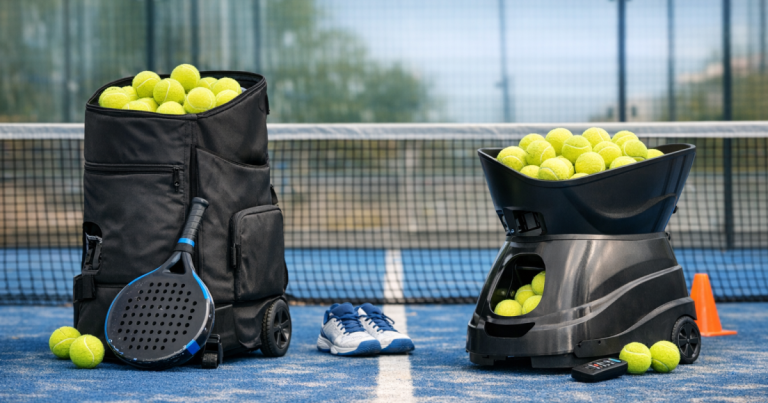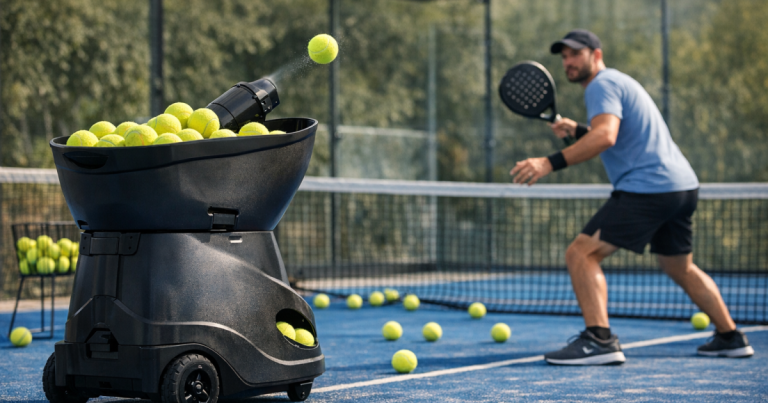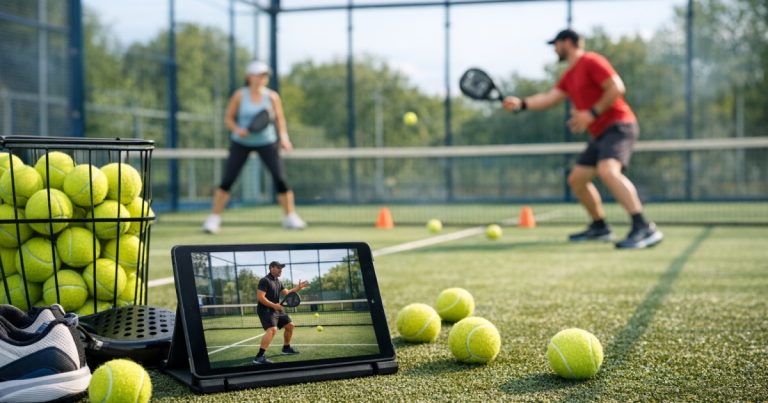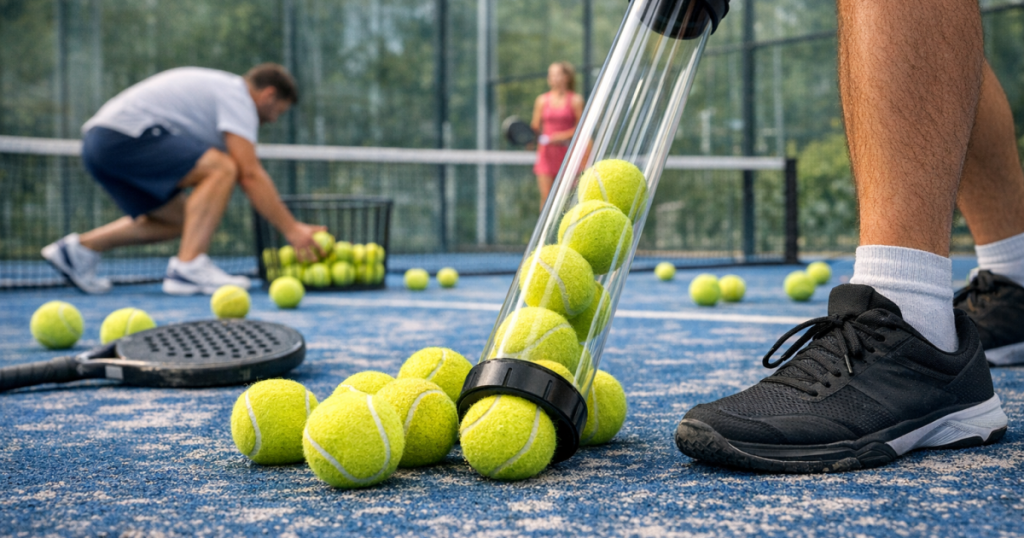
After a basket drill, the slow part is often not the hitting; it is bending down, clearing balls from the glass and resetting the next feed. That is where padel ball pickup tubes can help: they let you collect loose balls standing up, keep the court tidier and restart the drill with less faff. They are not essential for every beginner, but they can be surprisingly useful when you are practising with lots of balls.
What to know first
The short answer is yes, a pickup tube can save time during drills, but the saving depends on how you practise. It helps most when you are using a decent number of balls, repeating the same shot and stopping regularly to collect from the back glass, corners and service boxes. It helps least when you are playing points with just a few balls in rotation.
For beginners, the bigger benefit is often rhythm. Good practice needs repetition. If a group spends too long collecting balls by hand, players cool down, lose focus and start chatting instead of repeating the movement they were trying to learn. A simple collection tube can reduce those dead moments and make a 30-minute drill block feel more organised.
It is still not a magic shortcut. Poorly planned drills will still feel slow. A tube only helps if the group has enough balls, clear roles and a sensible reset routine. If you have one tube and four players, everyone needs to know whether one person collects, two people collect, or the tube is passed round between rounds.
When padel ball pickup tubes actually save time
The best use case is a repeated feed drill. For example, one player feeds 20 balls to a partner practising forehand volleys, then everyone swaps. After each round, the loose balls are spread around the net, side glass and back corners. Picking them up one by one by hand can break the flow; using a tube lets one person clear a line of balls quickly while standing upright.
They also help in small-group coaching-style practice, even if there is no coach. If four beginners book a court and bring a larger set of balls, a tube can make the session feel less chaotic. One person feeds, one hits, one waits, and one collects from safe areas when the drill pauses. That rotation keeps everyone involved rather than leaving one player doing all the tidying.
Another useful situation is wall-rebound practice. Beginners often hit balls into awkward areas near the back glass while learning how the ball comes off the wall. A tube makes it easier to collect several balls from the same area without repeated bending, which is welcome if you are doing short, focused blocks.
They are less useful for normal social games. In a match, you typically use a small number of balls, and collecting after every rally is just part of play. If you are still building match confidence, spend your attention on positioning, scoring and rules rather than carrying extra accessories onto court. For pre-match preparation, a short routine such as this guide to warming up before a social padel match will usually matter more than a collection aid.
How to use one without slowing the session down
A pickup tube saves time only when it has a job. If it is left against the fence and nobody uses it until the end, it becomes just another thing to move around. Set a simple routine before the drill starts.
Step 1: Put the tube in a sensible place
Keep it close to the gate, bench or side area rather than in the middle of the court. It should be easy to reach during a pause but not somewhere a player can trip over it while moving for a ball. Padel courts are compact, so tidy placement matters.
Step 2: Decide who collects
For four-player drills, the cleanest setup is usually one feeder, one hitter, one player waiting, and one player collecting during set pauses. Do not collect while another player is actively hitting near you. Wait until the feed stops, then clear the area efficiently.
Step 3: Collect by zones
Instead of wandering randomly, clear one area at a time: back-left corner, back-right corner, near the net, then middle court. This keeps the reset predictable and prevents two players moving into each other’s space.
Step 4: Empty before it becomes awkward
Most tubes are designed to hold a limited number of balls. Once it is getting full, empty it into a basket, bag pocket or feeding pile before continuing. Overfilling can make collection clumsy and undo the time saving.
Step 5: Restart with a clear count
Before the next round, gather the balls into one feeding spot. The feeder should know roughly how many balls are available for the next repetition block. That avoids the common beginner problem of starting a drill, hitting five balls, then stopping because the rest are scattered around the court.
A quick test to see if it is worth it
You do not need a lab-style experiment. Try a simple court test during your next practice session. Use the same drill twice and compare how it feels.
- Choose one repeatable drill: for example, cross-court forehand volleys, simple lobs, or controlled returns after a feed.
- Use enough balls: a tube makes little difference with three balls, so test it with a fuller practice pile.
- Run a timed block: practise for five minutes, then collect by hand and note how long the reset takes.
- Repeat with the tube: run the same five-minute block and collect using the tube.
- Judge the session, not just the stopwatch: ask whether the group kept better rhythm, restarted faster and stayed more focused.
If the difference is only a few seconds and the tube gets in the way, it may not be needed for your style of practice. If it turns messy resets into a smooth routine, it is doing its job.
Drills where a pickup tube earns its place
Beginners often benefit from drills that repeat one movement many times. These are the moments where a collection tube can be most useful, because the ball scatter is predictable and the reset happens often.
Volley repetition from a basket feed
One player feeds gentle balls from the opposite side while the hitter practises compact volleys. Balls usually finish near the back glass or side wall. A tube helps clear them quickly between rounds, so the next player can step in before the group loses focus.
Lob practice from the back of the court
Lobs are hard for beginners because they require height, control and patience. Many attempts land short, hit the glass or drift into corners. A pickup tube keeps the court clear enough for the next set of lobs without constant bending.
Serve and first volley rhythm
If you are practising serve, move forward, split step and volley, the server may use several balls in a row. The receiving side can become cluttered quickly. Collecting in batches makes the drill safer and easier to restart.
Wall rebound control
Wall drills can create clusters of balls close to the glass. A tube is handy here because you can move along the back line and collect systematically. Keep the court clear before starting the next round so players do not step on loose balls while turning.
If you are filming drills to understand your movement, quicker resets also mean more useful repetitions in the same booking slot. For players who like reviewing technique afterwards, this review of using OnForm for padel drill technique explains how video feedback can fit into practice without overcomplicating it.
Where they do not add much
A tube is not worth bringing to every session. If two friends are rallying with a standard set of balls, collecting by hand is usually fine. The court stays manageable, and stopping to use a tube may be slower than simply picking up the nearest ball.
It can also be unnecessary in very casual social play. If the aim is to meet people, get used to scoring and enjoy the game, extra equipment may make the session feel more formal than it needs to be. Early-stage players often progress faster by playing regularly and keeping things simple.
There is also a space factor. Many UK padel players travel light, especially when going to a club after work or cycling to a court. A tube is easy enough to carry by car, but it is another item to remember, store and bring home. If it stops you travelling comfortably, it may not be the right accessory for your routine.
Checks before using one on court
Most pickup tubes are simple, but a few practical checks help avoid frustration.
- Ball fit: padel balls are similar in size to tennis balls, but check that your usual balls slide in and release cleanly before relying on the tube for a full session.
- Grip at the bottom: the end should pick up balls without needing excessive force. If you have to jab hard at the court, it is not helping.
- Comfortable length: the point is to avoid repeated bending, so it should be comfortable for the person using it.
- Easy emptying: make sure balls can be released into a basket, bag or feeding pile without spilling everywhere.
- Court etiquette: keep it off the playing area during rallies and make sure everyone knows where it is.
- Build quality: check for sharp edges, cracks or loose parts that could mark equipment or become annoying during transport.
A pickup tube does not need to be fancy. The important question is whether it improves the flow of your practice. A basic, reliable tube that fits your balls and is easy to empty is more useful than one that looks clever but slows the group down.
Tube, basket or just picking up by hand?
For beginner drill sessions, the right collection method depends on scale.
- By hand: fine for light practice, warm-ups and short rallies with only a few balls.
- Pickup tube: useful for repeated drills with a moderate number of balls, especially when you want faster resets and less bending.
- Ball basket: better for feeding larger numbers of balls, coaching-style sessions and drills where the feeder needs balls at waist height.
- Tube plus basket: the smoothest option for group practice, because one player collects into the tube and empties into the feeding basket.
If your club group is becoming more organised, agree who brings balls, who brings collection kit and what type of session you are running before the booking. For regular groups, this review of WhatsApp Communities for organising padel club games may help keep drill nights and social matches clearer.
Questions people ask
Can I use a tennis ball pickup tube for padel?
Often, yes, but check it with your own balls first. The tube needs to pick up cleanly, hold the balls securely and release them without jamming. Do not assume every tennis-style tube will feel right with every padel ball.
How many balls do I need before a tube makes sense?
It starts to make sense when you have enough balls for repeated feeds rather than just normal rallying. If you are stopping every minute to collect several balls, a tube may help. If you are using only a few balls, it probably will not change much.
Will it make beginners practise better?
Not by itself. It helps create more repetitions and fewer interruptions, but the drill still needs a clear purpose. Beginners improve when they repeat the right movement, get feedback and keep the session focused.
Is it worth bringing one to a lesson?
Usually the coach or club will already have a collection system if the lesson uses lots of balls. For your own practice sessions, a tube is more useful if you regularly run drills with friends outside formal coaching.
Key takeaways
Padel ball collection is not the most exciting part of training, but it affects how much useful hitting you fit into a court booking. A pickup tube can save time during drills when there are lots of loose balls, repeated feeds and regular resets. It also reduces bending, keeps the court tidier and helps beginners stay in a practice rhythm.
It is not essential for casual games, small-ball rallies or very relaxed social sessions. Before adding one to your kit, test whether it actually improves your drill flow. If it helps your group restart faster and get more quality repetitions, it is a simple accessory that can earn its place. If it sits unused by the gate, leave it at home and keep the session simple.