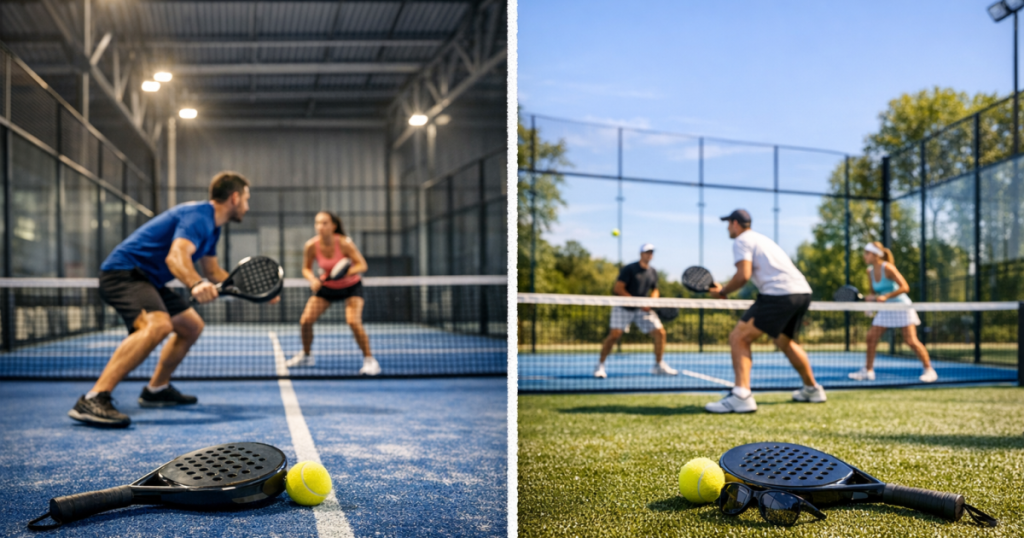
Choosing between indoor vs outdoor padel is not just about comfort. It can change how easy the ball is to read, how confident you feel serving, and how much the weather gets involved. If you are booking your very first session, the best choice is usually the one that gives you the calmest introduction: steady conditions, good visibility, and enough time on court to understand the basic rhythm of the game.
The short answer
For most beginners in Great Britain, an indoor court is the gentler first step. The ball behaves more predictably, wind is not a factor, and rain will not interrupt the session. That makes it easier to focus on simple goals: getting serves in, learning where to stand, using the glass safely, and keeping rallies going.
An outdoor court can still be a perfectly good place to start, especially if that is where your nearest club runs beginner sessions or social games. The key is to lower your expectations for tidy rallies. Outdoor padel adds light, wind, colder evenings and surface moisture into the mix, so you may need to play with a little more margin and patience.
If you have a choice, start indoors for your first lesson or taster game, then try outdoors once you understand the basics. If your local club is mainly outdoor, do not wait for the perfect indoor booking. A friendly beginner session outside is better than delaying your first game for weeks.
How the setting changes the game
Weather and predictability
Indoor padel removes the most obvious distractions. There is no breeze to push a lob long, no low sun when you look up for an overhead, and no drizzle making the glass awkward. Beginners benefit from that because early progress comes from repetition. You see the same type of bounce more often, so you start recognising patterns sooner.
Outdoor courts feel more variable. A light wind can make high balls drift, and cooler conditions can make rallies feel slower. On a sunny day, one end of the court may be easier to play from than the other. None of this ruins the game, but it asks for extra adjustment before you have fully settled into the sport.
Ball speed, bounce and control
Indoor courts often feel slightly cleaner to play on because conditions are stable. The ball can be easier to judge off the floor and glass, which helps with basic positioning. That does not mean the game is automatically slow or easy; it simply means fewer outside factors are changing the flight of the ball.
Outdoors, you may notice that lobs, serves and wall rebounds are less predictable. Beginners often overhit when the wind holds the ball up, or misjudge a ball that drops shorter than expected. A sensible adjustment is to aim higher over the net, use less power, and accept that some points will look untidy.
Lighting, sound and comfort
Indoor venues can be louder, particularly when several courts are close together. The echo of balls and voices may take a few minutes to get used to. Good lighting is a major plus, though, especially for evening sessions after work.
Outdoor courts can feel more spacious and relaxed, but light conditions matter. Low sun can make overheads difficult, and floodlights vary between venues. In colder months, wearing layers for the warm-up and removing them gradually is often more comfortable than starting in a light top and getting stiff between rallies. A short, simple routine like this warm-up before a social padel match can make either setting feel easier.
Beginner scenarios: which court makes more sense?
You are booking a first lesson
Choose indoors if you can. A first lesson is about building foundations: grip, serve, ready position, basic volleys and how to use the walls without panicking. Stable conditions help the coach give clearer feedback and help you connect cause and effect. When the ball goes wrong, it is more likely to be because of timing or positioning, not a gust of wind.
You are joining a social game
Pick the friendlier group over the “perfect” court. A patient social group outdoors will teach you more than a rushed, competitive indoor game where you barely touch the ball. For first social matches, ask whether the session is genuinely beginner-friendly and whether players rotate partners. That matters more than roof or no roof.
Your nearest club is outdoors
Start there. Accessibility is important in padel because progress depends on turning up regularly. If the outdoor club is easy to reach and has beginner games, it is a practical route into the sport. Just book with the weather in mind, take an extra layer, and avoid judging your level too harshly after one windy session.
You are nervous about rules and interruptions
Indoor play can make the rules feel easier because there are fewer odd interruptions from weather or light. The padel rules are the same in both settings, but beginners often feel more confident when the court conditions are consistent. If you are unsure about serves hitting the net, replayed points or what counts as a let, this plain-English guide to padel let rules is worth reading before you play.
Key checks before you book
Rather than treating one setting as automatically better, check the details that affect your first experience:
- Session level: Beginner coaching, intro sessions and social games are easier starting points than open club nights with mixed standards.
- Weather policy: For outdoor bookings, check how the venue handles rain, unsafe surfaces or cancellations.
- Lighting: Evening outdoor games depend on good floodlights. Poor visibility makes beginners tense and late to the ball.
- Footwear: Wear court shoes with suitable grip. Avoid running shoes with tall, soft soles, as they can feel unstable for side-to-side movement.
- Time of day: Outdoor morning or early evening sessions can feel very different depending on light, temperature and moisture on court.
- Group size: Four players on court is ideal. Too many players sharing one booking means less hitting time.
- Travel and routine: The court you can reach consistently is often the one that helps you improve fastest.
Indoor strengths and trade-offs
Indoor padel is usually best for learning technique. You get repeatable conditions, fewer weather cancellations and more reliable visibility. It is also useful if you are practising specific shots because the same feed or rally pattern can be repeated more accurately.
When booking indoors, look beyond the word “indoor” and check the actual court setup. Some venues have excellent height and space around the court, while others feel tighter, especially near the back corners or side exits. For beginners, a slightly roomier court can make a big difference because you will have more time to slow down, recover your position, and avoid feeling crowded when the ball comes off the glass.
Ceiling height is worth noticing too. In normal beginner rallies it may not matter much, but once you start practicing lobs, a low roof can change your habits. You might learn to play flatter, safer balls instead of developing a confident high lob. That is not a deal-breaker for casual play, but if you are taking lessons, ask the coach whether the court is suitable for overheads and lob practice.
Indoor comfort can also depend on ventilation and temperature. A still, warm venue can feel heavy after 20 minutes, while a cooler hall may make the ball feel slightly less lively. Bring water, arrive early enough to adjust to the lighting and sound, and try to book outside the busiest rush if you are easily distracted. A calmer indoor slot often feels much more beginner-friendly than a packed peak-time session.
The trade-off is that indoor venues may be busier at peak times, and some players find the noise more intense. If courts are close together, stray balls and nearby rallies can be distracting at first. Still, for a nervous beginner, the benefits usually outweigh the drawbacks.
Outdoor strengths and trade-offs
Outdoor padel can feel sociable, open and closer to the club atmosphere many beginners enjoy. It is a good way to get used to real match variation because conditions are rarely identical from one session to the next. Learning outside can also make you more adaptable when you later play at different venues.
The trade-off is that you need to be more forgiving with yourself. Wind affects high balls, rain can disrupt plans, and colder conditions may make your first few games feel scrappy. Keep the aim simple: serve safely, move with your partner, and choose controlled shots over ambitious winners.
The big picture
The indoor vs outdoor padel decision should come down to confidence and consistency. Indoor courts are usually the smoother first experience, especially for lessons and early drills. Outdoor courts are still a valid starting point when the session is friendly, convenient and clearly aimed at newer players.
If you are deciding between a coached session and a casual game as your first step, the setting is only one part of the decision. This guide to padel lessons versus social games explains which route tends to suit different beginner personalities.
A simple plan works well: book your first session where you will feel least rushed, learn the basic rhythm, then try the other setting within your next few games. That gives you a fair comparison without making the first booking feel like a big commitment.
Things readers ask
Is indoor padel easier than outdoor padel?
Usually, yes for beginners. Indoor courts remove wind, rain and sun glare, so the ball is easier to judge and rallies feel more predictable.
Can I learn properly if my local courts are outdoors?
Yes. Many players start outdoors and improve well. Choose beginner-friendly sessions, play with margin, and do not worry if windy games feel messy at first.
Do the rules change between indoor and outdoor courts?
No. The rules are the same. What changes is the playing environment, especially how wind, light and surface conditions affect your shot choices.
What should I wear for a first outdoor game in Britain?
Wear comfortable sports clothing, court shoes with good lateral support, and layers you can remove after warming up. Avoid clothing that restricts shoulder movement.
Which should I try after my first few games?
Try the other setting fairly soon. Playing both indoors and outdoors helps you become more adaptable and gives you a better feel for local clubs and sessions.