Slipping on an indoor padel court usually comes down to grip, court surface and how well your shoe supports sideways movement. The right padel shoes for slippery indoor courts should help you stop, turn and recover without feeling glued to the floor.
For beginners, the aim is not maximum speed. It is predictable traction, enough stability for quick changes of direction, and comfort that still feels good late in a session.
The short version
- Start by checking what type of indoor surface your club uses, because not all indoor courts feel the same underfoot.
- Choose a padel or tennis-style court shoe with lateral support, not a running trainer.
- Look closely at the outsole pattern: herringbone, mixed patterns and dot-style soles can all behave differently on sanded turf.
- Prioritise controlled grip over aggressive bite; too much grip can make rotation and recovery feel awkward.
- Test the shoes with padel movements before committing: split steps, side shuffles, turns and short recoveries.
Step 1: Work out why the court feels slippery
Indoor padel courts can feel slick for several different reasons. Some courts use artificial turf with visible sand, while others have a tighter, less sandy feel. Grip can also change during a busy evening if the surface gets dusty, the sand is unevenly spread, or the court is affected by condensation near doors and walls.
Before blaming your shoes, pay attention to when you slip. If you slide mostly when pushing sideways for volleys, you may need better lateral support and a more suitable outsole. If the whole court feels dusty, even good shoes may struggle. If you only slip on certain corners or near the glass, the surface may be inconsistent rather than your footwear being completely wrong.
A quick club-level check helps: look at what regular players are wearing, ask staff whether the court is sanded or low-sand, and notice whether players clean their soles between points. These details tell you more than a product description ever can.
Step 2: Avoid running shoes for indoor padel
Running shoes are designed mainly for forward movement. Padel asks for repeated side steps, small stops, pivots and quick recoveries after the ball hits the glass. On a slippery indoor court, a running trainer can feel unstable because the upper and midsole are not built primarily for lateral movement.
A court shoe should hold your foot more securely when you move side to side. You do not want your foot sliding over the edge of the sole when you lunge for a low volley. If you are unsure what that support feels like, compare a flexible running shoe with a padel or tennis shoe in your hands: the court shoe should generally feel more structured around the sides.
Support matters more than chasing the lightest possible shoe. If you are still building confidence, a stable shoe can help you trust your movement. For a useful example of how support can matter more than outright speed, see our Babolat Movea 2 padel shoes review.
Step 3: Match the outsole to the surface
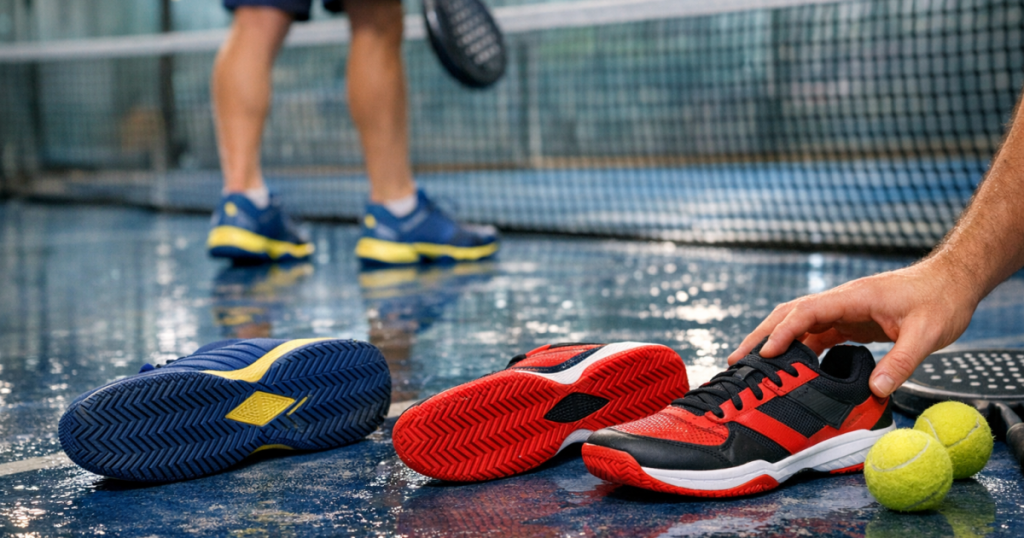
The outsole is the part that has the most direct effect on grip. On indoor padel courts, you will usually see shoes with herringbone-style tread, dot-style tread, or a mixed sole pattern. None is automatically perfect for every court, so think in terms of controlled traction rather than one universal winner.
Herringbone-style soles
A herringbone pattern is common on clay tennis shoes and many padel shoes. It can work well on sanded artificial turf because the grooves help manage loose material underfoot. The trade-off is that on some smoother or less sandy indoor courts, the feel can vary depending on how clean the sole is and how much loose sand is present.
Dot or omni-style soles
Dot-style soles can offer a more even contact feel on some artificial surfaces. They may feel less aggressive than deep herringbone, which some beginners like when turning or recovering after a shot. The key question is whether they provide enough stopping power for your club’s courts.
Mixed outsole patterns
Some padel shoes use a combination of grooves, dots and pivot zones. These are designed to balance grip, rotation and release. Do not assume a more complex sole is automatically better; the useful test is whether you can brake, turn and move again without a sudden slip or a sticky stop.
Real shoes such as Head Sprint Pro 4.0 Padel and Nox AT10 Lux show the kind of padel-specific options players may come across, but always check the outsole and fit against your actual court conditions rather than relying on the name alone.
Step 4: Check grip without over-gripping
Beginners often assume maximum grip is always best. On a slippery court, that sounds logical, but padel movement also needs small pivots and quick adjustments. If a shoe grips too sharply, your foot may stop while your body keeps rotating, which can make movement feel clumsy and uncomfortable.
You are looking for a controlled middle ground. When you push off, the shoe should not skate away. When you turn, it should let you rotate without feeling locked to the floor. When you stop after a short sprint, it should feel predictable rather than sudden.
Try this simple movement check if you can test shoes safely in a shop, at home on a suitable surface, or during a club demo session:
- Stand in an athletic position with knees slightly bent.
- Do three small side shuffles each way and notice whether your foot rolls inside the shoe.
- Practise a split step, then push diagonally as if moving towards a volley.
- Rotate gently on the ball of your foot to mimic turning after a glass rebound.
- Stop from a short jog and check whether the shoe grips smoothly or abruptly.
If you can borrow or demo footwear through your club, even better. Our guide on testing padel gear before you buy gives a useful framework for judging kit through real movement rather than first impressions.
Step 5: Get the fit right for side-to-side movement
Grip will not help much if your foot moves around inside the shoe. For indoor padel, the fit should feel secure through the midfoot and heel, with enough room at the front for your toes to settle without hitting the end during stops.
Try shoes with the socks you normally play in. Lace them properly, then check whether your heel lifts when you step backwards. Push sideways and feel whether your forefoot spills over the edge. If the shoe feels comfortable standing still but loose during a side lunge, it is unlikely to feel better once the court gets quicker.
Do not rely on your usual casual shoe size alone. Different brands shape their shoes differently, and padel involves more lateral force than walking around a shop. If you are between sizes, prioritise secure hold without toe pressure over simply choosing the larger option.
Step 6: Think about court etiquette when grip is poor
Slippery indoor courts are not just a footwear issue. Good habits help everyone play better. Wipe loose dust from your soles before stepping on court, avoid dragging grit in from outside, and do not leave damp towels or bottles where players may step on them.
If a particular part of the court feels unusually slick, mention it calmly to the club staff. Indoor conditions can change through the day, and a quick court brush or surface check may help. For new players, small habits like these are part of fitting into club play; our padel etiquette guide for beginners covers the wider court basics.
Common questions
Are indoor padel shoes different from outdoor padel shoes?
Sometimes, but the court surface matters more than whether it is indoors or outdoors. Check the outsole pattern, lateral support and how the shoe behaves on your club’s specific surface.
Can I use tennis shoes for indoor padel?
Some tennis shoes can work, especially clay-court styles, but they should still feel stable for padel’s short sideways movements and turns. Avoid smooth-soled casual trainers.
Why do my shoes slip more as the session goes on?
Dust, loose sand and moisture can build up on the sole during play. Wiping the outsole and checking whether the court surface has changed can make a noticeable difference.
Should beginners choose more grip or more cushioning?
Do not treat it as one or the other. You need reliable grip, but also enough comfort and support to move confidently for a full session.
Key takeaways
For slippery indoor courts, choose shoes by starting with the surface, not the brand name. Look for a padel or suitable court shoe with stable side support, an outsole that suits your club’s surface, and a fit that holds your foot during lateral movement.
The best choice is the one that lets you move with confidence: no skating, no over-sticking, and no foot sliding around inside the shoe. If you can, test shoes with real padel movements before you decide, because indoor grip is something you feel most clearly once you start stopping, turning and recovering on court.