Buying your first racket, shoes or bag is much easier when you can test padel gear in the same kind of session you actually play. A few controlled minutes of hitting, moving, carrying and changing direction will tell you more than a product page can.
The aim is not to find perfect kit on day one. It is to spot obvious discomfort, awkward weight, poor fit or unnecessary bulk before you commit.
What to know first
The most useful test is realistic, not dramatic. You do not need to smash winners or copy advanced players. You need to check whether the item helps you play simple padel: serve reliably, volley comfortably, move safely, recover between points and carry what you actually use.
- Test gear during warm-up, steady rallies and short points, not only when standing still.
- Use beginner-friendly shots: serves, forehand volleys, backhand volleys, lobs and simple wall rebounds.
- Pay attention to comfort after 20–30 minutes, not just the first impression.
- Compare against your current gear or a hire racket so the difference is meaningful.
- Check the retailer or club demo rules before using anything on court.
If you are still working out what belongs in your starter kit, it helps to read a basic packing list before testing bags and accessories. The guide on packing for your first padel session is a useful baseline.
Testing a padel racket on court
A racket can feel fine in your hand in a shop and still feel wrong once the ball comes quickly off the glass. Beginners should test for comfort, control and forgiveness before worrying about power.
Start with gentle volleys at the net. You are looking for a racket that lets you meet the ball cleanly without twisting sharply in your hand. If every off-centre hit feels harsh or unstable, it may be too demanding for your current level.
Then move back and try lobs, forehand drives and simple rebounds from the back glass. A good beginner test is whether you can send the ball deep with a controlled swing rather than forcing it. If you have to swing hard just to clear the net, the racket may not suit your timing yet.
Try a few serves as well. Serving in padel is not about maximum power, but the racket should feel easy to guide through a low, repeatable motion. If the head feels slow or heavy by the end of a short test, that feeling may be worse in a full match.
If a demo rack includes familiar models such as Nox ML10 Pro Cup or Bullpadel Hack 02, treat them as reference points rather than automatic choices. Check the current model details, weight range and feel yourself, because small differences can matter more than brand reputation when you are learning.
Racket material also changes feel. Fibreglass, carbon and foam can affect comfort, stiffness and response, so it is worth understanding the basics before reading too much into marketing terms. For a clearer explanation, see padel racket materials explained.
Checking padel shoes properly
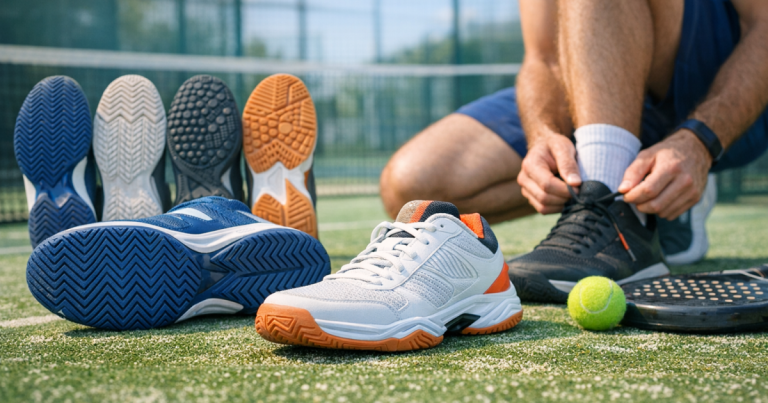
Shoes are one of the easiest items to misjudge because they may feel comfortable when walking but awkward during padel movement. Test them with short side steps, split steps, small sprints to the net and controlled pivots. Avoid exaggerated slides unless you already know how the court surface behaves.
The fit should feel secure through the midfoot and heel without squeezing your toes. If your foot moves around inside the shoe when you stop suddenly, that can make quick direction changes feel messy. If the upper pinches straight away, it is unlikely to become enjoyable during a longer session.
Pay attention to grip. On a sandy artificial turf court, you want enough traction to push off confidently without feeling glued to the surface. Too much grip can make turning feel clumsy; too little can make you cautious when reaching wide balls.
If you are considering a specific shoe such as the Babolat Jet Premura 2, it is worth reading a focused beginner review before trying it on court. The site’s Babolat Jet Premura 2 padel shoes review covers the kind of suitability questions beginners usually have.
Trying bags, clothing and accessories
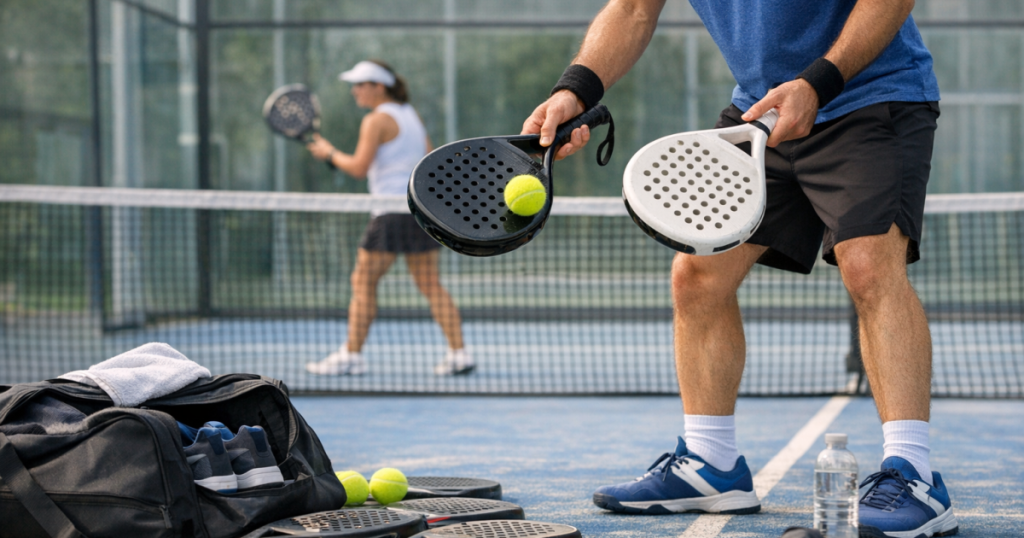
Bag testing is less exciting than racket testing, but it matters if you travel to courts after work, use public transport or cycle to a venue. Pack the bag with the items you genuinely carry: racket, shoes, water bottle, towel, balls, phone, keys and a change of top if needed.
Lift it, walk with it and open it as if you have just arrived at court. Can you find small items quickly? Does the racket fit without forcing the zip? Do shoes or damp clothing sit too close to clean kit? A bag that looks tidy when empty can become annoying when used for a real club session.
Clothing should be tested through movement rather than style. Try overhead reaches, lunges and quick turns. Shorts should not restrict wide steps, and tops should not ride up every time you play a bandeja-style overhead or reach for a lob. Sweat comfort matters too, so think about how the fabric feels once you are warm, not just when you leave the changing room.
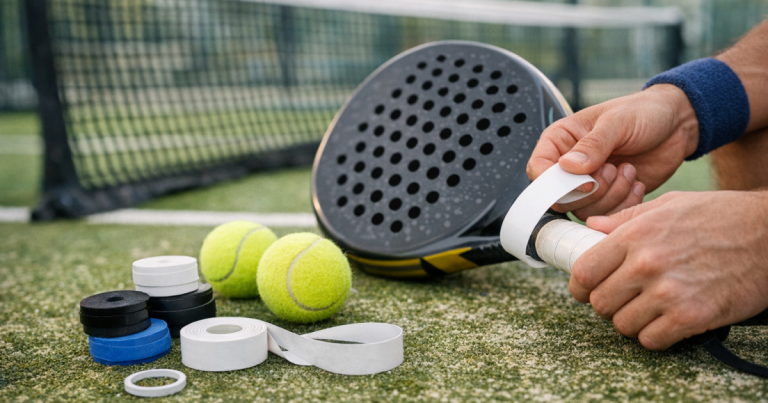
Accessories are worth testing only if they solve a real problem. A towel grip, wristband or cap can be useful for some players, but they should not become clutter. If an item does not make play more comfortable, organised or consistent, leave it out of your regular bag.
Questions to ask before committing
Before buying, slow the decision down with a few practical checks. These questions help you separate a useful upgrade from something that only felt exciting for five minutes.
- Did it feel better during simple, repeatable shots, or only during one impressive point?
- Was it comfortable after a proper warm-up and short match situation?
- Did it make your common mistakes smaller, or did it exaggerate them?
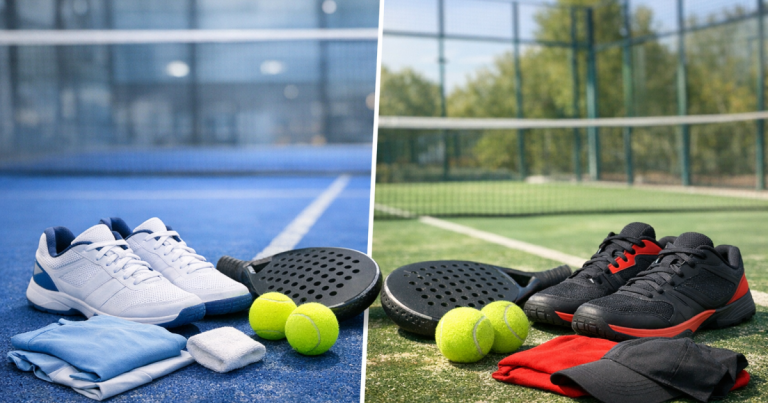
- Could you use it at both indoor and outdoor venues you normally play at?
- Does it fit your actual routine, including travel, storage and changing time?
- Can you return or exchange it if the fit is wrong, especially for shoes and clothing?
For rackets, do not judge only by one clean smash. For shoes, do not judge only by walking around. For bags, do not judge only by capacity. The right test should mirror your weekly padel life, not an idealised version of it.
Common testing mistakes beginners make
Choosing the most powerful racket too early
Power sounds appealing, but many beginners benefit more from comfort and easy control. If a racket makes you late on volleys or nervous on defensive shots, it may slow your progress even if it feels exciting on occasional attacking balls.
Testing gear when already exhausted
If you only try new kit at the end of a tiring session, your movement and timing may be the real issue. Test early enough that you can judge the gear fairly, then notice whether comfort changes as you get warmer.
Ignoring the court surface
Indoor and outdoor conditions can feel different, especially underfoot. If you usually play at a particular club, testing there gives you more useful feedback than trying shoes or balls in an unfamiliar setting.
Buying for a future version of yourself
It is fine to choose gear you can grow with, but not if it makes today’s game harder. Beginner gear should support regular play now: comfortable rallies, cleaner contact and confidence turning up for another session.
A simple testing plan
Use this quick routine when a club, coach or retailer lets you try gear properly.
- Minutes 1–5: warm up normally and notice immediate comfort, balance and fit.
- Minutes 5–10: play controlled volleys, drives and lobs to check touch and consistency.
- Minutes 10–15: add movement: side steps, net approaches and recovery after glass rebounds.
- Minutes 15–20: play a few points and notice whether the gear disappears into the background or distracts you.
- After the session: write down two positives and one concern before you forget the details.
This does not need to be formal. The point is to test padel gear against your actual habits rather than relying on first impressions, brand names or another player’s preferences.
Helpful questions
Can I test padel gear if I am a complete beginner?
Yes. In fact, simple beginner feedback is often clearer. If a racket feels awkward, shoes slip, or a bag is difficult to use, you do not need advanced technique to notice it.
How long should I test a racket before buying?
A short court trial of 20–30 minutes is more useful than a quick swing in a shop. Try volleys, lobs, serves and rebounds from the glass before deciding.
Should I copy the gear used by better players at my club?
Use their gear as a reference, not a rule. Stronger players may prefer heavier, firmer or more specialised kit that does not suit early-stage technique.
Is hire gear good enough while I decide?
Often, yes. Hire rackets can help you learn what feels comfortable before buying your own. Once you play regularly, your preferences usually become clearer.
What should I test first: racket, shoes or bag?
Prioritise shoes if your movement feels unstable, then racket comfort and control. Test a bag once you know what you actually carry to sessions.
Key takeaways
Good padel gear should make regular play easier, not just look more serious. Test rackets through controlled shots, shoes through real movement, and bags with the items you genuinely carry. If something feels uncomfortable, overcomplicated or distracting during a normal session, pause before buying. The best beginner decision is the one that helps you turn up, play confidently and keep improving week by week.