A good match-day bag is not about carrying everything you own. A simple padel accessories kit should help you deal with the small, annoying problems that can spoil a club session: a slippery grip, dead balls, forgotten water, loose items, or wet kit on the way home.
For most beginner and early club players, the aim is to keep things light, tidy and repeatable. If you can pack it in a few minutes and find what you need between games, it is doing its job.
At a glance
- Use one small pouch or bag section for accessories so they do not vanish under clothes and towels.
- Pack around real match problems: grip, hydration, spare balls, sweat, weather and post-match tidy-up.
- Keep the kit compact enough that you will actually bring it every time.
- Check venue rules and league habits before assuming you need to supply balls.
- Review the kit monthly and remove anything you have not used.
Step 1: Start with the bag space you already have
You do not need a large tournament bag to be organised for padel. A normal sports rucksack, a small padel bag, or one side pocket in your existing kitbag can work well. The key is to give accessories a fixed home.
Use a small zip pouch for loose items such as overgrips, tape, keys, coins for lockers and a spare hair tie if you need one. That stops small items falling to the bottom of the bag and makes it easier to move your kit between work, home and the club.
If you are still working out what gear is worth owning, it is sensible to keep your setup basic. Our guide to renting and buying padel gear can help you decide what to borrow, hire or buy first before you fill a bag with extras.
Step 2: Pack the true match essentials first
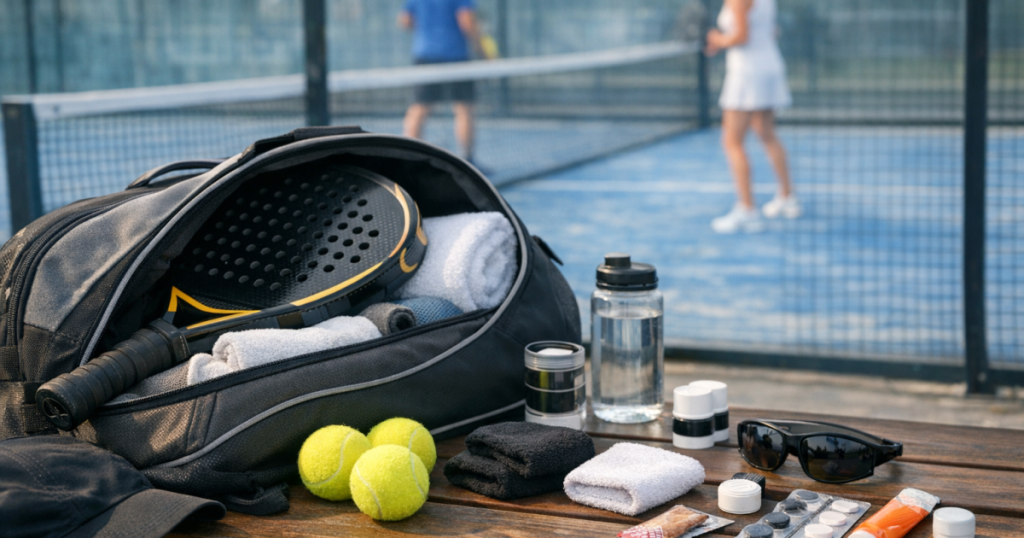
Build the core of your kit around items that support the actual session. These are the things you are most likely to miss if they are not there.
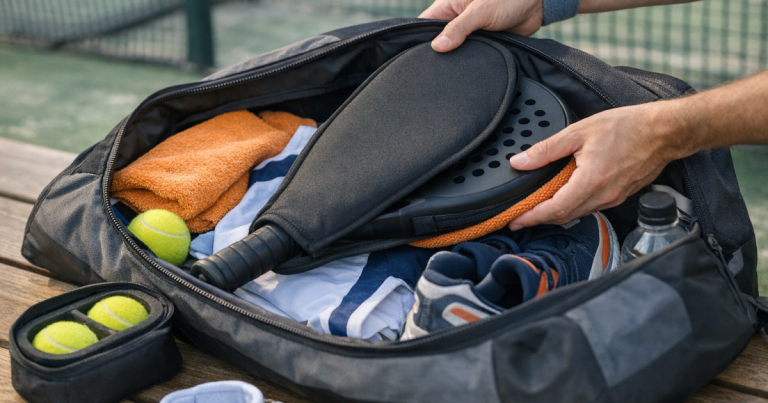
- Racket: Pack it first, ideally in a section where it will not be scratched by keys, bottles or metal zips.
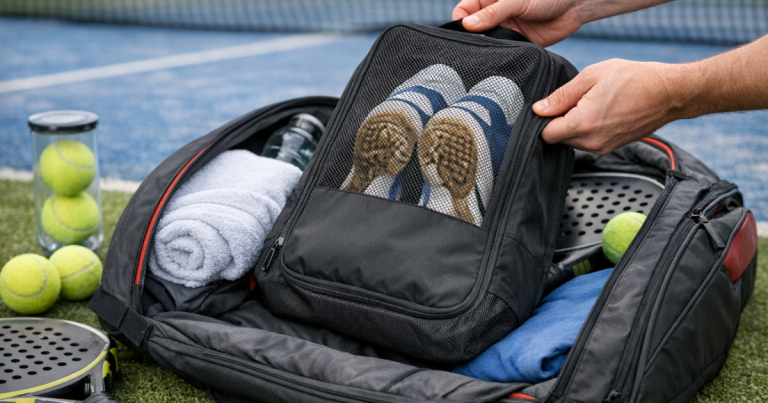
- Padel shoes: If you travel in normal trainers, keep your court shoes separate from clean clothes and snacks.
- Water bottle: A reusable bottle such as the CamelBak Chute Mag 750ml is easy to dedicate to sport, but any reliable bottle is fine.
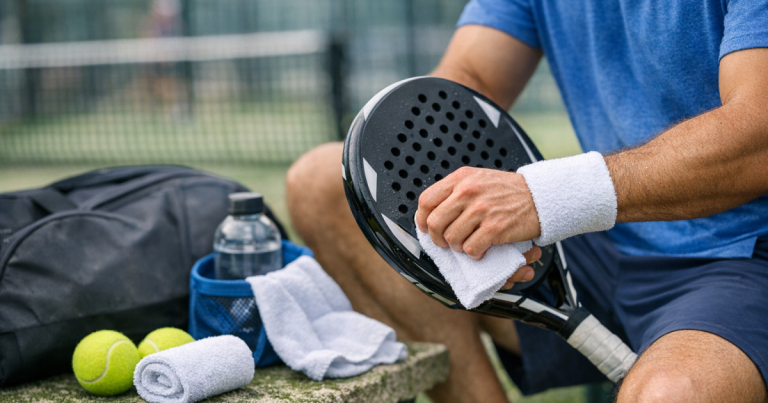
- Small towel: Useful for hands, face, racket handle and wet benches.
- Spare top or layer: Indoor courts can feel warm once you are playing, while outdoor or semi-covered venues can cool down quickly afterwards.
Keep this section boring on purpose. If the core items are packed, you can play. Everything else is there to make the session smoother, not to compensate for forgetting the basics.
Step 3: Add grip and racket comfort items
Grip problems are one of the most common match-day annoyances for new players. Sweaty hands, a worn handle or a damp court environment can make the racket feel less secure, which often leads to tense swings and rushed mistakes.
Carry one or two spare overgrips rather than a whole stack. A familiar option such as Wilson Pro Overgrip is widely used across racket sports, but the most important point is that you choose a grip feel you like and replace it before it becomes smooth and shiny.
- Keep overgrips sealed or in a pouch so they stay clean.
- Add a small pair of blunt-ended scissors if you regularly change grips at the club.
- Carry one elastic band or finishing tape only if you know your grip roll does not include it.
- Remove old packaging from the bag straight away so it does not become clutter.
If you are new to racket details and not sure what matters, grip is only one part of the picture. Weight, balance and shape also affect how a racket feels, and those numbers are explained in our guide to padel racket specifications.
Step 4: Decide whether you need balls in your kit
Do not assume every match needs you to bring a fresh tube of balls. Some clubs provide balls for coaching sessions, some box leagues expect players to agree who brings them, and casual games often depend on whoever has a decent tube in the bag.
For friendly matches, carrying one unopened or lightly used tube is useful. Head Padel Pro is a recognisable padel ball option, but the right choice depends on what your club uses and whether the session is social, coaching-based or competitive. Check the format before turning up with balls that nobody plans to use.
A simple rule works well: keep one tube for match play and one older set for warm-ups or solo wall practice if your venue allows it. Once balls feel flat, unpredictable or visibly worn, move them out of your match kit rather than letting them stay there forever.
Step 5: Include small comfort items, but avoid overpacking
Comfort items are helpful when they solve a real problem. They become annoying when they turn your bag into a mobile cupboard.
- Light snack: Something simple you know sits well before sport, especially if you play after work.
- Spare socks: Very useful for wet weather, long sessions or sweaty indoor matches.
- Cap or visor: Worth packing for outdoor courts with low sun.
- Hair ties or headband: Easy to forget, very irritating when missing.
- Plasters: Useful for small rubbing spots, but do not play through injuries that need proper attention.
Try not to pack for every possible situation. Match-day confidence comes from being prepared for common issues, not from carrying three versions of every item.
Step 6: Add a weather and venue mini-check
UK padel venues vary a lot. Some are indoor, some are outdoor, and many are covered but still affected by cold, wind or damp walkways. A quick check before leaving saves you from packing too much or too little.
- For indoor courts, prioritise water, towel, spare top and clean shoes.
- For outdoor courts, add a cap, extra layer and a bag for damp clothing.
- For evening sessions, pack a warmer post-match layer so you do not cool down sharply afterwards.
- For work-to-club trips, separate clean clothes from used kit with a drawstring laundry bag.
Good preparation also includes fitting smoothly into the club environment. If you are visiting somewhere new, it is worth checking how to follow good etiquette at a new club, including arrival time, court changes and how to handle balls around other matches.
Step 7: Keep valuables and admin simple
Most match-day stress comes from small admin mistakes: no locker coin, phone buried under wet kit, car key loose in the main compartment, or forgetting the entry code for a booked court.
Create a small “before I leave” routine. Put your phone, keys and wallet in the same zipped pocket every time. If your club uses lockers, keep a suitable coin or token in your pouch. If you need booking details, check them before you arrive rather than while three other players are waiting at court-side.
A tiny notebook is not essential, but some players like using one to note box league scores, names of new partners or one coaching cue from the session. If that feels like too much, use your phone after the match instead of during changeovers.
Step 8: Pack a post-match tidy-up section
The easiest kit to maintain is the one that separates clean, damp and dirty items straight away. This is especially useful if you play before work, travel by public transport, or leave your bag in the car for a short period after playing.
- Use a small laundry bag for sweaty tops and socks.
- Keep shoes away from towels and clean clothes.
- Open your bag when you get home so damp items can air properly.
- Throw away empty ball tubes, snack wrappers and used packaging after each session.
- Wipe down bottles and racket handles if they feel sweaty or gritty.
Every few weeks, empty the whole bag and reset it. If you notice odours, grit, leaking bottles or sticky pockets, follow a gentle cleaning routine rather than soaking or scrubbing materials that may not handle it well. The step-by-step notes on how to clean your padel bag properly are useful if your kit is starting to look and smell like it has done a few tough box league nights.
A simple starter checklist
Use this as a lean, realistic match-day setup. Add to it only when you discover a genuine need.
- Racket
- Padel shoes
- Water bottle
- Small towel
- One spare top or layer
- One or two overgrips
- One tube of balls if your session requires it
- Spare socks
- Small snack
- Plasters for minor rubbing
- Phone, keys, wallet and locker coin or token
- Bag for used clothing
This is enough for most beginner club matches without turning your bag into a heavy, overstuffed holdall. If something stays unused for a month, take it out unless it is there for a clear seasonal reason.
Common questions
Do I need a separate padel bag for this kit?
No. A normal sports bag or rucksack is fine if it has enough space for your racket, shoes and a small accessory pouch. A dedicated padel bag is useful later if you play regularly and want clearer compartments.
How many overgrips should I carry?
One or two is enough for most club players. Carrying more usually just adds clutter unless you play multiple matches a week or know you change grips very often.
Should beginners bring their own balls?
It depends on the session. Coaching sessions and organised club events may provide balls, while casual games and box leagues may expect players to bring a tube. Check the booking notes or ask the group.
What should I leave out?
Leave out anything you pack “just in case” but never use: extra clothing, too many snacks, old balls, duplicate towels and loose accessories. A lighter bag is easier to keep organised.
How often should I reset my match-day kit?
Do a quick reset after every session and a full empty-out every few weeks. That keeps your kit clean, prevents odours and makes it easier to spot what needs replacing.
Main lessons
A good match-day kit is small, repeatable and built around real court-side problems. Start with the essentials, add grip and hydration support, decide whether balls are actually needed, and keep clean and used items separate. Once the routine feels automatic, you can focus less on your bag and more on enjoying the match.