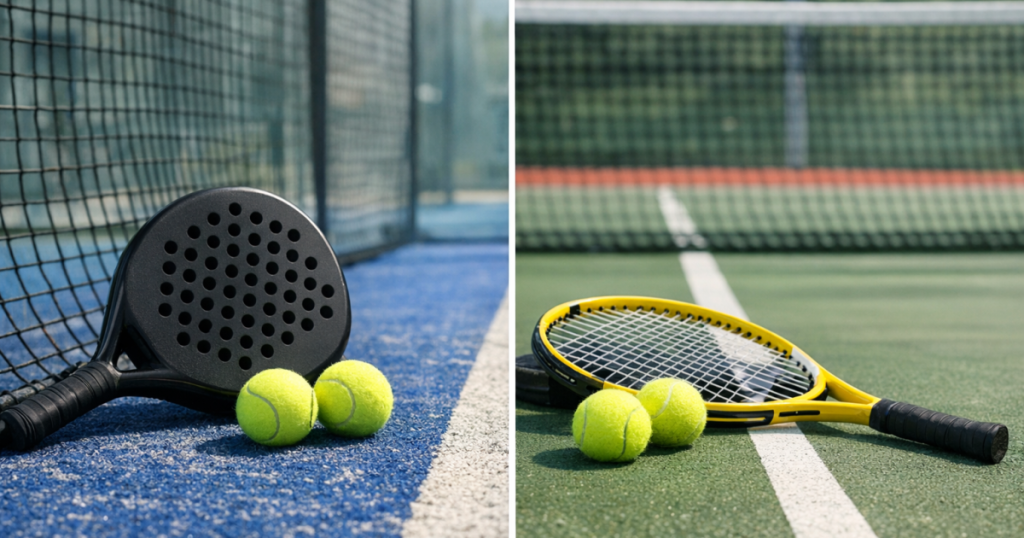
If you already know tennis, padel will feel familiar at first: you still play over a net, count points as 15, 30 and 40, and try to win games and sets. The important differences are the walls, the underarm serve and the way rallies continue after the ball rebounds. Understanding padel rules vs tennis rules helps you step onto a UK club court without second-guessing every shot.
At a glance
- Scoring is mostly the same as tennis: 15, 30, 40, deuce, advantage and games.
- Padel is normally played as doubles, while tennis is commonly played as singles or doubles.
- The padel serve is underarm after a bounce, not an overhead serve.
- The walls are part of padel once the ball has bounced in court.
- You usually get two serves in both sports, but service faults are judged differently.
- Rallies in padel often last longer because the glass keeps the ball alive.
The biggest difference: the walls are in play
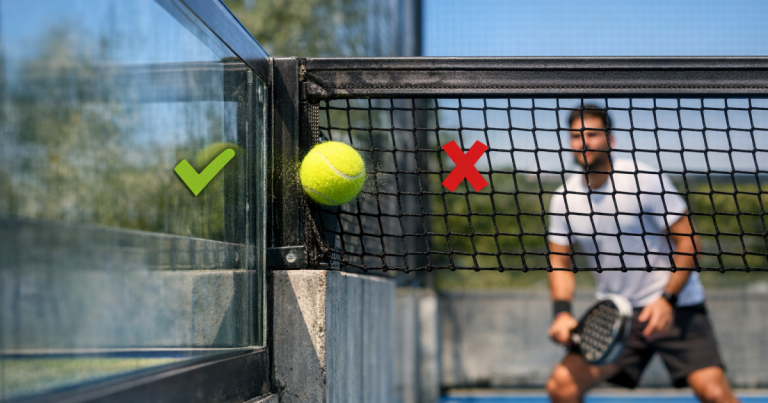
In tennis, once the ball goes beyond the baseline or sideline, the point is usually over. In padel, the court is enclosed, so the glass and mesh affect the rally. The key beginner rule is simple: the ball must bounce in the court first before it can rebound off a wall and stay live.
For example, if your opponent hits a shot that lands on your side, bounces, then hits the back glass, you can still play it before it bounces a second time. That is one reason padel feels more forgiving than tennis when you are learning. You have more time to read the rebound, reset your feet and guide the ball back.
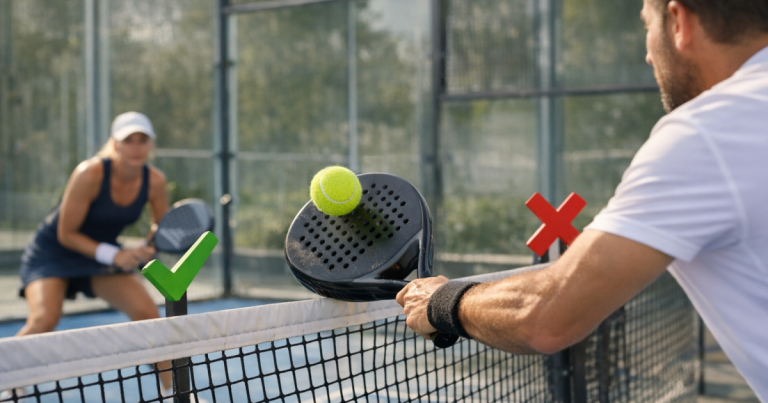
The wall does not make every ball legal, though. If your opponent’s shot hits your glass before landing in your court, it is out. If a shot hits the fence or glass directly without bouncing first on the opponent’s court, it is not a normal winning shot. For beginners, the safest mental shortcut is: court first, wall second.
Serving: underarm in padel, overhead in tennis
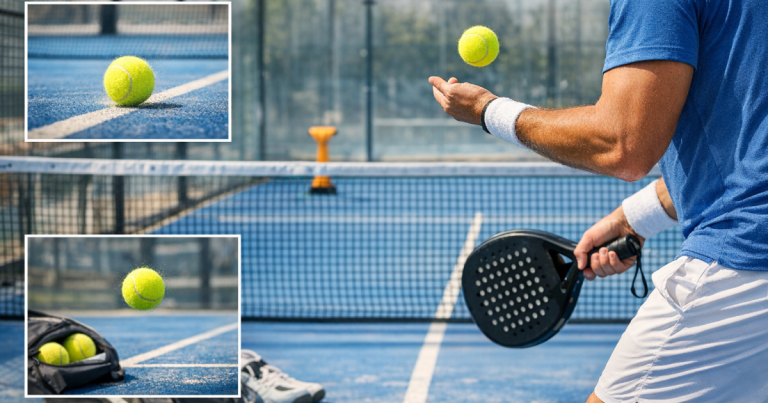
The serve is where tennis players often need to slow down and unlearn a habit. Tennis serves are hit overhead from behind the baseline into the diagonal service box. Padel serves are underarm, struck after bouncing the ball, and the ball must be hit at or below waist height.
In padel, you serve diagonally into the opponent’s service box, as in tennis. You normally have two attempts. The server stands behind the service line, bounces the ball, and plays it underarm across the net. A serve that lands in the correct box and then rebounds off the glass is generally fine. A serve that lands correctly but then touches the side fence is a fault under standard padel rules.
This matters because a powerful tennis-style serve is not part of padel. The serve starts the rally rather than dominating it. Placement, depth and getting into a good net position matter far more than raw pace. If you want a deeper beginner breakdown, the site’s guide to padel serve rules explains the bounce, box, height and common faults in more detail.
Scoring is familiar, but match formats can vary
Padel scoring uses the same traditional sequence as tennis: love, 15, 30, 40 and game. At 40-40, many matches use deuce and advantage, where a team must win two points in a row to take the game. Sets are usually won by reaching six games with a two-game lead, and tie-breaks are commonly used at 6-6.
At beginner sessions, social club nights and some leagues, you may also see golden point scoring. With golden point, 40-40 is decided by one point rather than advantage and deuce. This speeds up games and keeps court bookings running on time. It is not unusual in padel, so do not assume every match will use the same deuce format you know from tennis.
The practical advice is to confirm the format before you start. Ask whether the game uses advantage or golden point, whether tie-breaks are being played, and whether you are playing one full set, a timed match or a shorter social format. That quick check prevents most scoring confusion.
Doubles is the default in padel
Tennis can be singles or doubles, and many beginners first learn through singles rallies. Padel is overwhelmingly played as doubles because the standard court size and tactics are built around four players. Singles padel courts do exist, but they are far less common at UK clubs.
This changes how you think about space. In tennis singles, you cover the whole width by yourself. In padel doubles, you and your partner defend one half each but move together as a pair. If one player goes to the net and the other stays deep, gaps open quickly. Good beginner padel is less about hitting winners and more about moving in sync, keeping the ball in play and choosing safer targets.
For a first club session, expect to rotate partners, play short games and hear plenty of tactical reminders about court position. If you have not booked before, the step-by-step guide to booking your first padel court in the UK can help you understand what to expect from the process.
What counts as in or out?
The biggest in-or-out difference is the enclosure. In tennis, lines and open court boundaries decide almost everything. In padel, the first bounce still matters most, but what happens after that can keep the rally alive.
- In both sports: a ball landing on the line is in.
- In tennis: a ball landing beyond the line is out, even if it curves back later.
- In padel: a ball landing in court can rebound off glass and still be playable.
- In padel: a ball that hits the glass or fence before landing in the opponent’s court is out.
- On serve: padel has extra details around the side fence after the service bounce.
Beginners often stop too early after a ball hits the back glass. Try to wait and watch the rebound before giving up on the point. Many shots that look beaten at first are playable once you learn the bounce pattern.
Rally style: less power, more patience
Tennis rewards heavy topspin, big serves and aggressive baseline patterns. Padel rewards control, angles, lobs, volleys and patience. Because the court is smaller and enclosed, outright winners are harder to hit cleanly against organised opponents.
A tennis player coming into padel often makes two early mistakes. The first is hitting too hard from the back of the court, which gives the ball a lively rebound off the glass. The second is trying to finish the point from poor positions. In padel, a slower ball into the right space is often more effective than a powerful shot into the middle of the opponent’s racket.
The lob is also more central in padel. A good lob can move opponents away from the net and give your team time to move forwards. In tennis, a lob is often a defensive or surprise shot. In padel, it is a normal building block of point construction.
Lets, faults and common beginner mix-ups
Both sports use lets and faults, but the details differ. In tennis, a serve that clips the net and lands in the correct service box is traditionally replayed. In padel, a serve that touches the net and then lands correctly may also be replayed, provided it does not then create a service fault under the relevant rules.
Foot faults are another shared idea. Tennis players must serve from behind the baseline without stepping into court too early. Padel servers must stay behind the service line during the serve action and respect the service area. At beginner level, clubs are usually helpful rather than harsh, but it is worth learning the correct habit early.
The most common mix-up is treating the wall like an automatic fault. Remember: if the ball bounced in the court first, the glass may keep the rally going. Another is forgetting that padel serves are underarm. Even experienced tennis players sometimes instinctively lift the ball and shape up for an overhead serve during their first session.
How to adjust if you are coming from tennis
- Shorten your swing: compact strokes are easier to control on a smaller court.
- Watch the glass: do not rush towards the ball until you have read the rebound.
- Use the lob early: it buys time and helps your team regain the net.
- Talk to your partner: call yours, mine, switch and leave whenever needed.
- Serve for position: aim to start the point well rather than hit an unreturnable serve.
- Accept longer rallies: patience is a real advantage in beginner padel.
If you are unsure whether to start with a casual intro or structured coaching, a taster session or full lesson can both work. A taster is good for learning the feel of the court, while a full lesson gives more time for serving, wall rebounds and positioning.
Questions people ask
Is padel scoring exactly the same as tennis?
It is very close. Padel uses love, 15, 30, 40, games and sets, but some clubs and competitions use golden point at deuce to make matches quicker.
Can the ball hit the wall in padel?
Yes, but usually only after it has bounced in the court first. If it hits the glass or fence before landing on the opponent’s side, it is generally out.
Do you get two serves in padel?
Yes, standard padel gives the server a first and second serve, similar to tennis. The serve must be underarm and hit after a bounce.
Is padel easier than tennis for beginners?
Many beginners find rallies easier to start in padel because the serve is gentler and the walls keep points alive. Good padel still takes timing, movement and teamwork.
Can you play padel singles?
Padel is normally doubles. Singles courts exist, but most UK club sessions, social games and bookings are based around four players.
Key takeaways
If you know tennis, you already understand a lot of padel’s scoring language and basic court etiquette. The main changes are the underarm serve, doubles positioning and the fact that the glass can keep a point alive after the ball has bounced.
For your first few games, focus less on winners and more on staying calm during rebounds, serving legally, moving with your partner and confirming the scoring format before you start. Once those basics click, padel becomes much easier to follow and much more fun to play.
Quick Buying Links
Padel Rules
Understanding padel rules vs tennis rules helps you step onto a UK club court without second-guessing every shot.At a glanceScoring is mostly the same as tennis: 15, 30, 40, deuce, advantage and games.Padel is normally played as doubles, while tennis is commonly played as singles or doubles.The padel serve is underarm after a bounce, not an overhead serve.The walls are part of padel once the ball has bounced in court.You usually get two serves in both sports, but service faults are judged differently.Rallies in padel often last longer because the glass keeps the ball alive.The biggest difference: the walls are in playIn tennis, once the ball goes beyond the baseline or sideline, the point is usually over.
Tennis Rules: Key Differences Explained
Worth considering if its strengths better match your needs.