If you are new to the sport, padel taster sessions can feel like the easiest way in: short, sociable and low-pressure. A full lesson, meanwhile, gives you more time with a coach and usually more individual correction. The right choice depends less on “how sporty” you are and more on what you want from your first booking.
The short answer
Book a taster session if you mainly want to see whether padel feels fun, understand the basic rules, meet other beginners and avoid committing too much time straight away.
Book a full lesson if you already know you want to improve, you feel nervous about stepping onto court without guidance, or you want help with technique before joining social games.
For many UK beginners, the best route is simple: try a taster first, then book a proper lesson once you have felt the court, the walls and the pace of the game. If courts are hard to find near you, it can also make sense to book a full beginner lesson straight away so your first hour is structured and worthwhile.
What usually happens in a taster session?
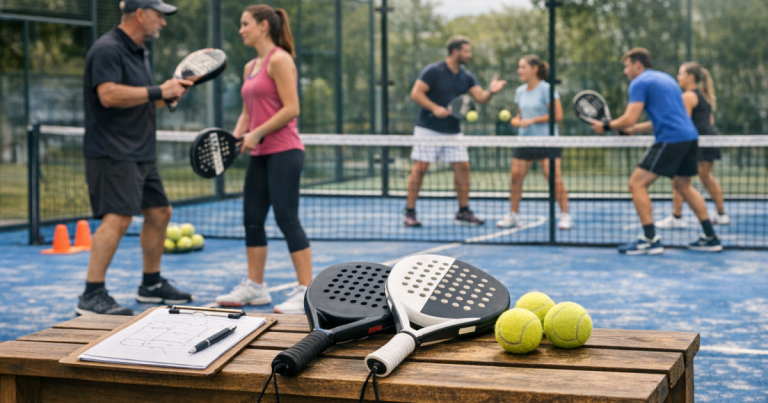
A taster session is normally designed for people who have little or no padel experience. The coach or organiser will keep things simple, with the aim of getting everyone rallying and enjoying the format quickly.
You can usually expect:
- A short explanation of the court, glass walls and basic scoring.
- A warm-up or easy rally to get used to the ball and racket.
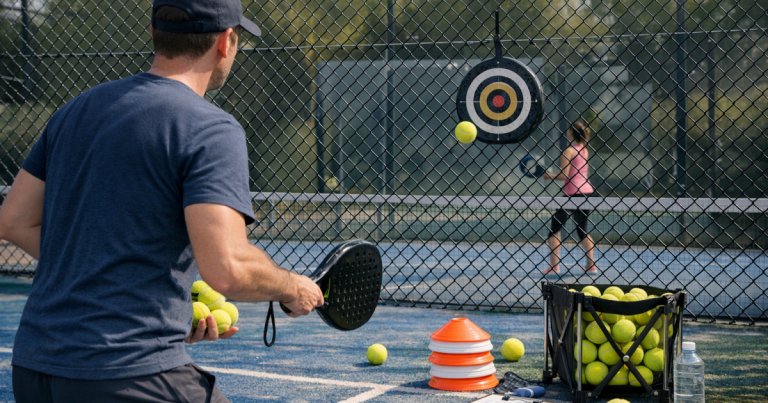
- Simple feeding drills, often focused on forehands, backhands and volleys.
- A few serve and return examples, without too much technical detail.
- Short games or point-based activities so you leave having played something that feels like padel.
The main benefit is confidence. You are not expected to arrive with polished technique or a full understanding of the rules. Most people will be there for the same reason: to try the sport without feeling exposed.
If you have not booked a court before and want to understand the practical side of finding venues, times and club systems, the guide to booking your first padel court in the UK is a useful next step.
What changes in a full lesson?
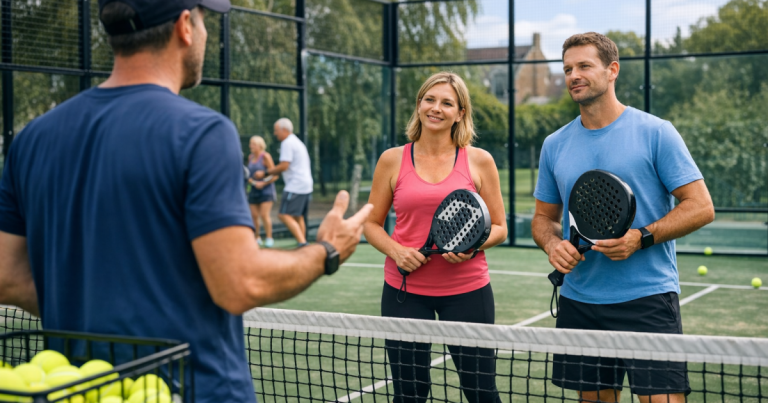
A full beginner lesson is more targeted. Instead of simply giving everyone a taste of the game, the coach has time to explain, observe and correct. That does not mean it becomes intense or intimidating; a good beginner lesson should still feel friendly and manageable.
The big difference is feedback. In a taster, a coach may give broad tips to the group. In a lesson, they can spot why your ball keeps hitting the back glass, why your volley floats up, or why your serve feels awkward. Those small corrections can make your next social game much more enjoyable.
A lesson may cover:
- Grip and ready position.
- Basic forehand and backhand technique.
- Using the walls without panicking.
- How to stand with a partner.
- Serve basics and common faults.
- Simple point patterns, such as when to move forwards.
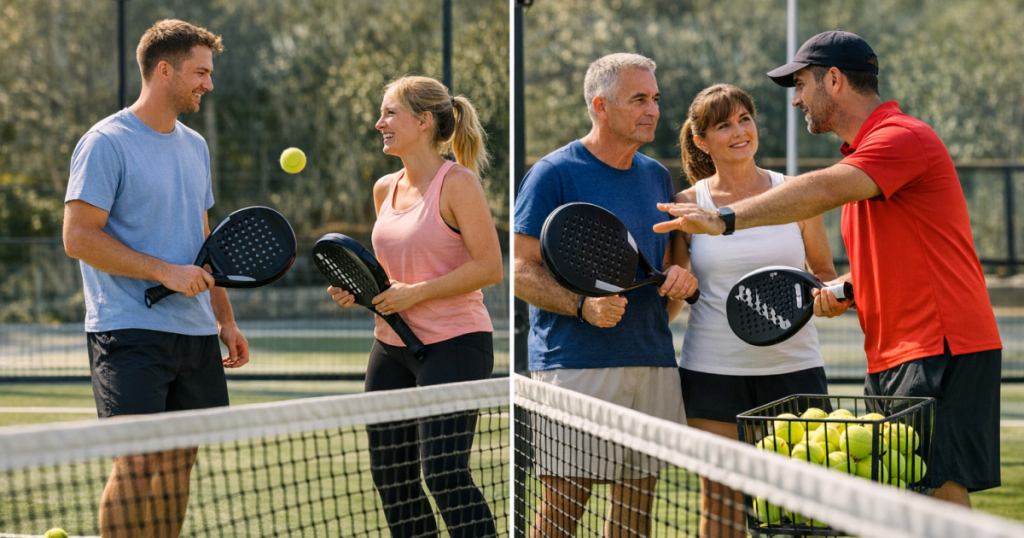
Full lessons can be one-to-one, in pairs, or in small groups. For beginners, a small group often works well because you get coaching without feeling like every shot is under the microscope. One-to-one coaching is useful if you are particularly nervous, coming from another racket sport with habits to adjust, or trying to improve quickly.
How to decide what to book first
Step 1: Be honest about your aim
If your aim is “I want to see what all the fuss is about”, a taster is enough. You will get a feel for the court and find out whether you like the bounce, the walls and the social nature of the game.
If your aim is “I want to start playing regularly”, a full lesson is more efficient. It gives you a foundation before bad habits settle in, especially with footwork, grip and court position.
Step 2: Think about your confidence level
Some beginners are happy to learn by doing. Others want a clearer explanation before they start moving around a glass-walled court. Neither approach is wrong.
Choose a taster if you are comfortable making mistakes in a group and mainly want to have fun. Choose a full lesson if you prefer being shown exactly what to do and why.
Step 3: Check the group size
Group size matters more than the name of the session. A “beginner lesson” with too many players may give you less personal attention than a well-run taster with a small group. Before booking, check how many players are expected on court and how the session is structured.
As a rough guide, smaller groups are better for feedback, while larger groups can feel more social. If you are nervous, avoid anything that looks like an open club night for mixed abilities unless the organiser clearly says beginners are supported.
Step 4: Look at what is included
Some clubs include racket hire in beginner activities; others expect you to bring or hire one separately. Balls are usually provided for coached sessions, but it is still worth checking. Also look for whether the session is indoors or outdoors, as wind, rain and court surface can affect how easy the first experience feels.
You do not need to buy a full kit before your first coached hit. Comfortable sports clothing and suitable court shoes are usually enough, provided the venue allows them. If you carry on, you can then think more carefully about shoes, bags and racket choice.
Examples of good beginner choices
Here are a few common beginner situations and what usually makes sense.
You are curious but not ready to commit
Book a taster. You will get enough court time to understand the feel of padel without turning it into a project. This is ideal if you are going with a friend, trying a new club, or fitting padel around other sports.
You have played tennis, squash or badminton
A full lesson can be useful, even if you are already comfortable with rackets. Padel rewards patience, positioning and using the glass, so habits from other sports can help in some moments and hold you back in others. A coach can stop you trying to win every point with power.
You want to join social games soon
Book a full lesson or a short beginner coaching block. Social padel is much more enjoyable when you know where to stand, how to serve legally and when to let the ball come off the glass. You do not need to be advanced, but a little structure goes a long way.
You are nervous about being the weakest player
Start with a beginner-only taster or a one-to-one lesson. Avoid mixed-level open play as your first experience unless the club has made it clear that complete beginners are welcome. The right environment matters; a supportive first session can make padel feel far less daunting.
Useful checks before you book
Before paying for any beginner session, read the description carefully and look for specific wording. “All abilities welcome” is not always the same as “complete beginners welcome”. For a first session, clear beginner language is your friend.
- Level: Does it say beginner, improver, open, social, or match play?
- Coach involvement: Is it coached throughout, supervised, or simply organised play?
- Equipment: Are rackets available, and are balls provided?
- Format: Will you do drills, games, or both?
- Group size: How many people share the court and coach?
- Indoor or outdoor: Outdoor sessions can be great, but weather may make the first hit trickier.
- Cancellation terms: Check what happens if the weather changes or you cannot attend.
If the club uses an online booking platform, read the session notes rather than choosing only by time slot. Some apps and club calendars group lots of activities together, so it is worth checking the level before you tap book.
How to get more from either session
Whether you choose padel taster sessions or a full lesson, arrive with one simple goal: leave understanding the next step. You do not need to fix every shot in one hour.
For a taster, ask yourself afterwards:
- Did I enjoy the pace and the social feel?
- Did I feel comfortable with the coach or organiser?
- Would I prefer another beginner group, or more individual help?
- Do I understand enough to book a court with friends?
For a full lesson, ask the coach for one or two practice priorities. Good beginner priorities might be keeping the racket ready, aiming higher over the net, recovering to the right position, or learning when to let the ball hit the glass.
If you like practising between club sessions, online drills can help, but they work best when you choose beginner-friendly exercises rather than copying advanced points. The review of The Padel School’s beginner-friendly drills explains what to look for when using video coaching alongside real court time.
When a taster is not enough
A taster is brilliant for removing the mystery, but it has limits. You may not get much personalised feedback, and the coach may need to keep the group moving rather than pause to rebuild one person’s technique.
Move on to full lessons if:
- You keep avoiding the back glass because it feels confusing.
- Your serve is unreliable or you are unsure about the rules.
- You are losing position in doubles and leaving gaps.
- You want to join regular club sessions but feel underprepared.
- You have had a fun first hit and want a clearer path to improvement.
At that point, a proper lesson is not about becoming serious overnight. It is about making normal club play more enjoyable, with fewer rushed swings and fewer “where should I stand?” moments.
When a full lesson might be more than you need
A full lesson is not automatically the better choice for every first-time player. If you are trying padel as a social activity with friends, a relaxed taster may be more enjoyable than a technical session. You may also prefer to play once before deciding whether coaching is worth your time.
There is nothing wrong with starting casually. Padel is popular partly because beginners can rally quickly. The key is to recognise when casual play stops helping you improve. If you keep making the same errors, a single focused lesson can save a lot of frustration.
Things readers ask
Do I need any experience before a taster session?
No. A beginner taster should assume you have not played before. If the listing is unclear, check that it is suitable for complete beginners before booking.
Will I get enough coaching in a taster?
You will usually get basic guidance, but not detailed correction. If you want individual feedback on technique, a full lesson is the better fit.
Can I book a full lesson as my first ever padel session?
Yes. Many beginners do this, especially if they are nervous, want structure, or plan to play regularly. Tell the coach it is your first time so they can pitch it correctly.
Is a group lesson better than one-to-one coaching?
For most beginners, a small group lesson offers a good balance of coaching, rally practice and social confidence. One-to-one coaching is better if you want focused feedback or feel anxious in groups.
What should I do after my first session?
Book another beginner-friendly court slot or lesson within a couple of weeks. Padel feels much easier when you build familiarity before the basics fade.
Why it matters
The best first booking is the one that gets you back on court. A taster is ideal for curiosity, confidence and a fun first feel. A full lesson is better when you want structure, correction and a smoother route into regular play.
If you are still unsure, start with the lowest-pressure beginner option at a convenient club, then use that experience to choose your next step. For a deeper look at coaching styles and structured learning, read the Better Padel Coaching review before planning your practice routine.
Quick Buying Links
Padel Taster Sessions
If you are new to the sport, padel taster sessions can feel like the easiest way in: short, sociable and low-pressure.
Full Lessons: What Should You Book?
Worth considering if its strengths better match your needs.