The easiest way to start playing padel is not to buy loads of kit or book five matches at once; it is to build a simple four-week rhythm. Your first month should help you understand the rules, feel comfortable on court, meet people at your level, and avoid the early mistakes that make rallies harder than they need to be.
Managing an injury, chest symptoms, or a medical condition while taking up padel should be discussed with a qualified healthcare professional so your activity level is appropriate and in line with UK health and safety guidance.
What to know first
Padel is beginner-friendly, but it still rewards a little structure. The first month is not about mastering every shot. It is about learning enough to enjoy games, hold a rally, move safely, and build confidence around other players.
- Play little and often if you can: one lesson or social game each week is better than a single intense burst.
- Keep the first aim simple: get the ball back, use the walls calmly, and understand where to stand.
- Join beginner-friendly sessions: look for intro lessons, coached socials, improver groups or club mix-ins.
- Use sensible kit: a hired racket is fine at first, but stable court shoes matter more than a premium racket.
- Track one improvement each session: for example, fewer rushed lobs, better positioning, or more consistent serves.
Week 1: Get comfortable with the court and the rules
Your first week should remove uncertainty. Book a beginner lesson, a taster session, or a relaxed hit with someone patient. A coach is useful because they can explain the court, glass, scoring and basic positions without you trying to learn everything during a live match.
Start with the essentials. Padel uses tennis-style scoring, the serve is underarm, and the ball must bounce before it can be played off the glass. You can volley in many situations, but there are limits around the serve and the net. If that part feels unclear, read the padel volley and net play rules before your next game so you are not guessing mid-rally.
For your first session, focus on three habits. Stand ready with the racket in front of you, recover towards a sensible position after each shot, and choose control over power. New players often swing too hard because padel looks fast from the outside. In reality, the early win is keeping the rally alive.
Your first-week targets
- Understand the serve, scoring and when the glass is in play.
- Hit forehands and backhands with a short, controlled swing.
- Practise a basic lob, even if it feels awkward at first.
- Learn the difference between attacking at the net and defending near the back glass.
- Leave the court knowing one clear thing to practise next time.
Week 2: Build rally skills before chasing winners
Once the court feels less strange, the second week is about repeatable rally skills. You do not need a huge range of shots yet. You need a serve that starts the point fairly, a return that gets into play, and a calm defensive shot when the ball comes off the glass.
If you can book another lesson, ask for work on positioning and wall rebounds. Many beginners lose points not because their racket technique is terrible, but because they stand too close to the ball or move backwards too late. Learning to let the ball come off the glass, then playing a compact shot, can make games feel slower and more manageable.
Try to play one controlled practice game this week. It can be a normal match, but agree with the group that the aim is rally length rather than smashing winners. If everyone is new, use mini targets: keep the serve in, make the first volley, or play three sensible lobs per set. These small goals make the game more useful than simply counting the score.
A simple second-week practice block
- 10 minutes: gentle hitting from the back of the court, aiming cross-court.
- 10 minutes: serves and returns, with no pressure to win the point.
- 10 minutes: lobs from defensive positions.
- 10 minutes: one player volleys while the other defends and uses the glass.
- Final 20 minutes: a relaxed set with one focus, such as better positioning after each shot.
Week 3: Find your people and play real points
By the third week, you will probably have enough confidence to join a beginner social, a club ladder entry level, or a casual match with three other newer players. This is where padel starts to feel like a proper habit rather than a one-off activity.
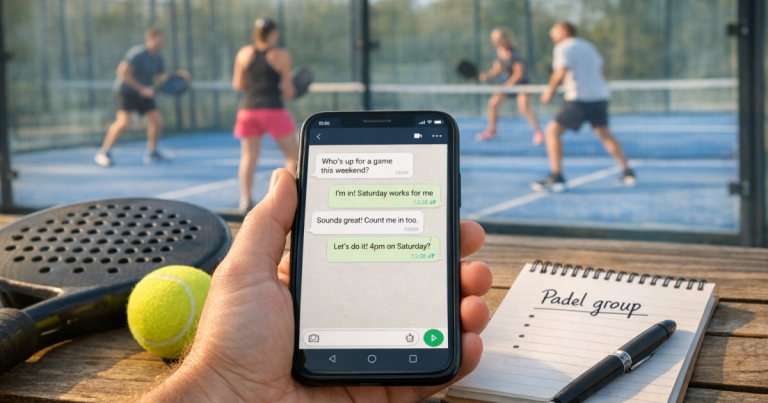
Good playing partners matter. You want people who are reliable, fair with ability levels, and happy to rotate partners so everyone learns. If you are not sure where to begin, our guide to finding a padel partner for regular games covers practical ways to connect through clubs, groups and beginner sessions.
When you play proper points, expect mistakes. That is normal. Your goal is to notice patterns rather than judge every shot. Are you losing points because you rush the return? Are you stuck at the back while both opponents are at the net? Are you hitting lobs too low? Pick one pattern, adjust it, and leave the rest for later.
Match habits to start now
- Talk between points: agree who covers the middle and when to switch.
- Use the lob as a reset: it buys time and can move opponents away from the net.
- Move as a pair: if your partner goes forward, do not stay stranded at the back without a reason.
- Respect mixed levels: avoid targeting the weakest player every point in friendly beginner games.
- Keep score clearly: saying the score before serving prevents confusion.
Week 4: Make padel part of your routine
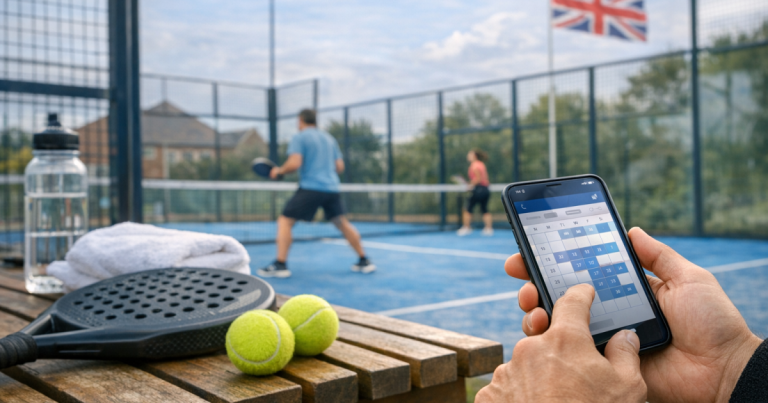
The fourth week is the time to decide what your regular rhythm looks like. For most new players, one coached or structured session plus one social game per week is a strong balance. Coaching gives you feedback; social play gives you decision-making practice.
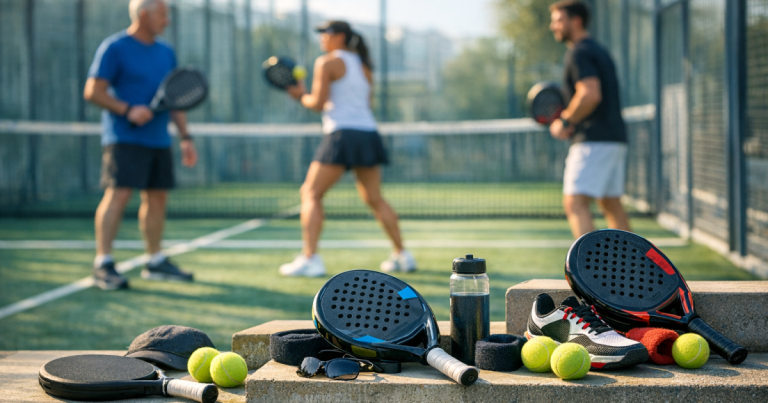
This is also the right time to think about kit, but keep it sensible. A racket can wait until you understand what feels comfortable in your hand. Shoes are the more urgent item because padel involves short sprints, stops, turns and lateral movement. Running trainers can feel unstable on court, particularly when changing direction. For more detail, use the padel shoes guide to understand soles, support and court safety before buying anything.
At this stage, start keeping a tiny practice note after each session. It does not need to be complicated. Write down what went well, what broke down, and one focus for next time. After a month, those notes will show whether your real issue is technique, positioning, fitness, confidence, or simply needing more regular games.
A realistic first-month schedule
Use this as a flexible plan rather than a strict timetable. If work, family or court availability gets in the way, repeat a week rather than rushing ahead.
- Week 1: one beginner lesson or taster session, plus 20 minutes reading the basic rules.
- Week 2: one practice session focused on rallying, serving and using the glass.
- Week 3: one beginner-friendly game, social or club mix-in with real points.
- Week 4: one structured session and one social game, then decide your weekly routine.
If you can only manage one court booking per week, that is still enough to improve. Consistency matters more than cramming. If you can play twice a week, leave at least a little recovery time between sessions while your legs and feet get used to the movement.
Common beginner mistakes to avoid
- Buying a demanding racket too early: a forgiving, comfortable feel is more useful than extra power when your timing is still developing.
- Standing too close to the back glass: give yourself room to judge the rebound instead of getting trapped.
- Trying to smash from poor positions: most early smashes become easy balls for opponents or hit the glass badly.
- Ignoring the net battle: padel is often easier when your pair controls the net, but you need to earn that position with good lobs and approach shots.
- Playing only with much stronger players: it can help sometimes, but too much of it may leave you chasing balls rather than learning patterns.
What progress should feel like after a month
After four weeks, you should not expect to look polished. A good first month looks more like this: you know the main rules, can start points without panic, understand why the lob matters, and can join a beginner game without feeling lost.
You may still misread the glass, mistime volleys and forget where to stand. That is fine. Padel rewards repetition. The important change is that you now have a route into regular play: a club session, a small group of partners, or a weekly booking that keeps you moving forward.
Common questions
Do I need lessons before my first game?
No, but one beginner lesson can save a lot of confusion. It helps you understand serving, scoring, court positioning and how the glass works before bad habits settle in.
How many times a week should a beginner play?
Once a week is enough to build familiarity. Twice a week is ideal if you recover well and keep one session fairly light or structured.
Can I play padel if I have never played tennis?
Yes. Tennis experience can help with timing, but padel has different movement, walls and tactics. Many complete beginners progress quickly with clear coaching and regular games.
What should I wear for my first session?
Wear comfortable sports clothing that lets you move freely. Use stable court shoes if you have them; if not, check the club’s guidance and avoid footwear with poor grip or very raised soles.
When should I buy my own racket?
After a few sessions is usually sensible. Try hire or loan rackets first so you learn whether you prefer a lighter, more forgiving feel or something with more weight and power.
Key takeaways
Your first month should be steady, social and practical. Learn the basic rules, practise controlled rallies, find people at a similar level, and build one repeatable weekly slot. Once you start playing padel regularly, improvement becomes much easier because every game gives you clearer feedback on what to work on next.