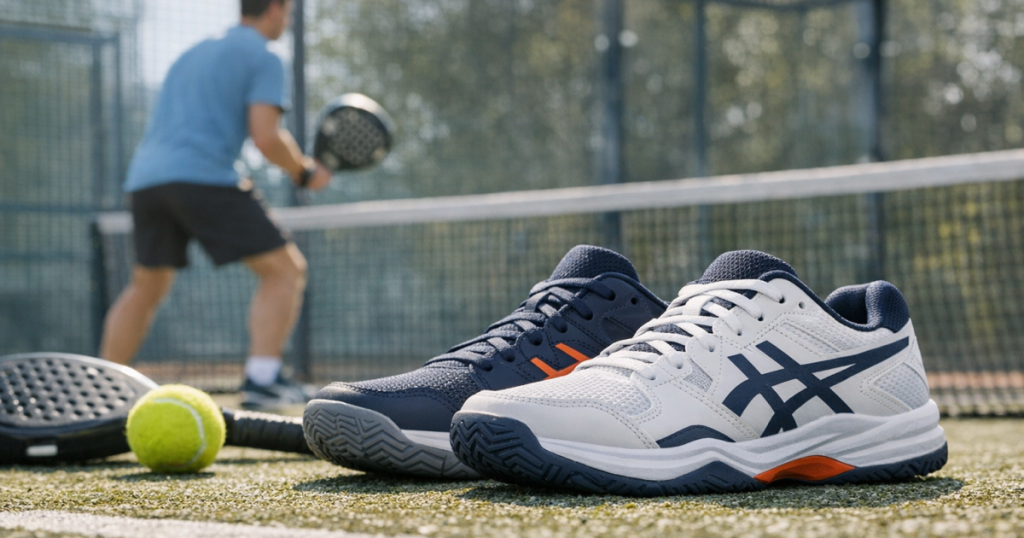
New padel players often buy running trainers first, then wonder why quick changes of direction feel slippy or awkward. This ASICS Gel-Dedicate 8 Padel Shoes review looks at whether a court-specific starter shoe is a smarter first step for regular club sessions, beginner coaching and friendly matches.
In brief
The Gel-Dedicate 8 Padel sits in the sensible starter zone: more padel-appropriate than a general gym shoe, but not as specialist or premium-feeling as higher-end court shoes. For beginners who are starting to play weekly, that can be exactly the point. You want reliable grip, enough lateral support and a fit that does not distract you, rather than paying for features you may not yet notice.
The biggest reason to consider it is simple: padel involves lots of small split steps, sideways pushes, turns towards the glass and short accelerations. A shoe built for court movement is better suited to that pattern than a running shoe, which is mainly designed for forward motion. If you are still learning how to move around the court, it is worth reading the basics of padel lines, walls and player positions alongside thinking about footwear, because better positioning reduces rushed, off-balance footwork.
What the ASICS Gel-Dedicate 8 Padel Shoes are trying to do
The ASICS Gel-Dedicate 8 Padel Shoes are aimed at recreational court players who want grip and support without jumping straight into a top-tier performance shoe. ASICS uses the Gel-Dedicate name across court footwear, so make sure you are looking at the padel version rather than assuming every listing is the same. Retailer titles, outsole photos and colour names can vary, so check the product page carefully before ordering.
For a beginner, the shoe’s job is not to make you faster overnight. It should help you feel more secure when you stop, turn and push off. That matters in padel because a lot of beginner mistakes come from arriving slightly late, hitting while leaning back, or sliding through a recovery step. Good footwear will not fix technique, but it can remove one avoidable source of uncertainty.
Grip and movement on a padel court
Grip is the main reason to choose padel shoes over general trainers. Padel courts in the UK are commonly artificial turf with sand infill, although the exact surface can feel different from club to club. On some courts you get a little natural slide; on others, fresh sand or damp conditions can make traction feel less predictable.
The Gel-Dedicate 8 Padel should be judged on whether it gives controlled traction rather than maximum stickiness. Too much grip can make twisting movements feel harsh, while too little grip leaves you hesitant when changing direction. For a new club player, the sweet spot is a sole that lets you move confidently into volleys, recover after lobs and adjust around the back glass without feeling as though your foot is skating underneath you.
When trying them on, do not only walk in a straight line. Mimic small padel movements: side steps, split steps, a short push towards an imaginary volley and a controlled turn back. If the heel lifts, the forefoot pinches or your foot rolls over the side, the size or shape may not suit you even if the length seems right.
Comfort and fit for weekly club play
Comfort is where starter shoes can quietly win or lose. New players often focus on rackets, but shoes are the bit of kit you notice every point. The Gel-Dedicate 8 Padel is likely to appeal if you prefer a secure, structured court-shoe feel rather than a very soft running-trainer feel.
ASICS shoes often suit players who like a held-in fit, but feet vary. Some players need more room across the forefoot; others want a snug midfoot to feel stable on lateral pushes. If you are between sizes, use the retailer’s current size guidance and check the returns policy before wearing them outside. Try them with the socks you actually use for padel, as thicker sports socks can change the fit noticeably.
For beginners, comfort also includes confidence. If your shoes feel stable, you are more likely to commit to moving forwards for volleys rather than hanging back. That is useful because padel rewards court position and partnership movement as much as clean hitting.
Support: where this shoe makes sense
The strongest argument for the Gel-Dedicate 8 Padel is support for ordinary club movement. Padel is full of short lateral shifts, and a shoe with court-focused structure should feel more controlled than a flexible lifestyle trainer. That support is most noticeable when you are defending in the corners, stepping across for a backhand volley, or adjusting your feet before a bandeja or overhead.
That said, it is still a starter-friendly shoe rather than a specialist competition model. Heavier players, very aggressive movers, or people who play several times a week may eventually want something with a more robust, premium court feel. For the average beginner moving from taster sessions into weekly games, though, the balance is sensible: enough support to be useful without feeling overbuilt.
Durability and value: what to expect
Durability depends heavily on how often you play, the court surface, your movement style and whether you use the shoes only for padel. A player doing one session a week will place very different demands on the outsole and upper than someone training and playing matches multiple times a week. Avoid treating any single review as a fixed lifespan promise.
The practical way to judge value is to watch the wear points. Look at the outsole under the forefoot, the inside edge near the big toe and the upper where your foot bends. If those areas start to smooth out or lose structure, grip and stability can fade before the shoe looks completely worn out. Keeping padel shoes for the court rather than using them for commuting, gym work or everyday errands usually helps preserve the sole pattern for longer.
Where it may not be the right starter pair
The Gel-Dedicate 8 Padel is not automatically the best choice for every beginner. It may be less suitable if you have very wide feet, prefer an ultra-soft underfoot feel, or already play intense, fast-paced matches several times each week. It also may not satisfy players who want a lighter, more premium shoe from the start.
There is also a naming and availability issue to watch. ASICS court shoes can appear in tennis and padel variants, and retailers sometimes use similar product names. Before buying, verify that the listing is specifically for padel and check the outsole images. If you mainly play on one local club’s courts, it is worth asking regular players or coaches what sole type works well there.
How it compares with other beginner-friendly padel shoes
For a first pair, the Gel-Dedicate 8 Padel competes with other entry-to-mid court shoes rather than elite tour-style models. The decision is mostly about fit, movement feel and how serious your playing routine has become.
- ASICS Gel-Dedicate 8 Padel: a sensible starting point if you want a recognised court brand, stable feel and padel-specific use without going straight to a more expensive performance shoe.
- ASICS Gel-Padel Pro 3: another ASICS padel option that some beginners may consider if available in their size; compare fit, sole images and retailer details rather than relying on the name alone.
- Nox AT10 Lux Padel Shoes: a more padel-branded option to research if you are already playing regularly; our Nox AT10 Lux Padel Shoes review looks at that route in more detail.
The main point is not to chase the most technical shoe too early. A new player benefits more from a shoe that fits well and grips consistently than from a premium model that feels stiff, narrow or wrong for their usual court surface.
Best fit for this shoe
The Gel-Dedicate 8 Padel makes most sense for players who have moved beyond a one-off taster session and expect to play regularly. If you have started booking club games, joining coaching sessions, or playing with friends most weeks, a proper padel shoe becomes easier to justify.
It is also a good fit for cautious movers. If you find yourself slowing down before turns because your trainers feel unstable, the extra court focus should be noticeable. Beginners who are still learning to use the walls may also appreciate feeling planted when turning and recovering.
It is less compelling if you only play occasionally and are not sure whether padel will stick. In that case, borrowing suitable court shoes or using clean non-marking court trainers for a first session may be enough. Once you start playing often, dedicated padel footwear becomes one of the more sensible early upgrades.
Small checks before you buy
Before choosing the Gel-Dedicate 8 Padel, run through a few practical checks rather than relying on the product name alone.
- Confirm it is the padel version: check the listing title, outsole image and retailer description.
- Check the return rules: try them indoors first so you can assess fit without marking the sole.
- Wear your padel socks: fit can change if you usually play in thicker sports socks.
- Test lateral movement: side steps and short stops tell you more than walking around the room.
- Think about your court surface: if your club’s courts are sandy, worn or often damp, ask local players what grip works for them.
Verdict: is it the best starter pair?
The Gel-Dedicate 8 Padel is a strong starter candidate rather than a universal answer. Its appeal is that it focuses on the things new padel players actually need: grip, stability and a proper court-shoe feel. It is not the flashiest route, and more frequent or powerful players may outgrow it, but for weekly club play it looks like a sensible first dedicated padel shoe.
If your current trainers feel vague when you change direction, this is the kind of upgrade that can make padel feel more controlled. Pair it with regular court time and a bit of coaching, and you are likely to get more benefit than you would from chasing advanced gear too soon. If you are still working out where to play regularly, our guide to booking a padel court at a UK club is a useful next step.
Helpful questions
Can beginners wear running shoes for padel?
For a first taster session, many players do. For regular padel, court shoes are a better idea because they are built for sideways movement, stopping and turning rather than only forward running.
Are the ASICS Gel-Dedicate 8 Padel Shoes only for outdoor courts?
No. Suitability depends more on the actual playing surface than whether the court is indoors or outdoors. Check the outsole and ask your club what works well on its courts.
Should padel shoes feel tight at first?
They should feel secure, not painful. Your heel should stay in place, your toes should not be cramped, and your foot should not spill over the side during lateral movements.
How often should a beginner replace padel shoes?
There is no fixed timetable. Replace them when grip fades, the outsole smooths out, the upper loses support, or you feel less stable during stops and turns.
Is this shoe better than buying a more advanced model straight away?
For many beginners, yes. A well-fitting starter shoe is usually more useful than an advanced model chosen mainly because it looks more technical or premium.