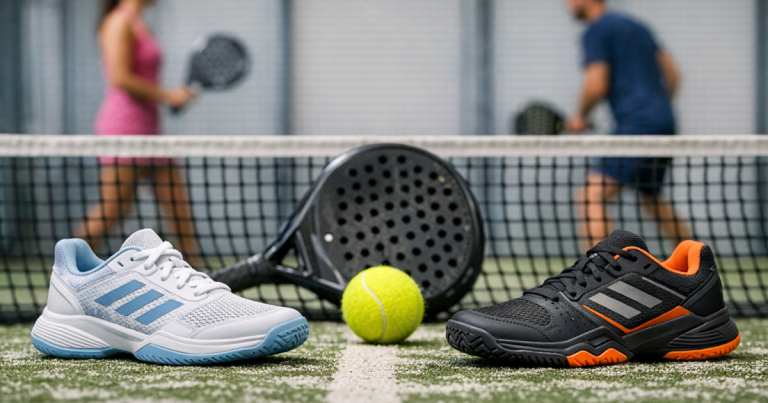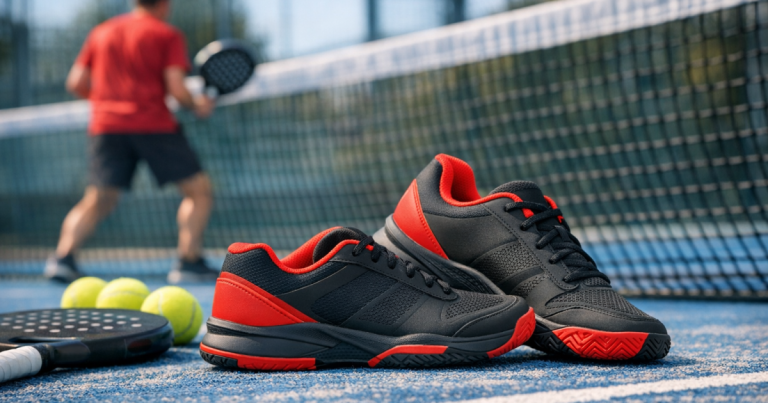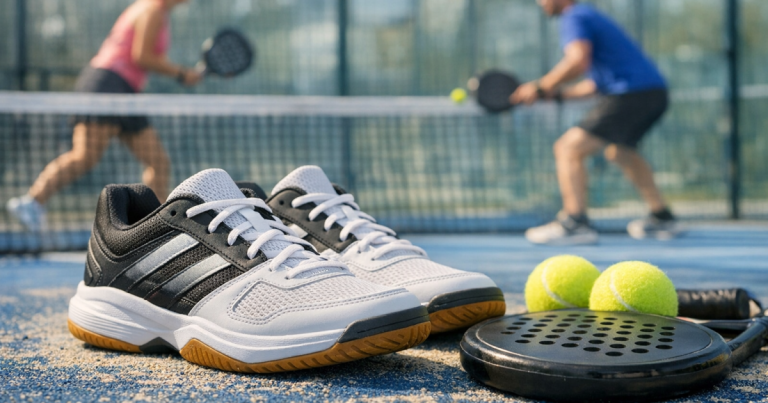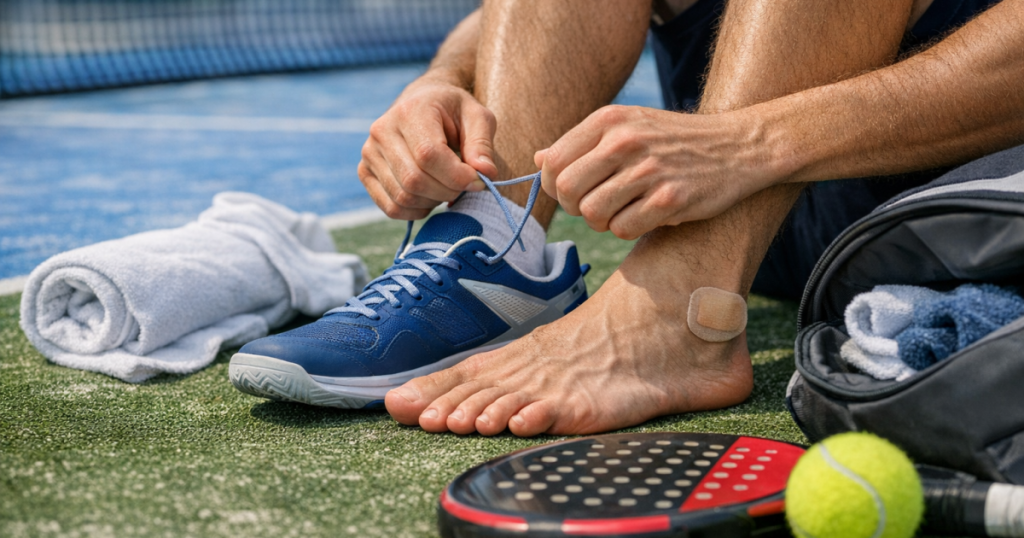
New padel shoes can feel brilliant in the shop and still rub badly once you start lunging, twisting and pushing off on court. The safest way to break in padel shoes is to build up wear gradually, check for hot spots early, and avoid saving their first proper outing for a long club night.
Padel footwork is full of small split steps, side pushes and quick stops, so a shoe that feels fine while walking around the house may still need a sensible bedding-in period. A few short checks before your first match can make the difference between confident movement and spending the evening thinking about your heels.
Treatment of infected blisters, open foot wounds or recurring foot pain should be handled by a qualified healthcare professional in line with NHS guidance and UK clinical standards, especially if you have diabetes or circulation problems.
In brief
- Wear new padel shoes at home first, but do not judge them only by walking comfort.
- Use padel socks you would actually play in, not thin everyday socks.
- Start with short court sessions before using them for a full match or club night.
- Stop when you feel heat, pinching or rubbing; those are early blister warnings.
- Do not try to force a badly fitting shoe to become comfortable.
Step 1: Check the fit before you try to soften them
Breaking in only helps when the shoe is close to the right fit already. It can ease a slightly stiff upper, settle the tongue, and help your foot get used to the shape. It will not fix a shoe that is too short, too narrow, too loose at the heel, or unstable when you move sideways.
Put the shoes on with the socks you normally use for padel. Stand up, bend your knees and shift your weight forward as if preparing to receive serve. Your toes should not be crushed into the end, your heel should not lift with every step, and the widest part of your foot should not feel squeezed by the sidewall.
Then do a few gentle side steps on a clean indoor surface. If your foot slides inside the shoe, that movement can create friction even if the shoe is technically the right length. If you are still deciding what type of outsole and fit makes sense for UK club courts, this guide to choosing padel shoes for sanded courts is a useful next read.
Step 2: Wear them at home in short blocks
Start with two or three short wears around the house, about 20 to 30 minutes at a time. Keep them clean so you can still use them on court, and avoid wearing them outdoors where grit can damage the outsole or mark indoor surfaces later.
The aim is not to stretch the shoe aggressively. You are checking where pressure builds: the heel collar, little toe, top of the foot, arch edge or tongue. If you notice a warm patch or a sharp pressure point, take the shoe off and look at your sock and skin. Redness in the same place twice is a sign to protect that area before court time.
If you have a recognisable padel shoe such as the Asics Gel-Padel Pro 3, still treat it like any new shoe: let the materials settle gradually and judge comfort by how it feels during padel-style movement, not by brand reputation alone.
Step 3: Use the right socks from day one
Socks matter more than many beginners expect. Thin cotton socks can hold moisture and wrinkle, which increases rubbing. A slightly thicker sports sock, or a padel/tennis-style sock with cushioning at the heel and forefoot, usually gives better protection during quick stops.
Try not to change too many things at once. If you test new shoes with old thin socks, then switch to thicker socks for club night, the fit may feel completely different. Use the same sock type during your home wear, first hit and first match so you know what is actually working.
Also check the sock seam around your toes. A bulky seam can create rubbing that feels like a shoe problem. If the shoe only irritates you with one particular pair of socks, the sock may be the real issue.
Step 4: Practise padel movements before playing points
Once the shoes feel fine at home, move to a short court session if you can. Keep it low pressure. Warm up, then do a few minutes of gentle split steps, side shuffles, forward steps to the net and controlled push-offs back towards the glass.
This is the stage where you properly break in padel shoes for the movements that matter. Walking and jogging are not enough because padel creates friction in different places: the outside of the forefoot during lateral pushes, the heel during quick stops, and the top of the foot when you bend low for volleys.
If you are preparing for a first social session, pack blister plasters, spare socks and a small towel with the rest of your kit. The checklist in how to pack a padel bag for club night covers the small extras that can save a session when something starts rubbing.
Step 5: Lace for control, not maximum tightness
Over-tightening new shoes can create pressure across the top of the foot and make your toes work harder. Under-tightening lets your foot slide, which can rub the heel and forefoot. Aim for a secure midfoot feel with enough room to flex naturally.
Before you play, lace the shoes while standing, not sitting. Your foot spreads slightly under body weight, so standing gives a more realistic fit. After five minutes of warm-up, pause and retie if needed. New laces and tongues often settle once you start moving.
If your heel lifts, try using the top eyelets if the shoe has them, but do not pull the whole shoe painfully tight. If heel slip remains obvious after a few sessions, the shape may not match your foot well enough for padel.
Step 6: Protect hot spots before they become blisters
A blister usually starts as friction and heat before it becomes a visible problem. The early warning signs are warmth, tingling, rubbing, pinching or a patch of skin that feels polished. Stop at that stage and deal with it. Playing through the warning signs is what turns a minor irritation into a painful heel or toe blister.
For known hot spots, use a blister plaster, sports tape or a small anti-friction balm before play. Apply it to clean, dry skin and check that it does not bunch up inside the sock. If tape rolls, wrinkles or creates an edge, it can become another rubbing point.
Spare socks are worth carrying. On warm indoor courts, damp socks increase friction and make the skin softer. Changing socks between matches can be a simple fix, especially during longer club nights.
Step 7: Do not make their first outing a two-hour test
The first full session in new shoes should be manageable. A short coaching session, gentle hit or half club night is better than a long evening of matches. If you are rotating on and off court, use the breaks to loosen the laces, check your heels and change socks if your feet feel damp.
A sensible first-week plan might look like this:
- Day 1: 20 to 30 minutes at home with your playing socks.
- Day 2: Another short home wear, including gentle side steps.
- Day 3 or 4: 20 to 30 minutes on court with warm-up movements and light hitting.
- Next session: One normal match or a shorter club night, with blister protection packed.
- After that: Use them normally if there are no repeated hot spots.
If the same area rubs every time, do not keep hoping it will disappear. Some shoes soften, but a consistent pressure point usually means a fit mismatch, sock issue or lacing problem.
Step 8: Let shoes dry properly between sessions
Damp shoes are more likely to rub and can feel less supportive. After playing, loosen the laces, pull the tongue forward and let the shoes air dry at room temperature. Avoid putting them directly on a radiator, as high heat can affect materials and shape.
Remove loose sand or court grit from the outsole and upper once dry. It keeps the shoe cleaner and helps you spot wear, rubbing marks or damage early. For broader kit habits between matches, the advice on caring for padel gear between matches pairs well with this routine.
Common mistakes that cause blisters
- Wearing brand-new shoes straight into match play: your feet get no chance to adapt before the highest-friction movements start.
- Using everyday socks: they can bunch, hold sweat and offer less protection at the heel and forefoot.
- Ignoring early heat: hot spots are the warning stage, not something to push through.
- Lacing too loosely: sliding inside the shoe creates repeated friction.
- Lacing too tightly: pressure across the top of the foot can cause discomfort and altered movement.
- Assuming all court shoes fit the same: padel shoes vary in shape, heel hold and forefoot feel, even when the size label matches.
Things readers ask
How long do padel shoes take to break in?
Many shoes feel more settled after two or three short wears and one light court session. Stiffer pairs may take a little longer, but they should not cause sharp pain or repeated rubbing.
Should padel shoes feel tight at first?
They should feel secure, not tight. A snug midfoot is useful for lateral movement, but crushed toes, numbness or pinching are signs the fit is wrong.
Can I stretch padel shoes to stop blisters?
Minor softening happens naturally with wear, but stretching is not a reliable fix for a poor fit. If the shoe is too narrow or short, changing socks or lacing may help slightly, but it will not transform the shape.
Is it better to wear two pairs of socks?
Some players like the extra cushioning, but two pairs can make shoes too tight and increase heat. A good sports sock that fits smoothly is usually the better starting point.
What should I do if I get a blister during club night?
Stop, clean and cover the area with a blister plaster if the skin is intact. If it is open, painful or looks infected, end the session and get appropriate healthcare advice.
Key takeaways
New padel shoes should become comfortable through gradual use, not through suffering. Start with short home wears, use proper sports socks, test padel-specific movements before match play, and protect any hot spots as soon as they appear.
If a shoe keeps rubbing in the same place after several careful sessions, trust the evidence from your feet. Comfort and secure movement matter more than forcing a pair to work just because they look right or came well recommended.