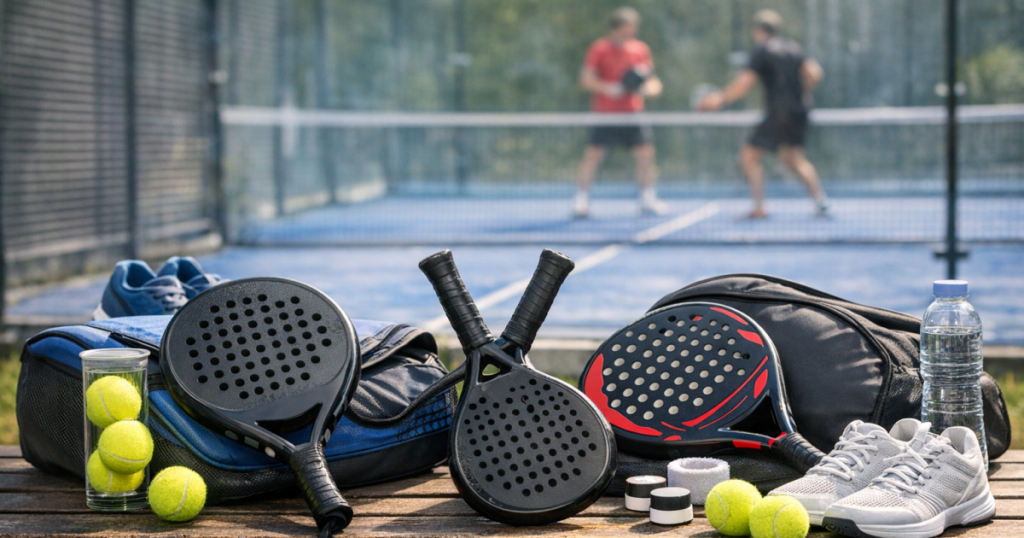
For a first evening at a padel club, club racket hire is usually the simplest choice: you can play properly, avoid rushing a purchase, and learn what feels comfortable in your hand. Buying can still make sense if you already know you will play regularly, but most new players benefit from borrowing or hiring once or twice before choosing a racket.
What to know first
The short answer is: hire for your first session, consider buying after a few games, and only buy immediately if you have a clear reason. Padel rackets vary in shape, balance, weight, grip feel and forgiveness. Those differences are difficult to judge before you have felt the ball on the racket face, played a few volleys, and handled glass rebounds under a little pressure.
A hired club racket will rarely feel like a perfect long-term match, but it can be good enough to learn the court, scoring, basic positioning and how padel differs from tennis or squash. At this stage, the main goal is not to own ideal equipment. It is to enjoy the session, avoid avoidable frustration, and work out whether you want to come back next week.
If you are also sorting shoes, balls and a few small extras, the padel starter kit checklist for first-time players is a useful companion because it separates essentials from nice-to-haves.
When club racket hire makes the most sense
Hiring is the safer route when you are still discovering the game. It suits first-time players, casual groups, work socials, holiday sessions and anyone who has booked a court before knowing whether padel will become a regular habit.
It is also useful if you are playing at a club night where standards vary. You may find that your first match is less about big shots and more about keeping the ball in play, learning when to let the ball come off the glass, and communicating with a partner. A forgiving general-use racket from the club is usually enough for that.
Choose hire if these apply
- You have played fewer than three sessions and do not yet know your preferred style.
- You are not sure how often you will play over the next month.
- You are trying padel with friends and may not continue as a regular player.
- You want to feel different rackets before spending money.
- You are travelling to the club by public transport and want less to carry.
Before the session, check whether the club has enough rackets available, whether you need to reserve one, and when it must be returned. Some venues include hire with beginner sessions; others handle it separately at reception. The important point is to ask before court time begins, not five minutes after your booking has started.
When buying early can be sensible
Buying your own racket can make sense if you are already committed to playing regularly. For example, if you have booked a beginner course, joined a club WhatsApp group, or agreed to weekly games with friends, owning a racket removes one small layer of faff each time you play.
It can also help with consistency. When you use the same racket each week, you start to understand how it reacts on volleys, lobs, blocks and slower defensive shots. That consistency can be reassuring when you are learning timing and control.
Still, early buying should be sensible rather than ambitious. Many beginners are better served by a comfortable, forgiving racket than by a stiff, advanced power model. If you are unsure, read about whether beginners should choose a control or power padel racket before assuming that more attacking equipment will help your game.
Buying is more reasonable if these apply
- You expect to play at least weekly for the next month or two.
- You have tried at least one club racket and know what felt awkward or comfortable.
- You want a consistent grip size, balance and feel from session to session.
- You dislike relying on reception stock being available.
- You are comfortable starting with a beginner-friendly racket rather than chasing advanced features.
The real trade-off: convenience now or confidence later
The choice is not simply “hire is cheap” and “buying is expensive”. The better way to think about it is convenience versus information.
Hiring gives you information. You learn whether you enjoy padel, how often you can realistically play, and what type of racket feels manageable. That can prevent an impulse purchase that looks good online but feels unforgiving on court.
Buying gives you convenience. You turn up with your own kit, know what you are playing with, and avoid checking availability each time. The downside is that you might buy before understanding your needs, especially if you choose based on looks, brand familiarity or what a much stronger player uses.
For most first sessions, information is more valuable than ownership. After two or three outings, the balance may change. By then you will have a clearer view of your playing plans, your budget, and whether a racket feels too head-heavy, too hard to control, or too light in contact.
Practical checks before you decide
Ask the club three quick questions
- Do I need to book a racket in advance?
- Is the hire racket suitable for beginners?
- What happens if the grip is worn or the racket feels damaged?
These questions keep things simple. You are not asking the club to provide a custom fitting; you are checking that you will have a usable racket and no surprise delay at reception.
Notice how the racket feels during play
- Does it feel easy to manoeuvre at the net?
- Can you block the ball back without the racket twisting too much?
- Do you feel confident playing soft lobs and controlled volleys?
- Does your hand feel relaxed on the grip, or are you squeezing too hard?
Do not judge the racket only by your best shots. Beginners often remember the one clean smash and ignore twenty awkward defensive touches. A good early racket should help you keep rallies going, not just reward the occasional big swing.
Be realistic about cost and frequency
Rather than using a fixed number of sessions as a rule, think about your own pattern. If you are likely to play once and then pause for months, hire is sensible. If you are booking weekly games and enjoying them, buying becomes easier to justify. Ask the club what hire costs, then compare that with how often you expect to play and how soon you would want your own racket anyway.
Simple etiquette when using a hired racket
Hired equipment belongs to the club and may be needed by the next player. Treat it as part of good club behaviour, not just a transaction.
- Collect it before your court time starts so you do not hold up the group.
- Do not scrape it against the glass, fence or court surface out of frustration.
- Return it promptly after the session rather than leaving it in your bag.
- Tell staff if the grip is slipping, the frame looks cracked, or the racket feels unsafe to use.
- Avoid swapping rackets mid-game without checking with the person who hired or borrowed it.
This matters at beginner club nights because smooth organisation helps everyone relax. Turning up prepared, sharing space well and returning kit on time all make it easier to get invited back into games.
A sensible first-month approach
If you want a balanced route, hire for session one, borrow or hire again for session two, then decide after you have played with at least a little match pressure. Use those first games to notice what actually affects your enjoyment: late preparation, footwork, communication, scoring, or the racket itself.
By the third or fourth session, you may know enough to make a calmer decision. If the game has clicked and you are booking regularly, start looking for a forgiving beginner racket. If you are still uncertain, keep hiring and put your attention into lessons, social games and learning the rules.
For a broader route into regular play, the first month padel plan gives a clear way to build confidence without trying to fix everything at once.
Helpful questions
Can I use a tennis racket for my first padel session?
No. Padel uses a solid, stringless racket designed for the sport. Use a club racket or a proper padel racket rather than turning up with tennis equipment.
Will a hired racket hold me back as a beginner?
Usually not for the first few sessions. At beginner level, positioning, timing and shot choice matter far more than having your own racket.
Should I buy the same model I hired at the club?
Only if it genuinely felt comfortable and suited your early game. Ask what type of racket it is, then use that as a reference point rather than an automatic choice.
What if the club racket feels uncomfortable?
Tell reception before you start, if possible. A worn grip or damaged racket can make the session less enjoyable, and clubs usually prefer to know when equipment needs attention.
How many sessions should I play before buying?
Many beginners benefit from two or three sessions first. That is usually enough to tell whether you will play regularly and what kind of racket feel you prefer.
What stands out
For most first padel sessions, hiring is the calmer, lower-pressure choice. It gets you on court without forcing a rushed purchase, and it gives you valuable experience before you spend money. Buying becomes sensible once padel is becoming part of your routine and you have a clearer idea of what feels comfortable.
The best decision is the one that helps you keep playing. If hiring removes friction for session one, hire. If owning a racket makes it easier to commit to weekly games, buy thoughtfully and keep the focus on control, comfort and consistency.
Quick Buying Links
Club Racket Hire
For a first evening at a padel club, club racket hire is usually the simplest choice: you can play properly, avoid rushing a purchase, and learn what feels comfortable in your hand.
Buying for First Padel Sessions
Worth considering if its strengths better match your needs.