Your first few club sessions are easier when your padel starter kit is simple, comfortable and not overloaded with things you barely use. You do not need a premium racket or a huge tour bag on day one. Focus on kit that helps you move safely, keep the ball in play, stay hydrated and arrive organised enough to enjoy the session.
What to know first
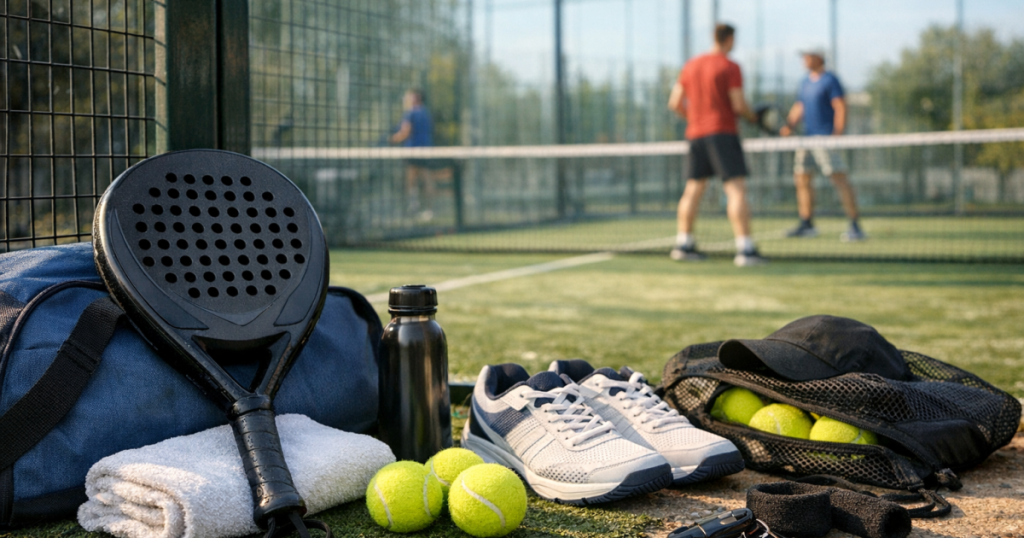
For a first-time player, the essentials are a racket, suitable court shoes, padel balls, breathable clothing, water and a small way to carry everything. Everything else is useful only if it solves a real problem you have already noticed, such as sweaty hands, sore feet, or struggling to keep your towel and keys together between games.
If you are playing at a club, check what is included with your booking. Some venues lend rackets, sell balls at reception or require a particular shoe sole for their courts. That one quick check can save you from buying too much too soon.
The core kit you actually need
1. A beginner-friendly racket
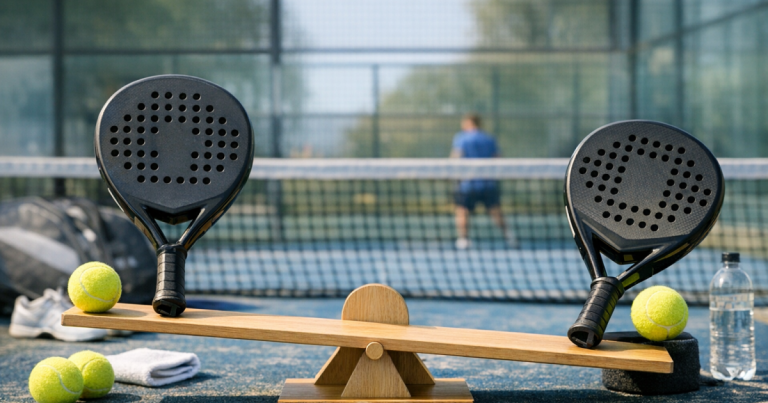
A first racket should help you control the ball rather than punish every off-centre hit. Many new players do well with a round or teardrop shape, a comfortable grip and a weight that feels manageable during a full session. Try to avoid choosing purely because a racket looks powerful or is used by an advanced player.
If you are not sure what style fits your game, read whether beginners should choose a control or power padel racket before committing. The short version is that control usually helps newer players build rallies, while power becomes more useful once timing, positioning and technique are more settled.
2. Padel balls
Padel uses pressurised balls that look similar to tennis balls but are designed for the sport. For casual beginner sessions, one fresh tube is usually enough for a group, though regular players often keep a spare tube in their bag. A recognisable option is Head Padel Pro, but the key thing is to check that the balls are suitable for padel and still have a good bounce.
Do not rely on old, soft balls if you are trying to learn clean technique. Dead balls can make rallies feel slower and encourage over-hitting, which is not helpful when you are still learning touch and positioning.
3. Proper court shoes
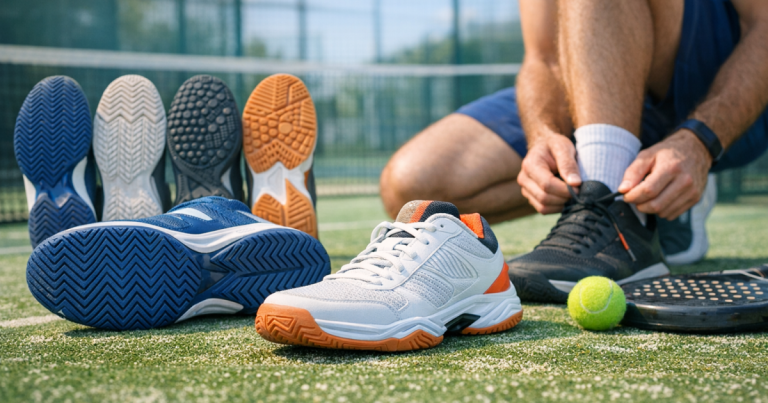
Shoes matter more than many beginners expect. Padel involves short sprints, quick turns, side steps and sudden stops, so running trainers are not ideal on a court. Look for good lateral support, a sole suited to the playing surface and a secure fit that does not let your foot slide inside the shoe.
Some padel and tennis shoes are designed with clay-style or all-court soles, but clubs may have preferences depending on the surface. A shoe such as Asics Gel-Padel Pro 3 is an example of a named padel model you might see when browsing, but always prioritise fit, support and court suitability over the logo. For a fuller breakdown, use this padel shoes guide to soles, support and court safety.
4. Comfortable sports clothing
Wear light, breathable clothing that lets you lunge, rotate and reach overhead without feeling restricted. You do not need padel-specific clothing for your first match, but avoid heavy cotton layers that stay wet and uncomfortable. A simple sports top such as Adidas Club 3-Stripes Tee is the kind of practical item many players use, though any comfortable training top can do the job.
In cooler months, bring a light layer for before and after the game rather than playing in something bulky. Indoor courts can still feel warm once rallies start, while outdoor courts in Britain can change quickly with wind and temperature.
5. Water, towel and grip basics
Bring more water than you think you need, especially for a 90-minute booking or a social mix-in where you may play several short matches. A small towel is useful for hands, face and racket handle between games.
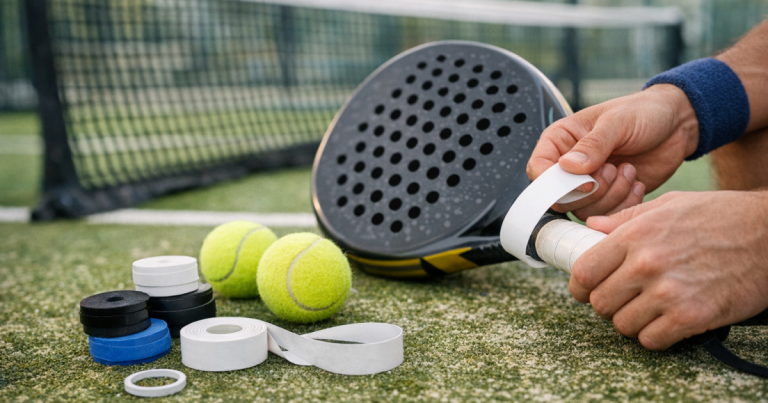
If your hand slips on the racket, an overgrip or wristband can help, but it is fine to wait until you know whether sweat is an issue for you. Many beginners buy accessories too early, then realise their main problem was simply learning to relax their grip.
Useful extras, but not day-one essentials
- Small padel bag or backpack: helpful once you own a racket, shoes and spare clothing, but not vital if you are borrowing kit.
- Overgrips: useful for comfort and sweat control, especially if the handle feels too thin or slippery.
- Cap or visor: worth packing for outdoor courts, low sun or bright floodlights.
- Light warm-up layer: useful before games and when waiting between rotations.
- Spare socks: easy to forget, surprisingly welcome after a damp or intense session.
- Simple first-aid basics: plasters can be useful for small blisters, but ongoing pain should not be ignored.
A compact setup is usually better than carrying a bag full of unused extras. Once you know how often you play, what your club provides and what annoys you during sessions, upgrades become much easier to judge.
A sensible padel starter kit checklist
- Beginner-friendly racket, borrowed or owned.
- One tube of padel balls for your group, unless the club provides them.
- Court-appropriate shoes with good side-to-side support.
- Breathable top, shorts, skirt, leggings or tracksuit bottoms that allow free movement.
- Water bottle large enough for the full booking.
- Small towel for hands and face.
- Light layer for arriving, waiting or cooling down.
- Phone, keys and booking details kept safely off court.
- Optional overgrip or wristband if you struggle with sweat or handle comfort.
- Bag or backpack big enough to keep clean clothing separate from shoes where possible.
Checks before you leave home
Confirm the time, court type and whether you are expected to bring balls. If it is your first organised match, also check the format: some social sessions rotate partners, while others keep fixed pairs for the full booking. Knowing that in advance makes the evening feel less rushed.
Take five minutes to label or recognise your racket, water bottle and ball tube. Beginner sessions often have several similar items on the bench, and it is easy to mix them up when everyone changes ends or rotates courts.
If you are using borrowed equipment, arrive a little early so you can sort the grip, test the racket weight and ask where to return it. The less admin you leave until the start time, the more relaxed your first warm-up will feel.
Common beginner packing mistakes
- Buying the most powerful racket first: it can make timing harder and slow down consistency.
- Wearing running shoes: they are built for forward movement, not repeated lateral changes on court.
- Forgetting water: social padel can be more tiring than it looks because rallies restart quickly.
- Carrying too much: a crowded bag makes it harder to find the few things you actually need.
- Using worn-out balls: poor bounce changes the rhythm of rallies and can make practice less useful.
A smaller but common mistake is packing for the drive to the club rather than the full session. New shoes that feel fine at home can rub once you start stopping and turning, so wear them briefly before match night if you can. If you are prone to blisters, pack plasters or a spare pair of socks rather than hoping the problem disappears mid-game.
Beginners also forget that the bench area can get messy when four players rotate, change ends and grab drinks at the same time. Keep valuables in one zipped pocket, separate clean clothes from damp kit and avoid loose keys, earbuds or jewelry rolling around the bottom of your bag. A simple “court pocket” for your phone, keys and wallet makes it much easier to leave the playing area quickly when the next booking arrives.
For outdoor courts, do not assume the weather at home matches the court conditions. Low sun, wind or a sudden temperature drop can change what feels comfortable, especially if you spend time waiting between games. A cap, light layer or dry top may seem unnecessary when you leave home, but they can make the session feel much smoother without adding much bulk.
Build your kit around how often you play
If you are trying padel once, borrow a racket, wear suitable court shoes if you have them, and keep spending low. If you have booked a few sessions, prioritise shoes and a racket that feels comfortable. If you are joining regular club nights, a bag, spare grips and a small towel become more useful.
Your kit should support your progress, not create pressure to play perfectly. A simple, well-chosen setup lets you focus on the basics: getting into position, using the glass, keeping score and enjoying longer rallies. If you want a broader route into regular play, this first month plan for starting padel is a helpful next step.
FAQ
Do I need my own racket for my first padel session?
No. If your club offers hire or loan rackets, borrowing one is a sensible way to start. Buy your own once you know you enjoy playing and have a feel for the weight and shape you prefer.
Can I play padel in normal trainers?
It is better to use court shoes with lateral support. Normal running trainers can feel unstable during side steps and quick changes of direction, especially on sand-dressed or artificial surfaces.
How many balls should beginners bring?
One fresh tube is usually enough for a casual group session. Bring an extra tube if you are playing longer, organising the booking, or know the club does not provide balls.
Should I buy a padel bag straight away?
Not necessarily. A normal sports backpack is fine at first. A padel bag becomes more useful once you regularly carry a racket, shoes, spare clothing, towel and accessories.
What is the first upgrade worth making?
For most beginners, shoes come before accessories. Good court footwear helps comfort, movement and confidence, while extras such as grips, wristbands and larger bags can wait until you know what you need.
Main lessons
Start with the essentials: racket, balls, court shoes, comfortable clothing, water and a towel. Borrow where you can, avoid buying advanced kit too early and let your regular playing habits guide future upgrades. The right first setup is not the most expensive one; it is the one that helps you turn up relaxed, move well and enjoy learning the game.