Your first padel racket should help you keep the ball in play, learn the glass, and enjoy longer rallies. The Control vs Power Padel Rackets decision matters because the wrong type can make the game feel harder than it needs to be. Beginners often assume more power means faster progress, but in early club sessions, a forgiving racket usually gives you more confidence, better timing, and fewer cheap errors.
That does not mean every new player needs the softest, roundest racket available. It means you should understand what control and power really feel like on court before choosing a direction.
The short version
- Choose control if you are new to racket sports, still learning walls, or want a larger margin for error.
- Choose balanced if you have some tennis, squash, badminton, or racket sport background and want room to grow.
- Be careful with pure power if you are still inconsistent with contact, positioning, or shot selection.
- Shape, balance and weight matter together; a racket is not powerful or controlled because of one feature alone.
- Comfort comes first. A racket that feels too heavy, stiff, or head-heavy can slow your learning.
What “control” means in a padel racket
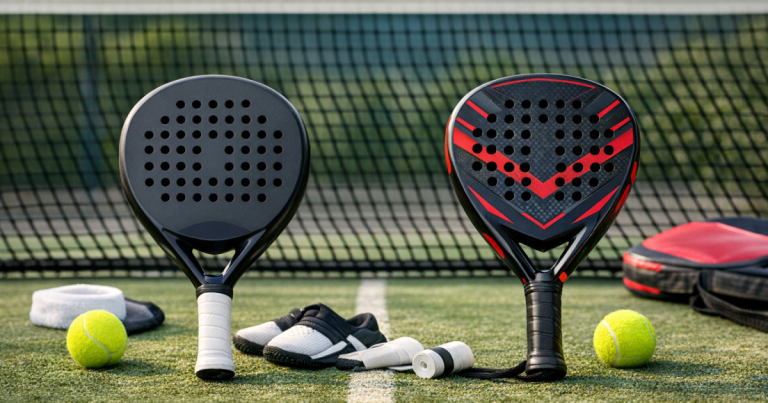
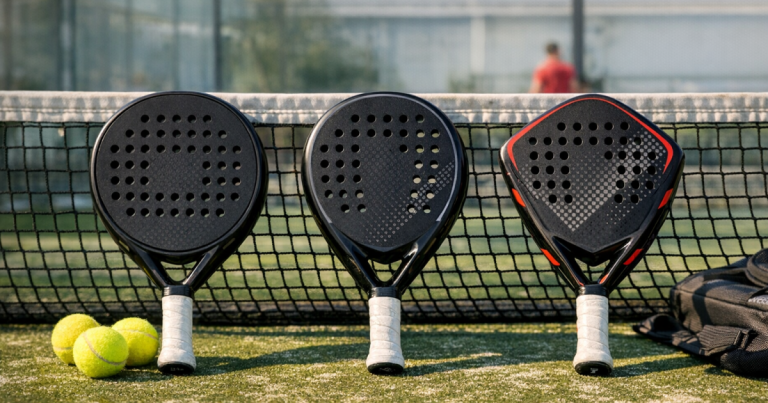
A control-focused racket is designed to make clean contact easier. In practice, that usually means a rounder shape, a more central sweet spot, and a balance that feels closer to your hand rather than pulled towards the head of the racket. The result is a racket that feels easier to manoeuvre during blocks, volleys, lobs, bandejas and defensive shots off the back glass.
For beginners, control is not about playing slowly. It is about knowing where the ball is likely to go when you make a slightly imperfect swing. Padel is full of rushed moments: a ball drops after hitting the side glass, a volley comes at your feet, or you are trying to lob while moving backwards. A forgiving racket helps you survive those moments without needing perfect technique.
Rackets such as Nox X-One Evo and Head Evo Speed are often used as recognisable examples of beginner-friendly, forgiving designs. Do not assume every yearly version feels identical, though; always check the current shape, stated weight range, balance and feel before deciding.
If you want a fuller explanation of how shape, weight and balance interact, the site’s guide to padel racket shape, weight and balance is a useful next step.
What “power” really adds
A power-focused racket helps the ball leave the face faster when you strike well. These rackets are often diamond-shaped or higher balanced, with a smaller sweet spot positioned higher up the face. They can reward aggressive smashes, viboras, high volleys and fast transitions at the net.
The catch is that power rackets tend to ask more from the player. If your timing is late, your contact point varies, or you hit too many balls from the wrong body position, the racket may amplify mistakes rather than solve them. Shots can fly long, drop short, or feel unstable when blocking hard balls.
Advanced power frames such as Adidas Metalbone and Babolat Technical Viper are good examples of rackets that make more sense once your technique, footwork and tactical choices are already settling. They are not “bad” beginner rackets because they are high quality; they are simply less forgiving for players still building reliable contact.
This is why many early-stage players improve faster with a racket that lets them place the ball, reset the rally and defend calmly. Power is useful, but only when you can control when and how you use it.
Why beginners often overvalue power
Power is easy to notice. A hard smash looks impressive, and it is tempting to choose a racket based on the shots you want to hit in six months rather than the shots you need to hit this week. Club padel, especially at beginner and improver level, is usually won through consistency, positioning and smart use of space rather than outright winners.
A control racket helps with the parts of the game that appear in almost every rally:
- Returning serve without floating the ball too high.
- Defending after the glass when the bounce is unfamiliar.
- Lobbing under pressure to recover court position.
- Blocking volleys rather than swinging wildly at fast balls.
- Keeping the ball low so opponents cannot attack easily.
Those skills build the foundation for attacking later. Once you can consistently make opponents play one more ball, extra power becomes far more useful.
The middle ground: balanced rackets
Many beginners do not need to choose an extreme. A balanced racket can give you enough forgiveness for learning while offering a bit more punch as your timing improves. These rackets often have a teardrop shape, medium balance, or a feel that sits between soft control and stiff attacking response.
This can be a smart route if you already play tennis, squash or badminton. You may have transferable hand-eye coordination, split-step habits, or volley instincts, but padel still has its own demands. The walls, underarm serve, smaller court and slower tactical rhythm change how you use the racket. If you are crossing over from another sport, the guide to padel, tennis and squash differences explains why old habits can help in some situations and hinder in others.
A balanced racket is also worth considering if you are already playing weekly and feel comfortable defending basic rallies. It gives you more room to develop attacking shots without jumping straight into a demanding, head-heavy frame.
How racket feel changes common beginner shots
Serve and first volley
A control racket makes it easier to place the serve and prepare for the next ball. Since padel serves are underarm and must be hit with control rather than raw pace, a forgiving racket is often more valuable than a powerful one. A power racket may add speed, but speed alone does not help if the serve sits up or misses the box.
Lob
The lob is one of the most important beginner shots. A control racket usually helps you lift the ball with a calmer swing and better depth. With a stiffer, head-heavy power racket, rushed lobs can become short or sail long if your contact is inconsistent.
Volley
At the net, manoeuvrability matters. Beginners often need to react quickly rather than swing big. A racket that feels light enough to move into position can help you block and guide volleys. Too much head weight can make late reactions even later.
Smash
This is where power rackets shine, but the beginner smash is often not a clean finishing shot yet. Many newer players would gain more by learning when not to smash, how to place overheads, and how to recover after the ball comes back off the glass.
Signs you should lean towards control
- You are regularly missing returns or defensive shots by a small margin.
- You feel rushed when the ball comes off the back or side glass.
- Your volleys are more blocks than attacking punches.
- You are still learning where to stand during rallies.
- Your arm gets tired quickly with heavier or head-heavy rackets.
- You want a racket that helps you play more often with fewer frustrating errors.
For most first-time players, this is the sensible starting point. It does not limit your future; it gives you a platform to improve.
Signs you might be ready for more power
- You already make consistent contact in the centre of the racket face.
- You can defend with the glass without panicking.
- You understand when to lob, when to block and when to attack.
- You have enough technique to generate controlled acceleration.
- You play regularly enough to adapt to a smaller sweet spot.
Even then, you do not have to jump to the most aggressive frame. Moving from a round control racket to a slightly higher-balanced teardrop racket is often a smoother step than going straight to a demanding diamond shape.
Common mistake: choosing the racket your best shot wants
One of the easiest traps is choosing a racket for your favourite shot instead of your weakest phase of play. If you occasionally hit a strong smash but lose points on returns, lobs and glass defence, a power racket may help the part of your game that already works while making the unreliable parts worse.
A better test is to ask: which racket helps me stay in the rally when I am under pressure? Beginner progress usually comes from reducing unforced errors, not from adding a handful of spectacular winners.
If you are still at the stage of working out weight, grip size, budget and basic racket types, start with the broader guide on choosing your first padel racket before narrowing the choice to control or power.
What to check before you commit
Try to demo a racket if your club or retailer allows it. Ten minutes of hitting can tell you things a product page cannot: whether the racket feels sluggish, whether mishits twist in your hand, and whether you can defend comfortably when the rally speeds up.
Pay attention to these details:
- Weight: many adult rackets sit roughly in the mid-300 g range, but the stated range varies by model and version. Check the actual racket where possible.
- Balance: head-heavy rackets can feel more powerful but harder to move quickly.
- Sweet spot: a larger, central sweet spot is usually kinder for beginners.
- Surface feel: softer-feeling rackets can help with comfort and depth control, while firmer rackets may feel more direct.
- Your schedule: if you play once a month, forgiveness matters more than long-term performance ceiling.
Also remember that balls, shoes and court conditions affect feel. A racket that seems lively with fresh balls on a warm indoor court may feel different outdoors in cooler UK weather.
Main lessons
For most beginners, control should come before power. That does not mean choosing the dullest racket or avoiding attack forever. It means giving yourself a racket that supports the skills you use most: returning, defending, lobbing, volleying and keeping rallies alive.
If you are brand new, start with a forgiving round or balanced racket. If you have racket sport experience, a middle-ground design may give you enough help without feeling too limited. If you are drawn to a powerful model, be honest about whether your technique is ready for it.
The best beginner racket is not the one that hits the biggest winner in a warm-up. It is the one that helps you make better decisions, contact the ball cleanly, and enjoy coming back for the next session.