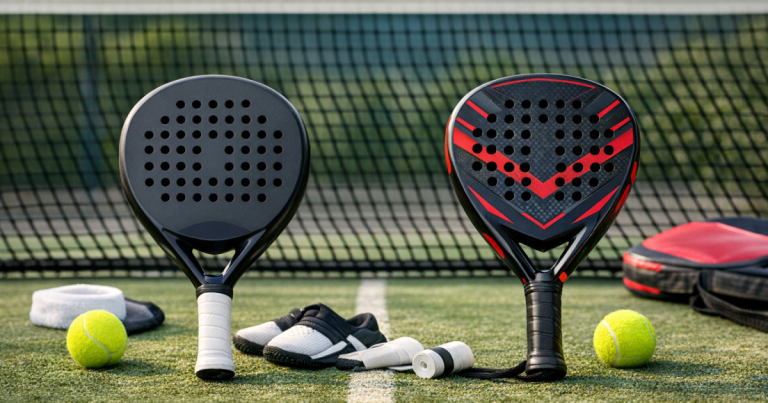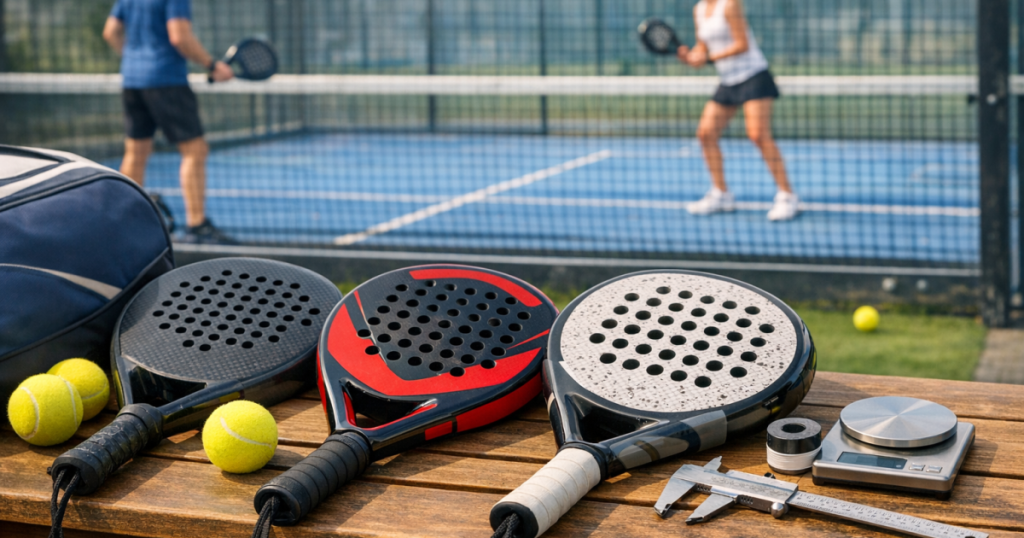
Most club players never need to measure their racket, but knowing the basic padel racket rules helps you avoid awkward questions before a match. The good news is simple: almost every modern adult racket sold by recognised padel brands is made to fit the official limits. The details only become important when a racket is unusually shaped, heavily modified, damaged, or being used in a more formal club event.
At a glance
- A standard padel racket has no strings and must stay within maximum size limits.
- The usual official maximums are 45.5 cm long, 26 cm wide and 38 mm thick.
- A wrist strap is part of the rules and should be used during play.
- Specs such as weight, balance, shape and foam affect feel more than legality.
- For everyday club play, comfort and control usually matter more than raw power.
If you want a deeper breakdown of the performance side, the separate guide to padel racket specs explained covers shape, weight, balance and foam in more detail. This page focuses on what is allowed, what is sensible, and what a beginner or early club player should actually care about.
The official size rules in plain English
Padel rackets are governed by maximum dimensions rather than by one fixed design. Under the commonly used international standard, the racket must be no longer than 45.5 cm, no wider than 26 cm and no thicker than 38 mm. The hitting area is solid rather than strung, with holes through the face.
You are unlikely to find a normal adult racket from a mainstream padel brand that exceeds those limits. The rules matter more if you are using a very old racket, a non-standard novelty racket, a junior racket in an adult competition, or a racket that has been altered after purchase.
The racket face should be flat enough for fair play and should not include additions that create an unfair or unsafe effect. Textured finishes are common on modern rackets, and many players like them for a little extra bite on sliced shots. For club play, that is normally accepted as long as the racket is a standard padel product and has not been modified in a strange way.
Holes, face texture and the hitting surface
A padel racket must have holes in the hitting surface. These are not decorative: they are part of the sport’s equipment design and help distinguish padel rackets from other bat-and-ball equipment. Official rules include guidance on hole size and placement, especially in the central hitting area.
As a player, you do not need to count the holes before social doubles. A sensible rule of thumb is to use a racket designed and sold specifically for padel, not a beach tennis racket, platform tennis paddle, training bat or improvised alternative. If the racket is being used in a league, graded box match or club tournament, ask the organiser before playing with anything unusual.
Surface texture can be confusing for beginners because some rackets feel smooth while others have a sandy or rough finish. Texture itself is not automatically a problem. The concern would be an added layer, damaged surface, sharp edge or loose material that changes the racket beyond normal use or risks marking the ball excessively.
The wrist strap is not optional in practice
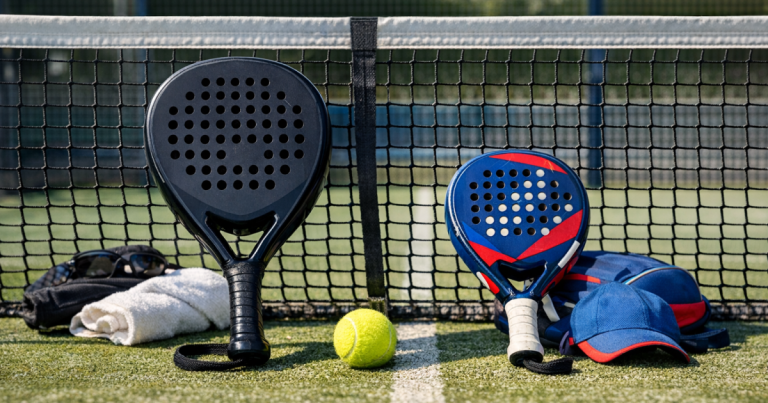
Padel rackets have a safety cord or wrist strap attached to the handle. In official play, the strap is expected to be used. In ordinary club matches, it is also good etiquette: padel is played close to partners, opponents, glass and metal mesh, so a dropped or thrown racket can be dangerous.
Before each match, check that the cord is firmly attached and not fraying. If it is loose, damaged or missing, do not ignore it. Some clubs may still let you knock up casually, but it is a poor habit and could cause issues in organised play. A replacement cord or a repair from a racket specialist is a better solution than tying on a random piece of string.
Weight: legal is easy, comfortable is harder
Official rules do not create the same simple weight limit that they do for length, width and thickness. That means weight is mostly a playing-choice issue rather than a legality issue. Many adult rackets sit somewhere around the mid-300 g range, but the way that weight is distributed can make two rackets feel very different.
For newer club players, a lighter or medium-weight racket is usually easier to manage through quick volleys, blocks and defensive lobs. A heavier racket can feel solid on volleys and smashes, but it may also tire your arm if your timing is still developing. If your shoulder, elbow or wrist feels overloaded after normal play, the answer is not always technique alone; racket weight, balance and grip setup can contribute.
Do not treat the printed weight as a complete truth once you add overgrips, protectors or dampening accessories. Small additions can change the feel in your hand. That does not usually affect whether the racket is permitted at club level, but it can change how quickly you react at the net.
Shape and balance: why legal rackets feel so different
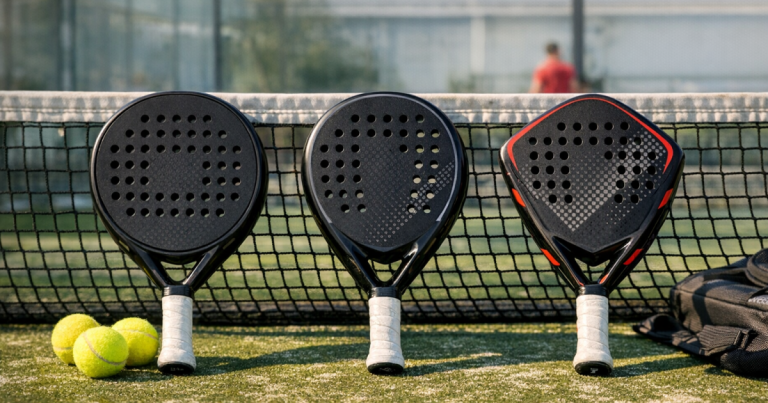
Most adult padel rackets fall into three broad shape families: round, teardrop and diamond. All can be legal. The difference is how they feel during rallies.
- Round rackets usually have a more forgiving sweet spot and a steadier feel, which suits many beginners and control-focused players.
- Teardrop rackets sit between control and power, often giving a little more attacking help without feeling extreme.
- Diamond rackets tend to feel more top-heavy and powerful, but they can be less forgiving when contact is late or off-centre.
Balance is just as important as shape. A head-heavy racket can make overheads feel more forceful but may slow down reactions in quick exchanges. A lower-balance racket usually feels easier to manoeuvre, especially when defending low balls near the glass. For early-stage club players, the most useful test is not whether a racket feels impressive in the shop; it is whether you can prepare early, volley cleanly and reset the point under pressure.
Grip rules, overgrips and handle setup
The handle must remain safe, secure and practical to hold. Most players use the original grip plus one or more overgrips to adjust thickness, absorb sweat and improve comfort. This is normal club practice and does not make a standard racket illegal.
Problems appear when the grip becomes too slippery, too bulky to control, or so worn that the racket twists during contact. A poor grip can make a perfectly sensible racket feel unstable. It can also encourage squeezing the handle too hard, which makes volleys and soft shots harder.
For more detail on building a comfortable handle, see the guide to padel racket grip, handle size and overgrips. As a quick check, you should be able to hold the racket securely without clamping your hand, and you should be able to change grip position slightly for volleys, lobs and overheads.
Modifications that can cause questions
Most small, common adjustments are fine for club play. Overgrips, a normal frame protector and routine replacement of worn parts are part of everyday racket care. The grey area is anything that changes the structure, face, thickness, safety or playing behaviour of the racket.
- A loose or broken wrist strap can be challenged because it affects safety.
- Sharp chips, cracked frames or splintered edges can make a racket unsuitable for play.
- Heavy added tape or unusual weights may be questioned in organised matches.
- Non-padel paddles or training aids should not be used in normal matches.
- Homemade repairs on the face can alter bounce and may not be accepted.
If you are playing a friendly social match, common sense usually solves it. If you are playing a box league, ladder match or club competition, use a standard racket in good condition and ask the organiser before using anything unusual.
What club players should prioritise
For a beginner or improving club player, the most important racket is not the most powerful one. It is the one that helps you put more balls back in play, defend without panic and learn the pace of doubles. A legal racket that feels too demanding will slow your progress more than a forgiving racket with modest power.
Think about your usual match situation. If you mostly play social doubles after work, you need easy handling, a comfortable grip and a forgiving face. If you are starting to play competitive club matches, you may want a slightly firmer feel or more stability, but not at the cost of control. If you are regularly borrowing rackets, pay attention to which shape and balance help you relax your swing.
Once you are playing often and can explain what your current racket lacks, it may be time to read the padel racket upgrade guide for regular club play. Until then, rule compliance is usually the easy part; choosing a racket that supports calm, repeatable shots is the bigger win.
Before a club match: a simple racket check
- Check the wrist strap is attached and comfortable to use.
- Look for cracks, sharp edges or loose frame protectors.
- Make sure the grip is dry enough and not peeling away.
- Use a racket made specifically for padel, not a similar-looking alternative.
- If the match is organised or competitive, avoid experimental modifications.
This quick check takes less than a minute and prevents most equipment-related problems. It also shows good court etiquette, especially when you are playing with new partners or joining a club session for the first time.
Common questions
Can I use any racket for a club social match?
Use a proper padel racket in safe condition. Most clubs will not measure it for a friendly game, but they can object to damaged, unsafe or non-padel equipment.
Does a rough racket face break the rules?
Not usually. Many modern rackets have textured faces. The issue is whether the surface has been altered, damaged or made unsafe beyond normal manufactured texture.
Is a junior racket allowed in adult play?
For casual play, it is normally fine if it is safe and designed for padel. In organised competition, check the event rules or ask the organiser.
How many overgrips can I use?
There is no normal club issue with using overgrips, but too many can make the handle bulky and harder to control. Comfort and secure handling matter most.
Will a club reject my racket because it is too powerful?
That is unlikely if it is a standard padel racket within the usual dimensions. Clubs are more likely to question unsafe damage, missing straps or unusual modifications.
Main lessons
For club play, racket legality is usually straightforward: use a standard padel racket, keep it in safe condition and wear the wrist strap. The specs that matter day to day are the ones that affect control, comfort and confidence. A forgiving racket with a secure grip will help most beginners more than an aggressive shape that looks impressive but makes simple shots harder.