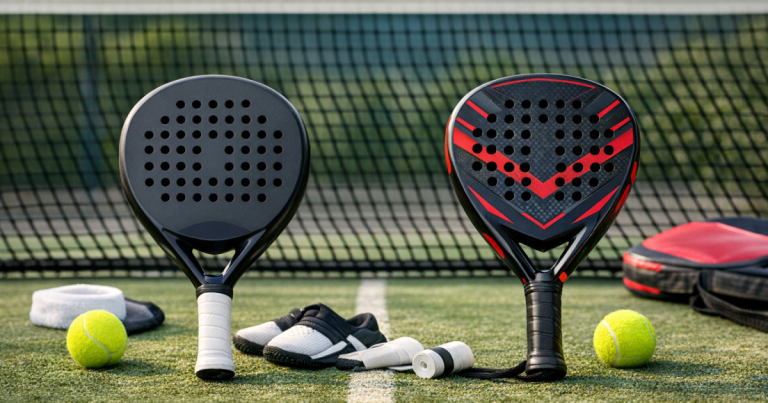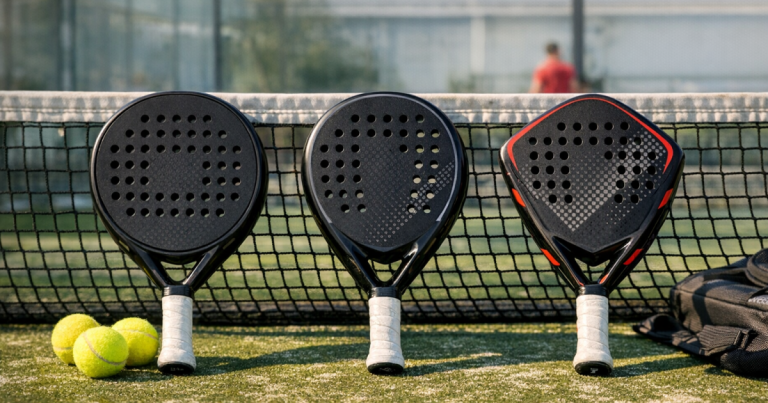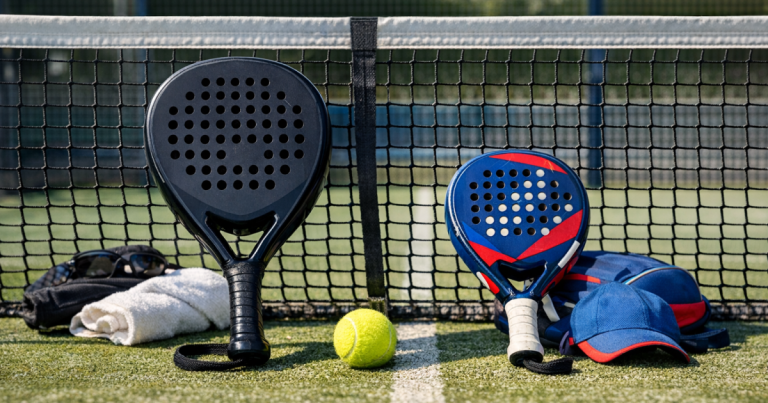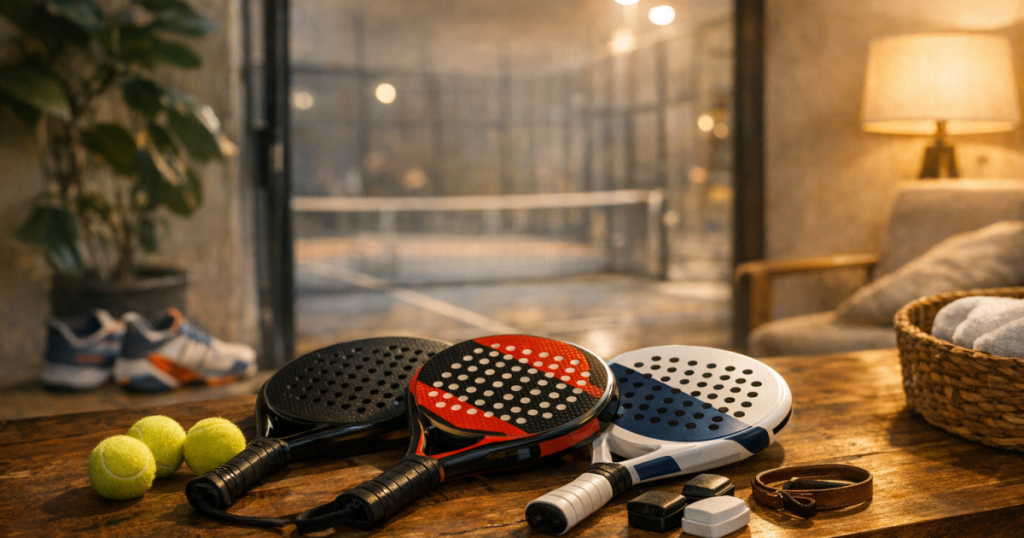
Choosing your first padel racket is easier when you ignore the flashy claims and focus on comfort, control and consistency. A good starter racket should help you get the ball back, learn the walls and build confidence rather than punish every slightly late swing.
For most new players in the UK, the sensible route is a round or forgiving teardrop racket, a medium-to-light feel in the hand, and a soft-to-medium touch that makes volleys and defensive shots easier to manage.
The short answer for new players
If you are just starting out, choose a racket that feels easy to swing, stable on off-centre hits and comfortable over a full session. You do not need the most powerful model on the wall, and you probably do not need a very hard, head-heavy diamond racket yet.
- Shape: round is usually the safest beginner choice; forgiving teardrop rackets can also work well.
- Balance: low to medium balance is easier to control than a head-heavy racket.
- Weight: pick a racket you can swing repeatedly without strain, not just one that feels powerful for five shots.
- Feel: soft-to-medium touch usually helps beginners with comfort and control.
- Grip: make sure the handle feels secure once you add an overgrip.
If you are still putting together your full starter kit, the beginner padel gear guide gives a useful wider view of what matters first and what can wait.
Why beginner rackets feel different
Padel rackets can look similar at first glance, but small design differences change how they behave. The main things to understand are shape, balance, weight, core feel and surface texture. You do not need to become a gear expert, but knowing these basics helps you avoid buying a racket that is too demanding too soon.
Shape: round, teardrop or diamond
A round racket normally has a larger sweet spot near the centre of the face. That means mishits are less severe, which is helpful while you are learning timing, court positioning and how the ball rebounds from the glass.
Teardrop rackets sit between control and power. A forgiving teardrop can be a good choice for a sporty beginner who already plays tennis, squash or badminton, but it should still feel manageable rather than top-heavy.
Diamond rackets are generally aimed at attacking players who can consistently hit the ball cleanly. They can deliver more power, but the sweet spot is usually higher and less forgiving. For a new player, that often means more errors, more vibration and less confidence.
Balance: why head-heavy can feel tiring
Balance describes where the weight feels concentrated. A racket with low balance feels easier to move quickly at the net and easier to control in defensive shots. A head-heavy racket may feel impressive when you smash, but it can become tiring during long rallies or quick exchanges.
When testing a racket, do not judge it only by a couple of big forehands. Practise blocks, volleys, lobs, bandejas and slow defensive shots from the back corners. If the racket feels late or clumsy in those situations, it is probably not the most helpful beginner option.
Weight: comfort matters more than ego
There is no single perfect weight for every beginner. The right choice depends on your strength, technique, injury history and how often you play. A heavier racket can feel stable, but it can also put more load through your wrist, elbow and shoulder if your timing is still developing.
A lighter racket can be easier to manoeuvre, especially for quick reactions near the net. The trade-off is that very light rackets may feel less solid against fast shots. The best test is simple: after 45 to 60 minutes of normal play, does the racket still feel easy to control?
What a first padel racket should help you do
Your first padel racket should make the common beginner shots less stressful. You want to keep the ball in play, learn when to use the glass, and build a repeatable swing. Power is useful later, but early progress usually comes from control and better decision-making.
- Return more serves: a forgiving face helps when you are rushed or slightly late.
- Volley with less panic: a manageable balance makes quick net reactions easier.
- Lift better lobs: a softer feel can help you guide the ball rather than snatch at it.
- Defend the corners: control matters when you are learning rebounds from the side and back glass.
- Play more often: a comfortable racket is easier to use regularly without feeling battered after every session.
If you are also learning the flow of the game, court etiquette and how club sessions usually work, this guide to how to start playing padel in the UK is a useful next step alongside choosing equipment.
Common mistakes to avoid
Buying the most advanced racket too soon
High-performance rackets are often built for players who already create their own control. They may have harder cores, smaller sweet spots or more aggressive balance points. Those features can be great in the right hands, but they can make the learning phase harder than it needs to be.
Choosing by looks alone
It is completely normal to prefer a racket that looks good. Just do not let colour or a professional player’s signature override comfort. The right beginner racket is the one that helps your normal shots, not the one that looks best in a photo.
Ignoring grip size and overgrips
Padel handles are fairly short, and many players customise the feel with one or more overgrips. If the grip is too thin, you may squeeze too hard. If it is too thick, you may lose wrist mobility. Try it with the type of overgrip you actually plan to use.
Forgetting the balls and court conditions
Racket feel changes depending on the balls, temperature and court speed. A racket that feels lively indoors may feel different on a cold outdoor court. If possible, test rackets in conditions similar to where you usually play.
Real examples without getting lost in labels
Specific models change, and availability in UK shops can vary, so treat examples as reference points rather than fixed answers. The important thing is to understand why a racket might suit a beginner.
- HEAD Evo Speed is commonly positioned as an accessible, forgiving racket for newer players. Check the current model details, weight and balance before buying.
- Bullpadel Indiga CTR is an example of a control-focused beginner-friendly racket style. It is worth testing if you prefer a steadier feel over easy power.
- Nox Equation Advanced is a recognisable option in the control-to-intermediate space. For a first purchase, make sure it feels comfortable rather than simply choosing it because it looks more advanced.
These are not the only sensible choices. Many beginner-friendly rackets from established padel brands can work well if the shape, balance and feel are right for you.
Try this simple test before deciding
If you can demo or borrow a racket, use it for normal padel situations rather than just warm-up hits. Spend a few minutes on each of these checks:
- Serve and first volley: can you place the serve without forcing the swing?
- Backhand block: does the racket stay stable when you absorb pace?
- Lob from the back glass: can you lift the ball calmly under pressure?
- Low volley: does the racket feel quick enough when the ball is below net height?
- Off-centre contact: do mishits stay playable, or does the racket twist sharply?
A racket that passes these tests is usually more useful than one that only feels good when you hit a clean smash. Beginners win more points by making the next ball than by chasing highlight shots.
How much should you spend?
There is no need to overspend before you know how often you will play. At the same time, the cheapest no-name racket can be a false economy if it feels harsh, heavy or poorly finished. Look for a recognised padel brand, a clear beginner or control description, and retailer information that explains shape, balance and materials in plain terms.
Prices move throughout the year, especially during sales, so check current UK pricing rather than relying on old figures. If two rackets feel equally comfortable, choose the one that gives you better control and comes from a retailer with a clear returns policy.
Small setup choices that make a big difference
Once you have chosen a racket, do not ignore the setup. A fresh overgrip can improve comfort immediately. A wrist strap should feel secure but not restrictive. A simple racket cover or padded bag helps protect the frame when travelling to and from club sessions.
Also pay attention to how the racket feels after a few weeks. If you keep gripping too tightly, struggle with elbow discomfort or feel late on volleys, the issue may be grip setup, technique, racket weight or a mix of all three. Small adjustments often help before you assume the racket is wrong.
Common questions
Should a beginner choose a carbon or fibreglass racket?
Many beginner rackets use fibreglass or a softer construction because it can feel more forgiving. Carbon constructions vary widely, so do not judge by material alone. Feel, balance and comfort matter more than a single label.
Is a tennis background enough to use an advanced racket?
A racket-sport background helps with hand-eye coordination, but padel has different spacing, glass rebounds and compact swings. Many tennis players still progress faster with a forgiving racket at the start.
How long should a first racket last?
That depends on how often you play, how well you look after it and whether your game changes quickly. A sensible starter racket can last well into regular club play if it remains comfortable and undamaged.
Can I start with a second-hand racket?
Yes, if it is in good condition. Check for cracks, soft spots, loose end caps, heavy frame wear and signs of water damage. If you cannot inspect it properly, a new beginner racket from a trusted retailer may be less risky.
The big picture
The best beginner racket is not the most powerful or the most expensive. It is the one that makes padel feel easier to learn: forgiving enough for imperfect contact, light enough to manoeuvre, and comfortable enough to use regularly.
Start with control, comfort and confidence. As your timing improves and you understand your preferred style, you can move towards more power, a firmer feel or a more demanding shape. For transparency on how product mentions may be handled across the site, you can read the affiliate disclosure.