A ball clips the net, drops into the service box, and everyone pauses. Understanding padel let rules helps you decide quickly whether to replay the serve, replay the point, or keep playing without turning a friendly club match into a debate.
For beginners, the main challenge is that a “let” does not always mean the same thing in every situation. Serves, rallies, distractions and court interruptions are treated differently, and knowing the difference makes your scoring calmer from the first few games.
The short version
- A let usually means the same serve or point is replayed.
- On serve, a net clip is only a let if the serve would otherwise be valid.
- During a rally, a ball that clips the net and goes over is normally still in play.
- Outside interference, such as another ball entering the court, can lead to the point being replayed.
- A let should be called straight away, not after seeing whether the shot worked out.
What a let means in padel
A let is a replay. It is not a point won, a point lost, or a warning. The idea is simple: something has happened that means the previous action should not count, so the players go back and do it again.
That said, padel uses lets more narrowly than many new players expect. If the ball hits the net during open play and still lands in, you do not automatically replay the point. If a player is surprised by a rebound off the glass, that is not a let either. Padel rewards reacting to awkward bounces, quick angles and net cords as part of normal play.
If you are still getting used to the flow of a club match, it helps to separate service lets from rally lets. Service lets are about whether the serve should be replayed. Rally lets are usually about outside interference or something unusual that stops fair play.
Service lets: the one beginners see most often
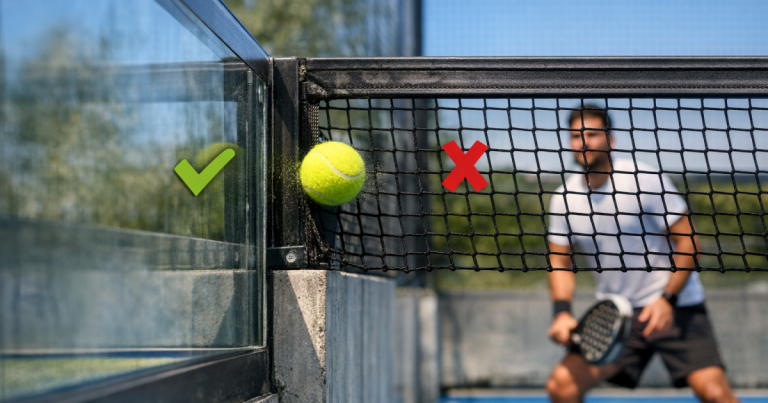
The most common let happens on serve. A padel serve is hit underarm after a bounce, diagonally into the opponent’s service box. If the ball clips the net on the way and then lands in the correct service box, it may be a let.
The key phrase is “may be”. A net touch does not rescue a bad serve. The serve still has to meet the normal requirements. If it clips the net and lands outside the correct box, it is a fault. If it clips the net, lands correctly, and then behaves like a legal serve, the server repeats that same serve.
Here are the usual beginner scenarios:
- First serve clips the net and lands in the correct service box: replay the first serve.
- Second serve clips the net and lands in the correct service box: replay the second serve.
- Serve clips the net and lands long or wide: fault.
- Serve clips the net, lands in the correct box, then rebounds off the glass: usually a let, because a serve may rebound from the glass after the bounce.
- Serve clips the net, lands in the correct box, then hits the metal mesh before a second bounce: fault, not a let.
That last example catches out a lot of beginners because it feels close enough to be replayed. In padel, the metal mesh matters. A serve that bounces correctly but then hits the side fence before the second bounce is not treated the same as a serve that rebounds from the glass.
If you are unsure about the diagonal boxes, service lines and how the walls relate to the playing area, the beginner explanation of court lines and boundaries is a useful next step.
What happens to the score after a service let?
A service let does not move the score on. It also does not take away the server’s attempt. You simply repeat the same serve.
So, if the score is 30-15 and the server’s first serve clips the net and lands correctly, the score stays 30-15 and the server has another first serve. If the second serve clips the net and lands correctly, the score still stays 30-15 and the server repeats the second serve.
This is one reason it is worth agreeing the call quickly. A clear “let, first serve” or “let, second serve” avoids confusion, especially in social doubles where players may not all have the same experience level.
Net cords during rallies are different
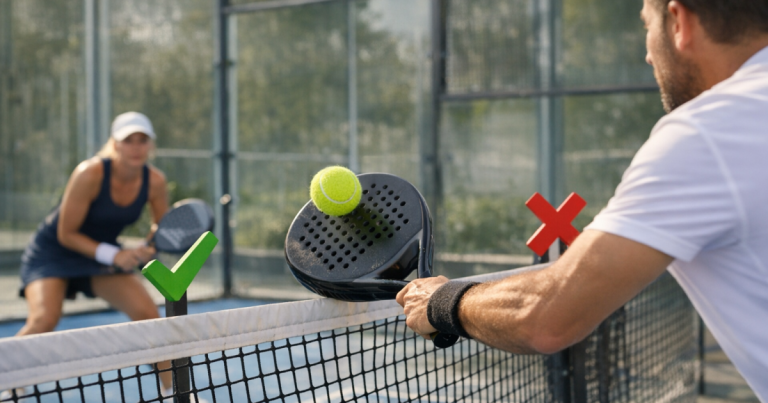
Once the serve is over and the rally has started, a ball touching the net is normally just part of the game. If it clips the tape and drops over into the opponent’s side, the point continues. If it clips the net and falls back onto the hitter’s side, the hitter loses the point.
This can feel harsh at first, particularly if you come from another racket sport where service lets are familiar. But it is one of the reasons padel rewards court position and quick reactions. A soft net cord can be lucky, but luck is still part of the rally unless something outside normal play has interfered.
There is also no let just because a shot is awkward. A ball can rebound from the back glass, side glass, or a combination of surfaces and still be live. If it has stayed within the rules, you keep playing.
Rally lets: when the point should be replayed
Rally lets are less common, but they do happen in busy club environments. The most obvious example is another ball rolling or bouncing onto your court from the next court. If it affects play, the point should usually be stopped and replayed.
Other examples can include a ball breaking during the point, an unexpected interruption from outside the court, or a genuine situation where fair play is no longer possible. In organised competition, the umpire or referee decides. In a normal club game, players should call it promptly and agree to replay the point if the interruption was real and immediate.
A useful rule of thumb is timing. A let should be called as soon as the problem happens. It should not be called after a player misses an easy shot, loses position, or realises the point is going badly. That is not good etiquette and it makes matches unnecessarily tense.
When it is not a let
Many situations that feel distracting are not automatically lets. Knowing these helps beginners avoid stopping play too often.
- A rally ball clips the net and lands in: play continues.
- A ball rebounds strangely from the glass: play continues if the ball is still live.
- A player misreads the score and stops without agreement: usually not a let.
- A player touches the net with their body or racket during play: that player normally loses the point.
- A player hits the ball after it has bounced twice: the point is over, not replayed.
- A serve clips the net but lands out: it is a fault.
There can be grey areas in social play, especially when players are learning. If two beginners genuinely stop because neither knew the rule, replaying the point can be the friendliest solution. But as you become more comfortable, it is better to apply the rule consistently.
The receiver being ready
The server should not rush the serve before the receiver is reasonably ready. If the receiver is clearly not ready and does not attempt to return, the serve is usually replayed. This is not the same as a net-cord let, but the result is similar: the serve happens again.
However, the receiver cannot normally wait to see whether the return is poor and then claim they were not ready. If they try to play the serve, they have usually accepted it. The practical habit is simple: the server should check body language, and the receiver should raise a hand early if they are not ready.
This matters a lot in beginner games because players are often still sorting their grip, position or score call. Taking one extra second before serving keeps things fair and relaxed.
How to call lets clearly in club matches
Most let disputes are not really about the rule. They are about uncertainty, late calls or unclear communication. A calm call is usually enough.
- Call “let” immediately and loudly enough for all four players to hear.
- Say what is being replayed: “first serve”, “second serve” or “point”.
- If the serve clipped the net, agree whether it landed in the correct service box.
- If another ball entered the court, stop straight away rather than playing on.
- Do not use a let call to escape a shot you simply misjudged.
If you are playing your first few games at a UK club, this is part of normal match etiquette rather than something to feel embarrassed about. Everyone who plays regularly has had moments of checking the rule, especially around net clips and side mesh. For broader first-session confidence, the guide to booking, kit and court basics covers what to expect before you step on court.
Why padel lets feel different from tennis and squash
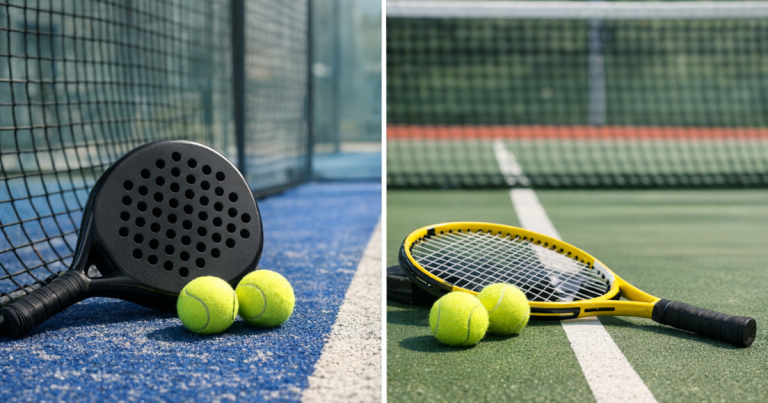
Players coming from tennis often expect net-cord serves to be replayed, which does carry over to padel in a similar way. The difference is what happens after the bounce: padel has glass, mesh and enclosed-court rebounds, so the serve still has to remain legal after landing.
Players coming from squash may be more used to asking for lets during congested rallies. Padel doubles has shared space too, but it is not handled in exactly the same way. You are expected to manage positioning with your partner, avoid obstructing opponents, and keep playing unless there is a genuine rule-based reason to stop.
If you are moving between racket sports, the wider comparison of how padel, tennis and squash differ helps explain why the same word can lead to different habits on court.
Common examples from a real match
Example 1: first serve clips the tape and lands in
The server starts at 15-0. The first serve touches the net, lands in the diagonal service box and rebounds from the back glass. Call a let and replay the first serve. The score stays 15-0.
Example 2: second serve clips the net and hits the side mesh
The server is on a second serve. The ball touches the net, lands in the correct box, then hits the side mesh before a second bounce. That is a fault. Because it was the second serve, the server loses the point.
Example 3: a rally ball hits the net and crawls over
The ball clips the net during a rally, drops just over, and the opponents cannot reach it. The point is not replayed. The player who hit the shot wins the point, assuming the ball landed in the correct playing area.
Example 4: another ball rolls behind the receiver
During a rally, a ball from the next court rolls onto the back of the court just as a player is preparing to defend. Stop the point and replay it. This is a fair let because outside interference affected play.
Key questions answered
Can you have unlimited service lets?
Yes. If the serve keeps clipping the net and landing legally, the same serve is replayed. There is no fixed limit in normal rules.
Does a let change from first serve to second serve?
No. A let repeats the same serve. A first-serve let remains a first serve, and a second-serve let remains a second serve.
Can only the receiver call a service let?
In friendly play, any player who clearly sees and hears the net touch can call it. In competition, officials may have the final say. The important point is to call it immediately and honestly.
Is a loud noise from another court a let?
Usually not by itself. Busy padel clubs are noisy, and players are expected to keep playing through normal background sound. A let is more likely when something physical, such as a ball entering the court, directly interferes with play.
Key takeaways
Padel lets are easiest to understand when you separate serves from rallies. On serve, a net touch can lead to a replay, but only if the serve would otherwise be legal. During a rally, a net touch is normally live and the point continues.
For beginner club players, the best habit is to call lets early, clearly and fairly. Say whether you are replaying the first serve, second serve or whole point, and do not wait to see the outcome before making the call. That small bit of clarity keeps matches moving and helps everyone enjoy the game without unnecessary rule debates.