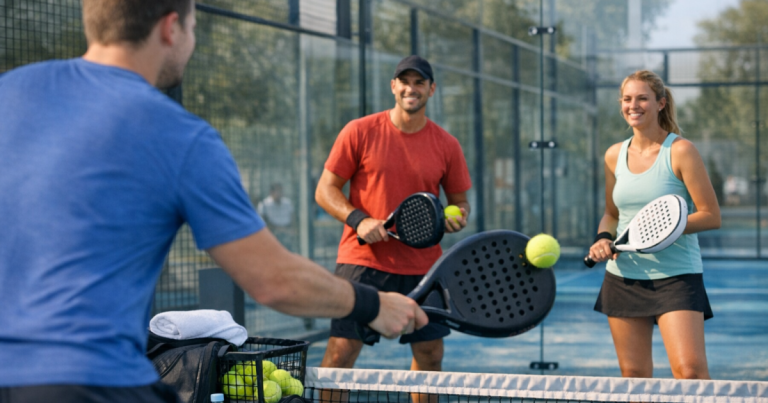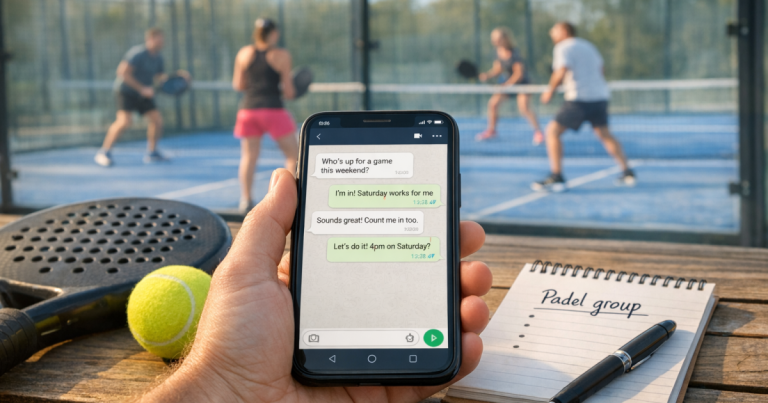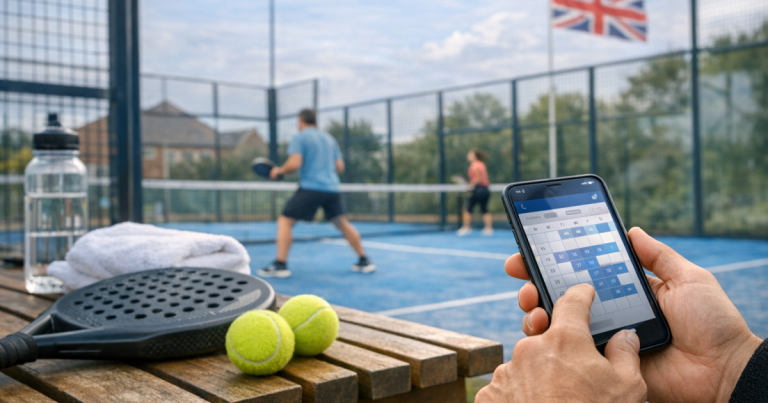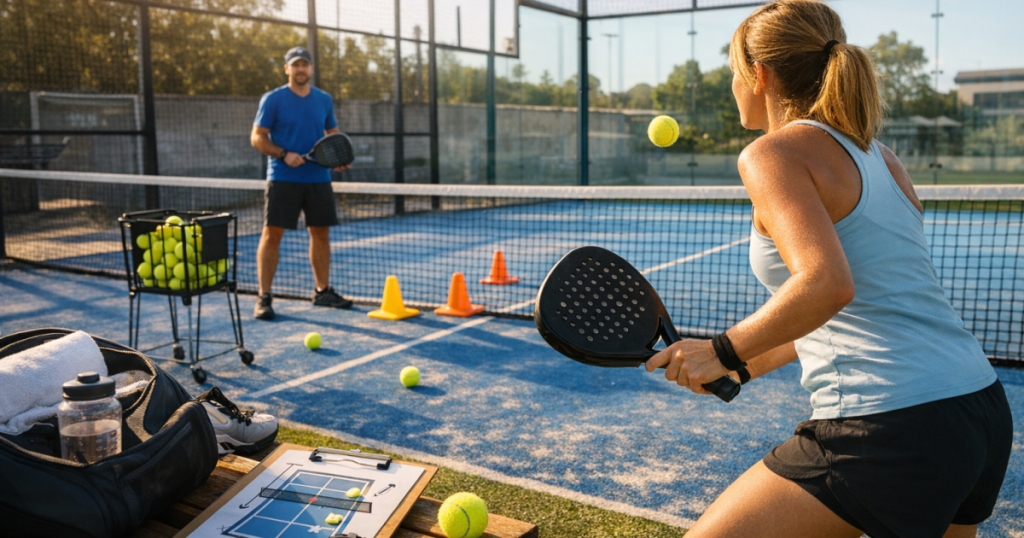
Your first few weeks on court can feel messy: new rules, glass rebounds, unfamiliar scoring and rallies that end too quickly. A first month padel practice plan gives you enough structure to improve without turning every hit into homework. The aim is simple: build repeatable habits, find suitable games, and finish the month feeling comfortable at club level.
You do not need daily training or advanced drills. Two or three focused court sessions each week, plus a little reflection afterwards, is enough for most new players to notice real progress.
What to know first
- Prioritise consistency over power. A slower ball that lands in is more useful than a hard shot that hits the glass or net.
- Practise with a purpose. Decide one theme before each session, such as serves, returns, lobs or positioning.
- Play with the right people. Games that are slightly challenging are better than matches where you barely touch the ball.
- Track one or two notes. Write down what worked, what felt awkward and what to repeat next time.
- Keep it enjoyable. The best plan is one you can actually follow for a month.
Set your starting point before week one
Before planning drills, be honest about where you are now. A complete beginner usually needs to understand the court, get used to the walls, learn the serve routine and keep rallies alive. An early-stage player who has already had a few games may need more work on decision-making, partner movement and shot selection.
Use your first session as a simple baseline. Spend 10 minutes warming up, then rally cross-court, practise a few serves, play a short set and notice what breaks down first. Common beginner patterns include standing too close to the net, swinging too big on volleys, rushing after the ball rebounds from the glass, or trying to win the point too early.
Do not turn this into a test. The point is to choose the right focus. If your serve starts points badly, fix that early. If you can rally but lose your court position, spend more time on movement. If your racket twists or slips in your hand, sort that out before blaming your technique; this guide on stopping your padel racket slipping during play is a useful next step.
Week one: make the court feel less strange
The first week should be about comfort, not winning. Padel feels different from tennis or squash because you are dealing with a smaller court, glass rebounds, underarm serving and a doubles partner who is always part of the point.
Session focus: control and simple rules
Start with low-pressure rallies from the back of the court. Aim to hit at 60 to 70 per cent effort and give yourself plenty of margin over the net. Your target is not a winner; your target is five, then eight, then ten balls in a row.
Add a short serve block. Practise the full routine: correct position, bounce, contact height and direction. New players often treat the serve as a formality, but a reliable serve gives you calmer first shots and fewer cheap faults. If you are unsure about the details, read the full breakdown of padel serve rules before your next game.
Good week-one drills
- Cross-court rally ladder: rally diagonally and count how many shots you can keep in without changing the pace.
- Serve plus first volley: serve, move forward, then play one controlled volley into space.
- Glass patience drill: let gentle balls rebound from the back glass before playing them, instead of rushing to hit early.
- Two-touch movement: after each shot, take two recovery steps back towards your useful court position.
By the end of week one, you want to feel less surprised by the ball. You may still miss plenty, but your misses should start to make sense.
Week two: build a reliable rally game
Week two is where many beginners improve fastest. Once the court feels more familiar, you can start building patterns. The priority is still not power. It is learning how to keep your pair in the point long enough to create an easier ball.
Try to book one practice-style hit and one social game. In the practice hit, repeat the same shot patterns. In the social game, notice whether those patterns hold up when there is pressure, movement and scoring.
Work on the shots you use most
- Forehand and backhand from the back: compact swing, balanced feet and a calm finish.
- Volleys: short punch, racket in front and aim away from the opponent rather than at the line.
- Lobs: high enough to move opponents back, not so flat that they can smash easily.
- Returns: controlled direction first, clever placement later.
A useful rule for this week is to choose big targets. Instead of aiming for the side glass or the corner, aim for the middle third of the opponent’s half until your control improves. Many beginner points are lost through over-precision rather than poor athletic ability.
Simple scoring challenge
Play games where a pair earns an extra point for winning a rally after five or more shots. This changes the mood of the session. Instead of trying to end points quickly, you learn to value patience, shape and recovery.
Week three: learn where to stand and who to play with
By week three, your biggest improvement may come from positioning rather than better ball striking. Padel is a game of pairs. If one player moves forward and the other stays deep without a reason, gaps appear. If both players stand too close to the net, lobs become a problem. If both sit too far back, opponents can control volleys.
Focus on moving as a unit. When your pair attacks, both players usually move forward. When you are under pressure, both players recover deeper. You do not need perfect tactics yet, but you do need to stop drifting around the court as two separate individuals.
Partner habits to practise
- Call early. Use simple words such as “mine”, “yours”, “leave” and “switch”.
- Recover together. After a lob or defensive shot, check whether your partner has moved too.
- Cover the middle. Many beginner pairs lose points because neither player takes responsibility for central balls.
- Reset when stretched. If you are off balance, play a safer ball rather than forcing an attacking shot.
This is also the right time to find better-matched games. A session that is too strong can be discouraging because you spend the evening defending. A session that is too easy can hide weaknesses. Use the guide to padel player levels to choose club nights, open matches and WhatsApp group games that fit your current stage.
Week four: turn practice into match confidence
The final week of your first month should feel more like real padel. Keep one focused practice theme, but spend more time playing points, rotating partners and coping with score pressure. You are not trying to become a complete player in four weeks. You are trying to become someone who can join regular games, contribute to rallies and keep learning without feeling lost.
Play with constraints
Constraints make practice more useful. Try one of these during a friendly game:
- No winners before shot five: both pairs must build the point before attacking.
- Lob requirement: each pair must attempt at least one lob per rally when under pressure.
- Serve target game: count how many legal serves land in your chosen half of the service box.
- Middle-ball rule: decide before the point who takes balls through the centre.
These mini-rules make weaknesses visible without needing complicated coaching language. If a constraint feels too hard, simplify it. For example, instead of requiring a perfect lob, just require a higher defensive ball that gives your pair time to recover.
A realistic weekly schedule
For most beginners, the best rhythm is two court sessions and one short reflection or movement session per week. If you can play three times, make the third session relaxed rather than intense. More court time is helpful only if you recover well and keep your focus clear.
- Session one: 60 to 90 minutes of focused practice with a friend, coach or small group.
- Session two: a social match, club night or open game where you apply one theme.
- Optional session three: light hitting, serve practice or a lower-pressure game.
- Off-court note: five minutes writing down one thing to repeat and one thing to improve.
If you only have one court session a week, still use the same structure. Warm up with control, practise one theme, then play points. A clear single session beats three unfocused games where every mistake is forgotten by the next week.
What to track without overthinking it
Beginners often track the wrong things. Winning a short club match is nice, but it does not always show whether you are improving. Instead, track behaviours that lead to better padel.
- Serve reliability: are you starting more points without faults?
- Rally length: can you keep the ball in play for longer at a calm pace?
- Recovery position: do you move after your shot, or watch the ball?
- Wall confidence: are you letting more balls rebound before playing them?
- Partner communication: are there fewer confused middle balls?
Keep your notes short. After each session, write three lines: what felt better, what cost you points, and what you will practise next. This keeps the plan useful without making padel feel like schoolwork.
Common first-month mistakes
Most early mistakes are completely normal. The key is spotting them before they become habits.
- Trying to hit through opponents. Padel rewards placement, patience and angles more than raw hitting.
- Standing still after contact. Your shot is not finished until you have recovered into a useful position.
- Avoiding the glass. The walls are part of the sport. Start with gentle rebounds and build trust gradually.
- Changing too many things at once. One theme per session is easier to remember under pressure.
- Only playing matches. Match play is fun, but repetition helps new skills settle faster.
If you feel stuck, consider booking a beginner coaching session or joining a structured group lesson. Even one coached session can correct simple movement and racket habits before you repeat them for months.
Helpful questions
How many times a week should a beginner practise padel?
Two court sessions a week is a strong starting point. One can be focused practice and the other can be a social game. If you play more, keep at least one session light so you do not lose quality through tiredness.
Should I take lessons in my first month?
Lessons are not essential, but they can speed up progress. A coach can help with serve technique, positioning and wall use before small mistakes become automatic habits.
What should I practise first: serve, volleys or glass shots?
Start with the serve and basic rally control, then add volleys and simple glass rebounds. You need a reliable way to start points and stay in rallies before advanced shots matter.
When am I ready for club nights?
You are ready when you can serve legally, keep some rallies going and understand basic doubles movement. Choose beginner-friendly or lower-level sessions first, then move up as your confidence grows.
Do I need fitness training for padel?
You do not need a gym plan to begin. Light mobility, brisk walking and short movement drills can help, but court awareness and controlled shots usually matter more in the first month.
Key takeaways
Your first month should give you a base you can build on: a legal serve, steadier rallies, calmer movement, better partner communication and more confidence joining suitable games. Keep the plan simple, repeat the important basics and judge progress by how often you make good decisions under pressure.
The best first month padel practice is not the most intense one. It is the one that helps you return to court regularly, understand your mistakes and enjoy becoming a more useful doubles partner.