Choosing your first padel club is less about finding the flashiest venue and more about finding somewhere you will actually enjoy visiting every week. The right club should make it simple to book, easy to meet suitable players, and comfortable to ask beginner questions without feeling out of place.
For new players, convenience and atmosphere matter just as much as court quality. A beautiful court that you can never book, or a competitive club with no beginner pathway, can slow your progress more than it helps.
The big picture
A good starter club usually does five things well: it gives you regular court access, offers clear beginner routes, communicates booking rules properly, maintains safe playable courts, and has a friendly social culture. You do not need the most premium venue in your area to improve. You need a place where the next game feels easy to arrange.
- Easy access: realistic travel time, sensible parking or public transport, and time slots that fit your routine.
- Beginner support: intro sessions, coaching, social games, or organised mix-ins for newer players.
- Transparent booking: clear rules on peak times, cancellations, guest access, and court release windows.
- Good playing conditions: courts that are clean, well lit, and not obviously neglected.
- Welcoming culture: staff and members who help you find games at the right level.
Start with access, not prestige
The club that looks best online is not always the one that helps you play most often. Before getting drawn into facilities, brand names, or league ladders, work out whether the venue fits your normal week.
Ask yourself how long the journey will feel after work, in bad weather, or when you are tired. A 20-minute drive that includes easy parking may be more realistic than a central venue that takes longer by train and bus. If you are hoping to play before work or during lunch breaks, changing rooms and predictable access become more important. If you only play evenings, check how quickly peak-time courts fill up.
For most beginners, one regular weekly session beats an occasional visit to a more impressive venue. Padel rewards repetition. If the club makes playing feel like a chore, you are less likely to build timing, confidence, and match awareness.
Look for a real beginner pathway
A beginner-friendly club should have more than a court and a booking page. It should give new players a way to move from nervous first session to regular games without needing to already know a group of players.
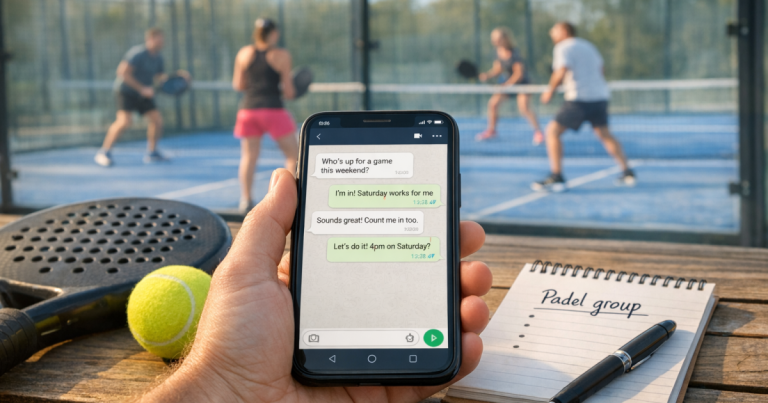
Useful signs include starter coaching, beginner socials, graded WhatsApp groups, box leagues with entry levels, and staff who can explain where a new player should begin. Some clubs run short taster sessions, while others offer structured weekly lessons. Neither format is automatically better; the important thing is whether the club can place you with people at a similar level.
When asking about coaching, focus on practical details. How many players are usually in a beginner group? Is the session mostly technical feeding, game-based drills, or match play? Are there follow-on sessions once you outgrow the basics? If you are considering a larger health club route, our David Lloyd padel lessons review explains what beginners should think about when lessons are part of the decision.
Understand the booking culture before you commit
Padel clubs can feel very different depending on how bookings work. Two venues with the same number of courts may offer completely different experiences if one has open beginner sessions and the other is dominated by private four-player bookings.
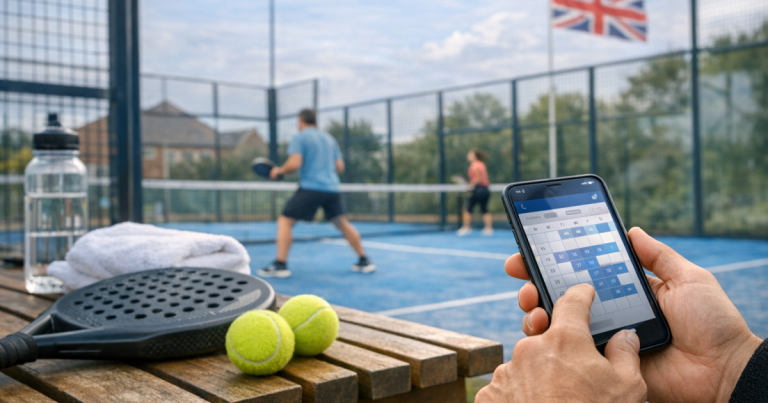
Before joining or paying for a block of sessions, ask how far ahead courts are released, whether members get priority, whether non-members can book, and what happens if someone cancels. Peak times matter in the UK because many beginners can only play evenings or weekends. A club may be excellent at 10am on a weekday but frustrating if you are trying to play after 6pm.
Also check how people find partners. Some venues use open matches, some rely on WhatsApp groups, and some manage everything through a booking platform. If your club uses ClubSpark or a similar system, our ClubSpark Booker app review for padel bookings covers what to expect from a beginner’s point of view.
Visit once before deciding
A short visit can tell you things a website never will. Try to see the club during the time you would normally play, not only on a quiet weekday afternoon. Notice whether people look relaxed between games, whether staff greet new arrivals, and whether beginners seem to be mixed in rather than left on the edges.
Look at the courts without becoming overly picky. You are not inspecting a professional tournament venue, but the surface should look playable, the glass and fencing should appear well maintained, and the lighting should be suitable for evening play. Outdoor courts can be perfectly good, but ask how the club handles wet weather, wind, rearranged sessions, and cancellations.
Pay attention to the off-court details too. Somewhere to sit, refill a water bottle, warm up safely, and wait without feeling awkward can make a big difference when you are new. If you are taking part in socials or group lessons, you will often spend time around the court as well as on it.
Questions worth asking the club
You do not need to interrogate the venue, but a few direct questions can prevent surprises later. Good clubs usually answer these clearly because they know beginners need guidance.
- What is the easiest way for a new player to start here? This reveals whether there is a pathway or just court hire.
- Are there sessions for complete beginners and early improvers? You want somewhere that supports the stage after your first few games too.
- How busy are weekday evenings and weekends? This tells you whether the club fits your actual availability.
- Can I hire or borrow a racket at first? This helps you avoid buying equipment before you know what you like.
- Are social games graded by level? Mixed levels can be fun, but beginners need some sessions where they can touch the ball regularly.
- What are the current court fees, membership costs, and cancellation rules? Ask the club directly, as costs and policies can change.
Do not ignore equipment expectations
Your first club should make the equipment side feel manageable. Many beginner sessions provide or rent rackets, and that can be sensible while you learn what weight, shape, and feel suit you. You do not need to turn up with a full padel bag on day one.
Shoes are more important than many beginners expect. Padel involves quick stops, turns, and short recovery steps, so a club may have rules about footwear to protect players and court surfaces. Before your first organised session, check the venue’s policy and read our guide on whether padel shoes are required for club sessions.
Clothing does not need to be specialist. Wear something comfortable for movement and bring layers if the courts are outdoors or in a cooler indoor facility. A water bottle, small towel, and spare grip can be useful later, but they should not distract from the main decision: finding somewhere you can play regularly.
Balance coaching, social play, and matches
Beginners often improve fastest when a club offers a mix of coaching and low-pressure games. Coaching helps with technique, positioning, and understanding the glass. Social play helps with decision-making, communication, and learning how points actually unfold.
If a club is coaching-heavy but has no route into games, you may end up with drills but little match confidence. If it is purely social and nobody explains the basics, you may keep repeating the same mistakes. The strongest beginner environments usually connect the two: a lesson group, followed by recommended socials or entry-level match play.
Do not worry if you feel slightly nervous joining a social session. That is normal. What matters is whether the club manages the group well. A good organiser will rotate pairs, keep the mood relaxed, and avoid placing a brand-new player into a session that is far too advanced.
Red flags for new players
Some clubs are excellent for experienced players but less suitable as a starting point. That does not make them bad venues; it simply means they may not match your current needs.
- No clear answer for beginners: If nobody can explain how a new player should get started, expect a harder route in.
- Booking is always full at your available times: Court quality is irrelevant if you cannot get on court.
- Sessions are labelled beginner but feel highly competitive: You need a chance to learn, not just survive.
- Poor communication: Unclear cancellation rules, vague pricing, or inconsistent replies can become frustrating.
- Unwelcoming social atmosphere: If you feel like an inconvenience when asking basic questions, try another venue.
A simple way to test a club
If you have two or three local options, give yourself a short trial period rather than trying to decide from the sofa. Book one beginner session or social game at each venue if possible. After each visit, make a quick note of how easy it was to book, how welcome you felt, whether the level was suitable, and whether you would happily go back next week.
After three or four sessions, patterns usually become obvious. The right club will not be perfect in every area, but it should remove friction rather than add it. You should know what to book next, who to ask, and where your level fits.
If you are still unsure, choose the club that gives you the most reliable route to regular play. Early progress in padel comes from turning up often, learning the court, and playing with people who help you improve rather than overwhelm you.
Common questions
Should I join as a member straight away?
Usually, it is better to try at least one session first. Membership can be worthwhile if it improves booking access or reduces regular playing costs, but only if you know the club fits your routine.
Is a padel-only club better than a leisure centre?
Not always. Padel-only clubs may offer stronger social structures, while leisure centres can be convenient and beginner-friendly. Judge the actual sessions, booking access, and atmosphere rather than the label.
What if I do not know anyone who plays?
Look for beginner socials, open matches, coaching groups, or club-managed player chats. A good starter venue should help solo players find suitable games.
How many courts should a good club have?
More courts can help availability, but it is not the only factor. A smaller club with organised beginner sessions may be easier to use than a larger venue with poor booking access.
Can I improve without joining a club?
You can practise basics elsewhere, but regular club play helps you learn positioning, communication, scoring, and match rhythm much faster.
What stands out
The best starting point is the club that makes padel feel repeatable. Prioritise access, beginner structure, clear booking rules, and a friendly playing culture. Court quality matters, but the biggest difference is whether the venue helps you move from trying padel once to playing often.
Choose somewhere you can realistically visit, ask questions without embarrassment, and find games at the right level. That is the foundation that turns an interesting new sport into a regular part of your week.