Leaving the office and heading straight to the courts is much easier when your bag is packed for the real rhythm of the evening: travel, change, warm-up, match, shower, and the trip home. A well-set padel bag for after-work matches saves you from digging around for grips, borrowing balls, or playing in work socks because one small item was missed.
The aim is not to carry everything you own. It is to build a compact, repeatable setup that works on a busy weekday, fits around commuting, and keeps clean kit separate from damp kit on the way home.
At a glance
- Pack in zones: racket, clothing, shoes, small accessories, recovery, and workday extras.
- Keep one small pouch for items you touch mid-match, such as grips, plasters, and a spare hair tie.
- Separate clean clothes from used kit with a lightweight laundry bag or dry bag.
- Use a repeatable packing order so you can check the bag in under two minutes before leaving home.
- After the match, empty damp items the same evening so the bag is ready for next time.
Step 1: Give every part of the bag a job
Start by deciding what each section of your bag is for. A padel bag does not need to be huge, but it does need a logical layout. The mistake many new players make is using the biggest compartment as a general dump zone, then losing small items at the bottom when they are already late for court.
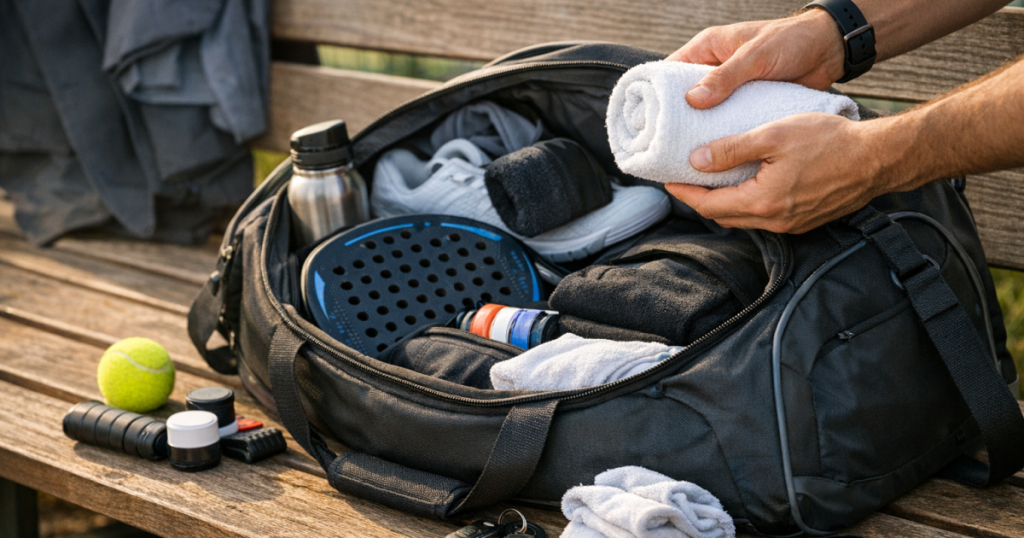
A simple after-work layout looks like this:
- Racket section: racket, optional second racket, and any racket cover or sleeve.
- Main clothing section: playing top, shorts or skort, socks, underwear, and a light layer.
- Shoe section or separate shoe bag: padel shoes or clean court trainers if your club allows them.
- Small pouch: overgrips, plasters, lip balm, hair ties, coins for lockers if needed, and a spare contact lens case if relevant.
- Wet kit bag: used towel, sweaty clothing, and damp socks after the match.
- Workday pocket: office pass, keys, phone, wallet, charger cable, deodorant, and travel card.
If you are still using a gym backpack, this system still works. If you are moving to a dedicated racket bag, it is worth reading this sensible racket bag for club nights review to see how compartments can make weeknight packing easier without turning your bag into a suitcase.
Step 2: Pack the racket section first
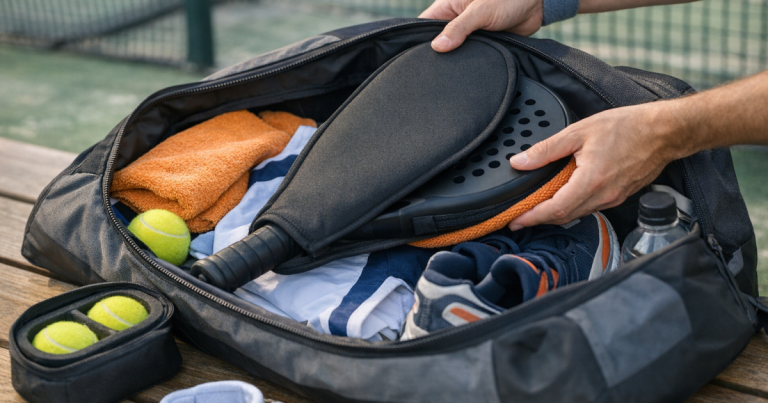
Your racket is the one item you cannot easily replace five minutes before the booking starts. Put it in first, ideally in a racket sleeve or dedicated compartment so it is not rubbing against shoes, keys, or a water bottle.
If you carry two rackets, keep them separated rather than pressed face-to-face with loose items between them. A thin towel, sleeve, or divider helps reduce scuffs during a commute. For more detail on that specific problem, use the simple checks in carrying two padel rackets without scratching them.
Add one fresh overgrip or a part-used roll to the same section only if it is protected from fluff and dirt. Do not leave loose grip tape floating around the main compartment; it will pick up lint and become annoying to apply when you need it.
Step 3: Build a complete clothing change, not just a playing outfit
After-work matches create a different packing problem from weekend padel. You may be leaving home in office clothes, travelling on public transport, playing for 60 to 90 minutes, then heading home or staying for a drink afterwards. That means you need both playing kit and a plan for what happens after.
Pack these as a complete bundle:
- Playing top
- Shorts, skort, leggings, or joggers suitable for movement
- Sports socks
- Clean underwear for after the match
- Light sweatshirt or jacket for travelling home
- Small towel if your club does not provide one
Socks are the item most players forget because they assume they are already wearing a usable pair. Office socks are rarely comfortable for padel, and they can make shoes feel wrong. Keep a spare pair permanently in the bag, even if you usually pack a fresh pair on the day.
If you are unsure how casual or technical your kit needs to be, this guide to what to wear to your first padel club night is a useful reference before you start building your after-work setup.
Step 4: Keep shoes away from everything else
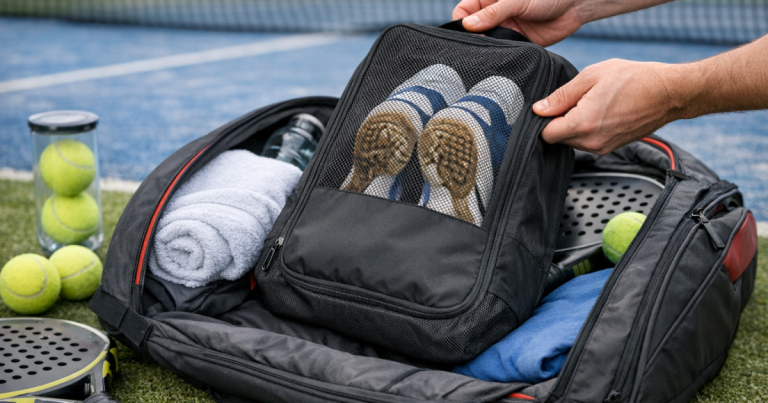
Even indoor and covered courts can leave grit on the soles of your shoes. Do not let them sit against clean clothes, towel fabric, or the face of your racket. If your bag has a shoe tunnel, use it. If not, a simple drawstring shoe bag works well and keeps the rest of the bag fresher.
For after-work play, it helps to pack shoes sole-to-sole with the heel at the bottom of the bag. That makes the bag more stable when it is standing upright on a train, in the boot, or in a changing room. If your shoes are damp after the match, loosen the laces before putting them away so they air more easily when you get home.
Step 5: Add a small match pouch
A small pouch is the easiest way to stop accessories spreading everywhere. It also means you can pull one item from the bag and take it courtside, instead of carrying the whole bag to the bench.
Good pouch items include:
- One or two overgrips
- Small blister plasters
- Hair ties or headband
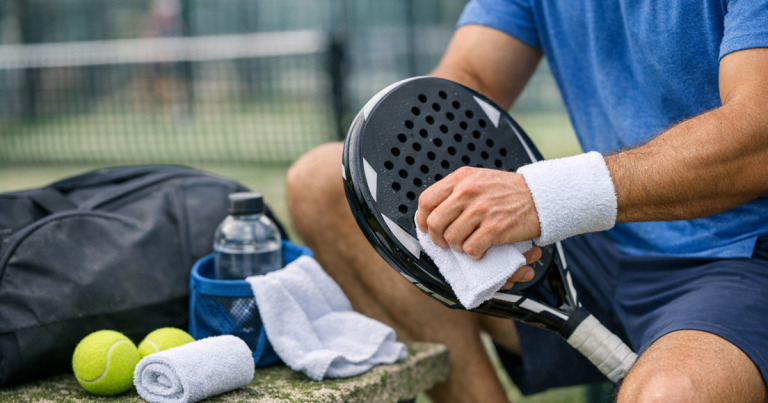
- Wristband or small sweat towel
- Spare contact lenses if you wear them
- Locker coin or token if your club uses lockers
- Energy snack that will not melt or crumble easily
Do not overload this pouch. If it becomes a second junk drawer, it stops being useful. Empty receipts, old wrappers, broken grip finishing tape, and used plasters as soon as you notice them.
Step 6: Bring balls, but check the club habit first
Some club nights provide balls, some players rotate who brings them, and some sessions expect each group to sort their own. If you are new, ask the organiser or regulars what people normally do. Turning up with a tube is helpful, but you do not need to become the person who supplies every court every week.
Keeping one unopened tube in the bag is a sensible backup. A recognised option such as Head Padel Pro is common in padel, but the more important point is to check whether the balls are actually padel balls, not tennis balls. They are not the same in play, and clubs usually expect proper padel balls for social matches.
Once a tube has been opened, avoid leaving it at the bottom of your bag for weeks and assuming it will feel the same next time. If the balls feel flat, heavy, or inconsistent in bounce, replace them or keep them for warm-up rather than a proper match.
Step 7: Prepare for the office-to-court transition
After-work padel is not just a sports kit problem. It is a timing problem. You are moving from work mode to match mode quickly, often with limited space to change. Pack the bag so the first things you need are easiest to reach.
A good order from top to bottom is:
- Water bottle and small towel near the top
- Playing clothes in one bundle
- Shoes in their own section
- Racket in its protected compartment
- Work items in a zipped pocket you will not open courtside
- Wet kit bag folded flat until after the match
If you travel by public transport, think about bag shape as well as contents. A long racket bag is fine for many players, but it can feel awkward on crowded trains if it is overstuffed. Keep hard items, such as water bottles, inside the bag rather than clipped outside where they can swing into people or knock against doors.
Step 8: Sort the return-home problem before it happens
The bag setup is only half finished when the match starts. You also need a clean way to pack up afterwards. A damp towel, sweaty top, and used socks can make the whole bag smell if they sit against everything else overnight.
Use one of these simple systems:
- Laundry bag: light, cheap, and easy to wash.
- Dry bag: better for very damp kit, especially if you shower at the club.
- Separate carrier bag: fine as a temporary backup, but replace it regularly.
When you get home, remove damp items before doing anything else. Hang up the towel, take out the shoes, open the bag, and refill anything used from the small pouch. This two-minute reset is what makes the setup work week after week.
A simple pre-match bag check
Before leaving for work, run through the same check every time. It should be quick enough to do by the front door without unpacking everything.
- Racket packed and protected
- Playing clothes complete
- Sports socks included
- Padel shoes packed
- Water bottle ready to fill
- Small towel included
- Overgrip and plasters in pouch
- Wet kit bag inside
- Phone, keys, wallet, and office pass secure
- Club booking time and location confirmed
If you regularly forget one item, do not rely on memory. Put a note in your work bag, set a recurring calendar reminder, or keep a duplicate spare in the padel bag. The best system is the one you will actually use on a rushed weekday morning.
Things readers ask
Can I leave my padel bag packed all week?
You can leave dry spare items packed, such as overgrips, socks, and a spare top. Do not leave damp clothes, used towels, or sweaty shoes sealed inside between matches.
Should I take my work clothes onto court?
No. Keep work clothes in a zipped pocket or locker where possible. Courtside space is limited, and loose clothing can pick up dust, sweat, or drink spills.
Do I need a dedicated padel bag for after-work matches?
Not at first. A normal sports backpack can work if it protects the racket and separates shoes from clean kit. A dedicated bag becomes more useful once you play regularly or carry two rackets.
What should I keep permanently in the bag?
Keep low-risk spares: socks, overgrip, plasters, hair ties, a small towel, and a wet kit bag. Avoid leaving snacks, damp kit, or half-empty bottles inside for long periods.
How much water should I bring?
For a normal club session, many players bring a 500 ml to 1 litre bottle and refill at the club if available. Check your venue facilities, especially for longer evening sessions.
Why it matters
A good after-work setup removes small bits of friction. You arrive calmer, change faster, warm up properly, and spend less time borrowing kit or improvising. That matters most when you are still building the habit of regular club play.
Keep the setup simple: protect the racket, separate shoes and damp kit, pack a complete clothing change, and reset the bag as soon as you get home. Once that routine is automatic, after-work padel feels far less like a logistical scramble and much more like the best part of the day.