You can start playing padel without buying a racket, a full outfit, or a specialist bag on day one. The cheapest route is not always the bare-minimum route; it is the route that gets you playing regularly, safely and comfortably without paying for things you will not use.
Most wasted spending comes from guessing too early. A couple of club sessions will teach you more about your needs than hours of browsing rackets, shoes and accessories.
The short version
- Book one beginner-friendly session before buying major kit.
- Borrow or hire a racket until you know whether you prefer control, comfort or extra power.
- Wear suitable court trainers first, then move to padel shoes when you are playing regularly.
- Spend money on court time and coaching before “upgrade” gear.
- Keep your first setup simple: racket access, balls if needed, water, towel and comfortable sports clothing.
Where beginners usually overspend
New players often assume padel requires the same kind of gear commitment as tennis, squash or golf. It does not. You need access to a court, a racket, balls and suitable footwear, but you do not need to own everything immediately.
The most common mistake is buying a racket before you have felt the difference between shapes, weights and balance. A powerful racket can look appealing online, but it may feel awkward if you are still learning how to block, lob and defend off the glass. A softer, easier racket may be more useful at the start, but even that is something you only learn by playing.
The second mistake is buying “padel-specific” everything at once. Some items are genuinely useful; others are convenience purchases. Your first few sessions are about finding out whether the sport fits your routine, your local club options and your body. Gear should support that, not lead it.
Spend first on court time, not kit
If your budget is limited, put the first chunk towards playing. A beginner social, taster session, group coaching block or off-peak court share will give you feedback that no product page can provide. You will learn how quickly you move, whether you enjoy doubles positioning, and what kind of players you are likely to meet locally.
Look for sessions labelled beginner, improver, social, mix-in or intro coaching. Clubs vary in how they describe them, so check whether the session includes racket hire, balls, coaching or organised rotation. That one detail can change the value of a session quite a lot.
Before your first booking, use a simple kit list rather than building a shopping basket from scratch. The first club session gear checklist is a good place to sanity-check what is genuinely useful and what can wait.
Borrow, hire or test a racket first
A beginner does not need to own a racket immediately. Many clubs have hire rackets, and some sessions include one as part of the booking. If you have a friend who plays, borrowing a racket for a first hit is perfectly reasonable, provided it is in usable condition and has a secure wrist strap.
When you do start looking at rackets, avoid thinking only in terms of “more power”. Early padel rewards consistency, timing and calm decision-making. A racket that helps you put the ball back in play is usually better value than one that encourages you to swing harder before your technique is ready.
If you are tempted by a recognised model such as the Bullpadel Hack 02, treat it as something to research carefully rather than an automatic beginner choice. Check the racket’s shape, balance, feel, condition and suitability for your level. If possible, hit with a similar style before spending money.
Footwear is the one area not to ignore
You can delay plenty of purchases, but footwear deserves more attention. Padel involves short sprints, quick stops, split steps and lateral movement. Running shoes can feel comfortable, but they are not designed primarily for side-to-side court movement.
For a one-off taster, clean court trainers may be enough if the club allows them. If you decide to play weekly, padel or tennis-style court shoes become a more sensible purchase. The goal is not to buy the most expensive pair; it is to get grip, support and confidence on the surface you actually play on.
A model such as the Asics Gel-Padel Pro 3 is an example of a padel-specific shoe category to research, not a universal answer for every foot. Check fit, comfort, outsole suitability for your local courts and the retailer’s returns policy before committing.
Use local club formats to reduce the cost
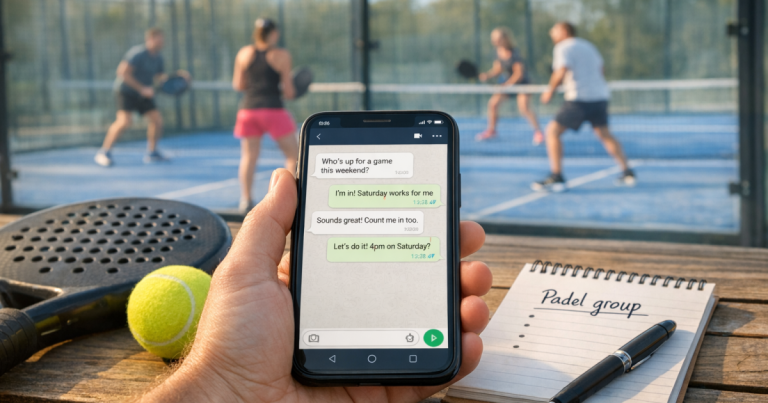
Padel is cheaper when you are not paying for a whole court alone. Doubles is the standard format, so the normal cost is shared between four players. That is why social sessions, WhatsApp groups, club ladders and beginner mix-ins are so useful for new players.
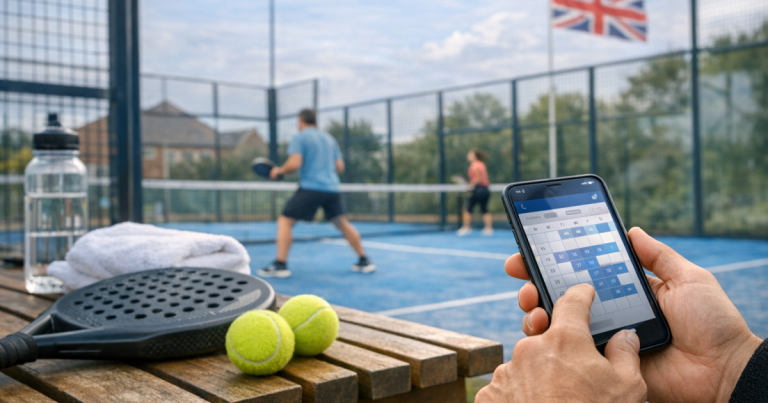
Before joining a club or committing to a block, compare the practical details: how easy it is to get a court after work, whether beginner sessions are actually available, and whether there are people at your level. A low court fee is not great value if you cannot find partners or suitable time slots.
For finding places to play, the LTA Padel Court Finder review explains how useful it can be for identifying nearby courts and club-session options in the UK.
A sensible first-month budget order
Instead of asking “what should I buy first?”, think in stages. Your first month should prove whether you enjoy the sport and can fit it into your week.
Stage 1: first session
- Book a beginner-friendly session or play with patient friends.
- Borrow or hire a racket.
- Wear clean, grippy court trainers if the venue permits them.
- Bring water, a small towel and comfortable sports clothing.
Stage 2: first few games
- Notice whether your shoes feel stable when changing direction.
- Try different borrowed rackets if possible.
- Ask regular players which sessions are best for newer people.
- Do not buy a bag, accessories or premium clothing yet unless you have a real need.
Stage 3: weekly routine
- Buy suitable court shoes if you are playing often.
- Choose a forgiving first racket after testing or getting advice.
- Consider a few group coaching sessions to avoid building bad habits.
- Add a basic overgrip, towel or simple bag only when your routine calls for it.
For a structured way to spend your early time well, follow a realistic practice rhythm rather than just playing random games. The guide to building your first month of padel practice helps you balance matches, drills and rest without making it feel like homework.
What is worth paying for early?
The best early spending usually improves your experience every session. Court time does that. Coaching can do that. Proper footwear can do that once you are playing regularly. A suitable racket can do that when you know what “suitable” feels like.
Some purchases are less urgent. A large racket bag is handy if you travel straight from work, carry spare clothing or bring more than one racket. For the first few sessions, a normal sports bag is usually fine. Branded clothing can be comfortable, but any breathable sports kit that lets you move freely is enough to begin.
Rebound nets, training aids and home-practice tools can be useful later, but they are easy to buy too early. If you are still learning where to stand and how to play off the glass, regular club play will usually teach you more than solo hitting at home.
Red flags that a purchase can wait
- You are buying it because other players have it, not because you need it.
- You cannot explain what problem it solves for your game.
- You have not played enough sessions to know your preferences.
- It costs more than your next few weeks of court time.
- It would not change whether you actually play this month.
This does not mean you should never enjoy buying gear. Padel kit is part of the fun for many players. The point is to let your playing habits guide the order of spending.
Helpful questions
Can I play padel without buying a racket?
Yes. Many beginners borrow from a friend or hire one at the venue. Check before booking, because racket availability and hire rules vary by club.
Should my first racket be cheap?
It should be suitable before it is cheap or expensive. A modest, forgiving racket that feels comfortable is usually better early value than a powerful model you struggle to control.
Do I need padel shoes for my first session?
Not always, but you do need footwear the club accepts and that feels stable on court. If you begin playing weekly, proper court shoes become a sensible priority.
Is coaching worth it for a beginner?
Group coaching can be excellent value because it fixes basic positioning, grip and shot choices early. One good session can save weeks of frustrating habits.
What should I avoid buying first?
A premium racket, oversized bag, lots of accessories and home training kit can all wait until you know your routine and playing style.
Main lessons
The money-smart way into padel is simple: play first, learn what you need, then buy slowly. Start with access to friendly sessions, borrow kit where possible, and prioritise the items that affect comfort and consistency.
Once the habit is there, gear choices become easier and less risky. You will know whether you need better shoes, a more comfortable racket, a proper bag or simply more court time with the right group of players.