Choosing lessons is easier when you know what you want from the next few weeks, not just the next hour. For most beginners, padel coaching options come down to learning with others, booking one-to-one time, or mixing both as your game develops.
There is no universally better route. Group sessions give you rhythm, match situations and social confidence; private sessions give you focused feedback, quicker technical correction and a quieter space to ask questions.
At a glance
- Choose group lessons if you want affordable repetition, match practice, social confidence and a better feel for doubles movement.
- Choose private lessons if you need targeted help with a specific weakness, feel nervous in groups, or want your technique checked closely.
- Choose a mix if you are playing regularly and want private feedback to support what you practise in group sessions or club nights.
- Review your choice after three or four sessions rather than judging everything from one lesson.
Step 1: Start with your current goal
Before choosing a format, write down the main reason you want coaching. Keep it simple: “I want to serve reliably”, “I want to understand where to stand”, “I want to join club nights without feeling lost”, or “I keep making the same mistake at the back glass”.
If your goal is broad, group coaching usually makes sense. You get exposed to serves, returns, volleys, lobs, positioning and point play without obsessing over one detail too early. If your goal is narrow, a private session may save time because the coach can watch repeated attempts and correct the same action from several angles.
For very new players, it also helps to separate lessons from basic orientation. If you are still working out the first skills, rules and gear basics, read what to learn first in padel so your coaching time is spent on court improvement rather than avoidable confusion.
Step 2: Choose group lessons when you need game awareness
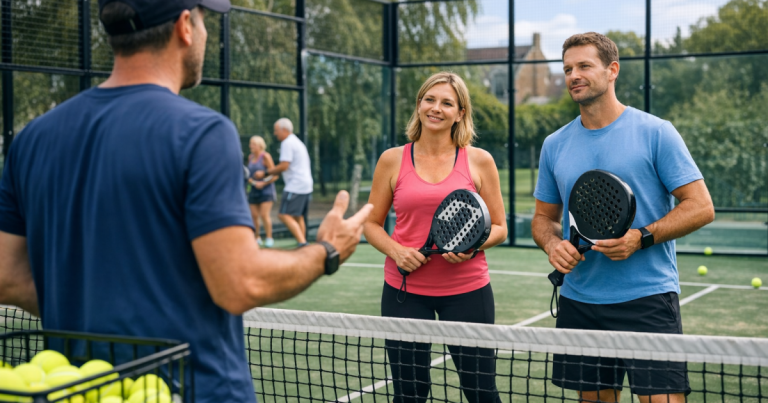
Padel is a doubles game, so a lot of progress comes from reading other players, moving with a partner and recovering to the right place after each shot. Group lessons are useful because they naturally create these situations. You are not just hitting balls fed by a coach; you are learning how real points develop.
Group coaching is especially useful when you need:
- More rally rhythm: You learn to deal with different ball speeds, heights and mistakes from other beginners.
- Partner awareness: You start to notice when to move forward, when to hold position and when to leave a ball for your partner.
- Serving and returning practice: You get more realistic patterns than you would from hitting alone.
- Confidence in club settings: You become more comfortable rotating partners, chatting between points and playing with people you do not know well.
- Shared learning: Watching another player receive feedback often makes the same point click for you.
The main trade-off is that the coach has to divide attention across the group. You may get less individual correction, and a large level gap can slow the session down. A good group lesson still has a clear theme, organised rotations and short, specific feedback rather than long lectures.
If your next step is regular doubles play, group lessons also help you understand the patterns behind partner movement and serve order. It is worth pairing coaching with a clear read of padel doubles rules, because knowing the rotation reduces hesitation during games.
Step 3: Choose private lessons when feedback needs to be personal
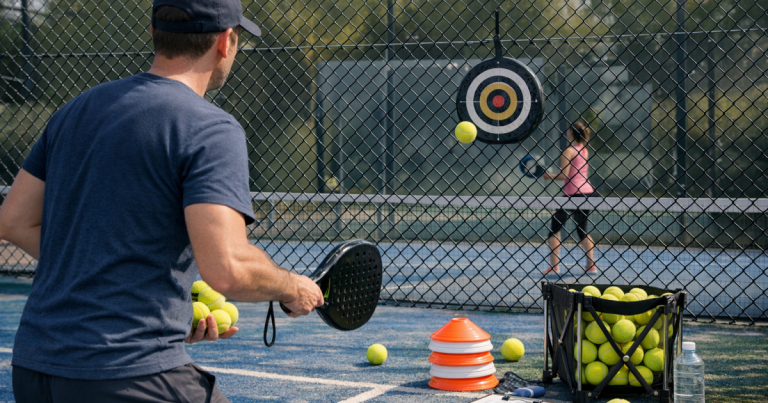
Private coaching is strongest when one recurring problem is holding you back. That might be a serve that breaks down under pressure, a backhand that always floats too high, difficulty using the glass, or uncertainty about grip changes at the net.
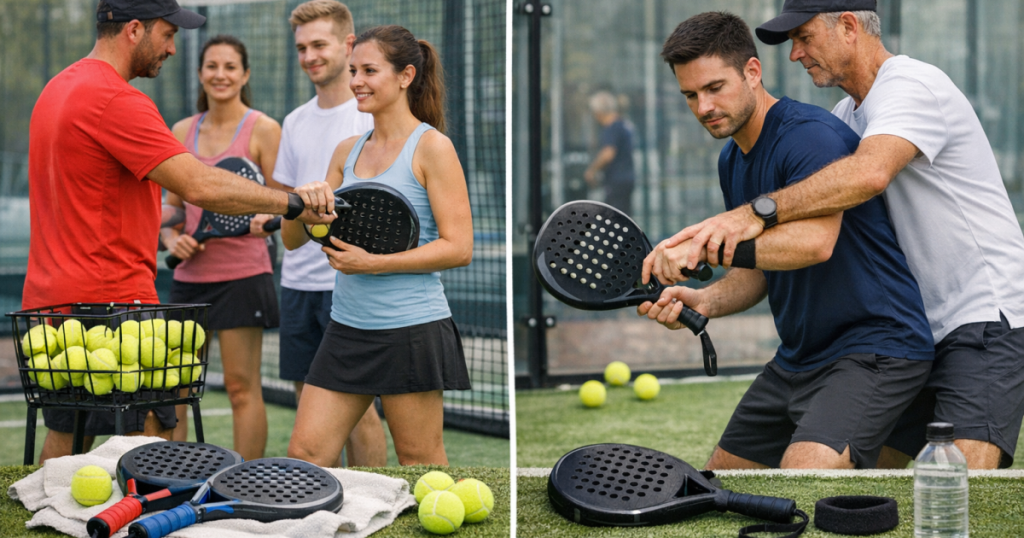
In a one-to-one session, the coach can adjust the pace, repeat the same drill, film or observe the same movement pattern, and give feedback without worrying about four other players waiting. That can be very helpful if you are self-conscious, returning from a long break from sport, or struggling to understand why a shot feels wrong.
Private lessons are also useful before a group programme if you feel anxious about joining one. A single session can cover the court layout, basic contact point, safe movement, scoring reminders and what to expect in a typical beginner drill. That does not make you “behind”; it simply gives you a calmer first step.
The trade-off is that private coaching can feel less like real padel if every ball is controlled and there is no partner or opponent decision-making. Ask for a short action plan at the end: one or two technical cues, one practice drill and one on-court habit to try in your next game. Without that, it is easy to enjoy the lesson but forget what to change afterwards.
Step 4: Consider a mixed approach once you play regularly
Many improving beginners do best with a blend. For example, you might attend a weekly group lesson for doubles patterns and book a private session every few weeks to tidy up one technical problem. This works well because group play shows the coach what actually breaks down under pressure, while private time gives you space to fix it.
A simple mixed plan could look like this:
- Weeks 1 to 3: Join group coaching to build confidence, learn basic court positions and meet players at a similar level.
- Week 4: Book one private lesson focused on the biggest recurring issue from those group sessions.
- Weeks 5 to 6: Return to group play and deliberately use the new cue in live points.
- After that: Repeat only when you have a clear problem to solve, not just because you feel you should.
This approach keeps coaching practical. You are not collecting tips for the sake of it; you are testing them in matches, noticing what changes, and coming back with better questions.
Step 5: Check the lesson setup before you commit
The format matters, but the lesson quality matters more. A small, well-run group can be more useful than a vague private session, and a focused one-to-one lesson can be better value than several group sessions where you barely touch the ball.
Use these checks before booking a block:
- Group size: Ask how many players are usually on court. Smaller groups normally mean more touches and more feedback.
- Level matching: Check whether the session is for complete beginners, improvers or mixed ability. A big mismatch can frustrate everyone.
- Session aim: A good lesson has a theme, such as serve and first volley, back glass defence or net positioning.
- Feedback style: You want short, usable corrections, not a flood of technical detail you cannot remember.
- Practice time: Ask whether the session includes point play, not only isolated drills.
- Commitment: Check cancellation rules, block length and whether you can try one session before booking more.
Also make sure you know what equipment is expected. Many clubs can help new players get started, but it is still sensible to understand the difference between borrowing, renting and owning kit. If you are unsure, the guide to renting versus buying padel gear will help you avoid spending too early.
Signs you should switch format
Your first choice does not have to be permanent. Switch from group to private if you keep hearing the same correction but cannot fix it during live play, or if you are avoiding certain shots because you do not understand the movement. A private session can slow everything down and rebuild the habit.
Switch from private to group if your technique is improving but your decisions are not. For example, you may hit a decent volley in drills but choose the wrong target in points, or serve well in practice but struggle when a return comes back quickly. That is a sign you need more realistic game situations.
Switch to a mixed routine if you enjoy both but want clearer progress. Group lessons can provide the playing context; private lessons can sharpen the details. The key is to connect them. Tell your coach what happened in your last match and ask what to focus on next time, rather than treating each session as a separate event.
Helpful questions
Should a complete beginner start with group or private coaching?
Either can work. Start with group coaching if you are happy learning alongside others and want a social route into the sport. Start privately if you feel nervous, want the basics explained slowly, or have one issue that needs close attention.
How many lessons should I try before deciding?
Give any format three or four sessions if you can. One lesson may be affected by group mix, weather, court timing or your own nerves, so look for patterns rather than judging too quickly.
Are semi-private lessons a good compromise?
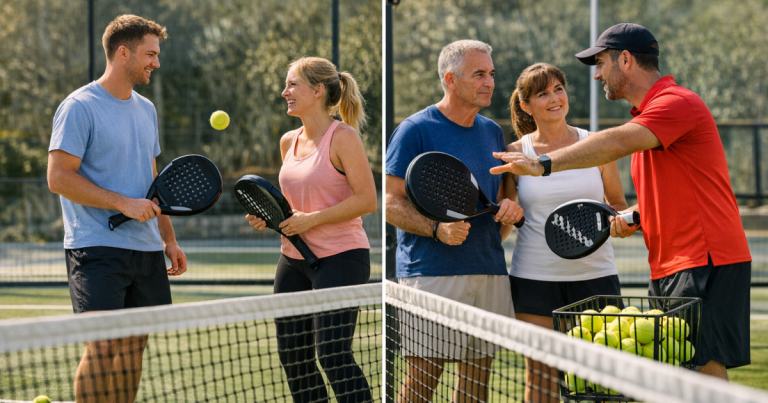
Yes, if the players are a similar level. Two-to-one or three-to-one coaching can offer more personal feedback than a group while still giving you partner work and realistic ball exchanges.
What should I ask a coach before booking?
Ask about level, group size, lesson theme, how much point play is included and what you should practise between sessions. Clear answers usually mean the coach has a structured plan.
Will private lessons make me improve faster?
They can fix specific technical problems faster, but they do not replace playing with others. The quickest progress usually comes when focused coaching is backed up by regular doubles practice.
What to remember
Pick the lesson format that solves your current problem. Group coaching is usually the better starting point for match confidence, doubles movement and meeting other players. Private coaching is better when you need close feedback, a quieter learning environment or help with one stubborn habit.
If you are unsure, start with the option you will actually attend consistently. Regular, purposeful practice beats the perfect plan on paper. After a few sessions, reassess what is improving, what still feels unclear and whether a short switch in format would help you take the next step into confident club play.