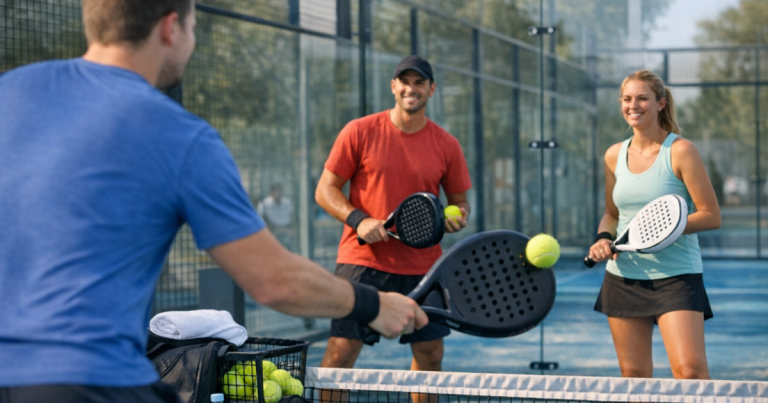
Padel looks familiar at first glance, but it is not just tennis on a smaller court. The simplest answer to what is padel is that it is a doubles racket sport played on an enclosed court where the glass walls stay in play. That mix of simple starting rules, quick rallies and social doubles play is why so many new players find it easier to enjoy than many traditional racket sports.
You do not need to be especially powerful, super fit or technically polished to start. A basic serve, a willingness to keep the ball in play and an understanding of when the walls matter will get you through a first game with far more confidence.
What to know first
- Padel is usually played as doubles, with two players on each side.
- The court is enclosed by glass and mesh, and the ball can rebound off the walls after it has bounced.
- Scoring is similar to tennis: 15, 30, 40 and game.
- Serves are underarm and must be hit after a bounce.
- The main beginner skill is control, not power.
- Most club games are friendly, mixed-ability and fairly quick to pick up.
How the court changes the game
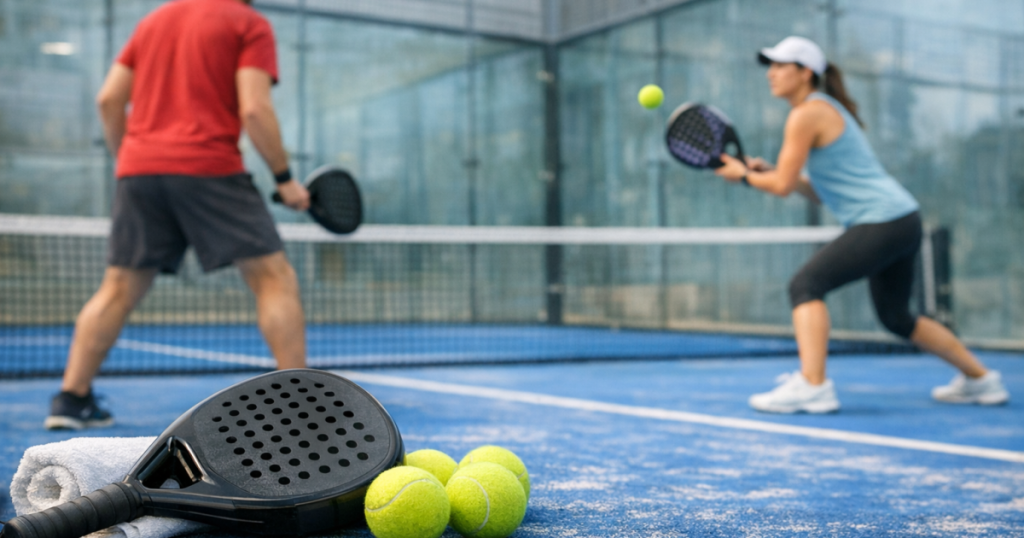
A padel court is smaller than a tennis court, measuring 10 metres by 20 metres, with glass walls at the back and partly along the sides. There is a net through the middle, service boxes on each side and enough enclosed space for the ball to stay alive after a bounce.
The walls are the part that feel most unusual at first. In padel, the ball must land in the opponent’s court before it can hit the glass. Once it has bounced, it may rebound off the back or side wall and still be returned. That means a ball that looks past you is not always lost; you can often let it bounce, come off the glass and then play it back.
This is why padel rewards patience. Beginners often rush to hit every ball before it reaches the wall, then find themselves cramped or off balance. Better players use the glass to create time, reset rallies and move their opponents around without swinging hard.
The basic rules in plain English
The serve starts every point. You stand behind the service line, bounce the ball, then hit it underarm below waist height into the diagonal service box. If it lands in the correct box and does not hit the side mesh before the second bounce, the point continues.
After the serve, the rally is simple in principle: each team must return the ball before it bounces twice on their side. You can volley the ball before it bounces, hit it after one bounce, or use the glass after the bounce to help return it. You cannot let the ball hit the wall before it lands on your side of the court.
The ball can hit your racket once per shot. It can then travel directly over the net, or hit your own glass wall first if the shot still crosses the net legally. That last part is more advanced, but you may see experienced players use the back glass to dig out awkward defensive shots.
Scoring and match rhythm
Padel uses the familiar tennis scoring pattern: love, 15, 30, 40 and game. A set is usually won by the first pair to reach six games with a two-game lead, although local club formats can vary depending on court time and box league rules.
At deuce, some clubs use a deciding point rather than advantage scoring. This is often called golden point, and it makes games faster and more dramatic because one point settles the game. If your club uses it, agree before the match who chooses the receiving side at deuce. For a deeper explanation, see our guide to golden point in padel.
For new players, the main thing is not to worry if scoring feels clunky for the first few sessions. Say the score out loud before each serve, ask your partner if you are unsure, and keep the flow friendly rather than treating every point like a tournament final.
Why doubles makes padel feel social
Most padel is played as doubles, which changes the feel of the game. You cover less court than in singles tennis, but you need to communicate constantly. Simple calls such as “mine”, “yours”, “leave” and “switch” make a big difference.
There are two broad court positions you will hear about early: defence and attack. When your pair is under pressure, you are usually near the back glass, trying to return safely and buy time. When you have pushed your opponents back, you move towards the net and look to control the rally with volleys and placement.
A common beginner mistake is drifting into no-man’s land halfway between the service line and the back glass. From there, low balls land at your feet and lobs go over your head. As a simple habit, move together as a pair: both back when defending, both closer to the net when attacking.
What makes padel different from tennis and squash?
Padel borrows bits from both sports, but it has its own rhythm. From tennis, it takes the net, scoring pattern, volleys and doubles movement. From squash, it borrows the idea that walls can extend rallies and create angles. The result is a game where placement, patience and court sense often beat raw hitting power.
The racket is different too. A padel racket is solid, perforated and shorter than a tennis racket, with no strings. The ball looks similar to a tennis ball but is used in padel-specific formats at clubs and competitions. Shoes matter because you need grip for short, quick movements, turns and stops, especially on sandy or indoor surfaces.
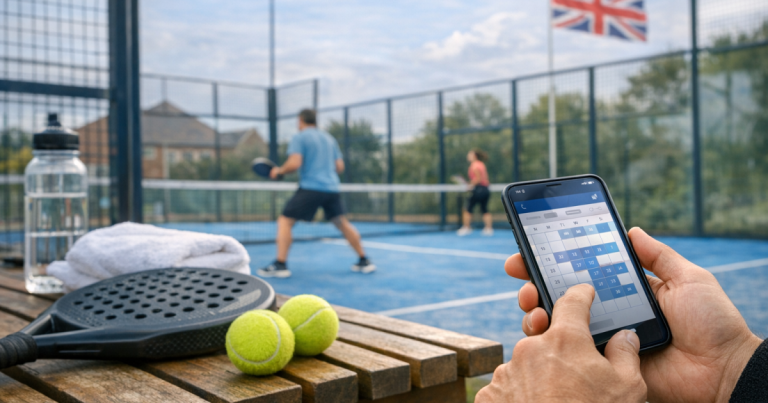
You do not need a full kit bag to start. Many UK clubs offer hire rackets, and borrowing or renting gear for the first few sessions is perfectly sensible. If you are unsure when it becomes worth getting your own setup, our guide to renting vs buying padel gear explains the decision without pushing you to rush.
How a first session usually feels
Your first session will probably include a few air shots, mistimed wall rebounds and moments where the ball seems to arrive quicker than expected. That is normal. Padel becomes much easier once you slow down, shorten the swing and aim for a safe target rather than a winner.
A good first-session goal is to keep rallies going. Try serving consistently into the box, returning cross-court, and using a compact swing on volleys. When defending near the back glass, let some balls come to you rather than charging forward automatically.
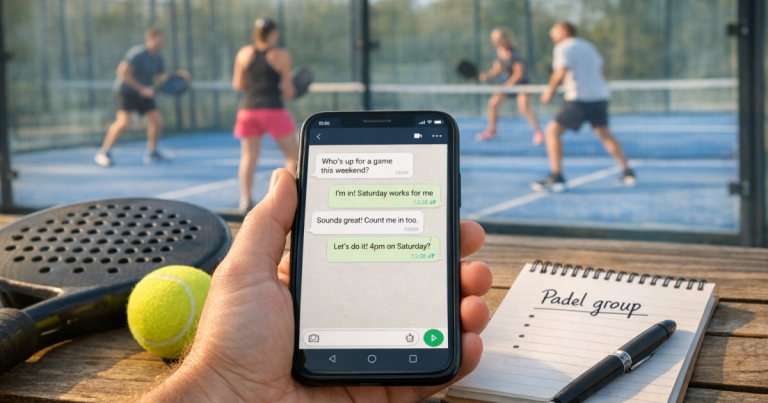
It also helps to understand the club rhythm. Arrive a little early, check whether the court surface needs suitable shoes, warm up gently, and avoid walking behind players during a point. If you are joining a social mix-in, be honest about your level so organisers can place you in a fair game. Our padel etiquette guide for new players covers the small habits that make club play smoother.
Beginner mistakes that are easy to fix
Trying to hit winners too early
Padel rewards consistency. A hard shot that rebounds off the glass can come back quickly, especially against calm opponents. Early on, aim deep, steady and cross-court rather than trying to finish points from awkward positions.
Standing too close to the back wall
If you stand right on top of the glass, you leave no room to react. Give yourself enough space to let the ball bounce, turn and play it after the rebound.
Forgetting your partner
Because padel is mainly doubles, your positioning affects your partner’s options. Move as a pair, call clearly and avoid both chasing the same ball unless one player has clearly taken charge.
Using a big tennis-style swing
Big swings can work sometimes, but they often make timing harder in a small enclosed court. Shorter swings help with control, quick reactions and cleaner contact.
Things readers ask
Is padel easy for complete beginners?
Yes. The serve is underarm, rallies start quickly and doubles means you share the court with a partner. The wall rebounds take a little time, but most people can enjoy a social game from the first session.
Do I need tennis experience to play padel?
No. Tennis experience can help with volleys and scoring, but it can also lead to oversized swings. New players from football, netball, squash or no sport at all can pick up the basics.
Can you play padel singles?
Padel is designed mainly for doubles. Some clubs have singles courts, but they are less common. Most beginners should expect to play with three other players.
What should I wear for a first padel session?
Wear comfortable sports clothing and court-appropriate trainers with decent grip. Avoid shoes with very worn soles, especially on indoor courts where slipping can spoil your movement.
How long does a padel match take?
A casual match can fit into a one-hour court booking, especially if you play a shortened format. Full matches vary depending on scoring rules, deuce format and rally length.
What stands out
Padel is popular with beginners because it becomes fun quickly without being simplistic. The rules are easy enough to start, but the walls, doubles movement and tactical choices give you plenty to learn as you improve.
If you are new, focus less on power and more on keeping the ball in play, learning when to use the glass and communicating with your partner. Those three habits will make your first few games calmer, friendlier and much more enjoyable.