A comfortable padel racket grip size helps you relax your hand, change grip quickly and avoid squeezing the handle through every shot. Most new players do not need a different racket straight away; they need to understand whether the handle feels too slim, too bulky, too slippery or simply unfamiliar.
Grip feel is one of those small details that can change your confidence quickly. If the handle feels secure, you are more likely to keep a loose wrist on volleys, prepare earlier and trust the racket face. If it feels wrong, you may start over-gripping, mistiming shots or blaming the racket when the real issue is the set-up around the handle.
The short version
- Most padel rackets come with a fairly standard handle rather than lots of factory grip sizes.
- New players usually adjust the feel with one or more overgrips instead of changing racket.
- A grip that is too thin can make you squeeze too hard and lose control on blocks and volleys.
- A grip that is too thick can slow down grip changes and make the racket feel less manoeuvrable.
- Sweat, old grip tape and poor wrapping can feel like a sizing problem even when the thickness is fine.
- Start with comfort and control, then fine-tune after a few sessions rather than copying someone else’s set-up.
Why padel handles feel different from tennis handles
If you have played tennis, badminton or squash, padel handles can feel short and compact at first. That is normal. Padel shots are often played closer to the body, with fast reactions at the net and frequent changes between forehand, backhand and continental-style positions. The handle does not need to feel like a tennis handle to work well.
Many beginner rackets are supplied with a base grip already fitted. From there, players commonly add an overgrip to improve feel, absorb sweat or add a little thickness. Unlike tennis, you are less likely to see a broad range of handle sizes printed on the racket. The practical question is usually not which factory handle size to choose, but how to adjust the grip so it suits your hand and playing style.
It also helps to understand the parts around the handle, including the base grip, butt cap, strap and throat shape. If those terms are still new, the padel racket anatomy guide gives useful context before you start changing anything.
How to tell if your grip is too thin
A grip that is too thin often feels lively at first because you can wrap your fingers around it easily. The problem is that your hand may then work too hard to keep the racket stable. During volleys, blocks and returns, the racket can twist slightly on off-centre contact, especially when the ball arrives quickly.
Common signs include:
- Your fingers dig hard into your palm when you hold the racket.
- You feel you must squeeze tightly to keep the face stable.
- The racket twists when you block firm shots at the net.
- Your hand feels tired earlier than expected in a match.
- You are tempted to grip harder before every contact instead of staying relaxed.
The fix is often simple: add one cleanly wrapped overgrip and play a few sessions before making another change. Avoid adding several layers at once. A small increase can make a noticeable difference because padel handles are compact and your hand position affects quick reaction shots.
How to tell if your grip is too thick
A grip that is too thick can feel cushioned and secure when you pick the racket up, but awkward once points start. You may struggle to adjust the racket face quickly, especially on defensive lobs, backhand volleys and quick transitions at the net.
Common signs include:
- Your hand feels stretched rather than naturally wrapped around the handle.
- You are slow moving between forehand and backhand positions.
- The racket feels clumsy on quick volleys or when defending close to the glass.
- You lose touch on soft shots because the handle feels padded rather than connected.
- Your wrist feels locked rather than relaxed during preparation.
If the grip feels too thick, remove the newest overgrip first rather than stripping everything back. Check whether the base grip is bulky, worn or uneven. A badly wrapped overgrip can also create lumps that make the handle feel bigger than it really is.
A simple hand check for beginners
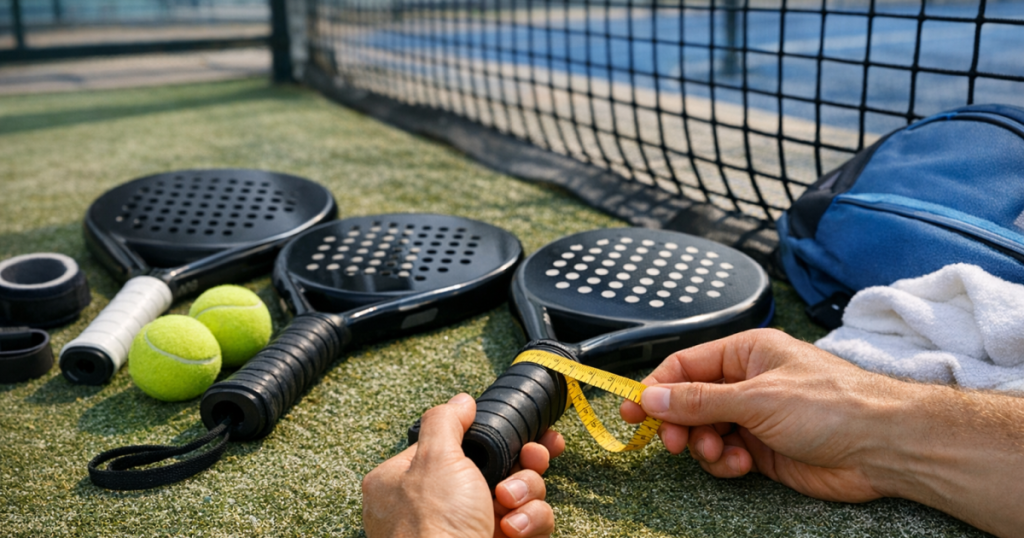
There is no perfect measurement test because padel comfort depends on hand size, grip pressure, sweat, technique and the racket’s handle shape. Still, a simple hand check can help you avoid extremes.
Hold the racket as if you are ready to volley, not as if you are posing for a product photo. Your fingers should wrap securely around the handle without having to crush it. Your thumb and index finger should feel relaxed enough to make small adjustments. The handle should not feel as if it is floating inside your hand, but it should not feel like a thick bat either.
Then test it during real shots. Static checks are useful, but padel is fast. Hit a few volleys, returns and bandejas if you can. Pay attention to whether the racket face stays stable, whether your grip changes feel easy and whether you can loosen your hand between shots. New players often grip too tightly anyway, so judge the handle after warming up rather than in the first two minutes.
Grip thickness, slipping and sweat are separate issues
Many beginners assume a slipping racket means the handle is too small. Sometimes it is, but often the issue is sweat, a worn overgrip or not changing the grip often enough. Indoor courts, summer club nights and long sessions can all make a previously comfortable set-up feel unreliable.
If the racket slips mainly when your hand gets sweaty, try a fresh overgrip before adding lots of thickness. If the grip rotates even when your hand is dry, thickness and wrapping quality are more likely to be part of the problem. If the racket slips only on hard shots, your contact point and grip pressure may also need attention.
For a deeper look at sweaty hands, worn grips and wrapping habits, the guide on how to stop your racket slipping during play is the better next step.
How many overgrips should a new player use?
Most beginners should start with one overgrip over the original base grip. That gives a cleaner, slightly tackier feel without making the handle dramatically larger. After two or three sessions, you can decide whether you want more thickness, a fresher surface or a different texture.
Using two overgrips can make sense if the handle still feels too slim or unstable. Beyond that, be careful. Too many layers can round off the handle edges, reduce feedback and make the racket feel disconnected from your hand. Padel relies on touch as well as power, so a soft, bulky handle is not always an upgrade.
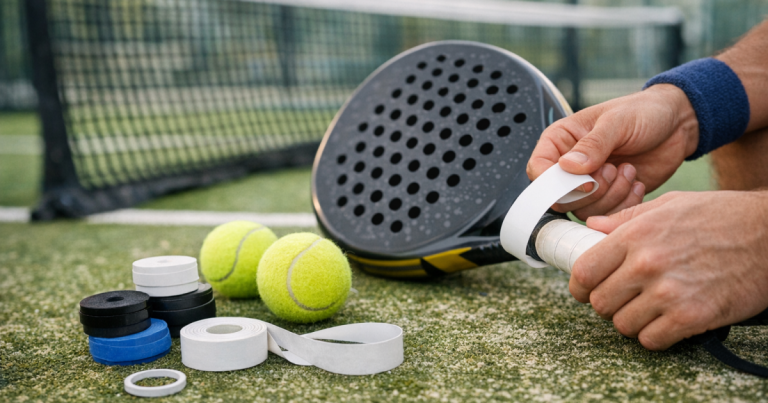
When adding an overgrip, wrap with even tension and a consistent overlap. Start neatly at the butt cap, work up the handle and secure the finish without leaving raised edges where your upper hand or fingers rest. If the final result looks lumpy, it will probably feel lumpy during points.
Base grip versus overgrip
The base grip is the main grip fitted directly to the handle. It provides the foundation for comfort, shape and cushioning. An overgrip is the thinner layer most players replace more often. It changes surface feel and can add a small amount of thickness.
For new players, overgrips are the easier adjustment because they are simple to change and do not permanently alter the racket. Replacing the base grip is more of a deliberate reset. It can help if the original grip is worn, damaged, too cushioned or badly fitted, but it is worth taking your time because the base layer affects the whole handle shape.
If you want a real-world example of how a small surface change can alter feel, the Wilson Pro Overgrip review explains what a familiar overgrip can do without treating it as a magic fix.
What your playing level changes
At the beginning, comfort and security matter more than tiny preferences. You are still learning how hard to hold the racket, how early to prepare and how to keep the face stable. A sensible grip set-up should make those basics easier, not distract you.
As you improve, you may notice more specific preferences. Some players like a slimmer feel for faster wrist action and easier grip changes. Others prefer a slightly fuller handle for stability on volleys and defensive blocks. Neither is automatically correct. The right feel is the one that lets you play relaxed, repeatable shots under pressure.
Club play is the best test. A grip that feels perfect in a five-minute knock-up may feel different in a full match, especially when you are returning serves, defending off the glass or reacting to quick net exchanges. Give any change enough court time before deciding it has worked.
Beginner mistakes to avoid
- Copying a stronger player’s grip set-up without considering your own hand size and technique.
- Adding multiple overgrips in one go and then wondering why the racket feels slow.
- Keeping an old, shiny overgrip for too long and mistaking wear for bad sizing.
- Changing racket because the handle feels wrong before trying a simple grip adjustment.
- Wrapping unevenly, leaving ridges that irritate your hand or affect finger placement.
- Assuming discomfort always means the grip is wrong; technique, tension in your hand and shot timing can all contribute.
One useful habit is to change only one thing at a time. If you add an overgrip, do not also change racket, balls and shoes in the same session and then try to judge the result. Keep the test simple so you know what made the difference.
What stands out
For most new players, grip sizing is less about finding a labelled number and more about building a comfortable handle set-up. Start with the racket’s existing base grip, add one overgrip if needed, and judge the result during real play rather than only at home.
If the racket twists, feels insecure or makes you squeeze too hard, the handle may be too slim or too worn. If it feels slow, padded or difficult to adjust, it may be too thick. If it slips only when you sweat, focus on grip freshness and surface feel before adding bulk.
The aim is simple: a handle that lets you hold the racket securely without tension. Once that feels right, you can stop thinking about the grip and start concentrating on footwork, positioning and making better decisions in rallies.
FAQ
Do padel rackets come in different grip sizes?
Not usually in the same obvious way as tennis rackets. Many padel rackets have a standard handle, and players fine-tune the feel with overgrips or, less commonly, a different base grip.
Should beginners use one or two overgrips?
Start with one overgrip over the original base grip. If the handle still feels too thin after a few sessions, try a second, but avoid building up the handle too quickly.
Is a thicker grip better for control?
Only if the original handle feels too slim or unstable. A grip that is too thick can reduce touch and make quick changes harder, so control depends on balance rather than maximum thickness.
How often should I change my overgrip?
Change it when it feels shiny, slippery, compressed or uncomfortable. Players who sweat more or play several times a week will usually need to replace it more often than occasional players.
Can the wrong grip cause arm pain?
A poor grip set-up can contribute to tension, but it is not the only cause. If wrist, elbow or shoulder pain persists, stop playing through it and get appropriate medical advice.