Choosing your first racket is easier once you know which details actually change how it feels on court. The label can look technical, but padel racket specs mainly tell you four useful things: where the sweet spot sits, how easy the racket is to move, how much help it gives on slower shots, and how firm it feels at impact. For beginners, the aim is not to find the most powerful racket. It is to find something predictable enough to help you learn clean contact, simple volleys and controlled lobs.
The short answer
Most new players are better served by a racket that feels manageable rather than dramatic. A round or gently teardrop-shaped racket, moderate weight, even or slightly low balance, and soft-to-medium foam will usually be easier to control while you build timing.
That does not mean every beginner needs the same racket. A stronger player coming from tennis may cope with a heavier or more head-heavy model sooner. A smaller adult, junior or player who tires quickly may be happier with a lighter frame. The useful part is understanding what each spec changes, then matching it to how you actually play.
If you are still working out whether racket cost should match your playing frequency, the guide on how much to spend on a first padel racket is a good next step once the spec terms below make sense.
Shape: where the sweet spot tends to sit
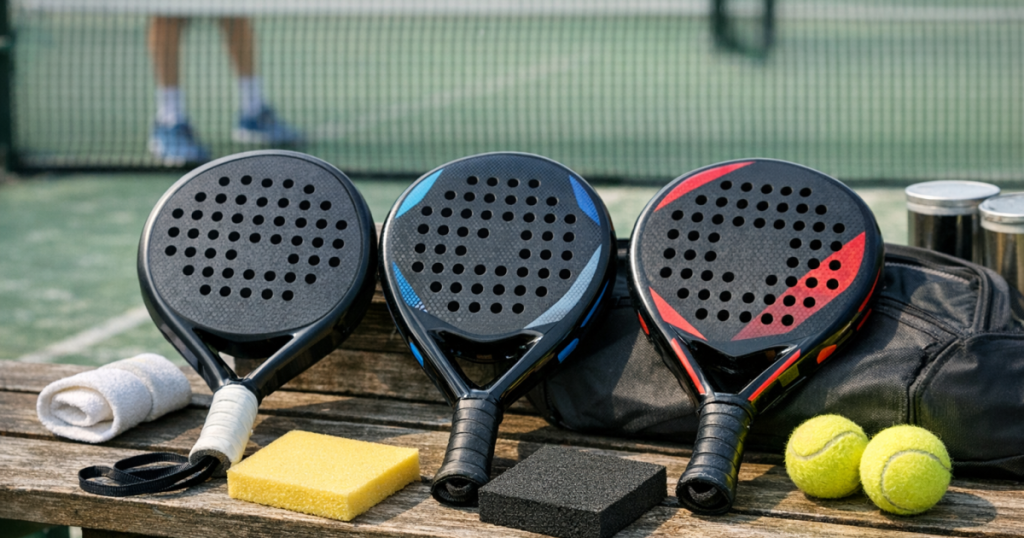
Padel rackets are normally described as round, teardrop or diamond. Shape affects how forgiving the racket feels and where you get the cleanest contact.
Round rackets
Round rackets usually have a larger, more central sweet spot. That makes them friendly for beginners because off-centre hits are less punishing. They also tend to feel easier to manoeuvre at the net and during quick defensive blocks, although the exact feel still depends on weight and balance.
Choose a round shape if your main goal is consistency. It helps when you are learning to use the glass, return serves calmly, and keep rallies alive instead of trying to finish points too early.
Teardrop rackets
Teardrop rackets sit between control-focused round models and more attacking diamond shapes. The sweet spot is often a little higher than on a round racket, so you may get a more lively feel on overheads while still keeping reasonable control.
This shape can suit beginners who already have a decent racket-sport background, but it is not automatically better. If the racket also has a high balance or very firm foam, it may feel demanding even if the shape looks beginner-friendly.
Diamond rackets
Diamond rackets are usually aimed more at attacking players. The sweet spot tends to sit higher towards the top of the racket, which can reward powerful smashes and aggressive volleys. The trade-off is that mistimed contact can feel less forgiving.
For most first-time players, diamond shapes are harder work. They can make late defensive shots, low volleys and awkward rebounds feel less stable. If you are still learning the basic shot patterns, a diamond racket is rarely the simplest starting point.
Weight: easy movement matters more than headline power
Adult padel rackets often sit roughly in the 340 g to 390 g range, but always check the listed range for the exact model because manufacturing tolerances and grip setup can alter the final feel. A few grams may not sound like much, but you will notice it during fast exchanges, long sessions and repeated volleys.
A lighter racket is usually easier to move, easier to prepare with, and less tiring over a match. That can help beginners who are still late to the ball or who grip too tightly under pressure. The possible downside is that very light rackets can feel less stable against hard-hit balls, especially when blocking at the net.
A heavier racket can feel more solid through contact and may suit players with good timing and strength. The drawback is reduced manoeuvrability. If your racket head arrives late, the extra mass will not help; it will usually make the error bigger.
As a simple starting point, many beginners should prioritise a weight that lets them swing relaxed for a full session. If your forearm is tired after warm-up volleys or you struggle to adjust quickly on returns, the racket may be too heavy, too head-heavy, or both.
Balance: why two rackets of the same weight can feel different
Balance describes where the weight feels concentrated. This is one of the most overlooked padel racket specs because two rackets can weigh the same on a scale but feel completely different in the hand.
Low balance
A low-balance racket feels more weighted towards the handle. It is normally easier to manoeuvre, which helps with quick reactions, defensive shots and controlled volleys. Beginners often find this reassuring because the racket feels less like it is pulling the hand forwards.
Medium balance
A medium-balance racket aims for a blend of control and help through the ball. This is a sensible middle ground for many improving players, especially if the shape and foam are also forgiving. It can be a good route once you are playing regular social matches and want a little more presence without losing too much handling.
High balance
A high-balance racket feels heavier towards the head. It can add leverage on attacking shots, but it also slows down preparation and can feel demanding in defence. New players often mistake high balance for quality because the racket feels powerful in a shop swing. On court, it can be much harder to control when the ball is coming quickly off the glass.
Foam: the feel behind the face
The foam inside the racket affects comfort, rebound and how much feedback you feel at impact. You will often see terms such as soft EVA, medium EVA, hard EVA or polyethylene foam. Brands use their own naming systems, so treat the label as a guide and confirm the feel by testing if possible.
Softer foam usually gives a more forgiving, cushioned feel. It can help on slower shots because the ball comes off the racket without requiring perfect technique. For many beginners, this makes rallies feel easier and reduces the urge to swing too hard.
Medium foam can feel more direct while still offering some comfort. It is often a good progression point for players who have started to control the ball better and want clearer feedback on volleys, lobs and bandejas.
Firmer foam tends to reward players who create their own racket-head speed and hit the sweet spot regularly. It can offer precision, but it may feel harsh or unhelpful if your contact point moves around. For a beginner, firm foam plus a high balance is usually a demanding combination.
How the four specs work together
No single spec tells the whole story. A round racket with high balance may feel less beginner-friendly than expected. A teardrop racket with soft foam and manageable weight may be easier than its shape suggests. The goal is to read the combination rather than judging one number or label in isolation.
Here are some common beginner scenarios:
- A nervous first-time player who wants fewer mishits will usually benefit from a round shape, low-to-medium balance and soft-to-medium foam.
- A tennis player moving into padel may enjoy a teardrop shape, medium balance and medium foam, provided the racket still feels quick enough at the net.
- A player who loves attacking but is still inconsistent should be careful with diamond shapes, high balance and very firm foam until their timing is reliable.
- A player who gets tired late in matches should think carefully about weight and balance, not just shape. A lighter or lower-balance option may make the whole session more enjoyable.
Specs also matter less if your fundamentals are unclear. Before chasing more power, it is worth building confidence with court layout, beginner shots and simple tactics, because better positioning often makes a bigger difference than a more advanced racket.
Checks to make before committing to a racket
When you read a product page or pick up a racket at a club shop, use the specs as a short checklist rather than a test of technical knowledge.
- Check the shape first. Round is usually the safest beginner route; teardrop can work if the rest of the racket is not too demanding.
- Look at the weight range, not just the headline model name. If possible, hold the actual racket you will use.
- Pay attention to balance. A head-heavy racket can feel tiring even when the listed weight looks reasonable.
- Read the foam description carefully. Soft and medium foams are usually more forgiving than firm competition-style cores.
- Think about your weekly use. If you play once a fortnight, comfort and control may matter more than extra power.
- Test simple shots if you can: a block volley, a lob, a slow forehand and a defensive rebound. These reveal more for beginners than a big smash.
Once you own a racket, specs are only part of the story. Heat, damp storage, wall contact and general knocks can all affect how long it feels good. For simple habits that extend its life, read the beginner guide to looking after your padel racket.
Main points
For most beginners, the most useful racket is not the most advanced one. It is the one that helps you prepare early, contact the ball cleanly and keep rallies under control.
- Round shapes are usually the most forgiving starting point.
- Teardrop shapes can suit improving players who still want some control.
- Diamond shapes are generally less forgiving and more attack-focused.
- Lighter rackets are easier to move, but very light frames may feel less stable.
- Low or medium balance is normally easier for new players than high balance.
- Soft-to-medium foam is usually more beginner-friendly than very firm foam.
The simplest rule is to choose a racket that feels calm in awkward situations, not only impressive on easy balls. If it helps you defend, reset the rally and learn proper shot choices, it is doing its job.
Things readers ask
Is a heavier padel racket always more powerful?
No. Extra weight can add solidity, but only if you can move the racket on time. For beginners, a racket that is slightly lighter and easier to control often produces better shots in real rallies.
Should a beginner avoid all diamond-shaped rackets?
Not always, but most beginners will find them less forgiving. If you are still learning contact, rebounds and volley control, a round or mild teardrop shape is usually easier.
What is the safest foam choice for a first racket?
Soft-to-medium foam is usually the safest starting point. It tends to feel more forgiving on slower shots and less punishing when your timing is not perfect.
Can grip changes affect how the racket feels?
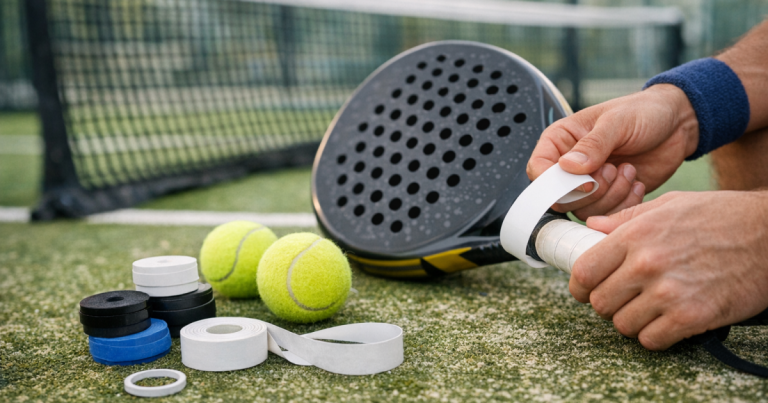
Yes. Adding overgrips increases handle thickness and can slightly change the overall weight and feel. It will not transform the racket, but it can make it feel more secure in your hand.
Do specs matter more than trying the racket?
Specs help you shortlist sensible options, but trying a racket is still the clearest test. If you can, judge it on normal beginner shots rather than only warm-up smashes.
What to remember
Shape, weight, balance and foam are not separate puzzles. They work together to create a racket that feels forgiving, lively, solid or demanding. As a beginner, look for a calm combination: forgiving shape, manageable weight, friendly balance and foam that gives you confidence without feeling vague. That kind of racket will support better habits and make regular club play much more enjoyable.