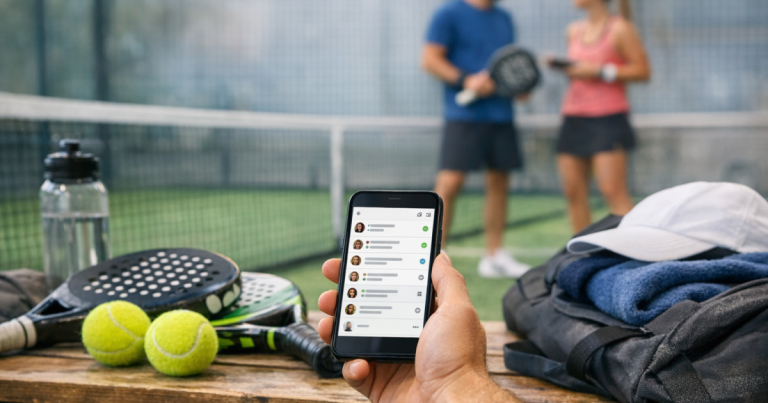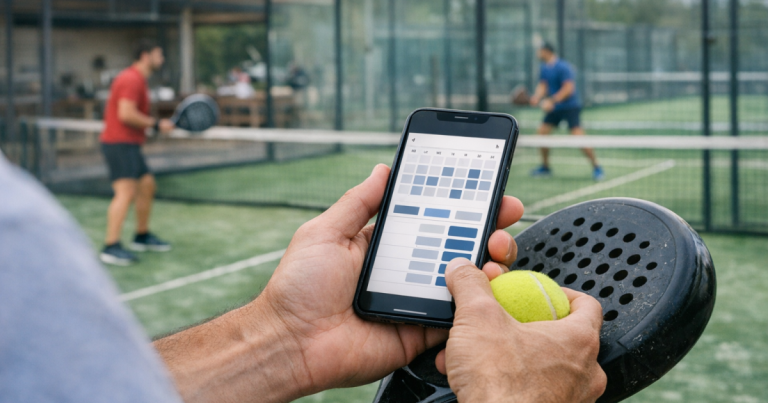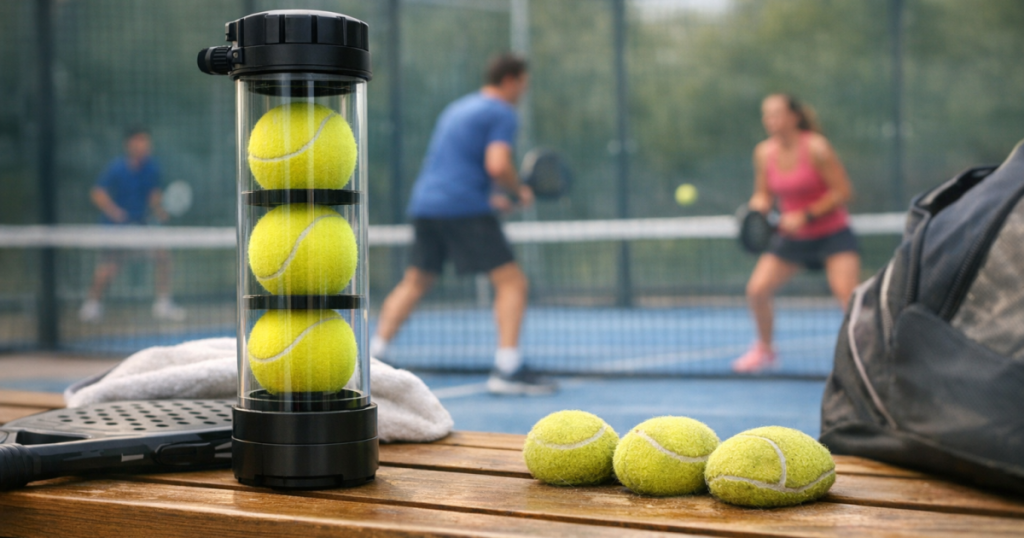
Weekly club games expose one small annoyance quickly: balls that felt lively on Monday can feel flat by Sunday. This Pascal Box review looks at whether a pressurised storage box is a genuinely useful addition for beginner and improver padel players who bring balls to regular matches, rather than another bit of kit that sits in the bag.
Main points
The Pascal Box is most useful if you open a tube, play one match, and want the remaining balls to feel more consistent for the next session. It is not a magic fix for bald, heavily worn or damp balls, and it will not make poor-quality balls feel premium. Used sensibly, though, it can make weekly club games feel a bit fairer and less wasteful.
If that sounds like your routine, put the Pascal Box on your shortlist and verify the current version, capacity, sealing method and included accessories before buying. Those details matter more than the headline promise.
Product overview
The Pascal Box is a pressurised ball storage container designed to help keep racket-sport balls closer to their playable pressure between sessions. For padel players, the appeal is obvious: you often use three balls for a social match, then have to decide whether they are still good enough for the next booking.
That decision matters at club level. A lively ball rewards normal timing and makes rallies feel cleaner. A flat ball can make everyone hit harder, mistime rebounds off the glass, and argue silently about whether the match feels “off”. If you are the person who usually brings the balls, a storage box can help remove some of that guesswork.
The Pascal Box is best understood as ball management, not ball revival. If the felt is worn smooth, the ball has been played outdoors in wet conditions, or it has lost shape, storing it under pressure will not undo that wear. For a better feel for when balls are past their best, the guide to padel ball speed, bounce and replacement is a useful next read.
Key specs
- Product type: Pressurised storage box for racket-sport balls.
- Main padel use: Keeping opened balls in more consistent condition between weekly games.
- Capacity: Check the current product listing, as capacity is one of the most important fit points for padel players using standard three-ball tubes.
- Pressure control: Verify how the current version is pressurised and whether any pump, valve or gauge is included.
- Seal design: Look for clear information on the lid, gasket or sealing mechanism, because air retention is central to the product’s usefulness.
- Portability: Check the external size against your racket bag if you plan to take it to club nights rather than leave it at home.
- Care needs: Keep the sealing area clean and dry, and follow the maker’s instructions for opening, pressurising and releasing pressure.
Pros and cons
Pros
- Helpful for players who regularly reuse balls across more than one club session.
- Can make ball feel more predictable compared with leaving opened balls loose in a bag.
- Encourages better habits around ball care, storage and deciding when to replace balls.
- Potentially useful for social organisers who supply balls for a regular four.
- Simple idea with a clear purpose: preserving playability between matches.
Cons
- Not worthwhile if you always use a fresh tube and rarely keep opened balls.
- Will not restore badly worn, wet, misshapen or very old balls.
- Takes up extra bag or cupboard space compared with a standard ball tube.
- Requires a bit of discipline after matches; if you forget to store the balls properly, the benefit is lost.
- Buyers need to verify current capacity and included accessories rather than assuming every listing is identical.
Performance in real use
Ball feel between sessions
The strongest case for the Pascal Box is consistency. In a typical weekly padel routine, balls are opened, used for 90 minutes, then either left in a bag or put back into a loose tube. By the next game, they can feel duller even if the felt still looks decent. A pressurised box aims to slow that drop-off.
For beginners and early-stage club players, that consistency is more valuable than it first sounds. You are still learning timing, glass rebounds and controlled lobs. If the ball changes dramatically from week to week, it becomes harder to judge whether a mistake came from your technique or from the equipment.
Ease of use after a match
A product like this only works if it fits your real routine. After a social game, you may be chatting, checking the next court booking, or rushing to get home. The Pascal Box needs to be easy enough that you actually use it before the balls disappear into the bottom of your bag.
The practical habit is simple: decide which balls are still worth keeping, make sure they are dry and reasonably clean, place them in the box, seal it correctly, and store it somewhere stable. Do not treat the box as a bin for every ball you have ever used. It is for balls that are still playable and worth preserving.
Club-night practicality and etiquette
For weekly club games, the etiquette point is important. Nobody wants to start a friendly match by debating whether the balls are dead. If you use the Pascal Box, be open about it: “These were opened last session and stored under pressure; happy to use a new tube if people prefer.” That keeps the tone friendly and avoids making other players feel awkward.
It is especially handy for regular fours where the same group shares ball duties. One player can bring the box, another can bring the next new tube, and the group can agree when balls move from match use to warm-up or drill use. If you are still getting used to club routines, the guide on booking a padel court at a UK club also helps make the whole session feel less improvised.
Durability and maintenance
The long-term usefulness of the Pascal Box depends heavily on the seal and pressure mechanism. With any pressurised container, small leaks, dirt around the seal or careless closing can reduce the benefit. Before buying, check whether replacement parts are available, what the maker says about cleaning, and whether the current model has clear instructions.
In normal padel use, the main maintenance should be routine rather than fussy: keep sand, grit and moisture away from the sealing area, avoid throwing it loose into a bag with sharp items, and do not force the lid or valve. If a box no longer holds pressure as intended, its value drops sharply.
Value for weekly players
The Pascal Box makes the most sense when you already spend money on balls regularly and dislike wasting ones that still have life in them. It is less convincing for a brand-new player who has not yet settled into a weekly schedule. If you play once a month, borrow balls, or mostly join sessions where the organiser supplies new ones, it may sit unused.
For a regular club player, the value is not just about saving balls. It is about avoiding a poor first set because everyone slowly realises the ball is lifeless. Better ball management supports better games, cleaner rallies and fewer excuses.
Who it’s best for / who should skip it
Best for
- Players who bring balls to the same weekly club group.
- Beginners and improvers who want more consistent bounce between sessions.
- Social organisers who dislike opening a fresh tube for every casual hit.
- Players who already pay attention to ball condition and replace balls when needed.
- Households where more than one person plays padel or tennis and opened balls build up quickly.
Skip it if
- You always play with balls supplied by the club, coach or session organiser.
- You only play occasionally and rarely keep balls after a match.
- You expect it to bring very old or heavily worn balls back to life.
- You do not want another accessory to carry, clean or remember after games.
- Your main issue is choosing better balls in the first place, rather than storing opened ones.
FAQ
Will the Pascal Box make flat padel balls feel new again?
No. It is better viewed as a preservation tool for still-playable balls, not a repair tool for dead, worn or damaged ones.
Is it worth using for one match per week?
Yes, if you regularly reuse opened balls and care about consistent feel. If you always open a fresh tube, it is less necessary.
Can I take it to the club in my racket bag?
Possibly, but check the current dimensions and your bag layout first. Some players will prefer to store it at home and only bring the balls.
Should beginners buy this before other padel gear?
No. Shoes, a suitable racket and decent balls come first. The Pascal Box is a useful extra once you are playing regularly.
How do I know when balls should be replaced anyway?
If the bounce is poor, the felt is badly worn, or rallies feel unusually heavy, replace them. A storage box cannot fix physical wear.
Alternatives
The simplest alternative is to use a fresh tube for matches and move older balls into a separate warm-up or drill pile. That is often the cleanest option for competitive club games, where nobody wants uncertainty about ball condition.
A second option is a group ball rota. Each player brings a new tube in turn, and any remaining playable balls are clearly marked for casual hitting. This costs no extra equipment and works well when the same four players meet regularly.
Compared with those habits, the Pascal Box adds structure. It is not essential, but it is neater than leaving opened balls loose in a bag and more consistent than hoping a half-used tube still feels fine next week.
Verdict + score
Verdict: 8.1/10. The Pascal Box is a genuinely useful accessory for weekly padel club players who bring and reuse balls, provided expectations stay realistic. It helps with consistency and organisation, but it should sit behind the basics: good balls, sensible replacement habits and clear agreement with the people you play with.
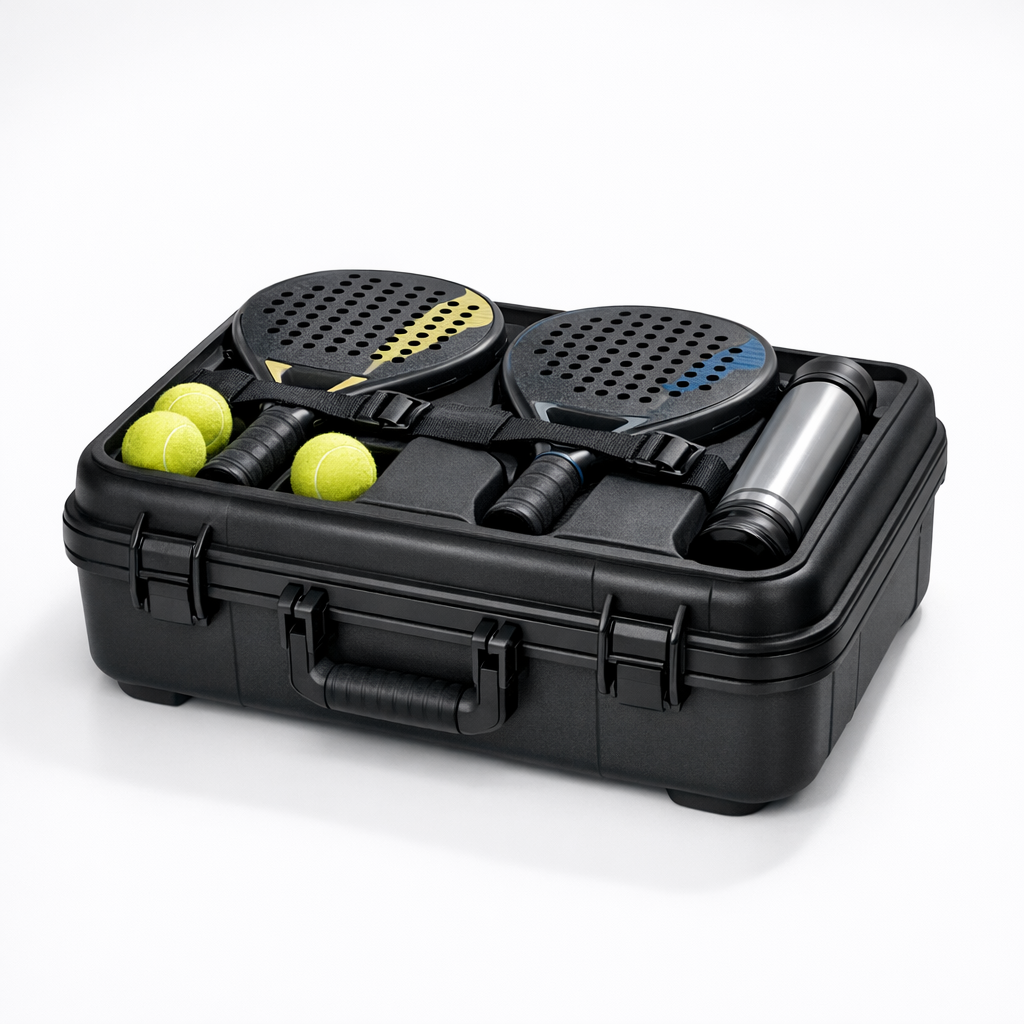
Pascal Box
The Pa scal Box is most useful if you open a tube, play one match, and want the remaining balls to feel more consistent for the next session.
You might also like: How to Fit Padel Racket Protector Tape Neatly.