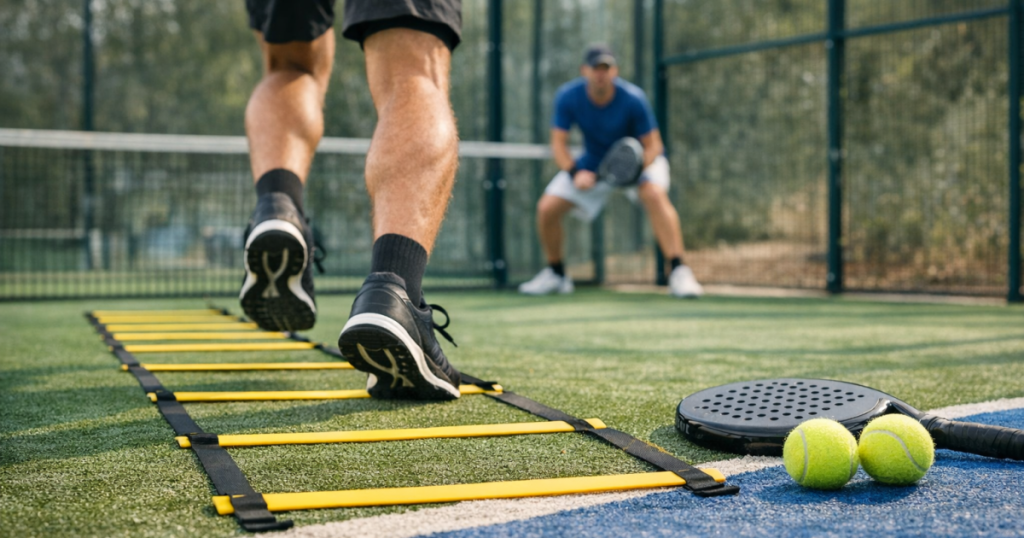
A SKLZ agility ladder can be useful for padel footwork, but only if you use it to build court habits rather than just fast feet. For beginners, the real value is learning smaller steps, better balance and quicker recovery after each shot.
It is not a magic shortcut. If your movement problems come from late reactions, poor positioning or not knowing where to recover after a shot, a ladder helps only when paired with padel-specific drills.
High-speed footwork drills and return-to-play work after injury should be guided by a qualified coach or physiotherapist, with sessions run in line with venue safety requirements and recognised coaching standards.
What to know first
For most newer padel players, an agility ladder is worth considering if you want a simple way to practise rhythm, coordination and short adjustment steps away from the court. It is small enough to use in a garden, sports hall or quiet warm-up space, and it can make you more aware of how your feet land.
The limit is that padel movement is not just straight-line speed. You need to read the ball, react to opponents, use the glass, recover towards the right part of the court and stay balanced while hitting. A ladder can support those skills, but it cannot replace rallies, coaching or live drills.
If you are choosing where to spend time as a beginner, put regular court time first, then simple footwork habits, then equipment extras. If you are still getting your basics together, this padel gear buying order is a useful way to avoid spending money in the wrong sequence.
Where the ladder actually helps your padel
The SKLZ Agility Ladder is most useful for building repeatable foot patterns. That matters in padel because many beginner mistakes happen before the shot: feet too wide, weight on the heels, overstriding, or standing still after contact.
A ladder can help with three beginner-friendly areas:
- Short adjustment steps: getting your feet into a hitting position without lunging.
- Balance after movement: landing softly so you can play the next ball instead of drifting through the shot.
- Recovery rhythm: moving, stopping, hitting, then resetting rather than watching your own shot.
Those sound simple, but they are exactly the habits that make club padel feel less rushed. You do not need to be explosive to benefit. In fact, beginners often get more from slow, tidy ladder work than from trying to sprint through it.
What it will not fix
A ladder does not teach you where to stand in a rally. It will not automatically improve your bandeja, your volley choices or your understanding of when to move forwards. It also will not recreate the awkward movements that happen when the ball rebounds off the back glass or dies low near the side wall.
This is why ladder drills should be treated as support work, not the main event. If you only do quick-feet patterns, you may become better at the ladder without becoming much better at padel. The transfer happens when you add split-steps, direction changes, shadow swings and recovery positions that match real points.
A simple 10-minute ladder routine for padel
Use this as a warm-up or a short off-court session. Keep the pace controlled at first. The aim is quiet, accurate feet, not looking impressive.
1. Two-feet rhythm
Step both feet into each ladder space, moving forwards. Stay light on the balls of your feet, keep your knees soft and avoid bouncing too high. This builds basic rhythm and helps you stop planting your feet too heavily.
2. Lateral shuffle
Stand side-on and move sideways through the ladder, placing both feet in each space. This is closer to padel than straight-line running because so much court movement is sideways or diagonal. Keep your chest facing forwards as if you were tracking the ball over the net.
3. In-in, out-out with a split-step
Step both feet into a space, then both feet outside it. After every few spaces, add a small split-step: a light hop into a balanced landing. In padel, the split-step helps you react just as the opponent strikes the ball, so this is one of the most useful habits to build.
4. Ladder exit into a shadow volley
Move through three or four ladder spaces, step out to one side, then shadow a compact volley. Pause in a balanced position after the imaginary contact. This connects foot speed to shot preparation, which is where many ladder routines become more padel-relevant.
5. Recover to ready position
After each exit, take two or three small recovery steps back to a neutral ready position. This is the part beginners often skip. In a real rally, the shot is only half the job; the reset prepares you for the next ball.
How often should beginners use it?
Two short sessions per week is plenty for most early-stage players. Aim for 8 to 12 minutes of focused work rather than a long fitness session. If your calves, ankles or knees feel overloaded, reduce the pace and volume rather than pushing through poor movement.
Ladder work also fits well before a social hit, provided it does not eat into court time. A few minutes of controlled steps can wake up your feet and make the first game feel less stiff. Just avoid leaving the ladder where other players might trip over it, and do not use it on a court surface if the venue does not allow training aids.
Key checks before using one for padel
Before you rely on any ladder routine, check the practical details:
- Surface: use it on a flat, dry area where the ladder sits securely and does not slide around.
- Footwear: wear shoes that give lateral support, not soft running trainers that roll easily during sideways movement.
- Space: leave room to exit the ladder safely for shadow shots and recovery steps.
- Quality of movement: stop if you are clipping every rung, losing posture or twisting awkwardly.
- Padel connection: include a split-step, direction change or shadow shot so the drill has a clear link to match play.
Footwear is worth taking seriously because ladder drills involve repeated side steps and quick stops. If you are unsure what supportive court shoes feel like, the Head Revolt Pro 4.5 padel shoes review gives a helpful example of the trade-off between stability and weight.
When it is worth buying
A ladder makes sense if you already play or practise regularly and want a cheap, simple way to add structure to your footwork. It is also useful if you enjoy having a visible drill layout, because the rungs give you instant feedback on step size and rhythm.
It is less urgent if you are brand new and have not yet learned basic positioning. In that case, your first gains will usually come from understanding the game, playing more points and getting feedback on where to stand. A ladder can come later, once you know which movements you are trying to improve.
It is also not essential if you dislike repetitive drills. You can practise many of the same habits using court lines, cones or simple shadow movement. The advantage of a ladder is convenience and consistency, not uniqueness.
Better ways to make ladder drills transfer to matches
The easiest mistake is treating the ladder as a speed test. For padel, try using it as a movement-quality tool instead. Each drill should answer a match question: can you move, stop, hit and recover without losing balance?
Here are simple ways to make the work more realistic:
- Add a verbal cue such as “volley”, “lob” or “back glass” so you react rather than move automatically.
- Finish each pattern with a compact shadow swing, not a big tennis-style action.
- Practise both directions so your weaker side does not get ignored.
- Keep your head up for some reps, because in padel you must track opponents and ball flight.
- Rest enough between sets so every repetition stays clean.
If you can, combine this with a beginner lesson or group session where someone can check whether your movement suits padel rather than just general fitness. For that route, this newcomer-focused coaching review may help you decide whether a coached session is a better next step.
Common questions
Will an agility ladder make me faster on court?
It can improve foot speed and coordination, but match speed also depends on anticipation. A player who reads the shot early will often look quicker than a fitter player who reacts late.
Can I use it indoors at home?
Yes, if you have a flat, clear area and enough room to move safely. Keep the movements controlled and avoid hard, noisy landings, especially on slippery flooring.
Should children use one for padel?
Children can use ladder drills when the work is age-appropriate, supervised and kept fun. Short coordination games are usually better than long, intense speed sessions.
Do I need a ladder if I already play twice a week?
Not necessarily. If you are improving through matches and drills, it is optional. It becomes more useful when you have a specific problem, such as slow recovery, heavy feet or poor balance after volleys.
What stands out
An agility ladder is worth it for padel footwork when it supports the movements you actually use in rallies: split-step, shuffle, adjust, hit and recover. It is not worth treating it as a standalone fitness gadget or a replacement for court experience.
For beginners, the best approach is simple: use it briefly, move cleanly, connect every pattern to a padel action and stop chasing speed for its own sake. Done that way, it can be a useful training aid without becoming another piece of kit that sits unused in your bag.