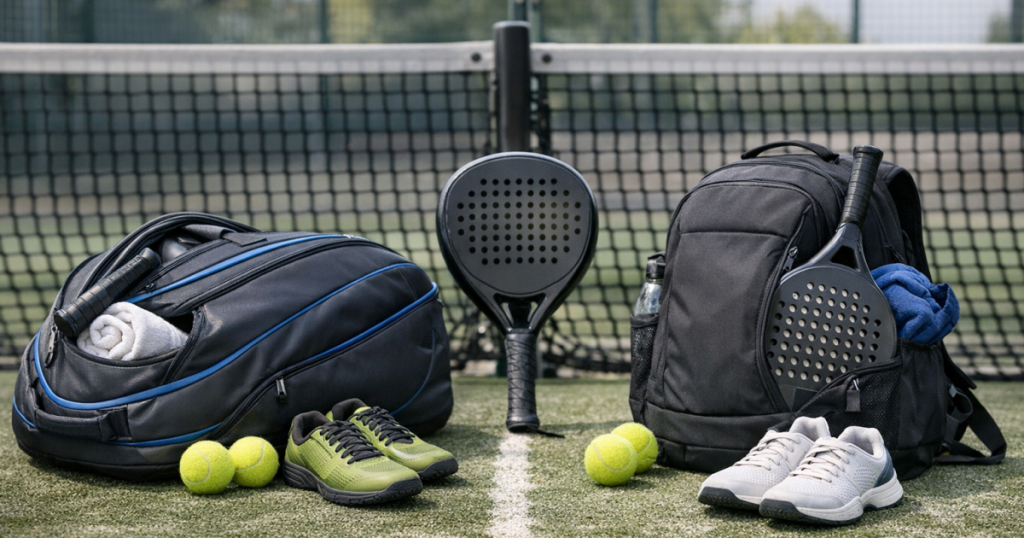
Turning up for a club session is easier when your kit is tidy, protected and simple to carry. The padel bag vs backpack decision is less about looking serious and more about protecting your racket, keeping shoes and clothes separate, and not taking up half the bench beside the court.
For many beginners, a backpack is enough for a first social game or coached session. A dedicated padel bag starts to make more sense when you play regularly, carry spare clothing, bring your own balls, or need separate space for shoes and damp kit after a match.
The short answer for club players
Choose a backpack if you travel light, use public transport, play one casual session at a time, or still borrow some kit. Choose a padel bag if you bring shoes, a towel, water, spare grips, a change of top, and possibly more than one racket.
- Backpack: best for light club sessions, coaching, quick games after work, and players who want a compact carry option.
- Padel bag: better for regular players who want more organisation, easier racket protection, and separate storage for shoes or damp clothing.
- Either can work: the right choice depends on how often you play, how you travel, and how careful you are when packing your racket.
If you are still at the stage of borrowing rackets or testing whether you will play weekly, do not rush into a large bag. If you already have your own racket and you are starting to book regular club nights, the extra space can quickly feel useful rather than excessive.
Step 1: Count what you actually bring to a session
Before thinking about bag shape, lay out what you normally take to the club. A typical beginner club session might involve a racket, a tube of balls, a water bottle, phone, keys, small towel and maybe an extra grip. That fits comfortably in many backpacks as long as the racket is not being bent, squashed or left loose against hard objects.
A longer evening session is different. You might arrive in work clothes, change into padel shoes, bring a clean top, carry a wet towel afterwards and want somewhere to put a snack or lightweight jacket. At that point, a padel bag gives you space to separate clean, dirty and fragile items rather than forcing everything into one main compartment.
Use this simple check: if your racket is the item you pack around, a backpack may be fine. If your racket, shoes and clothes are all competing for space, a padel bag will usually be less frustrating.
Step 2: Protect the racket first
Your racket is the item most likely to suffer from careless packing. In a backpack, the common problem is pressure: the racket head can be pushed against books, shoes, water bottles or the back of a car seat. In a padel bag, the common problem is complacency: players assume the bag protects everything, then throw keys, bottles or damp clothing into the same compartment.
Whichever option you use, the racket should sit flat, avoid hard pressure points, and be kept away from leaking bottles. If the handle sticks out of a backpack, be careful when walking through doors, sitting on trains or placing it under a table. It is easy to catch the handle or knock the racket against a wall without noticing.
For a deeper packing routine, the advice on using a padel backpack without damaging your racket is a useful next step if you prefer a compact setup.
Step 3: Decide how much separation you need
Club sessions create a surprisingly simple storage problem: clean things, wet things and fragile things should not all live together. A backpack can handle this if you use smaller pouches or bags inside it. A padel bag often handles it more naturally because it tends to offer more room and easier access.
When separation matters most
- Shoes: outdoor grit or indoor court dust should not rub against your racket face or clothing.
- Damp towel: after a warm session, keep it away from grips, clean kit and any paperwork or valuables.
- Water bottle: choose a position where a leak would not reach the racket compartment.
- Used overgrip: dispose of it properly rather than leaving sticky offcuts loose in the bag.
- Valuables: keys and coins can scratch surfaces if they share space with the racket.
If you are starting to take footwear more seriously, bag space becomes part of the decision. Padel shoes can make club play feel more secure, but they are also another bulky item to carry. The Head Sprint Team 4.0 padel shoes review explains the kind of beginner match situation where dedicated footwear starts to feel relevant.
Step 4: Match the bag to how you travel
Your journey to the club matters. A large padel bag may be comfortable from car boot to court, but awkward on a crowded train or bus. A backpack is usually easier for commuting, cycling short distances or walking through town, provided the racket is secure and does not swing around.
If you drive, a padel bag can sit flat in the boot and keep your kit together. Avoid leaving it in direct sun or a cold car for long periods, especially with balls, grips and a racket inside. If you commute, a backpack may be more polite and manageable, as long as you take care when turning in tight spaces.
Also think about lockers and changing rooms. Some clubs have limited storage, and a bulky bag can be annoying if everyone arrives with one. A compact bag or backpack is easier to tuck under a bench without blocking walkways.
Step 5: Think about club etiquette, not just storage
Good bag habits make club sessions smoother for everyone. Keep your bag away from court entrances, emergency exits, net posts and the area where players step off between points. If space is tight, zip it up and place it neatly rather than spreading towels, bottles and spare layers across the seating area.
Do not leave valuables loose beside the court, and avoid putting bags where balls can roll underneath during play. If you are playing in a mixed ability session, tidy kit helps the game keep moving because nobody is searching for balls, grips or phones between rotations.
After the match, take a minute to remove damp kit when you get home. This is not glamorous advice, but it prevents unpleasant smells and helps grips, clothing and towels dry properly before the next session.
Real club-session examples
First coached session
A backpack is usually enough. Bring one racket if you have one, water, a towel and a light layer. If you are borrowing equipment, keep the rest of your kit minimal so you can focus on the lesson rather than managing a large bag.
After-work social game
A padel bag is often more convenient if you need to carry shoes, playing clothes and work items separately. If you only have a backpack, use a separate shoe bag and keep your racket away from heavier objects.
Weekend club match
A padel bag becomes more useful here. You may want spare grips, an extra top, a towel, balls and snacks. It also makes it easier to find things quickly between games without emptying your whole bag beside the court.
Trying padel before buying kit
If you are still testing the sport, borrow or hire what you can and use a normal sports backpack for personal items. The guide on how to rent padel gear before buying your own can help you avoid spending too early.
Key checks before you commit to either option
- Racket fit: check that the racket sits without bending, crushing or rubbing against sharp items.
- Comfort: try carrying the loaded bag, not just the empty one. Shoulder comfort changes quickly once shoes and water are inside.
- Access: you should be able to reach balls, towel and water without digging through every compartment.
- Wet-kit control: make sure you have a plan for damp towels and clothing, even if that is a separate reusable bag.
- Court footprint: choose something you can place neatly beside a court without annoying other players.
- Future use: if you are moving from occasional games to weekly club play, allow a little room to grow without buying a huge tour-style bag you will not fill.
The best test is simple: pack for a real session at home, then carry the bag around for a few minutes. If it feels awkward before you have even reached the club, it will not improve when you are tired after a match.
Questions people ask
Can I use a normal gym backpack for padel?
Yes, for light sessions. The main issue is racket protection, so avoid forcing the racket into a tight space or packing heavy items against the face.
Will a padel bag make me look too advanced as a beginner?
No. Plenty of beginners use padel bags because they are practical. Just choose a size that matches your kit rather than carrying a half-empty oversized bag.
What should I pack for a 90-minute club session?
Bring your racket, balls if needed, water, a small towel, suitable shoes, a spare top and any personal essentials. Keep valuables zipped away and damp kit separate afterwards.
Is a backpack better for public transport?
Usually, yes. It is easier to manage in busy stations and on buses or trains. Just be aware of the racket handle when turning or sitting down.
Where should I put my bag during a match?
Place it neatly off the playing area, away from entrances and walkways. Follow any club instructions, and keep loose items zipped away so balls do not roll under them.
The big picture
A backpack is the simplest answer for occasional games, short coaching sessions and players who travel light. A padel bag is the more comfortable choice once club sessions become part of your weekly routine and you need better separation for racket, shoes, clothing and damp kit.
The right choice is the one that helps you arrive organised, protect your racket, respect shared club space and leave without forgetting half your kit. Start with what you actually carry, then choose the smallest option that handles it neatly.
Quick Buying Links
Padel Bag
The padel bag vs backpack decision is less about looking serious and more about protecting your racket, keeping shoes and clothes separate, and not taking up half the bench beside the court.For many beginners, a backpack is enough for a first social game or coached session.
Backpack for Club Sessions
Worth considering if its strengths better match your needs.