A friendly game can get tense quickly when two players remember the rule differently. Most padel rule disputes are not about gamesmanship; they happen because padel uses the walls, service boxes and net area in ways that feel unusual to beginners. The good news is that many arguments can be settled calmly if everyone knows the order of play, watches the bounce, and agrees how to handle uncertain calls before the match gets competitive.
The big picture
At beginner and club level, the best approach is simple: pause the point, agree what actually happened, apply the rule, then move on. If nobody is sure, replaying the point is usually the fairest social solution. In a league, box match or tournament, follow the organiser’s rules and accept the decision of the referee, marker or appointed official.
- Start with the fact, not the opinion: Did the ball bounce first? Did it touch the wire? Did anyone touch the net?
- Use the simplest rule that fits: Many arguments come from mixing up serve rules and rally rules.
- Keep the tone low: A calm question settles more points than a loud certainty.
- Agree uncertain calls early: Before you start, decide whether close calls are replayed or given to the player closest to the ball.
If you are still getting used to the court, it helps to understand the layout first. The service boxes, centre line, glass and side fence all matter in different ways, and our guide to padel court layout, beginner shots and simple tactics is a useful next step if the markings still feel new.
Why beginner matches create so many close calls
Padel looks relaxed, but the rules create fast judgement moments. A ball can be in after clipping a line, legal after rebounding from glass, out if it hits the back wall directly, or still playable after hitting the side wall on the opponent’s side. That is a lot to process while moving, turning and trying not to panic near the glass.
Disagreements also happen because players arrive from tennis, squash or badminton with different instincts. Tennis players often focus on lines. Squash players may be comfortable with wall rebounds but less familiar with padel’s service restrictions. New players may not yet know when the wire fence changes the outcome.
The aim is not to win every discussion. It is to protect the rhythm of the match, make consistent decisions, and avoid turning a learning game into a courtroom scene.
Serve arguments: line, box, net and fence
The serve causes more debate than almost any other beginner rule. In padel, the server must bounce the ball behind the service line and hit it underarm, diagonally into the opposite service box. The ball is good if it lands in the correct service box, including on the service line. A ball that touches the line is in.
Common serve disputes include:
- “It touched the line.” On a serve, the service line counts as in. If the ball clips the correct service box line, the serve is good unless another fault happens afterwards.
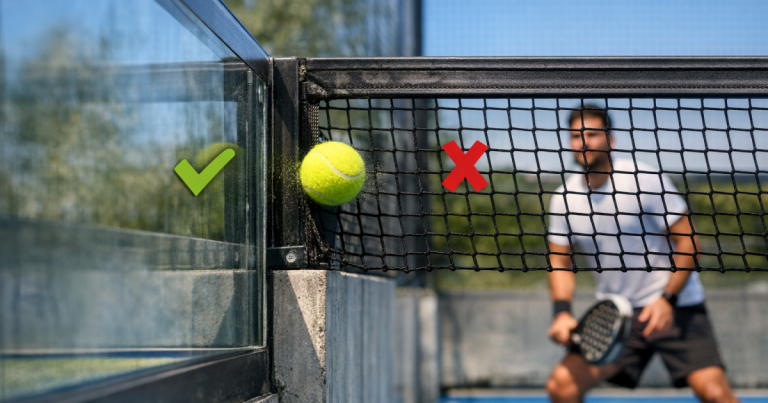
- “It hit the side fence after bouncing.” On a serve, if the ball lands in the correct service box and then touches the metallic fence before the second bounce, it is a fault. Players often confuse this with rally play, where the fence can be part of a live point after a legal bounce.
- “It clipped the net and went in.” If the serve touches the net and then lands correctly without becoming a fault, it is a let and the server repeats that serve.
- “The server hit it too high.” The serve must be underarm and struck at or below waist height. In casual play, avoid dramatic arguments over a borderline waist-height call unless it is clearly repeated and affecting the game.
A good settlement method is to separate the stages: first bounce position, then net touch, then what happened after the bounce. Most serve debates become clearer when you walk through that order.
Wall rebound disagreements
The wall is where padel feels most different from tennis. During a rally, the key question is usually whether the ball bounced on the opponent’s court before touching the glass or fence. If it lands in the opponent’s court first, the point normally continues. If it flies directly into the opponent’s glass or fence without bouncing, it is out.
That one distinction settles a large number of arguments. For example, a smash that clears the net, lands inside the court, and then hits the back glass is usually in and playable if the opponent can reach it. A drive that clears the net and hits the back glass before touching the floor is out.
Players also argue about using their own glass. You can play the ball off the glass on your side to send it back over the net, which is a normal defensive shot. The important point is that the return must legally reach the opponent’s court. If the ball does not cross the net, or it touches something that makes it dead before doing so, the point is lost.
For more detail on what remains live during a rally, the separate guide to legal shots, rebounds and point loss breaks down the common rebound patterns in a more visual way.
Two bounces: the dispute nobody wants to admit
The double-bounce call is awkward because it often happens near a player’s feet. One side thinks the ball was still live; the other saw it bounce twice. In friendly games, the player closest to the ball is usually in the best position to call it, but they should be honest if they are uncertain.
A practical habit is to call “two” straight away if you clearly see the second bounce. Do not wait until after the opponent hits a good recovery, because late calls feel suspicious even when they are correct. If the bounce was hidden by the player’s body or the glass angle, replaying the point is often the most peaceful answer in social play.
In competitive club matches, avoid bargaining after the point. Make the call promptly, accept the relevant official process if there is one, and continue. A match can survive one disputed bounce; it rarely survives ten minutes of debate about it.
Net touches and reaching over
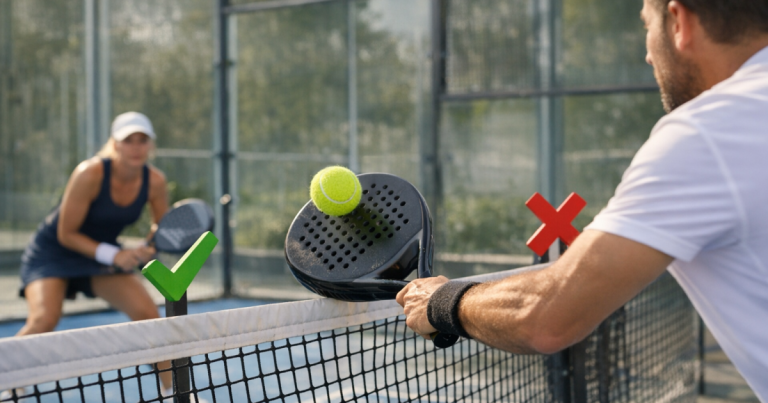
Net disputes usually involve enthusiasm rather than bad intent. A player charges forward, wins the exchange, then someone notices a racket, shoe or item of clothing touched the net. In padel, touching the net with your body, racket or clothing while the ball is in play loses the point.
Reaching over the net is a little more nuanced. You cannot hit the ball before it has crossed to your side. However, after the ball has crossed the net and, for example, bounces on your side and spins back towards the opponents, there are situations where playing the ball on the other side of the net can be legal. Beginners should not overcomplicate this. Ask one question first: had the ball already crossed to your side before you made the shot?
If the answer is no, the point should go to the other pair. If the answer is yes, then check whether anyone touched the net or interfered with the opponents’ space.
Ball hits a player, racket or object
Another common argument is whether a ball that strikes someone is still in play. If the ball hits a player before bouncing on the court, that player’s pair normally loses the point. This includes being hit by a smash, a volley or a rebound that comes off the glass and catches the body.
If the ball hits a racket, it depends on whether it was a legal stroke. A normal hit with the racket is fine. A double contact, carry or accidental body-and-racket combination can cause debate, but at beginner level these are often hard to judge in real time. Be honest about obvious mishits, and do not over-police tiny contacts that nobody clearly saw.
Loose balls from another court, falling items or outside interruptions should be handled sensibly. Stop the point immediately if a stray ball affects play. If the interruption genuinely distracts or creates confusion, replay the point rather than trying to guess what would have happened.
Scoring mix-ups: fix them before the next serve
Scoring disputes are easier to settle when caught early. Padel uses tennis-style scoring in many formats: 15, 30, 40 and game, with deuce or golden point depending on the format being used. The problem is not usually the scoring system; it is players forgetting who served last or whether the score was 30-15 or 15-30.
Use these habits:
- Call the score before every serve. It feels repetitive, but it prevents most arguments.
- Use the server’s score first. This keeps everyone aligned with standard scoring order.
- Stop immediately if the score is challenged. Do not play three more points and then try to reconstruct the game.
- Work backwards from agreed points. If everyone remembers the last two rallies, rebuild from there.
- If you cannot agree in social play, return to the last score everyone accepts. That is usually fairer than guessing.
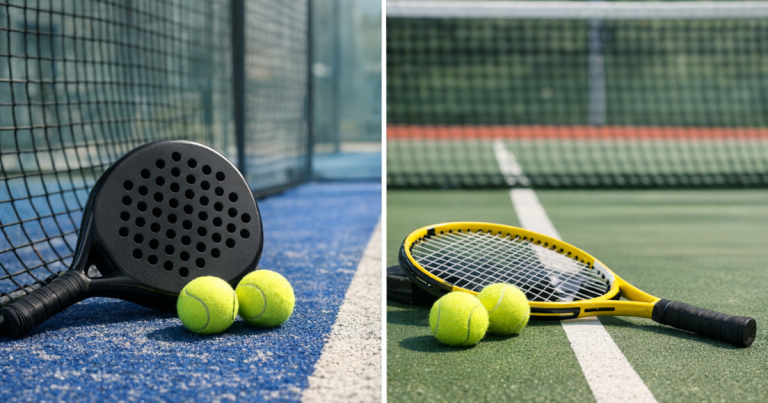
If you are coming from tennis and find the similarities confusing, the guide to padel rules vs tennis rules explains the differences that most often trip up new players.
Different ways players settle padel rule disputes
There is not one perfect method for every setting. A relaxed Sunday mix-in is different from a club ladder match, and both are different from a graded tournament. The fairest approach depends on what was agreed before the match.
Social games
In a casual game, replaying doubtful points is often the best solution. It keeps the atmosphere friendly and avoids punishing someone for not knowing a rule yet. The trade-off is that replaying too often can reward uncertainty, so use it for genuinely unclear moments rather than every close call.
Club box leagues
In box leagues or organised club matches, consistency matters more. Check the format before you start: deuce or golden point, tie-break rules, and any club convention on close calls. If the club has written guidance, follow it even if you personally prefer a different approach.
Coached sessions
During coaching, the coach may stop play to explain the rule rather than award the point strictly. That is normal. The aim is learning, not just scoring. If you are unsure, ask after the rally rather than interrupting every ball unless the call affects safety or fairness immediately.
Tournaments
In tournaments, do not rely on “we usually replay that”. Use the competition rules and accept the official decision process. If a referee or organiser is available, ask for clarification calmly and continue once the decision has been made.
A simple script for settling a close call
When a point becomes disputed, a calm structure helps everyone save face. Try this:
- Pause: “Let’s stop a second. What did each of us see?”
- Name the moment: “Was the question the first bounce, the fence after the serve, or the net touch?”
- Apply the rule: “If it bounced in before the glass, it is live. If it hit the glass first, it is out.”
- Choose the outcome: Award the point if the rule is clear; replay it if the facts are genuinely uncertain in a social match.
- Move on: Call the score clearly before the next serve.
This works because it removes blame. You are not accusing anyone of cheating; you are identifying the rule and the evidence available. That tone matters, especially when newer players are still building confidence.
Things readers ask
Who gets the final say on a close line call?
In social padel, the player or pair closest to the bounce usually has the best view, but everyone should be honest about uncertainty. In organised matches, follow the club or tournament procedure.
Should you replay every disputed point?
No. Replay only when the facts are genuinely unclear. If the rule and the event are clear, award the point correctly and continue.
Is a serve in if it clips the line?
Yes. If the serve lands on the correct service box line, it is in, unless another fault occurs, such as the ball touching the side fence after the bounce.
Can the ball hit the glass and still be in?
Yes, but the order matters. If the ball bounces in the opponent’s court and then hits the glass, it remains live. If it hits the glass before bouncing, it is out.
What should beginners agree before a match?
Agree the scoring format, who calls close balls, whether uncertain social points are replayed, and how you will handle stray balls from neighbouring courts.
Final thoughts
Most rule arguments become manageable when players slow the moment down. Work out what happened first, then apply the relevant rule, then restart with a clear score. The more you play, the easier these decisions feel, because you begin to recognise the same patterns: serve plus fence, bounce plus glass, net touch, double bounce, and score mix-up.
Good padel etiquette is not about never disagreeing. It is about settling disagreements quickly enough that the match stays enjoyable. For beginners, that is a skill worth practising just as much as the bandeja, lob or first volley.