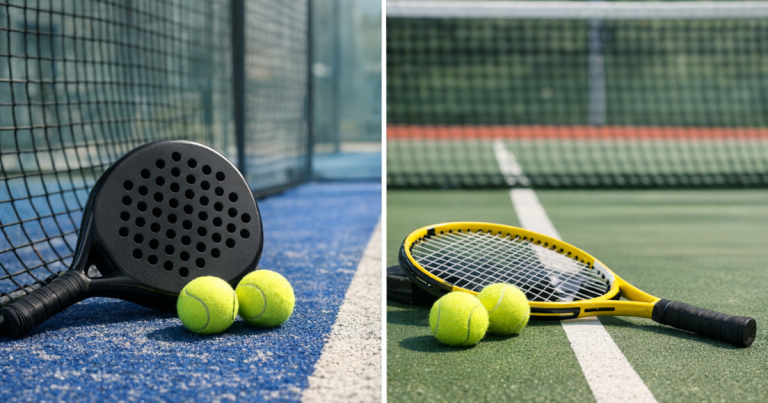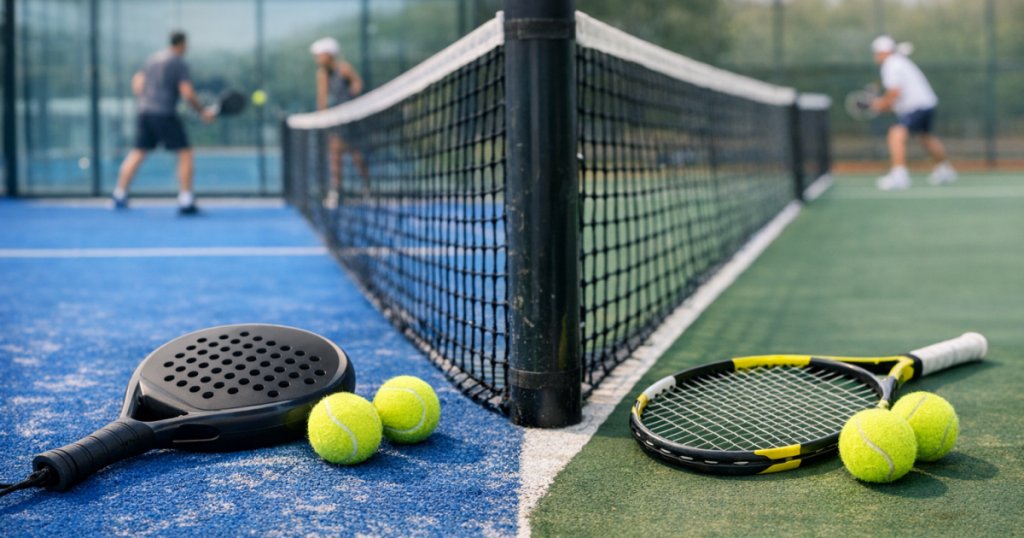
If you already play tennis, padel will feel familiar within the first few rallies. The scoring language, diagonal serving and basic aim of winning points carry across. But padel rules vs tennis rules become very different once the walls, underarm serve and doubles positioning start shaping every point.
The good news is that you do not need to relearn everything from scratch. Most new players improve quickly when they understand which tennis instincts still help and which ones need adjusting for a smaller, enclosed court.
Main points
- Padel uses tennis-style scoring, usually with games, sets and tie-breaks.
- The serve is underarm in padel, not an overhead power shot.
- Walls are part of normal padel rallies, so rebounds can be legal and useful.
- Padel is usually played as doubles, which makes positioning and communication more important.
- Many point losses come from treating the glass or fence as if they were tennis court boundaries.
The shared scoring system makes padel feel familiar
One reason tennis players settle into padel quickly is the scoring. Padel commonly uses 15, 30, 40 and game, just like tennis. Sets are normally won by reaching six games with a two-game lead, and a tie-break may decide a set when the score reaches 6-6.
Where beginners need to pay attention is the match format used by the club, league or organiser. Some padel sessions use advantage scoring after deuce, while others use golden point, where the next point wins the game. Golden point is especially common in social sessions and timed match formats because it keeps games moving.
If you are joining your first organised game, check the format before you start rather than waiting for deuce. For a fuller breakdown of games, sets, tie-breaks and golden point, see our guide to padel match rules.
The serve is the first big rule difference
In tennis, the serve can be a major weapon. Players toss the ball overhead, strike from above shoulder height and use pace, spin and placement to take control of the point immediately.
In padel, the serve is designed to start the rally rather than dominate it. The server bounces the ball behind the service line and hits it underarm, with contact at or below waist height. The serve must travel diagonally into the opposite service box, and players still get a first and second serve.
That changes the mindset. A tennis player may look for free points with a fast first serve. A padel player is usually trying to serve low, controlled and awkward enough to create a weak return. Placement often matters more than speed.
Serving habits tennis players need to change
- Do not toss the ball into the air as you would in tennis; the serve starts from a bounce.
- Do not chase power first; a consistent, low serve is more useful for beginners.
- Expect the receiver to use the glass after the ball bounces, depending on the angle of the serve.
- Clarify local let rules if you are unsure, especially in casual club play.
The walls make rallies completely different
The biggest rule adjustment is that padel is played inside an enclosed court. In tennis, once the ball passes the baseline or sideline, the point is usually over. In padel, the ball can bounce on the court and then rebound off the glass, and the rally can continue.
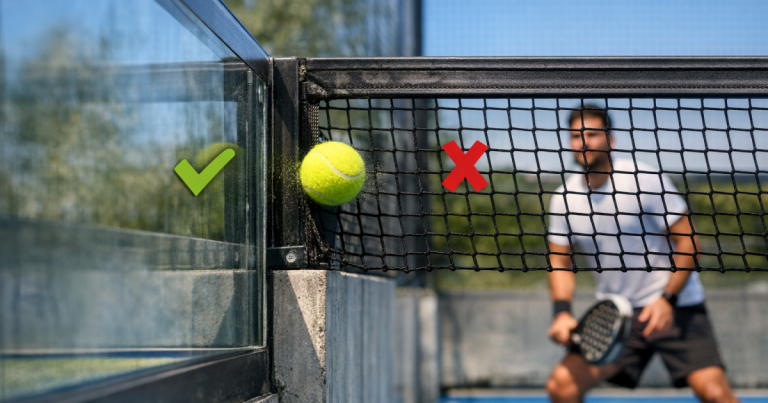
A simple rule of thumb helps: on the opponent’s side, the ball must hit the court before it hits the glass or fence. If you smash directly into the opponent’s back glass without the ball bouncing first, that is out. But if the ball lands in the court and then hits the glass, it is usually still in play.
On your own side, you can use the glass to help return the ball. For example, if a lob lands deep and rebounds off the back wall, you can let it come off the glass and then play it. This is one of the skills that makes padel more patient and tactical than it first appears.
For more detail on what is legal during a live point, including rebounds and common mistakes, read our guide to legal rebounds and point-loss rules.
Out, in and playable are not judged like tennis
Tennis players are used to judging lines quickly. Padel still has court lines, but they mostly matter for the serve. During an open rally, the main question is not simply whether the ball crossed a line. It is whether the ball landed in the court before touching anything else.
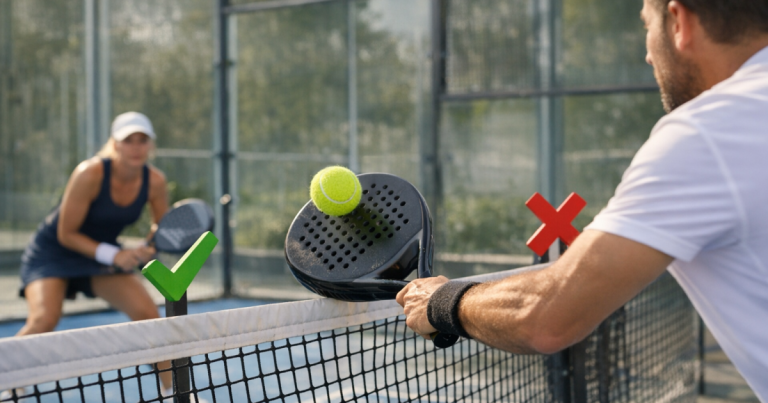
If the ball lands inside the court and then hits the glass, it remains playable. If it hits the glass or fence before bouncing on the court, it is out. If it hits the net and drops into the opponent’s court, the rally continues unless another rule is broken. If it bounces twice before a player returns it, the point is lost.
The fence can create extra confusion for new players. The glass gives a more predictable rebound; the metal mesh can send the ball off at odd angles. The exact court construction can vary, so when you are learning, focus on the order of contact: court first, then wall or fence, is usually the key distinction.
Doubles play changes your decisions
Tennis can be singles or doubles. Padel is overwhelmingly played as doubles, especially in clubs. That matters because many rules and tactics are experienced through teamwork: who takes the middle ball, who covers the lob, when to move forward and when to stay back.
New players often stand too deep because that feels safe from tennis. In padel, the pair at the net usually has the attacking advantage, while the pair at the back defends with lobs, blocks and rebounds off the glass. You are not just trying to hit winners; you are trying to win court position with your partner.
Communication also prevents avoidable point losses. A quick “mine”, “yours”, “leave” or “bounce” can stop both players chasing the same ball or watching a playable rebound go past. If you want to connect the rules with court shape and basic patterns, our overview of court layout, beginner shots and simple tactics is a helpful next step.
Volleys, smashes and net play feel familiar but behave differently
Volleys are legal in both sports, but padel volleys are usually less about outright pace and more about keeping the opponents under pressure. Because the court is smaller and the walls can bring balls back into play, a hard volley that would win a point in tennis may sit up nicely after hitting the glass in padel.
Smashes also work differently. Tennis players often think a smash should end the rally. In padel, a smash that bounces high off the back glass can give opponents a chance to recover or even counter-attack. More advanced players use smashes to bring the ball back to their own side or send it out of court, but beginners are usually better served by controlled overheads and patient placement.
The net itself is familiar: if the ball hits the net and lands legally in the opponent’s court during a rally, play continues. The difference is what happens next. Because players can use rebounds, a ball that looks awkward may still be recoverable after it bounces and reaches the glass.
Different explanations: is padel just easier tennis?
Some tennis players describe padel as easier because the serve is less technical, the court is smaller and rallies often last longer. That is partly true at beginner level. Padel is very accessible because more balls come back, and you can enjoy a rally before mastering advanced technique.
But that does not mean the rules are simpler in every situation. The wall rules add judgement calls that tennis does not have. Doubles positioning matters on almost every shot. The best option is not always the hardest shot, and the safest-looking ball can become dangerous if it gives opponents the net.
A better way to think about padel rules vs tennis rules is this: tennis rewards clean striking, depth and individual shot-making; padel rewards patience, positioning, use of angles and understanding how the enclosed court changes the point.
What to remember when switching from tennis
If you are coming from tennis, keep the useful habits: watching the ball, split-stepping, aiming cross-court, recovering after each shot and respecting the scoring structure. Then consciously adjust the habits that do not transfer as well.
- Serve to start the point well, not to overpower the receiver.
- Let some balls reach the glass instead of rushing every deep shot.
- Move with your partner rather than as two separate players.
- Use lobs to reset the point when you are under pressure.
- Check the match format before play, especially golden point and tie-break rules.
Most beginners do not lose points because they lack talent. They lose them because they apply a tennis answer to a padel situation. Once you understand the serve, the walls and the doubles rhythm, the game starts to feel much more logical.
FAQ
Is padel scoring exactly the same as tennis?
It is very similar. Padel normally uses 15, 30, 40 and game, with sets and tie-breaks. The main variation beginners notice is whether deuce uses advantage scoring or golden point.
Can the ball hit the wall in padel?
Yes, but the order matters. On the opponent’s side, the ball usually needs to bounce in the court before it hits the glass or fence. On your side, you can use the glass after the bounce to return the ball.
Do you get two serves in padel like tennis?
Yes. Padel players normally get a first and second serve, but the serve is underarm from a bounce and must be hit at or below waist height.
Can you play padel singles?
Singles padel exists, but standard padel is doubles. Most UK club sessions, beginner games and social matches are organised for four players.
Is tennis experience helpful for learning padel?
Yes. Tennis helps with timing, movement and scoring. The main adjustments are using the walls, serving underarm and making decisions with a partner on a smaller court.
Quick Buying Links
Padel Rules
But padel rules vs tennis rules become very different once the walls, underarm serve and doubles positioning start shaping every point.The good news is that you do not need to relearn everything from scratch.
Tennis Rules: Key Differences for New Players
Worth considering if its strengths better match your needs.