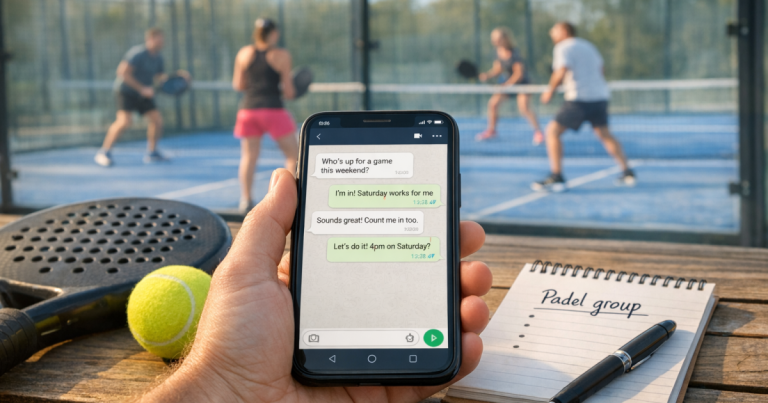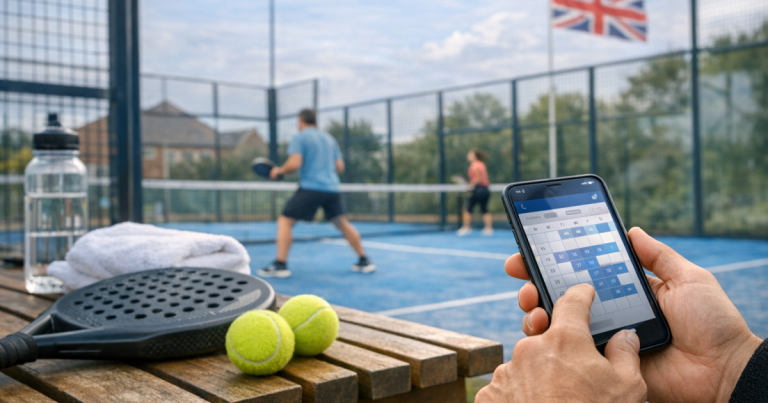
Choosing between padel coaching, social matches and local leagues can feel oddly tricky when you have only played a handful of times. The right starting point depends less on “being good enough” and more on what you need next: cleaner technique, relaxed court time, or regular competitive practice. Most beginners will benefit from a mix, but the order matters if you want to avoid frustration and build confidence quickly.
Main points
- Book a lesson first if you are unsure about grip, court positioning, wall rebounds or how the scoring works in live play.
- Choose social matches if you can rally, serve reasonably consistently and want low-pressure court time with different partners.
- Try a beginner league once you understand the basic rules, can keep score and are comfortable playing points without constant guidance.
- Do not wait until you feel “ready”. Early club play is meant to be messy, friendly and useful.
- Mix formats over time. Lessons improve your tools, socials give you rhythm, and leagues teach you how points really unfold.
The three routes are different, not better or worse
New players often ask which route is the “proper” way into padel. The better question is what kind of experience you need this month. A coached session, a social match and a league all develop different parts of your game.
A lesson is structured. A coach can correct your grip, explain why you are standing too deep, or show you how to use the glass without panicking. Social matches are more relaxed. You rotate partners, meet other players and learn the rhythm of doubles without every point feeling important. Leagues are more organised and competitive, even at beginner level. They teach score pressure, tactics and how to adapt when opponents start targeting your weaker side.
For many UK beginners, the most sensible path is not one single choice. It is a short block of instruction, then regular social play, then a beginner box league or club ladder when the rules feel familiar. If you are still working out the basics of the court, scoring and simple shots, it is worth reading this overview of padel court layout, beginner shots and simple tactics before jumping into more competitive sessions.
When coaching is the best first step
Padel coaching is most useful when you keep making the same mistake and cannot tell why. That might be hitting every bandeja into the side glass, standing in no-man’s land, rushing towards the net too early, or treating every wall rebound like an emergency. A good beginner session slows the game down and gives you a clearer picture of what you are trying to do.
Coaching is also helpful if you come from tennis, squash or badminton. Those sports give you useful movement and hand-eye skills, but they can also bring habits that do not transfer cleanly. Tennis players often swing too big. Squash players may overuse the walls without taking the net seriously. Badminton players may have quick reactions but need time to adjust to padel’s bounce and court geometry.
You do not need weekly lessons forever. Many beginners get a lot from one of these formats:
- A single starter session: good if you have never played and want the rules, serve, walls and basic positioning explained properly.
- A short beginner course: useful if your local club runs a four to six-week group programme with players of a similar level.
- An occasional tune-up lesson: ideal once you are playing socially but keep noticing one recurring weakness.
- A shared private lesson: helpful if you have a regular partner or small group and want feedback on teamwork and positioning.
The main sign that coaching should come first is confusion. If you leave every game unsure where to stand, when to let the ball hit the glass, or why you lost the point, instruction will save you weeks of guesswork.
When social matches make more sense
Social matches are usually the friendliest bridge between “I have tried padel” and “I play most weeks”. They give you repetition without the formal feel of a league table. You will hit more serves, return more awkward balls, learn what different partners expect, and start to recognise common patterns.
Social sessions suit you if you can already serve into the correct box, rally for a few shots, understand when the ball is still live after the glass, and keep a simple score. You do not need polished technique. You just need enough control to keep the game enjoyable for the group.
At many clubs, social padel is grouped by level. Names vary, but you might see beginner socials, improver sessions, mixed-level club nights or American-style rotations. Before booking, check whether the session is genuinely suitable for new players. “Open social” can sometimes mean a wide spread of abilities, which is fun later but daunting if you are still learning how to return serve.
Social matches are also brilliant for learning padel etiquette. You pick up when to call the score, how to rotate fairly, how to communicate with your partner, and how to handle close calls without turning a friendly game into a debate. If you are nervous about rule disagreements, the advice on common padel rule disputes and how to settle them will make those early club games feel calmer.
When a league is the right challenge
A league is worth trying when you want your matches to have a bit more shape. Instead of simply playing whoever turns up, you get fixtures, standings or a ladder format. That structure can be motivating because it gives you a reason to practise between matches and notice patterns in your results.
Beginner leagues should still be welcoming. You are not expected to play perfect padel. What matters is that you can play a full match, respect the format, arrange fixtures if required, keep score accurately and handle winning or losing without drama.
Leagues reveal things that casual games sometimes hide. Under score pressure, you may discover that your serve is too risky, your lobs are too short, or you and your partner both rush to the same ball. That is not a failure. It is useful information. The competitive setting simply makes your habits more visible.
If you are unsure whether you are ready, ask yourself three questions:
- Can I serve legally and start most points without repeated faults?
- Can I keep track of the score and change ends at the right time?
- Can I play with unfamiliar opponents without needing someone to explain every rebound?
If the answer is mostly yes, a beginner league is likely to help. If the answer is no, play a few more socials or book a lesson first. Either route is normal.
A simple route for your first three months
There is no official beginner timetable, but this pattern works well for many new players who want to move into regular club play without feeling thrown in too quickly.
Weeks 1–2: get oriented
Play a taster session, starter lesson or relaxed game with patient friends. Focus on the serve, basic scoring, where to stand and how the ball behaves off the glass. Do not worry about advanced shots yet.
Weeks 3–6: build rhythm through social play
Join beginner-friendly social matches and aim for consistency rather than winners. Try to communicate clearly with your partner, recover to sensible positions and learn from players who are slightly more experienced than you.
Weeks 7–12: add structure
If you are enjoying regular games, try a beginner ladder, box league or organised match night. Keep one eye on your biggest weakness and consider a follow-up lesson if the same problem keeps costing points.
If you are still at the “will I embarrass myself?” stage, the answer is almost always no. Padel clubs see new players all the time, and most beginner sessions are designed around people learning in public. For a broader confidence boost, this first-timer’s roadmap on whether padel is hard to learn explains what usually feels awkward at the start and what improves quickly.
Common mistakes when choosing where to start
The first mistake is waiting too long for everything to feel perfect. You can learn technique in a lesson, but you only learn match rhythm by playing points with real people. If you keep postponing social games until you have a complete game, you will miss the very experience that helps you relax.
The second mistake is jumping into the wrong level. A session that is too advanced can leave you chasing balls and apologising rather than learning. A session that is far too easy can become dull. Look for wording such as “beginner”, “new player”, “improver” or “level 1–2”, and ask the organiser how the group is usually run.
The third mistake is treating every match as a test of your worth. Early padel is a feedback loop, not an exam. If you lose because you stand too deep, that is a clear practice target. If you miss returns because you rush, that is useful. If you struggle with the walls, join the very large club of beginners who felt the same.
The fourth mistake is ignoring the social side. Padel is doubles-based and club-centred. Finding reliable partners, being easy to play with and communicating well will help you progress just as much as one flashy shot.
How to decide this week
If you want a quick decision, use your current feeling as the clue. If you feel confused, choose a lesson. If you feel nervous but curious, choose a beginner social. If you feel comfortable rallying and want matches with meaning, choose a league.
It can also help to think about your main goal. For technique, coaching wins. For confidence, social play wins. For tactics and pressure, leagues win. For long-term improvement, rotate between all three rather than expecting one format to do everything.
Try not to judge your progress after one awkward session. New partners, unfamiliar courts and different ball speeds can all make a game feel messy. A better measure is whether you understand more than you did last time and whether you are starting to make better decisions during points.
Common questions
Should I take lessons before my first social match?
Not always. If the social is clearly marked for complete beginners, you can usually go straight in. If you feel unsure about serving, scoring or rebounds, one starter lesson will make the first session less stressful.
How good do I need to be for a beginner league?
You should be able to serve, keep score, play a full match and understand the main rally rules. You do not need advanced shots or a perfect record in social games.
Is group coaching better than private coaching for new players?
Group coaching is often enough at the start because you learn alongside players making similar mistakes. Private coaching is useful when you want specific feedback or have a recurring technical issue.
What if I do not have a partner?
Start with club socials, group lessons or organiser-led match sessions. These formats are designed to mix players, and they are often the easiest way to meet future partners.
Can I join a league and still take lessons?
Yes. In fact, that can work very well. League matches show you what breaks down under pressure, and lessons help you fix those specific problems.
Key takeaways
There is no single correct entry point into padel. Start with the format that solves your immediate problem. Choose coaching when you need clarity, social matches when you need court time, and leagues when you are ready for structure and score pressure.
The best beginners do not wait until they feel fully ready. They ask sensible questions, choose the right level, play regularly and treat every session as information. That is how padel starts to feel less like a new sport and more like a weekly habit.