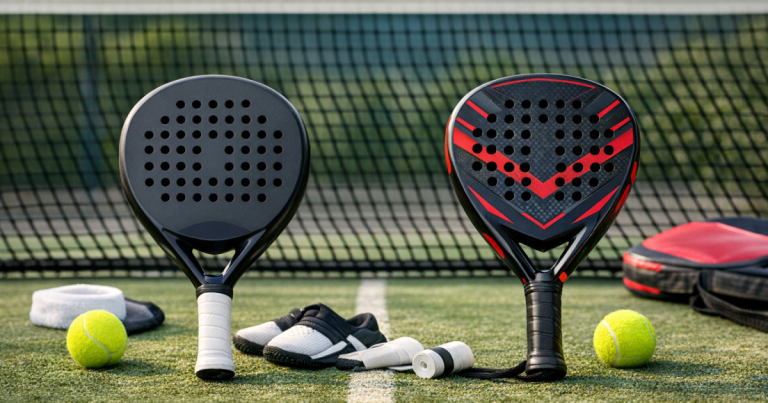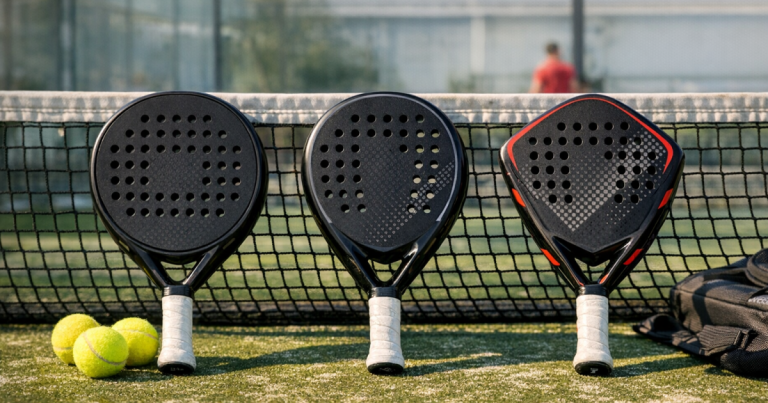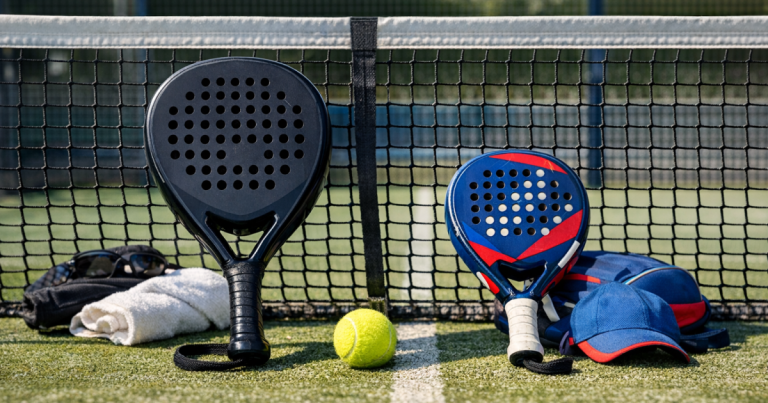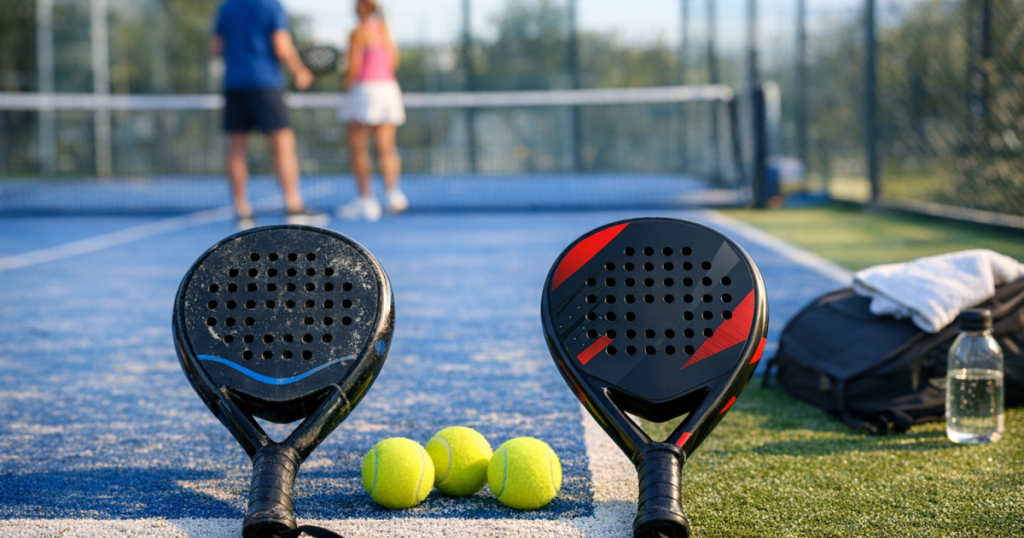
Once you are playing weekly club matches, your first racket starts to feel less like a starter purchase and more like part of your game. A padel racket upgrade can make sense when you know what you want to improve, but it can also make padel harder if you jump too far too quickly.
The aim is not to buy the most advanced racket you can find. It is to choose something that supports the way you actually play: your contact quality, swing speed, defensive habits, confidence at the net and tolerance for mishits.
In brief
- Upgrade when your current racket limits control, comfort or shot development, not just because others at the club use premium models.
- For most regular club players, a small step up in firmness, balance or shape is safer than a dramatic switch.
- Round and teardrop rackets are usually easier transitions than high-balance diamond shapes.
- Check weight in grams, balance, foam feel, face material and sweet spot before focusing on brand names.
- Keep your old racket for a few sessions if possible, so you can compare match performance rather than judging from one hit.
When your starter racket is no longer enough
A beginner racket is designed to make early rallies easier. It usually prioritises a forgiving sweet spot, manageable weight and comfortable ball response. That is ideal when you are learning court positioning, glass rebounds and basic doubles patterns.
After several months of regular club play, you may notice different needs. Perhaps you are reaching more volleys but struggling to finish points. Perhaps your lobs are consistent, but your racket feels unstable against faster balls. Or maybe you now swing with more intent and a very soft racket feels vague on block volleys and bandejas.
Those are reasonable upgrade signals. Less reliable signals include wanting the racket your strongest club player uses, assuming expensive means suitable, or changing rackets after one poor match. Padel improvement is uneven. A bad evening can come from tired legs, old balls, awkward opponents or simply playing too flat from the back wall.
The specs that matter most for regular club play
Racket marketing can make the category sound more complicated than it needs to be. Start with the practical feel of the racket, then work backwards to the specification. If you want a fuller breakdown of shape, weight, balance and foam, the site’s guide to padel racket specs explained is a useful next step.
Shape: round, teardrop or diamond
Round rackets usually have the most forgiving feel because the sweet spot tends to sit closer to the centre of the face. They suit club players who win points through consistency, defence and placement.
Teardrop rackets are a common upgrade route because they can add a little more attacking help without making every mishit feel punished. Many players moving from beginner to regular club level find this the most natural progression.
Diamond-shaped rackets tend to feel more demanding because their balance is often higher and the sweet spot can feel less central. They can reward confident overhead technique, but they are rarely the easiest step if you still miss the centre of the face under pressure.
Weight and balance: the hidden difficulty jump
A racket that is only slightly heavier on paper can feel much heavier if the balance is towards the head. Weight is measured in grams, but balance changes how that weight behaves during volleys, quick blocks and late defensive shots.
If your wrist, forearm or shoulder feels tired after a normal session, do not treat a heavier racket as an automatic upgrade. A regular club player often benefits more from a stable, manageable racket than from a powerful one that slows reactions at the net.
Foam and face feel
Softer foam can help the ball come off the face with less effort, which is useful in defence and slower rallies. Firmer foam can feel more precise when you hit cleanly, but it can also demand better timing. The same applies to face materials: a stiffer feel may suit a stronger swing, while a more elastic response may suit controlled placement.
The key is progression. If your current racket is very soft and forgiving, consider a moderate step rather than leaping straight to a very firm, high-balance frame.
What a sensible upgrade path looks like
For a regular club player, the best change is often one clear adjustment at a time. If you change shape, weight, balance and firmness all at once, you will not know which part is helping or hurting your game.
- If you are consistent but lack depth: try a slightly firmer feel or a modest move towards teardrop, while keeping weight manageable.
- If you defend well but struggle at the net: look for stability on block volleys without choosing a racket that feels slow in hand.
- If you hit hard but make too many errors: prioritise control and sweet spot forgiveness before chasing extra power.
- If you play mostly social matches: comfort and easy handling may matter more than maximum attacking performance.
- If you are entering leagues: choose a racket that stays reliable when rallies get faster and points feel tighter.
Recognisable models can be useful reference points, but they should not decide for you. When you see names such as Nox ML10 Pro Cup or Bullpadel Hack 02 2022 Padel Racket, treat the model name as a starting point for checking the current version’s listed weight, balance, shape and feel. Different versions, player editions and production ranges can feel different in the hand.
How to test a racket properly
A few warm-up shots are not enough to judge a new racket. The first five minutes often flatter a racket because the ball feels fresh and you are paying close attention. A better test includes the shots that normally decide your club matches.
- Hit slow defensive balls after the back glass and notice whether you can lift cleanly without forcing.
- Play controlled lobs under pressure, not just easy feeds.
- Block firm volleys and check whether the racket twists on off-centre contact.
- Try bandejas and overheads at your normal intensity, not at showroom speed.
- Play at least one set, because fatigue changes how a racket feels.
If you borrow a racket from a club mate, ask about the grip set-up too. Extra overgrips can change handle thickness and balance. A racket that feels perfect in someone else’s hand might feel awkward with your usual grip.
Budget: spend for fit, not status
Regular play makes it easier to justify spending more than you did on your first racket, but price still needs context. Paying more can bring different materials, construction and feel, yet it does not guarantee a better result for your level.
A sensible question is: will this racket help you play your normal club match with more confidence? If the answer depends on you suddenly becoming stronger, cleaner and more aggressive, it may be too ambitious. For a clearer way to judge value, read how much you should spend on a padel racket before committing to a bigger purchase.
It is also worth factoring in replacement timing. If your current racket is chipped, softening, rattling or visibly cracked, you may be solving a condition problem rather than upgrading performance. If it is still sound, you have the luxury of waiting for the right fit.
Mistakes regular club players often make
The most common mistake is overcorrecting. A player who wants more power buys a demanding racket, then loses the consistency that helped them enjoy padel in the first place. Another player wants more control but chooses a racket so firm that defensive shots become harder.
Copying better players is another trap. Strong club players often have cleaner timing, faster preparation and more repeatable contact. Their racket may suit their strengths but expose your weaknesses. That does not mean advanced rackets are bad; it means suitability depends on your current game, not someone else’s highlight shots.
Finally, do not ignore condition and care. Heat, damp storage, repeated frame impacts and poor bag habits can shorten a racket’s useful life. If you are unsure whether your current frame is simply worn out, the beginner-friendly guide to padel racket care, damage and replacement explains what to check.
Fast answers
How often should a regular club player replace a padel racket?
There is no fixed schedule. It depends on how often you play, how hard you hit, how well you store it and whether the frame or face is damaged. Replace it when performance, comfort or structural condition has clearly declined.
Should my first upgrade be a power racket?
Usually not unless your technique is already reliable. Many regular club players improve faster with a balanced control or teardrop racket that adds help without making defence harder.
Is a heavier racket better for club matches?
Not automatically. More weight can feel stable, but it can also slow reactions and tire the arm. Handling matters more than the number printed on the listing.
Can I use two different rackets while deciding?
Yes, but compare them in similar conditions. Use the same balls if possible, play the same type of session and judge normal match shots rather than only warm-up winners.
Do I need an advanced racket for league play?
No. You need a racket you trust under pressure. For many early league players, consistency, comfort and predictable control are more valuable than maximum power.
Main lessons
The best padel racket upgrade for regular club play is usually a measured step, not a dramatic leap. Start with what your current racket fails to give you, then choose one or two improvements that match your real game.
If you are still building consistency, stay close to forgiving shapes and manageable balance. If your technique is becoming more reliable, a slightly firmer or more attacking frame may help. Either way, test through real match situations, keep comfort high and let your club results guide the decision more than the label on the racket.