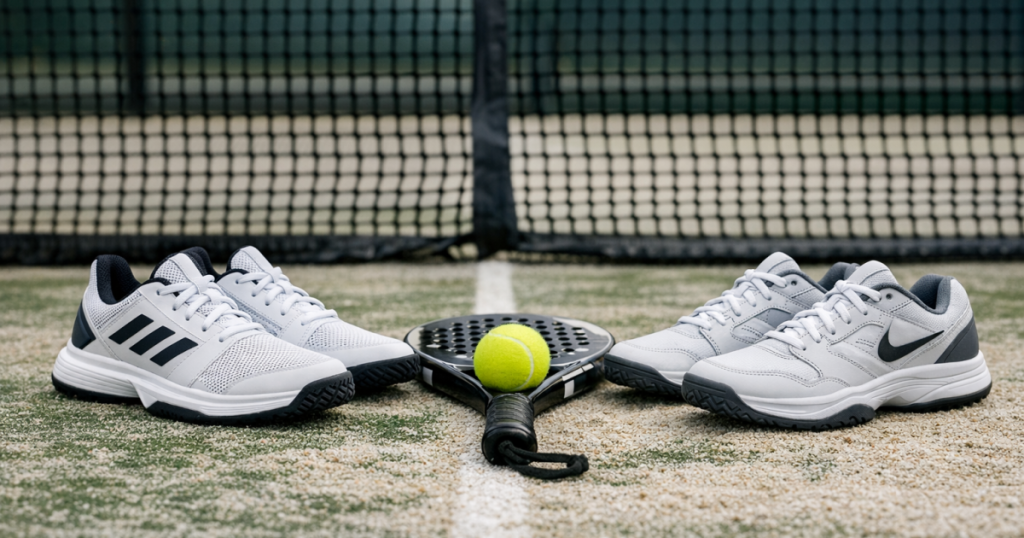
Choosing padel shoes can feel annoyingly close when both options look court-ready. Adidas CourtJam Bounce vs Nike Court Lite matters because the right choice is less about the logo and more about grip, lateral support, comfort and how the shoe behaves on the type of padel court you actually use.
For most UK beginners, that usually means sanded artificial turf at club venues, where sliding too much or sticking too hard can both cause problems. If you are still working out what outsole pattern suits those surfaces, read our guide to choosing padel shoes for sanded courts alongside this comparison.
What to know first
The short answer: the Adidas option is usually the more padel-minded pick if you want a supportive, cushioned court shoe and can find the right outsole version for your courts. The Nike option can make sense if you want a familiar, straightforward court shoe feel and you are happy to double-check that the exact pair is suitable for padel rather than simply general tennis use.
- Pick Adidas CourtJam Bounce Padel Shoes if your priority is a stable, cushioned shoe for regular club sessions and you want something that feels more purpose-built for quick side-to-side movement.
- Pick Nike Court Lite Padel Shoes if you prefer a simpler traditional court-shoe feel, already know Nike fits your feet well, and can verify the outsole works for your local padel surface.
- Do not choose on brand alone. Fit, traction and side support matter more than whether the shoe looks faster on the shelf.
- Check the exact product listing. Court-shoe lines often have different versions, and retailer wording can blur the line between tennis, padel and all-court use.
Side-by-side comparison
Rather than treating this as a fashion choice, compare the two shoes through the situations beginners actually face: moving to the glass, recovering after a volley, stopping after a sprint, and playing a full club night without sore feet.
- Best for regular padel sessions: Adidas CourtJam Bounce Padel Shoes are the safer shortlist if you are playing weekly and want a shoe that feels geared towards court stability and cushioning.
- Best for a simple court-shoe feel: Nike Court Lite Padel Shoes suit players who like a more traditional tennis-style court shoe and want something familiar rather than highly specialised.
- Grip confidence: The exact outsole matters. For padel, look for a sole pattern that gives controlled grip on sanded turf rather than a flat or overly aggressive sole designed for a different surface.
- Lateral support: Padel involves repeated side steps, small adjustment steps and sudden stops. A shoe that holds your foot securely through sideways movement is worth prioritising over a soft trainer-style feel.
- Comfort over a session: Both shoes need to be tried with the socks you play in. Walk, split-step and lunge gently at home before committing them to a full match.
- Value: Do not judge value only by a small £ difference. A cheaper shoe that slips, pinches or wears quickly on your court is not the better buy.
Where the Adidas CourtJam Bounce Padel Shoes have the edge
The Adidas CourtJam Bounce Padel Shoes are the more convincing choice for many early-stage club players because they sit closer to what beginners usually need from a padel shoe: cushioning, court stability and enough structure to support side-to-side movement.
The most important point is not that the shoe feels plush in the hand. It is whether it keeps you balanced when you move diagonally towards the net, shuffle back for a lob, or brake before playing off the glass. Beginners often blame their racket or technique when they feel late to the ball, but footwear can make those small recovery steps feel either secure or hesitant.
The Bounce name points to Adidas cushioning, but you should still judge comfort by fit rather than assuming the technology will suit everyone. Try the shoe with your usual padel socks, lace it properly, and check whether your heel stays planted when you make small side steps. If your foot lifts or rolls inside the shoe, the model is not doing its job for you, however good it looks on paper.
Adidas also tends to be a strong option for players who are starting to play more than the occasional one-off game. Once you are joining club nights, having lessons or playing weekly matches, your shoes stop being an afterthought. They become part of your movement base. If your next goal is to feel quicker and less rushed between shots, combine decent footwear with simple movement drills from our guide to practising padel footwork between coaching sessions.
Where the Nike Court Lite Padel Shoes make sense
Nike Court Lite Padel Shoes can still be a sensible buy, especially for players who already like Nike court footwear and want a straightforward shoe without overcomplicating the decision. Some beginners do not need the most technical-looking padel shoe immediately; they need a stable court shoe that fits well, grips adequately and does not distract them during rallies.
The main caution is that Court Lite models are widely associated with tennis-style court use, and product listings can vary. If a retailer describes a pair as padel shoes, check what that actually means. Look at the outsole image, surface recommendation and return policy. A shoe can be fine for general court sports and still not be ideal for a sanded padel court.
The Nike option may appeal if you prefer a shoe that feels less bulky, or if Adidas shapes have not suited your foot in the past. Fit history matters. If you consistently get heel rub, toe pressure or side pinching from one brand, do not ignore that just because the comparison says it is theoretically better for padel.
For occasional players, the Nike Court Lite route can be reasonable if the price is attractive and the outsole matches the court. For players booking multiple sessions each week, it is worth being stricter. The more often you play, the more important support, grip consistency and comfort become.
The buying checks that matter most
Outsole pattern
Padel is usually played on artificial turf, often with visible sand. You want grip that helps you stop and recover without feeling glued to the court. A herringbone-style or padel-suitable outsole is commonly preferred on sanded courts, but always check the exact product description and court rules at your venue.
Side support
Running shoes are built mainly for forward movement. Padel shoes need to handle lateral movement. When trying either model, make a few gentle side steps and controlled lunges. Your foot should feel held, not sliding around inside the upper.
Heel hold
A secure heel helps you change direction without rubbing or instability. If your heel lifts when you walk up stairs or perform a small split step, try a different size, lacing method or model.
Toe room
Your toes need enough room for braking and quick stops, but not so much that your foot shoots forward. Too-tight shoes can feel acceptable for five minutes and uncomfortable after a full club night.
Break-in comfort
Both shoes should feel playable early, not painful. A little stiffness can settle, but sharp pressure points are a warning sign. Before wearing either pair for matches, use our guide on breaking in padel shoes without getting blisters so your first proper session is not ruined by rubbing.
Which shoe suits your stage of play?
If you are brand new to padel
Start with the shoe that fits securely and has the right sole for your court. At this stage, you do not need to chase the most premium option. You need grip you can trust and comfort that lets you focus on learning the rules, spacing and basic shots.
If you are moving into regular club nights
The Adidas CourtJam Bounce Padel Shoes become more persuasive here. Regular play exposes weak support and poor outsole choices quickly. If you are playing doubles points for two hours, your shoes need to help you recover after volleys, turn for lobs and push off without hesitation.
If you already know Nike fits you well
Do not dismiss the Nike Court Lite Padel Shoes. Fit confidence is valuable. If the model holds your foot well and the outsole is suitable for your venue, it can be the more comfortable choice for you personally.
If you are unsure between two sizes
Try both indoors on a clean floor with your playing socks. Your foot should not slide forward when you stop, and your toes should not feel crushed. If neither size feels right, do not force it. A different model is usually better than compromising on fit.
The sensible recommendation
For most beginners and improving club players, Adidas CourtJam Bounce Padel Shoes are the stronger first shortlist. They are the better fit for the way many new padel players progress: starting with casual games, then quickly wanting more confidence in movement, recovery and grip on sanded courts.
Nike Court Lite Padel Shoes are still worth considering if they fit your feet better, are clearly suitable for your court surface and you want a simpler court-shoe option. The key is to avoid buying them purely because they are familiar. Padel asks more of your shoes sideways than many beginners expect.
If you play once in a while, choose the pair that fits best and has a suitable outsole. If you are building towards regular club play, give the Adidas option the first try, then compare the Nike only if fit, price or availability makes it more practical. Either way, check the return policy before wearing them outdoors, because the best padel shoe is the one that feels secure when you actually move.
Quick Buying Links
Adidas CourtJam Bounce Padel Shoes
Pick Adidas CourtJam Bounce Padel Shoes if your priority is a stable, cushioned shoe for regular club sessions and you want something that feels more purpose-built for quick side-to-side movement.
Nike Court Lite Padel Shoes
Pick Nike Court Lite Padel Shoes if you prefer a simpler traditional court-shoe feel, already know Nike fits your feet well, and can verify the outsole works for your local padel surface.
Helpful questions
Can I use normal tennis shoes for padel?
Sometimes, but it depends on the outsole and support. Many tennis shoes work on some court surfaces, but padel on sanded turf usually rewards a sole pattern designed for controlled grip and small adjustment steps.
Are Adidas CourtJam Bounce Padel Shoes better for beginners than Nike Court Lite Padel Shoes?
For many beginners playing regularly, yes, the Adidas option is the safer starting point because it is easier to justify as a padel-focused club shoe. The Nike option can still be better if it fits your foot more securely and suits your court surface.
Should padel shoes feel tight at first?
They should feel secure, not painfully tight. A snug midfoot and stable heel are good; numb toes, sharp rubbing or pressure across the forefoot are signs to try another size or model.
How long should padel shoes last?
It depends on how often you play, your movement style, court surface and how much the outsole wears. Replace them when grip drops, support feels tired or the shoe starts moving under your foot during direction changes.
What is the biggest mistake when buying first padel shoes?
The biggest mistake is choosing by looks or brand before checking the outsole and fit. A good-looking court shoe that slips on your local surface will not help your confidence in rallies.