A thermal padel bag pocket is there to protect your racket from sudden temperature changes, not to make your bag indestructible. Used well, it helps keep your racket away from hot car interiors, cold winter mornings, damp towels and crushed kit.
The key is simple: put the right items in it, close it properly, and avoid treating it like a general storage compartment.
In brief
- Use the insulated pocket mainly for your racket, not shoes, wet clothing or loose accessories.
- Zip it fully closed so the lining can slow temperature changes.
- Never leave the whole bag in a hot car or beside a radiator and expect the lining to solve it.
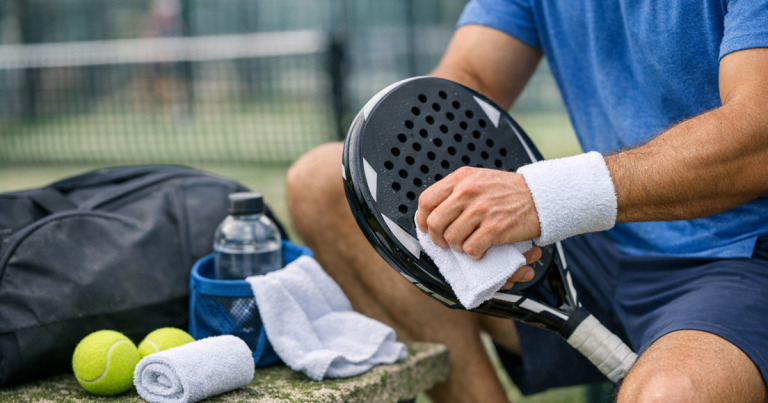
- Dry your racket and grip before storing it, especially after indoor sessions where hands get sweaty.
- Check the pocket lining regularly for tears, grit, damp patches or a failing zip.
What the thermal lining actually does
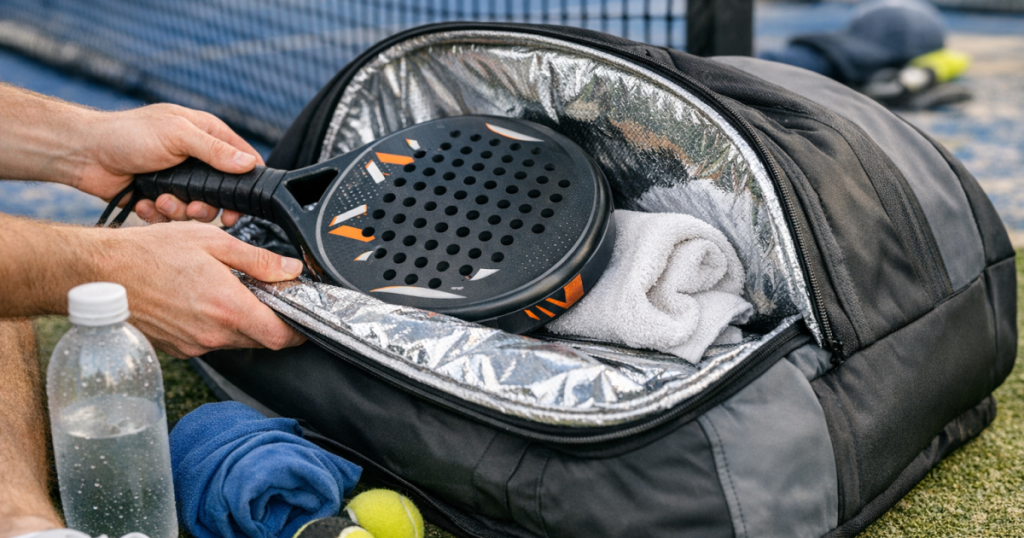
The insulated section in a padel bag is designed to reduce rapid changes in temperature around your racket. It is not a fridge, heater or moisture-proof safe. Think of it as a buffer: useful for a walk from the car park to the club, or for keeping your racket away from the worst of a chilly changing room, but not a cure for poor storage.
This matters because padel rackets are made from layers of materials that can be affected by repeated extremes. You do not need to panic about normal UK weather, but leaving a racket in direct summer sun, in a freezing boot overnight, or next to wet kit every week is not ideal.
The thermal padel bag pocket works best when it is clean, dry and not overfilled. If you cram it with balls, spare clothes, snacks and a racket, the lining has less room to sit around the racket and the zip is more likely to strain.
Step 1: Put your racket in first
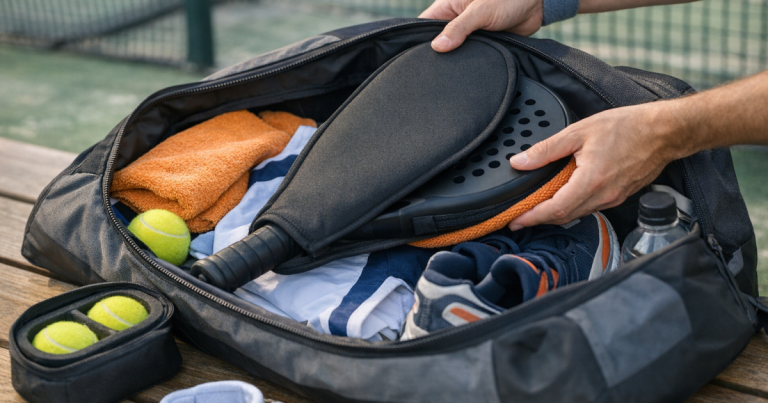
Start with the item the pocket is meant to protect: your racket. Slide it in gently with the face flat against the widest part of the compartment. Avoid forcing the racket in at an angle, especially if the bag is already full, because that can press the edge or frame against the zip track.
If your racket has a cover, you can usually use the cover inside the insulated pocket as an extra layer, provided it does not make the fit too tight. If the bag becomes hard to close, remove the cover rather than yanking the zip around the frame.
Before storing it, give the racket a quick check:
- Is the face dry?
- Is the grip damp or slippery?
- Is there grit or sand around the edge?
- Is the wrist strap tucked in rather than trapped in the zip?
If your grip is soaked, let it air briefly before packing. For longer-term grip care, it is worth knowing how to replace a padel overgrip without wasting it, because a fresh overgrip is often cheaper and easier than trying to rescue one that has been stored damp for too long.
Step 2: Keep wet and smelly kit out
The biggest beginner mistake is treating every zipped section as interchangeable. Your thermal compartment should not be the place for sweaty shirts, damp towels, wet socks or used shoes. Moisture and odour can build up quickly, and once the lining smells, it is harder to freshen than a normal fabric pocket.
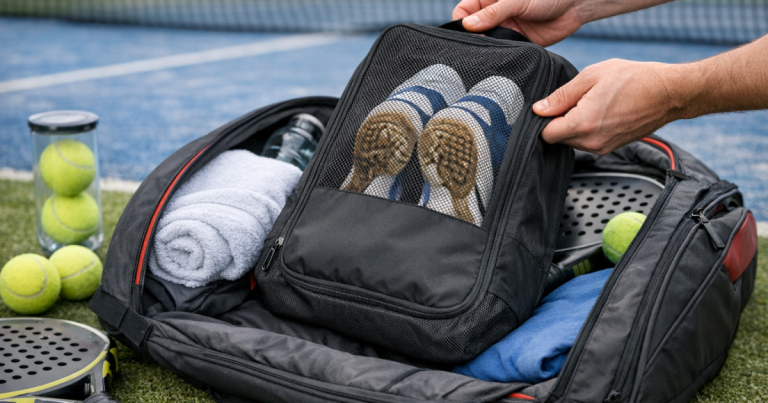
Use a separate shoe section if your bag has one. If it does not, put shoes in a breathable shoe bag or a separate carrier for the journey home. Wet clothing should go in a laundry pouch or separate compartment, not beside your racket.
This is not just about smell. Damp kit raises the humidity inside the compartment, which is the opposite of what you want around a racket grip and frame. If your whole bag tends to get unpleasant after club nights, the same habits that protect the insulated pocket will also help you stop your padel bag smelling after matches.
Step 3: Close the zip properly
A half-open insulated pocket is not doing much. Once the racket is in, close the zip fully and check that no strap, towel corner or overgrip edge is caught. If the zip resists, do not force it. Open it again, rearrange the contents and try once more.
Forcing the zip can damage the teeth or pull the stitching around the pocket. That matters because the pocket only works well when it can close neatly. A small gap may seem harmless, but it lets warm, cold or damp air move in and out more easily.
Step 4: Use it sensibly before and after play
On match day, the insulated section is most useful during travel and waiting time. Put your racket in before leaving home, keep the bag out of direct sun where possible, then take the racket out shortly before warm-up. After the session, wipe the racket face and handle before putting it back.
In a typical UK routine, this means:
- Do not leave the bag in the boot all day before an evening booking.
- Keep it away from radiators, heated floors and sunny windows at home.
- Bring the bag indoors after winter sessions rather than leaving it in a cold car overnight.
- Open the pocket when you get home if the grip or interior feels damp.
You do not need elaborate storage habits. You just need to avoid the obvious extremes that make the lining work harder than it was designed to.
Step 5: Do a quick pocket check every few weeks
Thermal pockets get overlooked because the lining is hidden until something goes wrong. Every few weeks, empty the pocket and look inside properly. Check the seams, corners and zip area, because those are the places most likely to collect grit or show early wear.
Look for:
- Small tears or peeling in the insulated lining.
- Grit, sand or ball fluff in the corners.
- Lingering damp patches after the bag has aired.
- A zip that catches in the same place each time.
- A smell that does not go after airing.
Wipe the inside with a clean, slightly damp cloth if needed, then leave it open to dry fully. Avoid soaking the lining or using harsh cleaners, as they can leave residue and may affect the material. If the lining is badly torn, the pocket can still hold a racket, but you should no longer rely on it for meaningful insulation.
What should and should not go in the insulated compartment?
Use this as a simple packing rule when you are getting ready for a club session.
Good uses
- Your main racket.
- A spare racket, if the pocket is designed to fit two without pressure.
- A racket cover, if it fits comfortably.
- A dry microfibre cloth for wiping the racket after play.
Avoid putting these inside
- Wet towels or sweaty clothing.
- Used shoes or socks.
- Loose balls that can press against the racket face.
- Drinks bottles, especially if there is any chance of leaking.
- Food, gels or anything sticky.
- Keys, coins or hard accessories that can scratch the racket.
If your bag is small, it can be tempting to use the insulated section as overflow storage. Try not to. A compact bag is fine for beginners, but the more you mix clean, damp, hard and soft items together, the less protective any one pocket becomes.
Common mistakes beginners make
The first mistake is assuming the insulated lining means the racket is safe anywhere. It is still better to keep the whole bag in a sensible place: shaded, dry and indoors when possible.
The second mistake is packing the racket straight after a sweaty session and leaving it zipped until the next game. If the grip is damp, open the pocket when you get home and let air circulate. That small habit can help the grip feel fresher and reduce stale smells.
The third mistake is overfilling the bag. Beginners often carry more than they need because they are still working out their routine. A racket, balls, water, towel, clean layer and basic personal items are usually enough for a normal club session. If you are still building your kit, start with sensible essentials before adding extras; this approach is similar to choosing a racket carefully rather than overspending too early, which is covered in how to choose a starter padel racket without overspending.
When the pocket is useful, and when it is not
An insulated racket pocket is useful for everyday protection, travel to club sessions and reducing exposure to quick temperature changes. It is less useful if the bag itself is left in poor conditions for hours. No normal padel bag pocket should be treated as a long-term storage solution for a racket in a loft, shed, garage or car boot.
For home storage, keep the racket somewhere dry, moderate and away from direct sunlight. The bag can be useful, but it should not become a sealed container for damp kit. After a wet or sweaty session, airing the bag is part of looking after the racket.
FAQ
Can I put two rackets in one thermal pocket?
Yes, if the bag is designed for two and the zip closes without pressure. If the rackets are squeezed together or the frame pushes against the zip, use another compartment or carry one separately.
Should padel balls go in the insulated pocket?
Usually no. Keep balls in a separate section so they do not press into the racket face or roll around the lining. A tube of balls is better kept upright in a main compartment.
Is it bad to leave my racket in the car for a few hours?
It is better to avoid it, especially in strong sun or cold weather. The insulated pocket helps during normal travel, but it should not be relied on for long periods inside a hot or very cold car.
Do I need to air the pocket after every match?
If the racket and grip are dry, a quick check is enough. If the grip feels damp or the inside smells stale, open the pocket at home and let it dry fully before zipping it again.
Can the lining be repaired if it tears?
Small tears may still let the pocket function as storage, but insulation may be reduced. Avoid taping over damp or dirty lining, and check whether the bag brand gives any care guidance before attempting a repair.
What to remember
The thermal padel bag pocket is a useful feature, but only when you give it a fair chance to work. Keep it mainly for your racket, avoid wet kit, close the zip properly, and do not leave the whole bag in extreme heat or cold.
For beginners, this is one of those small habits that quietly protects your gear. It takes seconds before and after each session, and it helps your racket, grip and bag stay in better condition for regular club play.