Buying your first racket, shoes and balls can feel oddly expensive once you realise how many small bits of kit padel involves. The sensible answer to new vs used padel gear is not “always buy new” or “always hunt second-hand”; it depends on wear, hygiene, fit and how quickly the item affects your comfort on court.
For most beginners, the safest split is simple: buy shoes and balls new, consider a used racket if you can inspect it properly, and happily buy bags, clothing and many accessories second-hand if they are clean and functional.
The short version
- Buy new: padel shoes, balls, overgrips, socks and anything hygiene-related.
- Consider used: rackets, bags, ball tubes, training cones and spare clothing, provided condition is genuinely good.
- Avoid used: shoes with worn soles, cracked rackets, dead balls, damaged wrist straps and anything with unpleasant odours or visible mould.
- Borrow before buying: if your club or coach has loan rackets, try a few shapes and weights before committing.
- Spend where it affects movement: shoes matter more than a flashy racket when you are learning footwork, braking and turning.
Why beginners should not buy everything new immediately
Early-stage padel is full of trial and error. You may think you want a powerful diamond-shaped racket, then realise after three sessions that a more forgiving shape helps you control the ball. You may buy a large bag, then discover you only need a compact one for local club nights. Buying every item brand new before you know your routine can lead to clutter and wasted money.
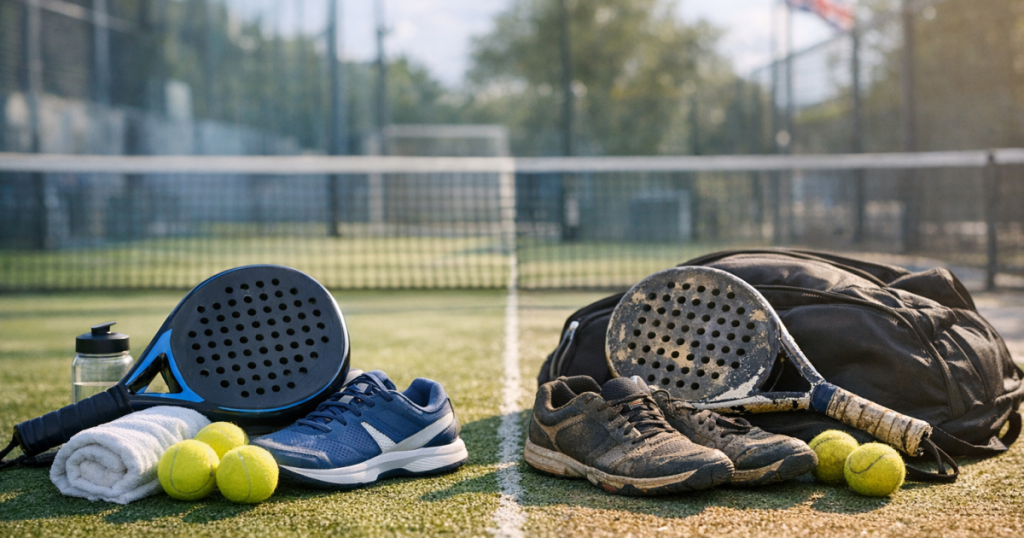
Used kit can be a smart bridge. It lets you start playing regularly, learn what actually bothers you, and upgrade with better judgement later. The catch is that padel gear wears in ways that are not always obvious in photos. A racket can look tidy but have frame damage. Shoes can look presentable but have flattened cushioning or a worn outsole. Balls can still be yellow but feel lifeless in play.
The aim is not to chase the cheapest possible setup. It is to avoid paying for performance you cannot use yet while still protecting the basics: grip, movement, comfort and consistency.
Rackets: second-hand can work, but inspect carefully
A used racket is often the most tempting saving, and it can make sense for beginners. Padel rackets are expensive compared with smaller accessories, and many early players sell lightly used rackets after deciding they want a different feel. That creates opportunities, especially if you can see the racket in person rather than relying only on listing photos.
Start with condition, not brand. Check the frame edge for cracks, soft spots, dents or deep chips. Cosmetic scuffs are normal, especially around the top edge, but structural damage is a different issue. Look across both faces of the racket for swelling, separation, unusual ripples or areas that feel dead when tapped. The wrist strap should be secure and not frayed where it joins the handle.
Be cautious with advanced-looking rackets. A used Bullpadel Hack 02 2022 Padel Racket might look like a bargain, but a beginner still needs to ask whether the racket feels manageable, forgiving and comfortable during normal play. A racket that is too demanding can make basic control harder and encourage late, rushed swings.
If you cannot test the racket, ask clear questions: how long it has been used, whether it has been repaired, whether it has ever hit the glass or fence hard, and why the owner is selling it. A vague answer is not automatic proof of a problem, but it should make you slower to hand over cash.
Shoes: buy new unless you know exactly what you are getting
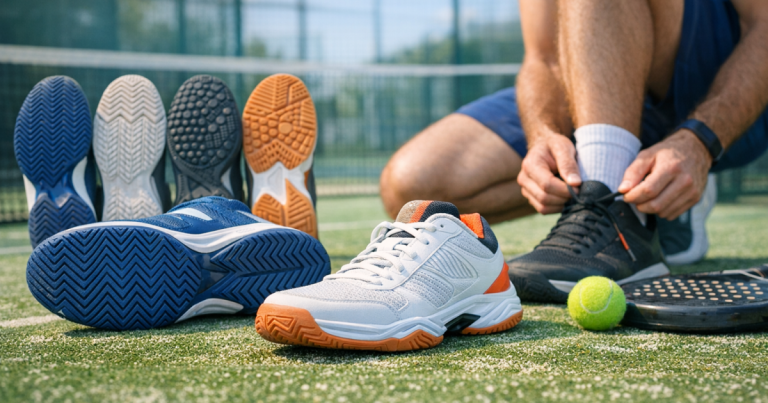
Padel shoes are the item beginners should be most reluctant to buy used. Your shoes affect grip, braking, turning and confidence when moving towards the glass or changing direction after a volley. A second-hand pair might look clean, but the sole pattern, inner support and cushioning could already be worn to someone else’s movement habits.
Used shoes are also a hygiene issue. Even if they have been wiped down, you cannot easily know how heavily they were used or stored. For a first regular club setup, new shoes are the cleaner and more predictable choice.
You do not need the most premium pair straight away. You need court-appropriate grip, a secure fit and enough comfort for an hour or two of play. If you are unsure what separates a basic court shoe from a padel-focused pair, our beginner padel shoe comparison explains the practical differences to think about before buying.
Named shoes such as Babolat Movea Padel Shoes can be useful reference points when you are browsing, but do not choose by brand name alone. Try to check fit around the heel, forefoot comfort, grip pattern and whether the shoe feels stable when you make short sideways steps.
Balls: fresh tubes are worth it
Padel balls lose pressure through use and time. That matters more than beginners sometimes expect. Dead balls bounce lower, slow the rally and make it harder to learn timing properly. If you are practising with tired balls every week, your touch and positioning can start to adapt to poor feedback.
For matches and normal club sessions, buy balls new. A fresh tube of recognisable padel balls, such as Dunlop Pro Padel Balls, gives you a more consistent starting point. You can still keep older balls for gentle hand-feeding, basket drills or solo control practice, but they should not be your main match balls once they have gone flat.
If someone offers you “barely used” balls, squeeze and bounce them before accepting. They should feel lively enough for normal rallies. If they feel soft, dull or inconsistent from ball to ball, they are better treated as training spares than match kit.
Bags, clothing and small accessories: used is usually fine
This is where second-hand buying can make the most sense. Padel bags, spare tops, outer layers, towels, ball clips and simple training accessories do not usually need to be new to do their job. A clean bag with working zips and straps can be perfectly adequate for getting to your first few club sessions.
Check storage areas carefully. A used bag should not smell damp, have sticky lining, broken zip tracks or peeling internal material. If it has a thermal racket compartment, do not assume it performs like new; just treat it as a useful storage section unless you can inspect its condition properly.
For clothing, fit and comfort matter more than logos. Avoid anything that restricts shoulder movement or feels heavy when damp. Used sports clothing is fine if it is clean, intact and still comfortable, but buy socks new. Socks take a lot of friction in padel, and fresh pairs are a small upgrade that can prevent irritation during longer sessions.
If you are still working out what belongs in your bag, start with the essentials rather than filling every pocket. Our guide on what to pack for your first club session keeps the checklist realistic for beginners.
A sensible beginner buying order
If you are starting from nothing, prioritise the items that affect safety, comfort and the quality of practice. You can upgrade the rest once you know how often you play.
- First: suitable court shoes, new balls and comfortable sports clothing.
- Second: a beginner-friendly racket, either new, borrowed or carefully inspected second-hand.
- Third: a bag that fits your racket, shoes, water bottle and spare layer without becoming awkward to carry.
- Fourth: overgrips, towel, plasters, spare socks and other small match-day items.
- Later: extra training aids, upgraded rackets, larger bags or more specialised clothing once your routine is clearer.
This order keeps your early spending tied to real use. A beginner who plays once a week does not need the same setup as someone training twice, playing box leagues and travelling between clubs. The right amount of kit is the amount that helps you turn up prepared without making padel feel more complicated than it needs to be.
Checks before buying used padel gear
Second-hand padel kit is easiest to judge in person. Photos can hide cracks, smells, warped shapes and loose stitching. If you are buying through a marketplace, ask for close-up photos in natural light and avoid listings that only show one flattering angle.
Used racket checks
- Inspect the frame edge all the way around, not just the face.
- Look for cracks, soft areas, rattling sounds or signs of repair.
- Check that the handle does not twist and the wrist strap is secure.
- Ask how often it was used and whether it has had heavy impacts.
- Be wary of “advanced” rackets if you have not tried that style before.
Used bag checks
- Open every pocket and check for damp odours.
- Test zips, buckles, seams and shoulder straps.
- Look for worn lining, peeling material or hidden staining.
- Make sure the racket compartment is long enough for your racket.
- Check that it is practical for your journey to the club, not just large.
Used clothing checks
- Check seams, waistbands and underarm areas for wear.
- Avoid fabric that has gone stiff, thin or misshapen.
- Make sure you can serve, reach and turn freely.
- Buy socks and base layers new if they sit close to high-friction areas.
Where new kit is worth the extra spend
New kit is worth it when freshness, fit or predictable performance matters. Shoes are the clearest example because they shape how confidently you move. Balls are another because consistent bounce helps you learn timing. Overgrips are cheap enough to buy fresh and can make a used racket feel cleaner and more secure in the hand.
There is also a confidence factor. Beginners often blame themselves when rallies feel awkward, but tired balls, slippery shoes or a damaged racket can make learning harder than it should be. Buying selected items new removes a few variables, so you can focus on technique, positioning and decision-making instead.
Small accessories are the exception. You do not need to overbuy, but a tidy set of basics can stop minor problems spoiling a session. If you want a simple checklist, the guide to setting up a small match accessories kit covers the useful extras without turning your bag into a travelling pro shop.
Common beginner mistakes
- Buying a racket because it was expensive when new: a reduced second-hand price does not make a racket suitable for your level.
- Using old trainers on court: general trainers may feel comfortable, but padel movement needs secure lateral support and reliable grip.
- Accepting dead balls as normal: if the ball barely bounces, your timing practice suffers.
- Choosing a huge bag too early: a large bag is only useful if you genuinely carry extra kit.
- Ignoring hygiene: fresh grips, socks and clean storage make regular play much more pleasant.
Helpful questions
Is a used racket better than a cheap new racket?
Sometimes. A well-kept used racket that suits your level can be better than a poor-quality new one, but only if you can inspect it properly and it feels comfortable to play with.
Should beginners buy used padel shoes?
Usually no. Shoes mould to the previous owner’s feet and movement, and worn soles can reduce grip. New shoes are the more reliable choice for regular play.
Can I start with borrowed club gear?
Yes. Borrowing a racket for your first few sessions is sensible if the club offers it. It gives you time to learn what shape, balance and feel you prefer.
Are second-hand padel bags worth it?
Yes, if the bag is clean, dry and structurally sound. Check zips, straps, seams and internal pockets before buying.
How soon should I upgrade my first racket?
Upgrade when you can explain what your current racket is limiting: control, comfort, manoeuvrability or power. If you cannot tell yet, keep playing and gather more court time first.
What to remember
Beginners do not need a perfect setup on day one. They need kit that keeps them comfortable, helps them move well and gives consistent feedback while they learn. Buy shoes, balls, socks and grips new. Consider used rackets and bags when condition is clear and the item suits your actual level. Spend slowly, test where you can, and let your playing routine guide the upgrades.