Padel can look busy from outside the glass, but it is one of the easier racket sports to try for the first time. If you want to get into padel, start with one beginner-friendly court booking, borrowed or hired kit, and a simple plan for the first few rallies.
You do not need perfect technique, expensive gear, or a fixed group of four from day one. The main aim is to leave your first session understanding the bounce, the walls, the scoring, and whether you want to play again next week.
What to know first
- Book a beginner session, taster class, or quiet court rather than jumping straight into a competitive match.
- Hire or borrow a racket for your first few sessions if the club offers it.
- Wear grippy court shoes if you have them; avoid running shoes with tall, soft soles on sanded courts.
- Focus on control before power. Long rallies teach you more than trying to hit winners.
- Say yes to social formats once you know the basics. Padel becomes much easier when you meet regular players.
Choose the easiest first booking
The easiest way to get into padel is to remove pressure from the first session. A beginner group lesson, club taster, or coached introduction is usually better than hiring a court with three complete strangers and hoping it all makes sense.
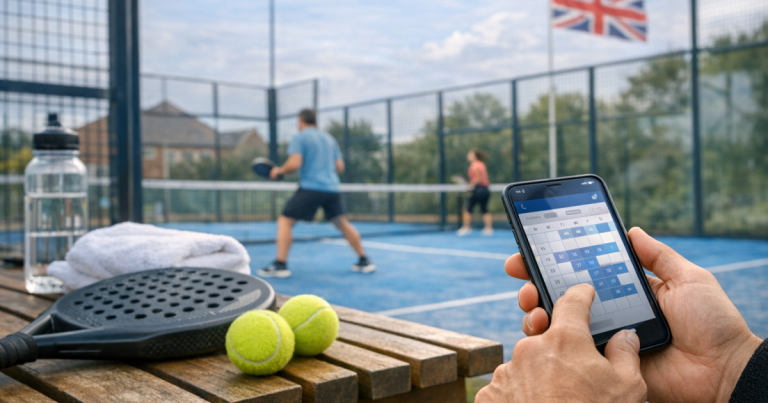
If you are booking your own court, pick an off-peak slot if possible. Quieter times give you more space to ask questions, collect balls, and get used to the glass without feeling watched. Many UK clubs and leisure centres offer pay-and-play courts, and some also run starter sessions where rackets and balls are included. Check the booking notes carefully so you know what is provided before you arrive.
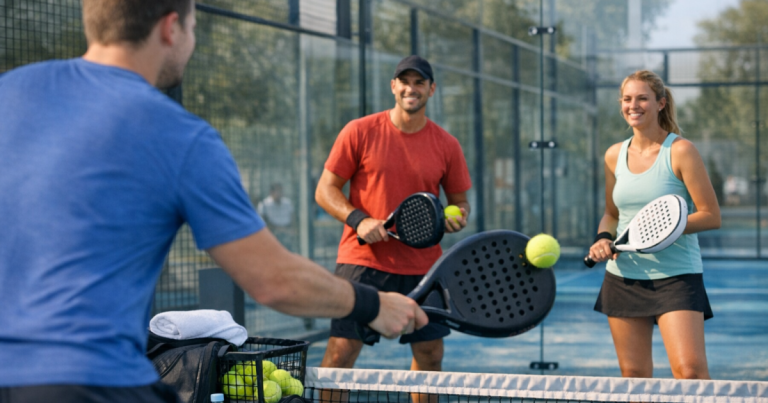
If you have one friend who is also new, that is enough to begin. You can practise serving, returning, letting the ball rebound off the back glass, and keeping a gentle rally going cross-court. A full game of four is fun, but it is not required for your very first hit.
For a sensible spending order, read how to start playing padel without wasting money before buying a racket, bag, or extra accessories. It is much easier to make good kit decisions after you have felt what the game is like.
What actually happens in a first padel session
A first session normally has three parts: getting comfortable with the court, learning the basic shots, and trying short points. The court is enclosed by glass and mesh, so the ball can stay alive after it bounces on your side and hits the wall. That is the part that feels unusual at first, even for people who have played tennis, squash, or badminton.
The serve is underarm and must bounce before you hit it. Points are scored like tennis, but the patterns are different because the court is smaller and doubles positioning matters. Most beginners enjoy the game quickly because you do not need a huge serve or perfect technique to start a rally.
During your first hit, keep these ideas simple:
- Let the ball come to you: beginners often rush forward and hit too early.
- Use a short swing: compact contact gives you more control than a big backswing.
- Aim cross-court: it gives you more room and helps rallies last longer.
- Watch the glass: after the ball bounces, it may rebound towards you rather than away from you.
- Talk to your partner: simple calls such as “mine”, “yours”, and “leave” prevent confusion.
Should you take a lesson straight away?
A lesson is not compulsory, but it can save you several frustrating sessions. A good beginner coach will explain court positioning, serve rules, wall rebounds, and doubles movement in a way that makes social games less chaotic.
Group lessons are usually the best starting point for most newcomers because they are social, structured, and less intense than one-to-one coaching. Private coaching can be useful if you feel nervous, want faster feedback, or are moving across from another racket sport and need to adjust your technique. For a clearer breakdown, see group padel lessons vs private coaching.
If you do book a lesson, ask whether it is aimed at complete beginners. Some “improver” sessions assume you already understand scoring, basic positioning, and how the glass works. Starting in the right level is better for everyone, including you.
What to bring without overpacking
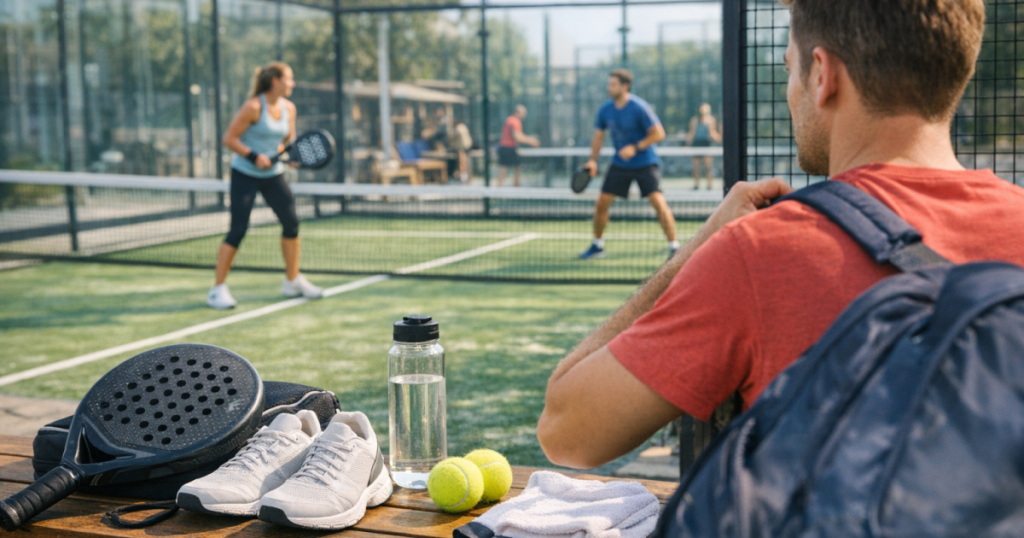
Your first padel bag does not need to be impressive. Bring comfortable sports clothing, water, a small towel, and shoes that grip well on court. If you already own tennis shoes or other low-profile court shoes, they may be fine for an initial session, but check the club’s surface guidance. Outdoor and indoor padel courts can feel different underfoot, especially when sand is present.
Rackets are often available to hire at beginner-friendly venues. Use that option if you can. Early on, you are learning whether you prefer a softer feel, a lighter racket, or a more forgiving shape. Buying too early can lead to a racket that feels exciting in the shop but awkward on court.
Balls are another area where you can keep things simple. Many coached sessions provide them. If you are booking a private court with friends, check whether you need to bring your own padel balls rather than tennis balls. Padel balls look similar, but they are made for the pace and bounce of the sport.
Skills that matter in your first month
Beginner padel improves fastest when you focus on repeatable habits, not flashy shots. The first month is about staying calm, moving with your partner, and learning when not to attack.
Keep the ball in play
Most early points are lost through rushed errors. Aim for height over the net, good margin inside the court, and steady contact. If your rally lasts eight or ten shots, you are already building the foundation for club play.
Learn the basic serve and return
You do not need a powerful serve. A legal, consistent serve that lands deep enough to make the return awkward is far more useful. On returns, block the ball back with control rather than swinging hard.
Get used to defending with the glass
Letting the ball pass you can feel wrong at first, but it is central to padel. Practise watching the ball bounce, hit the back glass, and come forward again. Once that stops feeling strange, the court feels much bigger.
Move as a pair
Padel is doubles by default. If your partner moves forward, you usually move forward too. If they are defending at the back, you normally stay connected rather than leaving a gap. This simple spacing helps you look organised even as a beginner.
How to find people to play with
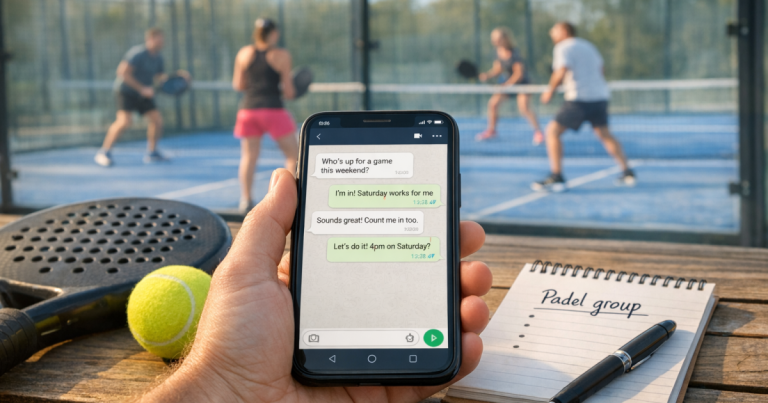
The social side is one of padel’s biggest advantages. You do not need to know lots of players before you start; you can build a playing circle through club sessions, WhatsApp groups, beginner boxes, and organised social formats.
Once you can serve, return, and keep basic score, an Americano can be a friendly next step. You rotate partners, play short rounds, and meet several players in one session. If that sounds intimidating, read how to enter a padel Americano without knowing anyone before signing up.
When joining a new group, be honest about your level. Saying “I am new but can keep score and rally a little” is much more helpful than pretending to be more advanced. Most regular players would rather know what to expect than discover it halfway through a match.
Common newcomer mistakes to avoid
- Buying a powerful racket too soon: control and comfort matter more while your technique is forming.
- Standing too close to the net: beginners often get lobbed because they drift forward without purpose.
- Ignoring the walls: the glass is not just an obstacle; it gives you extra time when used properly.
- Trying to win every point early: learning the rhythm of rallies is more useful than forcing winners.
- Skipping social play: regular games help you learn positioning, scoring, and communication faster than solo practice.
Helpful questions
Can I play padel if I have never played a racket sport?
Yes. Padel is beginner-friendly because the court is smaller, the serve is underarm, and rallies can start slowly. You may need a few sessions to understand the glass, but you do not need a tennis background.
Do I need four people for my first session?
No. Four people are ideal for a proper match, but two players can still practise serving, returning, wall rebounds, and controlled rallies. A coached group session is often the easiest first format.
How many sessions before I can join social games?
Many beginners can join gentle social games after a few sessions, provided they can serve legally, keep basic score, and rally with some control. Choose beginner-labelled sessions first.
Should I buy a racket before playing?
Not usually. Hire or borrow one at first. After several sessions, you will have a better sense of weight, shape, balance, and feel, which makes your first racket choice more sensible.
Is padel expensive to start in the UK?
It does not have to be. Court hire, lessons, and kit costs vary by venue, but you can keep the first few sessions affordable by sharing courts, joining group sessions, and delaying non-essential purchases.
Final thoughts
Starting padel is less about having the perfect setup and more about choosing the right first environment. Book an easy session, use hired kit where available, learn the basic rules, and give yourself time to understand the glass.
After that, the next step is simple: play often enough to feel familiar with the court. A few relaxed sessions can turn padel from something that looks fast and confusing into a social sport you can keep improving at week by week.