Choosing between group padel lessons vs private coaching is mostly about what you need next: comfort on court, technical correction, confidence with tactics, or regular playing contacts. Both can help beginners progress, but they solve different problems. The right booking is the one that gives you enough feedback, enough repetition, and enough real-game context for your current stage.
The short answer
Most beginners should start with a small group lesson if they are still learning how padel rallies work, how to use the glass, where to stand, and how to play with a partner. It is usually less intense, more social, and gives you a useful feel for the rhythm of a real club session.
Private coaching makes more sense when you have a specific problem to fix. That might be a serve that keeps sitting up, a backhand you avoid under pressure, confusion about when to move forward, or a habit your regular playing partners keep noticing. One-to-one time is more direct, but it works best when you arrive with a clear aim.
If your budget only stretches to occasional coaching, a sensible route is to take a group course first, play a few matches, then book a private session to tidy up the patterns that keep holding you back.
How group lessons usually work
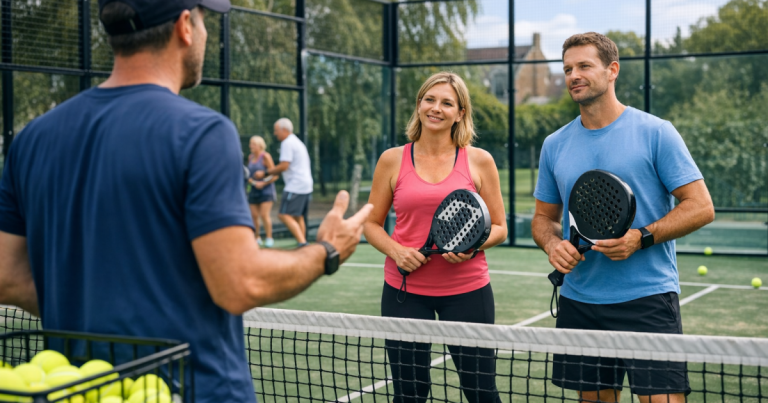
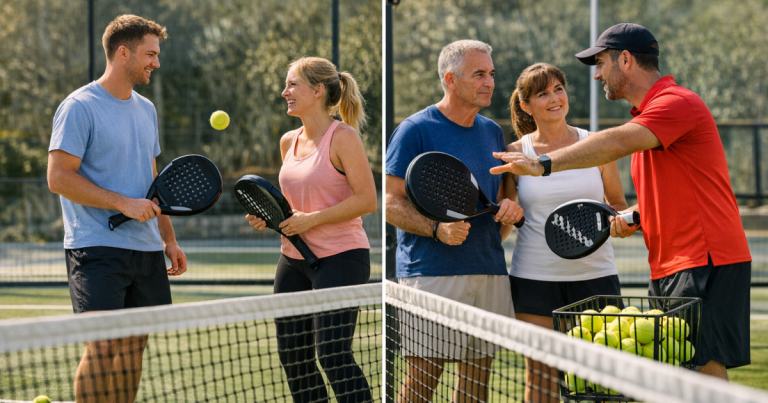
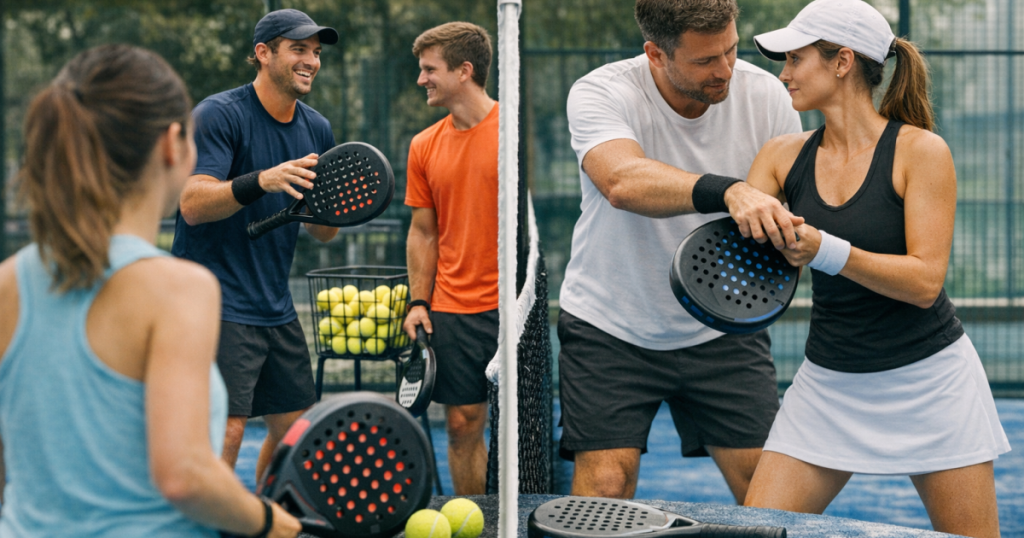
A group padel lesson is normally built around shared drills, coach demonstrations, rotating partners, and short conditioned games. You might spend one block on volleys, another on lobs, then finish with points where everyone practises the same tactical idea.
The main advantage is variety. You see different ball speeds, different positioning mistakes, and different communication styles. That matters in padel because the sport is not just about hitting well. You are constantly adjusting to your partner, the walls, court position, and the pair on the other side of the net.
Group sessions also reduce the pressure. You can make mistakes, watch others try the same drill, and learn from corrections that are not aimed only at you. For new players, that can be more useful than an hour of intense personal feedback before you fully understand the game.
They do have limits. If a class is large or mixed in level, the coach has to spread attention around. You might get helpful pointers, but not a complete rebuild of your technique. That is fine when your goal is to learn patterns and gain confidence, but less effective when one stroke or movement habit needs close attention.
How private coaching usually feels
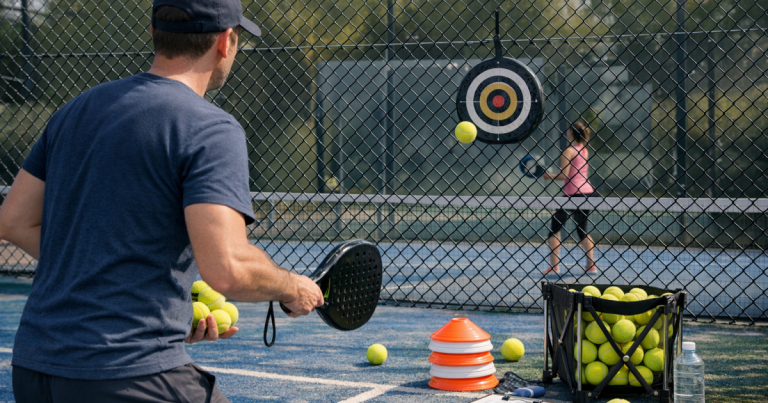
Private coaching is more concentrated. The coach can watch your grip, preparation, footwork, shot choice, recovery position, and decision-making without splitting attention across several players. The session can move quickly from diagnosis to repetition.
For example, a coach may notice that your bandeja breaks down because you are moving backwards too late, not because your racket swing is wrong. In a group lesson, that might be one quick comment. In a private session, it can become the main theme: movement first, contact point second, recovery third.
Private coaching is also useful when you want to connect technique to match situations. A good coach can feed you balls, pause the rally, reset the pattern, and explain what you should have done differently. That level of stop-start detail is harder to manage in a busy group.
The trade-off is intensity. One-to-one coaching gives you fewer places to hide. You will hit more balls, receive more corrections, and may feel mentally tired sooner. That is not a bad thing, but it means private sessions are best booked when you are ready to focus rather than just have a fun hit.
Step 1: decide what problem you are trying to solve
Before booking anything, write down what you want the lesson to change. Keep it practical. A vague aim such as getting better at padel is hard to coach well. A clearer aim gives the session shape.
- If you do not understand positioning, start with a group lesson or beginner course.
- If you lose rallies because you rush the net or stay too deep, either format can help, but group drills may show you the pattern more naturally.
- If one stroke keeps failing, such as the return of serve or backhand volley, private coaching is usually more efficient.
- If you want to meet players and build confidence at a club, group sessions are the better first booking.
- If you are preparing for a club ladder, box league, or regular match, private coaching can sharpen one or two priorities quickly.
This is also where cost discipline matters. Coaching is useful, but it is only one part of starting well. If you are still sorting out where to play and what you actually need, the advice on how to start playing padel without wasting money is a helpful next read.
Step 2: match the format to your stage
Complete beginner
Book a group beginner lesson first. You need the basics of scoring, walls, court positions, serve routine, and partner movement. A group setting gives you enough structure without making every mistake feel like a personal exam.
Early-stage club player
Use a mix. Group lessons are good for repetition and social confidence. Add a private session when you notice the same problem appearing in matches. This is often the point where players realise their issue is not power, but spacing, patience, or recovery position.
Regular player with a specific weakness
Private coaching is likely to give better value. You already have match experience, so the coach can connect corrections to real situations. Ask for one or two priorities rather than a full technical overhaul.
Nervous player returning after a break
A small group can be ideal. You get movement, timing, and reassurance without the pressure of being watched every second. If confidence is low because of a specific shot, follow up with a short one-to-one session later.
Step 3: check the quality of the session before you commit
The format matters, but the coach and session structure matter more. A well-run group lesson can beat a vague private session. A clear private lesson can save weeks of trial and error.
Before booking, check a few simple points with the club or coach:
- How many players are normally in the group?
- Is the session aimed at beginners, improvers, or mixed levels?
- Will the lesson include game situations, not just feeding drills?
- Can the coach explain what the session is designed to improve?
- For private coaching, can you bring one clear goal from recent matches?
If the answer is unclear, keep looking or ask for a recommendation from regular players at the club. Some coaching programmes suit social beginners well, while others are more technical. For one example of how a structured coaching option can feel in practice, read the Padel Social Club coaching review.
Step 4: think about feedback, not just court time
More minutes on court are not automatically better. The useful question is how much good feedback you will receive and whether you can apply it after the lesson.
In a group, you may receive fewer individual comments, but you can learn by watching others. You also get realistic partner changes, which is valuable because beginner padel often breaks down through poor communication rather than terrible technique.
In private coaching, you should expect more direct correction. That is helpful only if it is specific and memorable. A good session should leave you with a small number of cues you can actually use, such as split step before the volley, recover to the middle after defending the glass, or aim higher on defensive lobs.
Try not to judge a lesson by how tired you feel afterwards. A session that improves your decision-making may feel less dramatic than one full of hard feeding, but it can make a bigger difference in matches.
Step 5: use coaching to support real play
Lessons work best when they feed into matches. After a group class, book a social game or club session within a week so the movements stay fresh. After a private session, choose one theme to test in your next match rather than trying to remember every correction.
For example, if your coach worked on defending the back glass, your next match goal might be simple: let more balls come off the glass instead of rushing forward. If you worked on net position, your goal might be to move as a pair and avoid leaving a big gap through the middle.
This is where group lessons have a hidden advantage. They often help you meet players of a similar level. Regular partners make improvement easier because you can practise patterns together, talk between points, and build trust. If that is the bigger barrier for you right now, it may be worth reading how to find a padel partner at your local club.
Common booking mistakes to avoid
The biggest mistake is booking private coaching too early and expecting it to replace match experience. If you have barely played, the coach may spend much of the session explaining basics you could have picked up in a group class.
The second mistake is staying in group lessons for too long without ever addressing personal habits. If you have taken several sessions and the same weakness keeps appearing, one focused private lesson can be more useful than another general class.
The third mistake is chasing advanced shots before building stable rally skills. Many beginners want to learn smashes, kick-smashes, or dramatic glass shots. In real club play, better returns, calmer lobs, sensible volleys, and clear partner movement usually win more points.
Finally, avoid judging lessons only by how much fun they were. Enjoyment matters, especially if it keeps you playing, but a good coaching session should also give you something specific to practise next time.
Main points
- Choose group lessons if you want confidence, social contact, beginner structure, and match-style variety.
- Choose private coaching if you have a specific technical or tactical issue to fix.
- For many beginners, the best path is group first, matches second, private coaching third.
- Ask about group size, player level, session focus, and how feedback is given before booking.
- Turn every lesson into one simple match goal so the coaching does not stay on the practice court.
Things readers ask
How many group lessons should I take before private coaching?
For many beginners, a short block of group lessons is enough to learn the basics and notice repeated problems. Once you can describe what keeps going wrong in matches, private coaching becomes more useful.
Is private coaching worth it for a total beginner?
It can be, but it is not always the best first step. If you are completely new, a group beginner session usually gives better context because you learn rules, positioning, partner movement, and rally rhythm together.
Should I book private coaching alone or with a partner?
If you regularly play with the same partner, a shared coaching session can be very useful. Padel is a pairs game, so working on movement, communication, and court coverage together can improve results quickly.
What should I tell the coach before the lesson?
Tell them your playing level, how often you play, and one or two situations you struggle with. Simple examples such as missing returns, panicking at the glass, or losing net position are more helpful than vague aims.
Can I improve with group lessons only?
Yes, especially at beginner level, provided you also play matches between sessions. If progress stalls because of a repeated personal weakness, add occasional private coaching rather than abandoning group lessons completely.
What stands out
There is no single correct booking for every beginner. Group lessons help you feel at home on court and understand the shared patterns of the game. Private coaching helps you fix the details that keep costing you points. Start with the format that solves your current problem, then adjust as your padel becomes more regular, more confident, and more specific.
Quick Buying Links
Group Padel Lessons
Choosing between group padel lessons vs private coaching is mostly about what you need next: comfort on court, technical correction, confidence with tactics, or regular playing contacts.
Private Coaching: Which Should You Book?
Worth considering if its strengths better match your needs.