A fresh overgrip is only useful if it still feels fresh when you unwrap it. Keeping spare overgrips dry matters because padel bags often carry sweaty clothing, used towels, water bottles and damp shoes in the same space.
The good news is that you do not need a complicated system. You just need to separate clean grips from moisture, protect the packaging, and avoid leaving them in a steamy bag after a session.
The short version
- Keep unused overgrips inside their original wrapper until you need one.
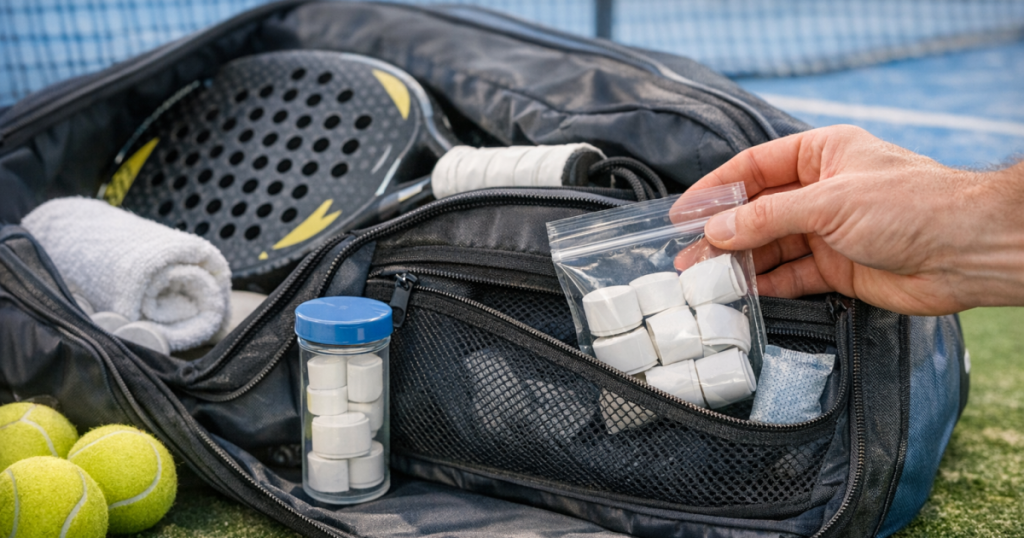
- Store them in a small resealable bag or pouch, not loose in the main compartment.
- Keep them away from towels, shirts, shoes and open bottle pockets.
- Use the driest pocket in your padel bag, ideally an internal zipped pocket.
- Empty and air your bag after play, especially after rainy journeys or sweaty indoor sessions.
Why overgrips get damp in a padel bag
Most overgrips are thin, soft and slightly tacky. That is exactly why they feel good on the racket, but it also means they can pick up moisture, dust and smells if they are left loose in a bag. Even if the grip is still in its wrapper, the outside packaging can become wet or sticky if it sits next to damp kit.
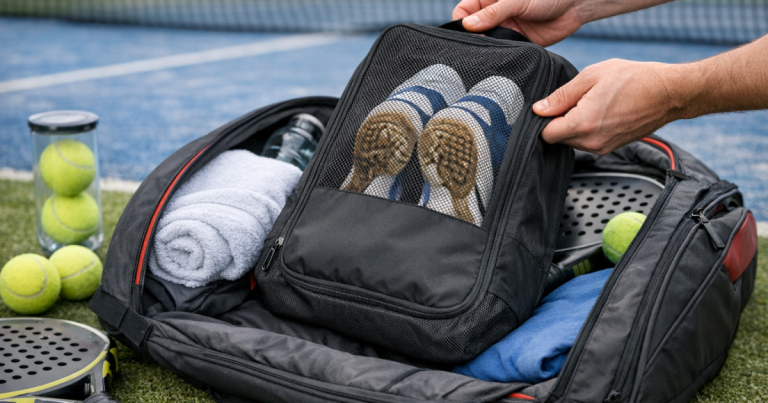
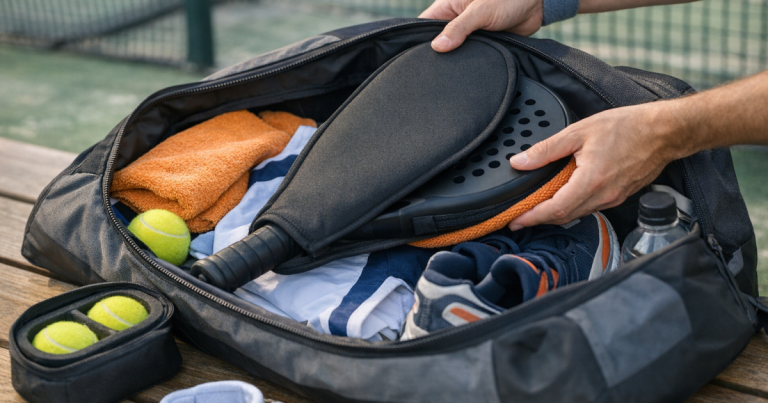
For beginner and early-stage players, the common cause is not usually rain landing directly on the grip. It is the mixed-kit problem: one bag, one main compartment, and everything thrown in after court time. A towel goes in wet, a shirt goes in sweaty, a water bottle leaks slightly, and the unused grip gets caught in the same environment for the journey home.
Bag layout matters too. Some compact padel backpacks are convenient, but they can be tight inside. If you are still working out what to carry, this guide on choosing between a padel backpack and racket bag is useful because storage space affects how easy it is to keep clean accessories separate.
Step 1: Leave the grip sealed until you actually need it
The simplest habit is also the most effective: do not unwrap an overgrip early. Once the plastic wrap is removed, the grip is exposed to moisture, lint and dirt from the inside of your bag. It might still look fine, but it can feel less clean when you put it on the racket.
If you like to carry more than one backup, keep each one individually wrapped where possible. If you buy multi-packs, avoid opening the whole pack and letting several grips float around the bag. Open one at a time, then close the main pack properly before storing it again.
Step 2: Use a small dry pouch inside your bag
A dedicated pouch is better than relying on the main bag pocket. It does not need to be fancy. A small zip pouch, a clean pencil-case-style pouch, or a resealable food bag can all work well. The point is to create a clean barrier between your dry accessories and the rest of your kit.
Put only dry items in this pouch. Good contents include unused overgrips, a spare wristband, plasters, a hair tie, or a small roll of grip finishing tape. Do not add used wristbands, damp towels, loose snacks or anything that might leak.
If you use a resealable plastic bag, replace it when it becomes cloudy, split or grubby. If you use a fabric pouch, let it air occasionally and wash it if it starts to smell. A pouch that has absorbed sweat from old kit is no longer doing its job.
Step 3: Choose the driest pocket, not just the easiest one
The best place for spare grips is usually an internal zipped pocket or a small top pocket that does not touch shoes or clothing. Avoid external pockets if your walk to the club includes rain, especially in winter or after evening games when the outside of the bag can stay damp.
Try this quick bag check before your next session:
- Is the pocket near a water bottle? If yes, use another pocket or keep the grip pouch upright and sealed.
- Does the pocket touch your shoe compartment? If yes, move the grips somewhere cleaner.
- Do damp towels end up beside it? If yes, your grip storage needs a separate pouch.
- Can you find it quickly courtside? If no, choose a small pocket you use only for clean accessories.
This matters more than it sounds. During a match or coaching session, you want to grab a fresh grip quickly without rummaging through wet kit. A simple, repeatable place in your bag saves time and keeps the grip cleaner.
Step 4: Keep wet kit in its own zone
After padel, treat wet kit as the problem item, not the spare grip. Your overgrips will stay in better condition if sweat and moisture are contained before they spread around the bag.
A useful post-session routine is:
- Put your towel and shirt into a separate drawstring bag or laundry pouch.
- Keep used wristbands away from unused grips.
- Check bottle lids before packing them beside accessories.
- Do not rest a damp towel on top of the accessory pocket while you change.
- Take wet kit out as soon as you get home rather than leaving it overnight.
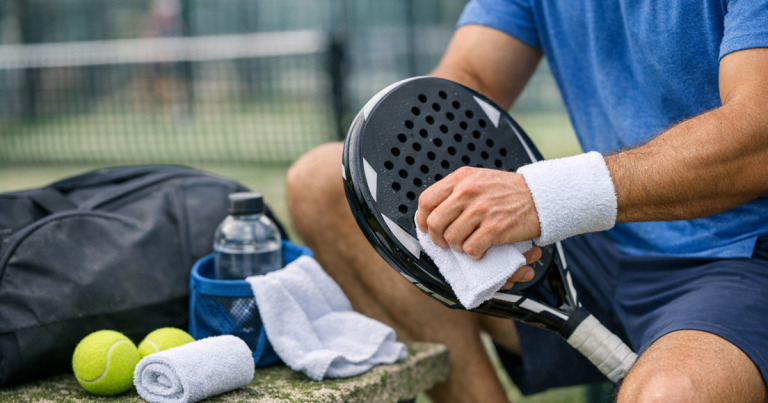
Sweat management also helps on court. If your hands get wet quickly, a fresh overgrip may not solve everything by itself. A dry wristband can stop sweat running down your arm onto the handle, which is why the site’s Wilson padel wristbands review is worth reading if you are building a simple match-day kit.
Step 5: Do not store grips permanently in a damp bag
It is tempting to leave all your padel accessories in the bag between sessions. That is fine if your bag is clean and dry, but it is not ideal if it often sits in a car boot, hallway or changing room while still holding damp kit.
Once you are home, open the main compartment and remove anything wet. If the inside of the bag feels damp, take the grip pouch out and store it somewhere dry until the bag has aired. You do not need to overthink it; even leaving the zip open for a few hours can make a big difference.
Be careful with heat as well. Do not try to dry accessories on a radiator or in direct heat. Overgrips are better kept in normal indoor conditions, away from moisture and away from anything that could deform packaging or make adhesive strips messy.
Step 6: Pack for the conditions you actually play in
UK padel can mean indoor courts, outdoor courts, rainy car parks and damp changing areas, sometimes all in the same week. Your storage habit should match that reality.
If you play indoors
Moisture usually comes from sweat rather than weather. Keep grips away from towels and clothing, and empty the bag promptly after longer sessions or coaching drills.
If you play outdoors
Protect the whole accessory pocket from rain during the walk to and from the court. An internal pouch is safer than an exposed side pocket, even if the side pocket feels more convenient.
If you go straight from work
Keep padel accessories separate from lunch containers, umbrellas and commuting items. A small pouch inside your sports bag keeps your grip from picking up everyday bag grime.
If you share a family sports bag
Label or colour-code your pouch so it does not become the general pocket for keys, snacks and wet items. Spare overgrips are small, so they are easy to lose or crush in a shared bag.
Common packing mistakes to avoid
- Leaving a grip loose in the racket compartment: It can get flattened, dirty or caught when you pull the racket out.
- Keeping it beside a leaking bottle: Even a small amount of water in the pocket can ruin the clean feel of the packaging.
- Using the same pouch for clean and used items: Once a pouch has held sweaty kit, it is no longer a clean storage space.
- Opening multi-packs at home and carrying loose grips: Keep packaging intact until you need one.
- Forgetting about the bag after play: The longer damp kit stays inside, the more everything else absorbs that environment.
A simple pre-session and post-session routine
Before you leave for padel, check that your grip pouch is sealed, dry and in the same pocket as usual. You only need one or two spares for most beginner club sessions, so avoid overpacking the bag with more than you will realistically use.
After the session, separate wet kit first. Then check whether the accessory pouch still feels dry on the outside. If it does, it can stay packed. If it feels damp, take it out, wipe it if needed, and let the bag air before putting it back.
This is also a good point to think about your wider kit order. If you are still building your setup, the guide to padel gear for beginners helps prioritise what matters first, so accessories stay useful rather than becoming clutter.
Helpful questions
Can I keep overgrips in the original cardboard pack?
Yes, as long as the pack stays dry and closes neatly. For extra protection, place the whole pack inside a small sealed pouch or resealable bag.
Should I carry one spare grip or several?
For most beginner sessions, one or two spare overgrips is enough. Carry more only if you play long sessions, sweat heavily, or share grips with a regular partner.
Is a plastic bag better than a fabric pouch?
A sealed plastic bag gives better moisture protection, while a fabric pouch is neater and more durable. Many players use both: grip in its wrapper, then inside a small pouch.
What should I do if a spare grip gets damp?
If the grip itself feels wet, dirty or less tacky, do not put it on your racket. Keep it for emergency use only, or replace it with a properly dry one.
Can damp storage affect how an overgrip feels?
Yes. Moisture, lint and sweat can make an unused grip feel less fresh and less comfortable, even if it has never been fitted to a racket.
Key takeaways
The easiest way to keep your backup grips usable is to give them their own dry space. Leave them wrapped, put them in a sealed pouch, store that pouch away from wet kit, and air your bag after play.
Once the habit is in place, keeping spare overgrips dry becomes a small part of your normal padel routine. It means fewer annoying mid-session surprises and a cleaner, more reliable feel when you need to regrip your racket.