Your bag choice affects how easy it is to get to the court, organise your kit and avoid carrying things you never use. For most beginners, a padel backpack is the simplest place to start, but a larger racket bag can make more sense once you play more often or carry shoes, spare clothing and multiple rackets.
The right answer is not about looking more serious. It is about how you travel, what you actually bring to sessions, and whether your bag makes club nights easier or more awkward.
The quick decision
- Choose a backpack if you usually carry one racket, a bottle, balls, a towel and a few small accessories.
- Choose a racket bag if you regularly take two or more rackets, separate shoes, spare clothing or damp kit after playing.
- Choose the smaller option if you walk, cycle, use trains or need to store the bag under a desk or in a locker.
- Choose the larger option if you drive to padel, play long sessions, or often go straight from work to the club.
A good bag should reduce faff. If you have to empty it on the court just to find your overgrip, keys or balls, it is not helping you. If you carry a huge bag that is mostly empty, it may be more bulk than benefit.
What each bag style is designed to do
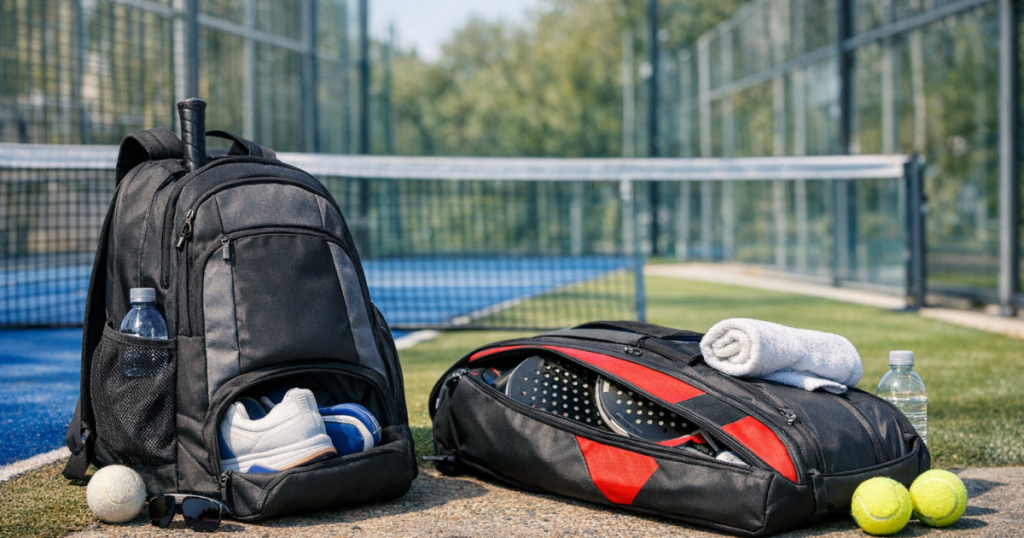
A compact backpack is built around convenience. It keeps the load close to your body, usually fits into normal daily travel, and is easy to carry alongside work clothes or a gym kit. It is often the tidier option for players who are still working out how often they will play.
A padel backpack normally has room for a racket, personal items and basic court essentials. Some versions include a racket sleeve, side bottle pocket or separate section for smaller items, but layouts vary, so check the current product details rather than assuming every model is arranged the same way.
A racket bag is closer to a sports holdall shaped around padel gear. It is designed to carry more volume, usually with dedicated racket space and extra room for clothing, towel, balls and accessories. Some larger bags include separate shoe or wet compartments, but again, the exact layout depends on the model.
The trade-off is simple: backpacks are easier to live with; racket bags are easier to pack heavily.
Step 1: Count what you really take to padel
Before choosing, lay out the kit you actually carry for a normal club session. Do not pack for a fantasy tournament day if you are mostly playing one evening match after work.
For a typical beginner session
- One racket
- A tube of balls
- Water bottle
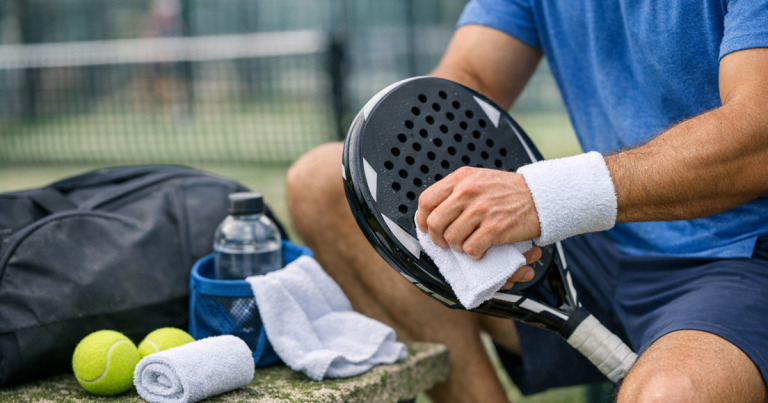
- Small towel
- Phone, wallet and keys
- Spare overgrip or grip tape
- Light layer for before or after play
That list usually fits a backpack-style bag, provided the racket is held securely and the smaller items are not all thrown into one loose compartment.
For longer or more regular sessions
- Two rackets, perhaps your usual one and a backup
- Separate padel shoes
- Change of top or socks
- Larger towel
- Extra balls for drills
- Snack or recovery drink
- Used clothing after play
Once shoes and spare clothing enter the picture, a racket bag starts to make more sense. The main advantage is separation: clean kit, damp kit, shoes and rackets are easier to keep apart.
Step 2: Match the bag to your journey
Your travel routine matters as much as the kit list. A player who walks ten minutes to an indoor court has different needs from someone driving to a club after work.
If you walk, cycle or use public transport
A backpack is usually less annoying. It keeps both hands free, sits better on busy trains and is less likely to swing into people than a wide shoulder bag. For UK players using buses, trains or shared changing areas, compact storage can be a real advantage.
Check that the shoulder straps feel comfortable once the bag is loaded. A bag can look neat when empty but dig into your shoulders when it contains a racket, bottle and shoes. Also think about rain: you do not need a fully specialised solution for every journey, but you do want zips and fabric that feel sensible for normal British weather.
If you drive to the club
A larger racket bag becomes easier to justify. You can leave it in the boot during the day, carry more kit without wearing it on your back, and keep shoes or damp clothing away from work items. The downside is storage at home and at the club. Some changing rooms and court-side benches get crowded, so a very bulky bag can be irritating even if you have not filled it.
Step 3: Think about racket protection
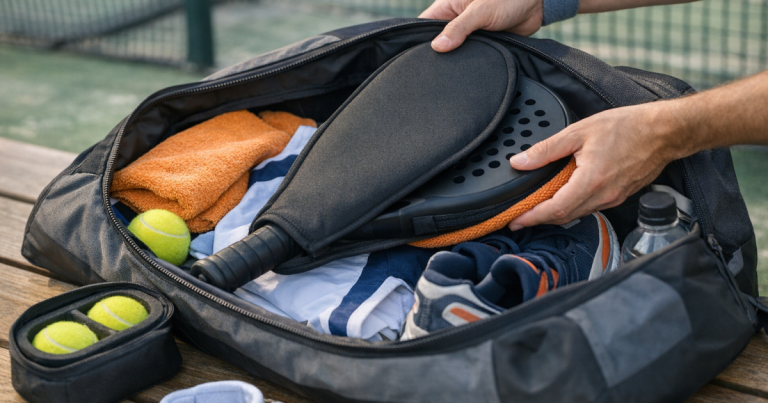
A racket does not need to be treated like museum glass, but it should not be loose in a bag with keys, bottles or hard objects pressing into it. Beginners often underestimate how much a bag’s internal layout matters.
If you only carry one racket, a secure sleeve or padded section is usually enough. If you carry more than one, a larger racket bag gives you more room to avoid pressure on the faces and frame. This matters more if you are moving from a forgiving starter racket to something with a different balance or shape. If you are still learning how racket styles affect feel, the guide to round, teardrop and diamond padel rackets is a useful next step.
Do not choose a bag purely because it says it can hold several rackets. Ask whether you genuinely need that space now. Many beginners are better served by protecting one racket well than carrying three compartments they never use.
Step 4: Decide how you will handle shoes and damp kit
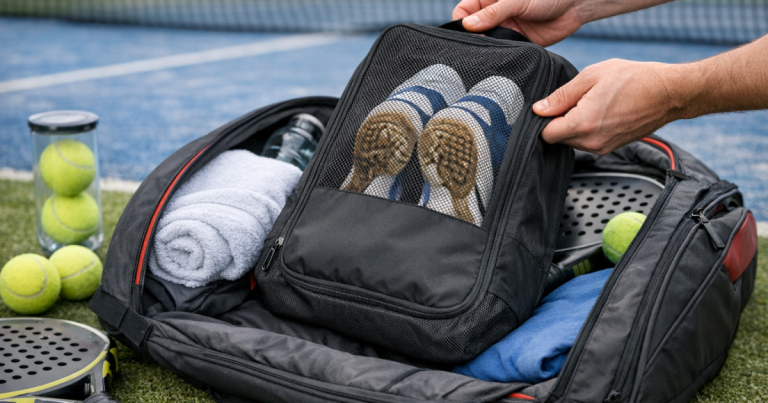
Shoes are often the point where the decision changes. If you wear your padel shoes to the club and go straight home afterwards, a backpack may still be enough. If you travel in normal trainers, change at the venue, and want to keep court shoes separate from clean clothing, a racket bag is more practical.
Separate shoe storage is not just about neatness. Padel courts can leave fine sand or court dust on the sole, and you may not want that sitting next to your towel or spare top. If you are still working out what footwear suits the surfaces you play on, read the padel shoes guide for grip, support and court surface before building your whole bag setup around your current trainers.
Damp kit also needs a plan. After a warm indoor session, a towel and top can make the rest of the bag unpleasant quickly. A larger bag with better separation helps, but even with a backpack, a simple reusable pouch for used clothing can keep things tidy until you get home.
Step 5: Use real-life scenarios
One social match per week
Start small. A backpack is usually enough if you bring one racket, a tube of balls and a drink. It is easier to store, easier to carry, and less likely to encourage overpacking.
Beginner coaching plus occasional games
A backpack still works for many players, but look for enough organisation for small accessories. Coaching sessions often involve spare balls, a towel and perhaps a notebook or phone tripod if you like reviewing your technique. You do not need a huge bag, but you do need to find things quickly.
League nights or regular club play
A racket bag becomes more useful when sessions are longer and less predictable. You may want a spare top, backup grip, extra balls and a second racket. The more you play, the more you appreciate compartments that stop your kit becoming a heap.
Going straight from work
This is the classic bigger-bag situation. If you need padel kit, work items, a change of clothing and shoes in one trip, a racket bag or hybrid holdall is much less frustrating. If you need to look tidy on the train or in the office, though, a smarter backpack may still be the better everyday compromise.
Useful examples without overcomplicating it
It helps to look at real formats rather than only reading generic descriptions. The Head Tour Padel Backpack is an example of the compact backpack style many players consider when they want something easier to carry than a full racket bag. Check the current layout, racket storage and pocket arrangement before deciding whether it fits your own kit list.
At the larger end, the Adidas Multigame Padel Bag is an example of a more spacious racket-bag format. Bags like this make sense when separation and capacity matter more than commuting convenience. Always verify the current dimensions, strap setup and compartments because designs can change between versions.
The point is not that one style is automatically more advanced. Plenty of good players use compact bags. Plenty of beginners buy large bags because they have a long journey or carry shoes. Use your routine as the filter.
Practical checks before you choose
- Load it in your head, not empty on a shelf: picture your racket, bottle, towel, balls, shoes and valuables inside at the same time.
- Check racket fit: make sure the handle and head sit securely, not awkwardly stretched across the zip.
- Think about valuables: keys and phone need a smaller pocket, not the same space as balls and grips.
- Consider bottle position: an upright side pocket can be more reassuring than a bottle loose beside clothing.
- Look at the base: bags get placed on court-side floors, car parks and changing-room benches, so a reasonably sturdy bottom is useful.
- Try the straps loaded: comfort matters more than how the bag looks when empty.
- Check storage at home: a large bag is only convenient if you have somewhere sensible to keep it.
Small accessories still need a home
The easiest bag to use is the one where small items have a predictable place. Overgrips, wristbands, blister plasters, hair ties, spare contact lenses and keys are the things that disappear when everything is loose.
A beginner-friendly setup is simple: keep one small pouch for grips and tape, one pocket for valuables, and one section for balls. If you change grips yourself, the overgrip replacement guide can help you keep the right bits in your bag without carrying a whole drawer of extras.
A backpack can be excellent if it has enough small storage. A racket bag can still be annoying if it is just a large empty space. Organisation matters as much as litres.
FAQ
Can I use a normal gym backpack for padel?
Yes, for a first session or casual hit, as long as the racket is not being bent, crushed or scratched by other items. A padel-specific bag becomes more useful once you play regularly and want better racket storage.
Do beginners need space for two rackets?
Usually not at the start. One suitable racket is enough for most new players. Space for a second racket becomes useful if you play leagues, share kit with a partner, or want a backup for regular sessions.
Is a racket bag too much for club nights?
Not if you carry shoes, spare clothing and a towel. It is too much only if the extra size makes your journey awkward or you end up carrying unused compartments every week.
Should my bag have a separate shoe compartment?
It is very helpful if you change footwear at the venue. If you arrive already wearing your court shoes and go straight home afterwards, it is less important.
How much should I spend on a padel bag?
Set a sensible budget based on how often you play and check build quality, comfort and layout before price alone. For beginners, a well-organised modest bag is usually more useful than an oversized premium one.
The big picture
Choose the bag that supports your actual padel routine. If your sessions are short, local and simple, a backpack keeps things light and manageable. If you are playing more often, travelling from work, carrying shoes or bringing spare kit, a racket bag will feel calmer and better organised.
The best choice is the one you will happily use every week. Pack what you need, leave out what you do not, and let the bag make getting on court easier rather than turning every club night into a kit-hauling exercise.