When you are new to padel, online drills can either give your practice some useful structure or send you chasing techniques you are not ready for yet. This PadelMBA review looks at the beginner-focused side of the platform: whether the drills are clear, realistic for early-stage players, and worth using alongside normal club sessions.
Footwork drills, repeated hitting and higher-intensity movement work can place stress on ankles, knees, shoulders and backs. Return-from-injury training, pain-related adjustments and intense physical conditioning should be guided by a qualified coach or healthcare professional and follow your club’s safety rules and relevant UK coaching standards.
The short version
PadelMBA is worth considering if you want a more organised way to practise the basics between lessons, social games and club sessions. Its main value for beginners is not magic technique fixes; it is giving you repeatable themes to work on, such as positioning, control, shot selection and court awareness.
The drills are most useful when you treat them as prompts rather than a complete coaching replacement. If you already play once or twice a week and can find a partner, basket feed, or friendly group willing to repeat patterns, you can turn the ideas into better habits. If you only want instant match wins, or you have no court time to practise, it will feel less valuable.
- Best for: motivated beginners and early improvers who like structured practice.
- Less useful for: complete first-timers who have not yet played a real session.
- Main strength: drill ideas that make practice more focused.
- Main limitation: online coaching cannot see your timing, grip, movement or decision-making in real time.
- Verdict: helpful if used sensibly alongside real play, not as a substitute for court experience.
What PadelMBA is trying to do
PadelMBA is an online padel coaching platform built around learning content rather than a casual collection of random tips. For beginner players, that matters because padel improvement is rarely about learning one flashy shot. Most early progress comes from understanding where to stand, how to move with a partner, how to keep the ball in play, and when not to attack.
The platform’s beginner drills are best viewed as a training menu. You take one idea onto court, repeat it with a simple goal, then bring it into a match gradually. That approach suits padel because the game rewards habits: split-stepping, recovering position, using the glass calmly, choosing safer targets and staying connected with your partner.
If you have not yet been to a club session, start with the basics of how a first game usually feels, what to bring and how the rhythm works. Our guide to what to expect at your first padel session is a better first step before diving into a library of drills.
How beginner-friendly are the drills?
The beginner material is strongest when it keeps things simple: one court situation, one objective, and one clear behaviour to repeat. A useful beginner drill should not ask you to think about grip changes, spin, footwork, communication, court geometry and winning the point all at once. It should narrow your attention.
Good beginner drill themes include:
- Control before power: keeping cross-court rallies alive instead of trying to finish early.
- Recovery position: hitting, then returning to a sensible spot rather than admiring the shot.
- Net discipline: learning when to hold the net and when to retreat after a lob.
- Glass confidence: letting the ball come off the back glass instead of rushing a panicked volley.
- Partner awareness: moving as a pair rather than two separate singles players.
PadelMBA is useful here because it can give players vocabulary and structure. Instead of saying “I need to get better”, you can say “today I am practising recovery after the bandeja” or “today we are working on defending cross-court balls after the glass”. That shift makes practice feel calmer and more measurable.
The risk is that some learners will watch a drill and copy the shape without understanding the point. If a drill becomes too complex for your current level, simplify it. Use slower feeds, bigger targets, fewer shots in the sequence, or a cooperative rally rather than a competitive point.
Where the drills help most on court
Building repeatable routines
Beginners often improve fastest when they stop treating every ball as a new emergency. PadelMBA-style drills can help by giving you patterns you recognise: defend low, lob when under pressure, move forwards together, volley to safe spaces, then reset.
This is valuable in club play because social padel can be chaotic. You might play with different partners, varied ball speeds and changing levels every week. A small number of reliable routines gives you something steady to fall back on.
Understanding doubles movement
Padel is a doubles game, and many beginners lose points because they move too late, split apart, or leave gaps through the middle. Any drill that helps you and your partner shift together is worth taking seriously. For a clear foundation before adding more advanced patterns, read our guide to moving with your partner in padel doubles.
The best beginner drills are not always the most exciting ones. Side-by-side recovery, controlled lobs, cross-court defence and net positioning can look basic, but they fix the mistakes that cost newer pairs point after point.
Turning lessons into practice
If you take occasional coaching, online drills can help you practise what your coach has already shown you. For example, if a coach tells you that your volleys are too rushed, a controlled volley-to-target drill gives you a way to work on that between sessions. If a coach tells you that you are too static after serving, a serve-and-recover drill gives that advice a practical shape.
This is where PadelMBA is most helpful: it can fill the gap between “I understand the idea” and “I have repeated it enough to use it under pressure”.
What beginners should be careful with
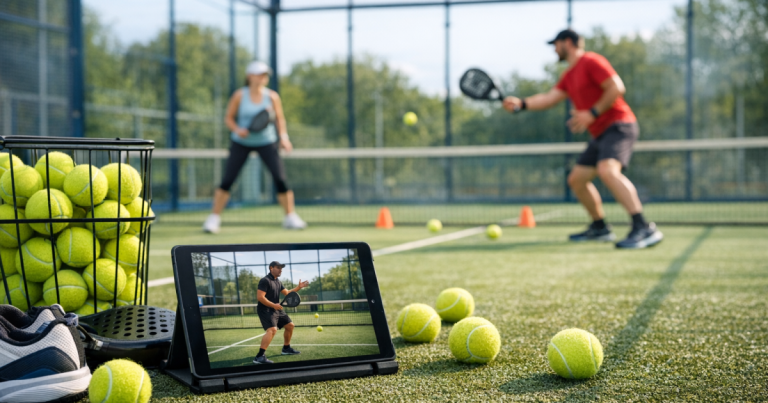
The main limitation is that online drills cannot correct you in the moment. A video may show the right contact point, but it cannot see whether you are gripping too tightly, swinging too big, planting your feet awkwardly, or choosing the wrong ball. That does not make the drills useless, but it means you need feedback from real play.
There are also three common traps:
- Doing too many drills at once: pick one theme per session. More variety usually means less learning.
- Copying advanced rhythm too early: slower, cleaner repetitions are better than rushed sequences.
- Ignoring match context: a drill only matters if you can connect it to a real situation you face in games.
A simple way to keep things grounded is to use a three-part practice block. Spend 10 minutes warming up and rallying cooperatively, 15 to 20 minutes on one drill, then play points where you deliberately look for that same situation. That is more useful than watching several videos and trying to fix everything in one evening.
How it compares with other beginner resources
PadelMBA is not the only online route for learning. Some players prefer a more personality-led coaching style, while others like structured courses, short social clips, or in-person club coaching. The right choice depends on how you learn.
If you like organised drill libraries and are willing to plan practice sessions, PadelMBA makes sense. If you mainly want broader beginner education, community feel, and a different presentation style, you may also want to read our The Padel School review for beginner players.
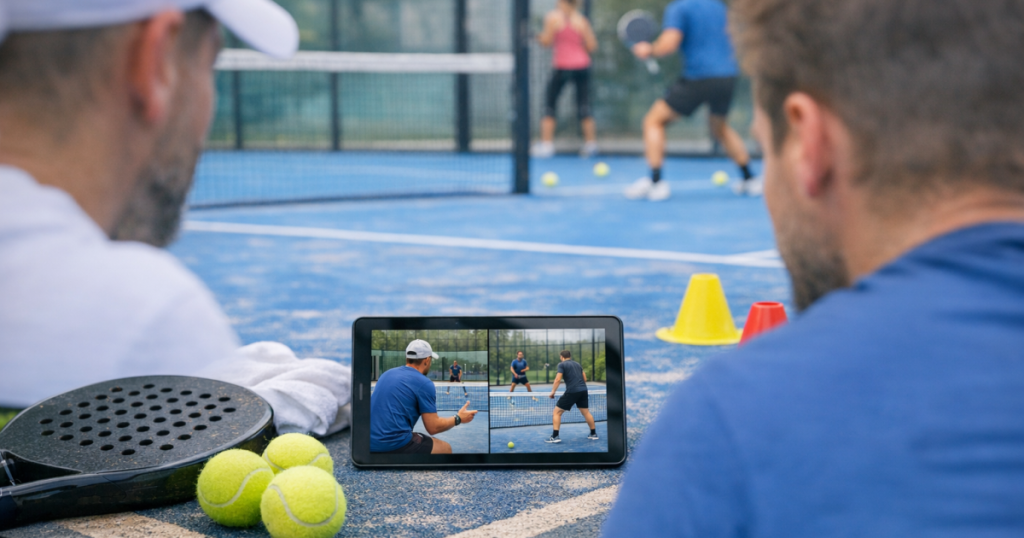
The most important comparison is not one platform against another. It is online instruction versus feedback. Online content is excellent for ideas, structure and reminders. Coaches and good practice partners are better for spotting what you are actually doing. Most beginners benefit from mixing both.
A sensible way to use PadelMBA as a beginner
If you decide to follow the drills, keep the process simple. Choose one weakness from recent matches, find a drill that matches it, then practise it for a short block over several sessions. Do not keep changing theme every week just because a new video looks interesting.
For example:
- If you lose points after the return: practise return plus recovery position, not just hitting harder returns.
- If you get lobbed constantly: practise recognising when to move back, then defending after the glass.
- If your pair leaves the middle open: practise shifting as a unit and calling who takes the central ball.
- If you panic at the net: practise softer volleys to big targets rather than winner attempts.
Keep a short note after each session. One line is enough: “Today I worked on recovering after my volley” or “We tried to defend cross-court after the back glass”. That makes improvement visible, even when match results are uneven.
Who will get the most value from it?
PadelMBA suits beginners who already understand the basic scoring, have played a few games, and want to become more intentional. It is also a good fit for friends who book courts together and want something more focused than just hitting around for an hour.
It is less ideal if you are expecting personalised correction, if you dislike practising repeated patterns, or if your current priority is simply getting comfortable on court. At the very start, playing more points, learning the rules and enjoying club sessions may matter more than structured drills.
For early-stage players in the UK, the sweet spot is likely to be one online drill theme plus regular club play. Use the drill to guide your attention, then let matches show whether it is becoming a habit.
Questions people ask
Is PadelMBA suitable for complete beginners?
It can be, but it is more useful once you have played a few sessions and understand the basic rhythm of padel. Absolute beginners may benefit more from a first lesson or social club session before following drills online.
Can PadelMBA replace a padel coach?
No. It can give you structure and ideas, but it cannot watch your movement, timing or shot choices in real time. For persistent technique problems, a coach will usually help faster.
How often should beginners practise drills?
One focused drill block per week is enough for many newer players. The key is repeating the same theme over several sessions, not cramming lots of unrelated exercises into one booking.
Do you need a regular practice partner?
It helps a lot. Many padel drills rely on cooperative feeding, controlled rallies or pair movement. You can still learn from the videos alone, but court practice with another player makes the ideas stick.
Should you follow advanced drills as a beginner?
Only if you simplify them. Remove extra shots, slow the feed down and focus on the main principle. Advanced patterns copied at full speed can make beginners tense and rushed.
What stands out
PadelMBA’s beginner drills are worth following if you use them with realistic expectations. They are best as a structure for practice, not a shortcut around court time, coaching feedback or match experience.
The strongest reason to use the platform is that it helps you practise with a purpose. Instead of turning up, rallying randomly and hoping to improve, you can choose one situation and repeat it until it starts to feel natural. For beginners trying to move from occasional games into regular club play, that is a meaningful advantage.
The simple verdict: follow the drills, but keep them small, repeatable and connected to real match problems. One well-practised habit will help your padel far more than ten videos you never take onto court.