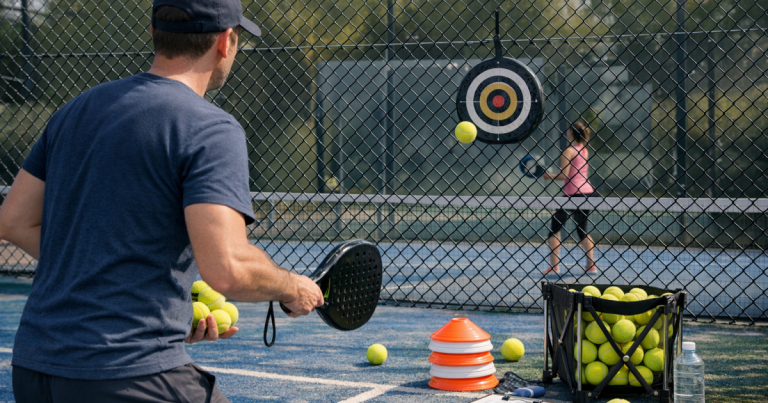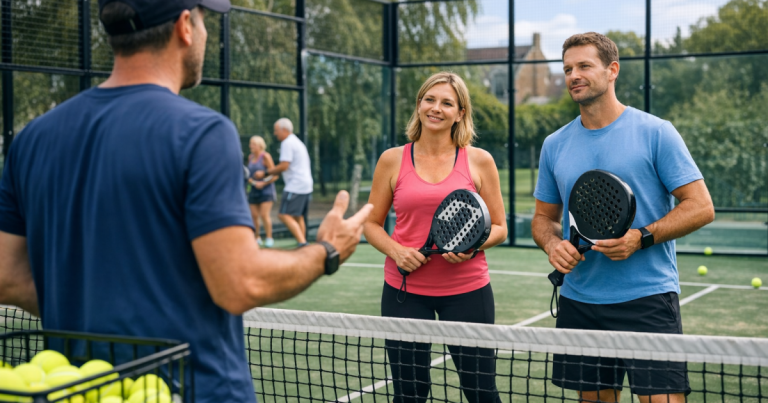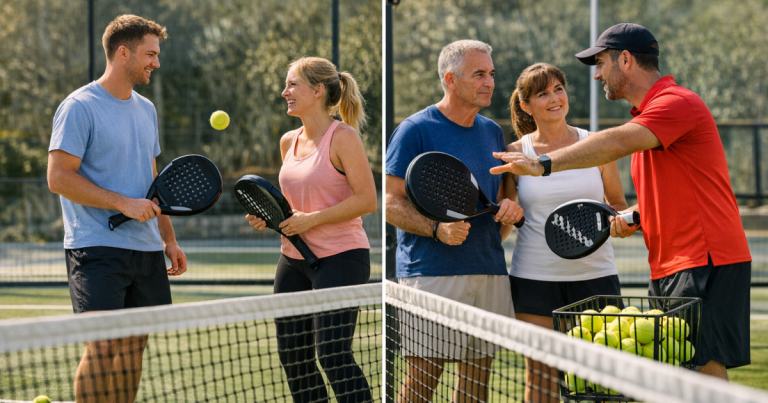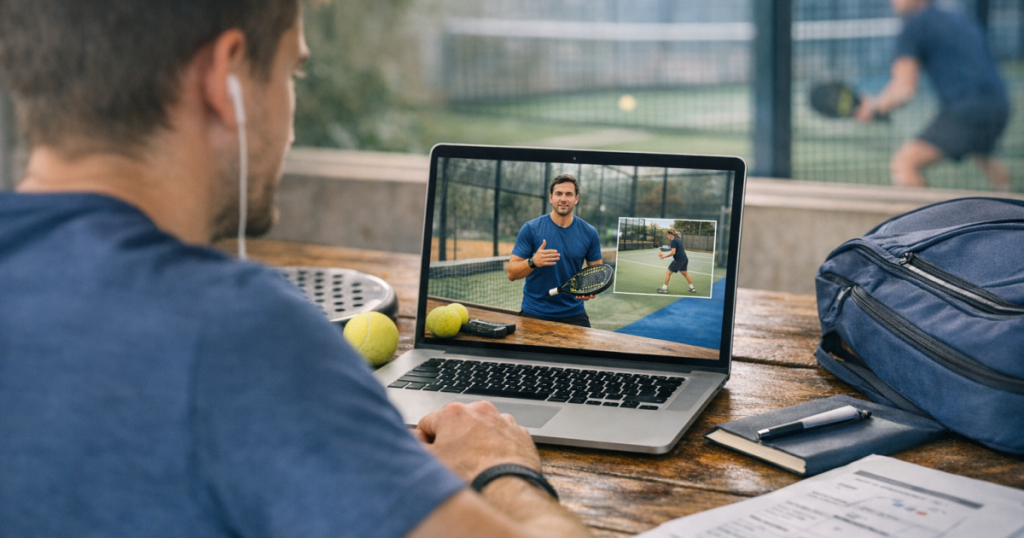
For new club players, the real The Padel School review question is simple: will online coaching make your next game feel clearer, or will it become another membership you barely use?
Quick verdict: The Padel School is most useful if you already play, can practise regularly, and want coaching ideas between sessions. It is less useful if you need live correction, motivation to turn up, or a coach watching your actual movement on court.
Injury assessment and return-to-play decisions should be handled by a qualified physiotherapist or medical professional to ensure training is appropriate and consistent with UK health and safety expectations.
Product overview
The Padel School is an online padel coaching platform built around video-led instruction. It is aimed at players who want to understand the game more clearly, improve technique, and make smarter tactical decisions without relying only on occasional in-person lessons.
That makes it a natural fit for beginners and improvers who are already playing at a club, booking social games, or trying to move from casual rallies into more organised match play. If you are completely new and have never stepped on court, start by understanding what a normal beginner session feels like; our guide to what to expect at your first padel session is a better first step before joining any online coaching platform.
The main appeal is structure. Padel can feel chaotic early on: glass rebounds, positioning, lobs, bandejas, volleys, serves, scoring and partner movement all arrive at once. A good online coaching library lets you revisit one idea several times, pause the explanation, then test it in your next game.
The limitation is just as important. A video cannot see whether your grip is drifting, whether your split step is late, or whether your shoulders are opening too soon. So The Padel School works best as a support tool alongside real court time, not as a full replacement for coaching or match experience.
Key specs
- Product type: Online padel coaching platform.
- Main format: Video-based coaching and learning resources.
- Best fit: Beginners, improvers and club players who want structured learning between matches.
- Access: Online access; check the current joining model and device compatibility before signing up.
- Cost: Verify the current UK price in £ directly before joining, as memberships and offers can change.
- Equipment needed: No special equipment is required to watch the content, but you need regular court time to apply it properly.
- Coaching style: Instructional and technique-focused, with practical ideas you can take into drills and games.
- Important check: Confirm the current lesson library, membership terms, cancellation process and any included extras before paying.
Pros and cons
Pros
- Gives beginners a more organised way to learn instead of relying on random social-game advice.
- Useful for reviewing one topic repeatedly, such as positioning, serve patterns, wall use or net play.
- Works well between weekly club sessions because you can arrive with one clear focus.
- Can help you understand why a shot or tactic matters, not just how it looks.
- Good for players who enjoy self-directed learning and are willing to take notes or practise deliberately.
Cons
- It cannot correct your technique in real time.
- The value depends heavily on how often you play and whether you actively apply the lessons.
- Some beginners may still need an in-person coach to simplify the first few sessions.
- You need to check current pricing and membership terms rather than relying on older reviews.
- It may feel too passive if you prefer direct feedback, group energy or coached drills on court.
Performance in real use
The strongest use case is learning one idea before a club game, then testing it immediately. For example, instead of watching several lessons in one sitting, a beginner might pick one theme: holding the net, using a lob to reset, or letting the ball come off the back glass. That is where online coaching starts to feel practical rather than theoretical.
For technique, the platform can help you build a clearer mental model. Many early-stage players swing too hard, rush the ball, or try to win points from poor positions. A structured explanation can slow that down. You begin to recognise that padel rewards patience, court position and shot selection more than constant power.
The risk is over-watching. It is easy to feel like you are improving because you understand a concept on screen. Real improvement only shows up when you can make the decision under pressure, with a partner beside you and the glass involved. The best way to use The Padel School is to choose one lesson, write down one cue, then give yourself a few matches to test it.
For beginners in UK club environments, this matters because social games can be uneven. One week you might play with other newcomers; the next, you might be pulled into a faster game where everyone seems to know where to stand. Video coaching can give you a reference point so you are not just guessing.
It is also useful for understanding the language of lessons. If an in-person coach talks about recovery position, the volley zone, defending corners or playing with the walls, prior video learning can make that coaching sink in faster. That can make paid court lessons feel more productive because you spend less time decoding basic ideas.
Where it struggles is personal diagnosis. If your bandeja keeps floating long, the cause might be grip, contact point, footwork, timing or shot choice. A general lesson can explain common causes, but it cannot tell you which one is happening in your swing. For that, an in-person coach or video feedback from a qualified coach is still stronger.
Motivation is another real-world factor. If you are the kind of player who happily watches, notes and practises, the value improves quickly. If you join and then only open it once before a match, it will feel expensive no matter how good the content is. Before joining, be honest about whether you will use it at least weekly.
Who it’s best for / who should skip it
The Padel School is best for beginners who have already caught the padel bug and want to progress into regular club play. If you are playing once a week or more, the platform gives you a way to make that court time more purposeful.
It also suits improvers who feel stuck. If your rallies are longer but you keep losing points in the same patterns, structured coaching can help you see the game more tactically. You may start to notice when to defend low, when to lob, when to come forward and when not to chase a winner from the back of the court.
It is a good fit for analytical learners too. Some players like to understand the “why” before the “how”. If that sounds like you, video coaching can be a comfortable way to absorb ideas without the pressure of everyone watching you on court.
You should skip it, or delay joining, if you are not playing regularly. Padel learning fades quickly when it stays theoretical. If you cannot get on court for a few weeks, bookmark the idea and come back when your playing rhythm is more settled.
You should also skip it if your main issue is basic confidence in your first few club games. In that case, rules, scoring and etiquette may help more than technique content. Our beginner-friendly guide to padel rules and scoring for new club players will make those early matches feel less confusing.
Finally, skip it if you expect a single membership to replace coaching entirely. Online learning can be excellent support, but it cannot watch your body position, adapt a drill to your level, or manage a session with three other players.
Alternatives
The closest alternative is regular in-person coaching at your local club. That costs more per session in many cases, but the feedback is immediate and specific. For technical problems, confidence issues or movement habits, live coaching is usually the faster route.
Another alternative is using free coaching clips on YouTube or social media. That can be useful, but it is less structured. The danger for beginners is jumping from one tip to another without knowing what to prioritise. A paid platform earns its place if it helps you follow a clearer learning path and avoid information overload.
A sensible approach is to combine methods: use The Padel School for explanations, use club sessions for repetition, and use occasional in-person coaching when you need correction. That blend is often better than relying on one source for everything.
Common questions
Is The Padel School suitable for complete beginners?
Yes, but it is more useful once you have played at least once or twice. The court, glass and basic scoring will make much more sense after a real session.
Can it replace a padel coach?
No. It can support your learning, but it cannot give live feedback on your grip, footwork, contact point or decision-making in an actual rally.
How should a beginner use it each week?
Pick one topic before you play, practise one simple cue during your game, then review what happened afterwards. Avoid trying to fix everything at once.
Is it worth joining if I only play occasionally?
Probably not yet. The value is much better when you can apply lessons regularly, ideally through weekly games, drills or club sessions.
What should I check before signing up?
Check the current UK price in £, what content is included, how access works, cancellation terms, and whether the lesson topics match your level.
Verdict + score
The Padel School is worth joining if you are already playing regularly and want a structured, confidence-building way to learn between club sessions. It is strongest as a companion to court time: watch one lesson, test one idea, and keep your expectations grounded. It is not the right choice if you need live technical correction or if you are unlikely to use it consistently. For motivated beginners and early-stage club players, I’d rate it 8.1/10.
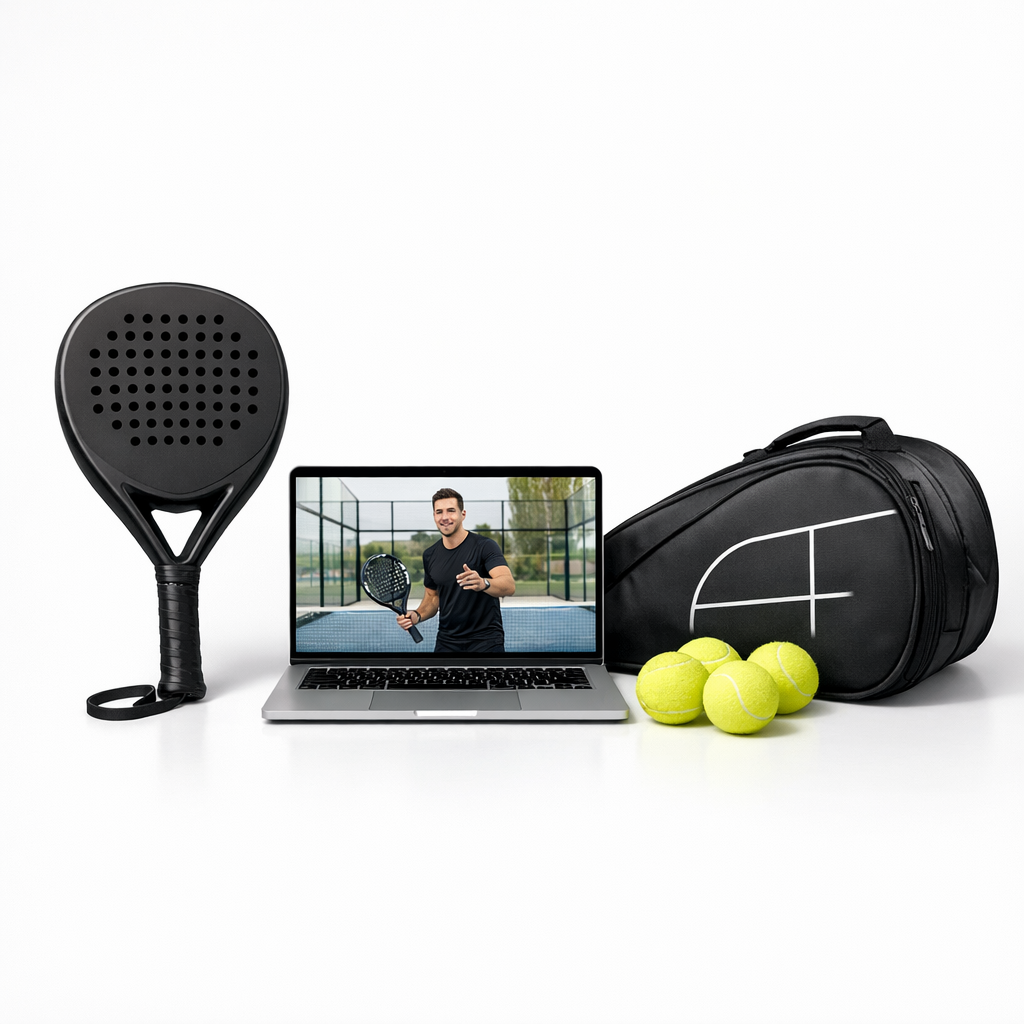
The Padel School
Truste d resourcesHelpful external resources related to this topic.British Padel — associationPadel Magazine — mediaSport England — government agency You might also like: Is the SKLZ Agility Ladder Worth It for Padel Footwork?.
You might also like: Is the SKLZ Agility Ladder Worth It for Padel Footwork?.