A noisy padel bag usually means small items are moving around instead of being packed with a clear home. The quickest way to stop loose accessories rattling is to group hard items, soften contact points, and use the pockets your bag already has more deliberately. You do not need a fully new setup; a few small habits can make club sessions feel much calmer.
This is mainly about organisation rather than buying more kit. Start with the accessories you actually carry, then make sure anything hard, metal or loose cannot knock against your racket, ball tube, keys or water bottle on the way to court.
The short version
- Empty your bag first, then separate soft items from hard items.
- Give keys, coins, locker tokens and padel balls their own small pouch or zipped pocket.
- Use soft kit, such as a towel or spare top, as padding between rigid objects.
- Keep overgrips in a sealed pouch so they stay clean, dry and easy to find.
- Pack the same way each time, so you notice quickly when something is missing or moving around.
Step 1: Empty the bag and find the noisy items
Before adding pouches or rearranging pockets, take everything out and place it on the floor. It sounds obvious, but most bag noise comes from a handful of small items that have built up over several sessions: loose balls, spare wristbands, grip finishing tape, coins, used overgrip backing, padel booking receipts, keys, sunglasses cases and half-empty snack wrappers.
Sort your kit into three groups: soft, hard and awkward. Soft items include towels, socks, spare tops and wristbands. Hard items include keys, padel ball tubes, water bottles, deodorant, sunglasses cases and small tins. Awkward items are things that are light but move around easily, such as overgrips, sweatbands, hair ties, resistance bands or loose tape.
Once you have done this, gently shake the empty bag. If the bag itself still makes noise, check for a loose zip pull, broken plastic clip or something stuck in a pocket lining. If the empty bag is quiet, the problem is simply how the contents are packed.
Step 2: Give every small accessory a fixed home
The easiest packing rule is this: nothing small should live loose in the main compartment. The main compartment is usually for the bigger pieces of kit, such as shoes, clothing, towel, water bottle and sometimes a racket if your bag does not have a separate racket section.
Small accessories need a repeatable home. Use one zipped pocket for valuables, one pouch for court accessories, and one simple area for items you use straight after playing. That way, you are not tipping the whole bag out at the side of the court to find grip tape or a fresh overgrip.
If your bag already has several compartments, use them before adding extra organisers. A beginner-friendly club bag can usually handle the basics well if you do not overload it. For a sense of how pockets and compartments can work in a simple setup, the Bullpadel padel bag review is a useful reference point.
Step 3: Put hard items inside soft barriers
Rattling usually happens when hard items hit other hard items. A ball tube knocking against a bottle, keys tapping a sunglasses case, or a deodorant can rolling into a racket frame will all make noise as you walk. The solution is not complicated: create soft barriers.
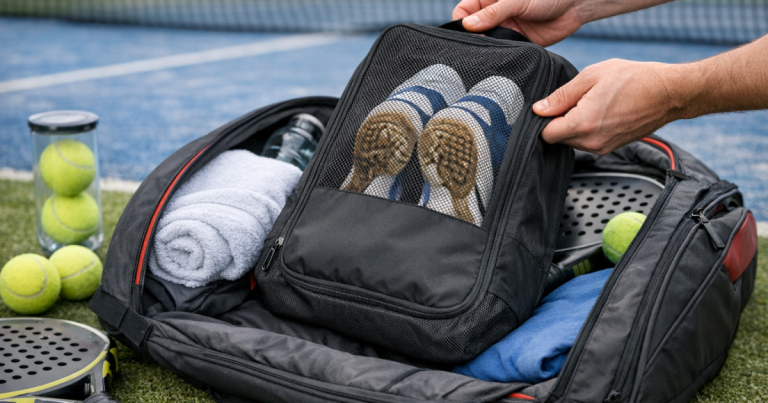
Wrap or position a towel between the water bottle and ball tube. Place a spare top around a sunglasses case. Keep keys in a zipped pocket rather than next to the ball tube. If your bag has a shoe tunnel, avoid letting shoes press directly against loose accessories unless they are already in a pouch.
Try this simple packing order for a typical beginner club session:
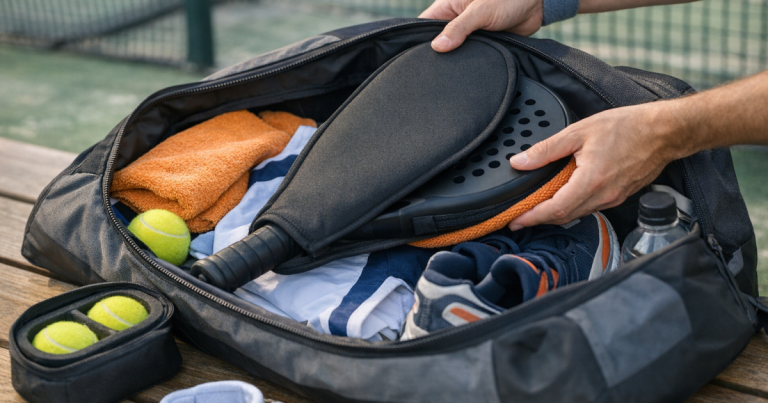
- Racket in its sleeve or racket compartment first, with the face protected from loose items.
- Shoes in the shoe section or at the bottom of the main compartment.
- Towel or spare layer placed next, acting as soft padding.
- Ball tube, bottle and other rigid items positioned upright where possible.
- Small accessories in zipped pockets or pouches, not scattered across the base of the bag.
After packing, lift the bag and walk a few steps. If you still hear clattering, do not repack everything. Find the one moving object, secure it, and test again.
Step 4: Use pouches without overcomplicating the bag
A pouch system works well because it turns many small moving objects into one quiet object. You do not need a specialist padel organiser. A small wash bag, zip pouch, pencil case-style pouch or drawstring accessory bag can be enough.
Use pouches by purpose, not by category for the sake of neatness. One pouch can hold overgrips, finishing tape and a small pair of scissors if you regrip at home rather than courtside. Another can hold recovery items, such as a spare wristband or small towel. Valuables should still go in a secure zipped pocket, not in a pouch that might be pulled out in a busy changing area.
Be careful not to create a pouch for every tiny thing. That makes your bag quiet but frustrating. Two or three small organisers are usually plenty for a beginner or early-stage club player.
Step 5: Stop ball tubes becoming the main noise source
Padel ball tubes are one of the most common causes of bag noise. They are hard, round and easy to knock about, especially once the tube is not full. If you carry a partly used tube, keep it upright in a side pocket if your bag has one, or wedge it beside a towel in the main section.
If you carry loose balls for warm-ups or casual hits, do not leave them rolling around the main compartment. Put them in a mesh pouch, a drawstring bag or the original tube. Loose balls are not as sharp-sounding as keys, but they still make the bag feel messy and make it harder to find smaller items.
It also helps to decide how many balls you really need. For most regular club sessions, carrying one tube plus one or two clearly separated spare balls is easier than letting several old balls gather at the bottom of the bag.
Step 6: Keep overgrips tidy, dry and separate
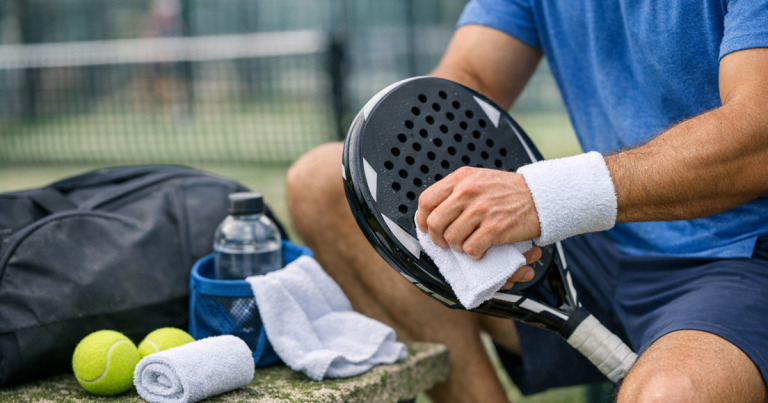
Overgrips are light, but they can still add to bag mess. Loose packaging, finishing tape and backing strips quickly spread through the main compartment. They also pick up moisture and lint if they sit next to a towel or used clothing.
Keep fresh overgrips in a sealed pouch or small plastic bag inside a dry pocket. If you share rackets at club sessions, label or separate fresh grips from used ones so you do not accidentally re-use something damp or dirty. For more detail on storage habits, read how to keep spare overgrips dry in your padel bag.
Used backing strips and finishing tape should go straight into a rubbish pocket or be thrown away at the club. They weigh almost nothing, but they make a bag feel untidy surprisingly quickly.
Step 7: Make keys and valuables silent
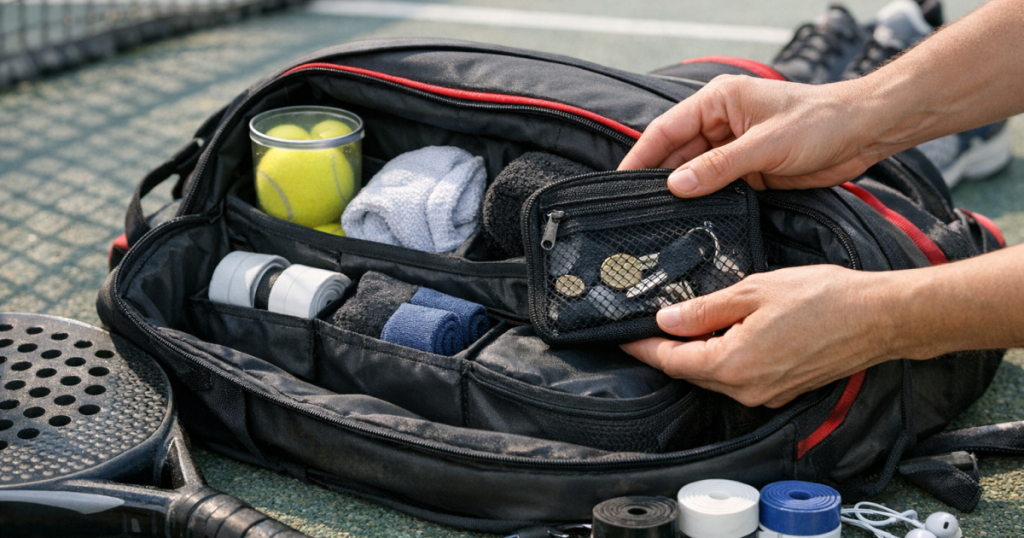
Keys are small, hard and usually the loudest item in the bag. Do not clip them to an outside handle unless you like hearing them swing as you walk. Put them in a zipped valuables pocket, ideally away from the ball tube and bottle.
If your keyring is bulky, remove anything you do not need for padel. A smaller keyring is quieter and easier to store. For car keys, use a padded pocket if your bag has one, or place them inside a soft pouch within a zipped section. Avoid putting keys in the same pocket as sunglasses, watches or anything with a surface you care about.
Coins and locker tokens are another common source of clatter. Keep one small coin purse or mini pouch for them rather than letting them sit loose in a side pocket.
Step 8: Pack for the journey, not just the court
A bag can seem tidy at home, then become noisy once you walk, cycle, take the train or load it into a car boot. Pack for movement. Anything upright should be supported. Anything round should be wedged. Anything small should be zipped away.
If you travel on public transport, quiet packing has an extra benefit: it stops you from opening the bag repeatedly in a crowded space to check what is moving. If you drive, it helps prevent hard items sliding into your racket or sunglasses case while the bag is lying flat.
Before leaving for a session, do a quick three-part check:
- Lift the bag by the handle you normally use.
- Walk across the room or hallway.
- Listen for one obvious clatter and fix that item first.
This takes less than a minute and is much easier than reorganising everything at the club.
A simple packing layout for beginner club sessions
For a normal evening session, you can use this layout as a starting point:
- Racket section: racket, cover if you use one, and nothing sharp or hard beside it.
- Main compartment: towel, spare top, shoes if there is no shoe section, bottle and ball tube held in place by soft kit.
- Small zipped pocket: keys, wallet, phone and locker token.
- Accessory pouch: overgrips, finishing tape, wristbands and small court extras.
- After-play area: used towel or damp clothing kept away from fresh grips and valuables.
The aim is not to make the bag look perfect. The aim is to make it predictable. When every item has a sensible place, the bag stays quieter and you get ready for games faster.
Common packing mistakes that cause noise
- Letting the ball tube roll sideways: keep it upright, wedged or in a side pocket.
- Leaving keys in the main compartment: they will hit almost everything else in the bag.
- Putting all accessories in one open pocket: use a pouch or zipped section instead.
- Mixing fresh and used kit: damp clothing can make grips, wristbands and packaging messy.
- Overfilling the bag: when every pocket is strained, items move unpredictably and become harder to find.
If your current setup feels chaotic before every game, it may be worth stepping back and checking your whole session routine. The padel starter checklist covers the wider basics, from kit to booking and court readiness.
FAQ
Do I need a special organiser for a padel bag?
No. A couple of small zipped pouches are usually enough. Use your bag’s existing pockets first, then add simple organisers only where loose items keep moving.
Where should I put my keys during padel?
Use a zipped valuables pocket, ideally away from your bottle, ball tube and sunglasses. If the pocket is large, place the keys in a small soft pouch inside it.
How do I stop padel balls moving around in the bag?
Keep them in their original tube, a mesh pouch or a small drawstring bag. Avoid leaving single balls loose in the main compartment.
Should overgrips go in the same pocket as damp clothing?
No. Fresh overgrips should stay dry and clean, so keep them in a sealed pouch or dry pocket away from towels and used kit.
What if my bag still makes noise after organising it?
Check the bag itself. Loose zip pulls, broken clips or items trapped in pocket linings can make noise even when the main kit is packed properly.
What stands out
A quieter padel bag is usually the result of small decisions rather than specialist gear. Separate hard items, use soft kit as padding, put small accessories in fixed places, and test the bag before leaving home.
Once your packing routine is consistent, you will spend less time searching for grips, balls and keys, and more time focusing on the session ahead. For beginners moving into regular club play, that kind of calm organisation makes a real difference.