Your first few games are much easier when your kit helps rather than distracts. The right beginner padel gear does not need to be expensive, flashy or professional-level; it just needs to be comfortable, legal for play, and suited to learning the basics without fighting your equipment.
Most new players can start with a simple setup: a forgiving racket, proper court shoes, a small supply of balls, breathable sports clothing, and somewhere sensible to carry it all. The trick is knowing which items genuinely affect your early progress and which upgrades can wait until you are playing regularly.
What to know first
Padel is relatively easy to start because clubs often rent rackets and sell or provide balls. That means you do not have to buy everything before your first session. If you are still deciding whether the sport will become a regular habit, use hire equipment once or twice and focus on learning how the court, glass and scoring work. The site guide on how to start playing padel in the UK is a useful next step if you are still booking your first court.
Once you have played a couple of times, your own kit starts to make sense. You get consistent racket feel, shoes that fit properly, and balls you know are suitable for club play. You also avoid relying on whatever hire racket happens to be available at reception.
Because UK prices change frequently across sports shops, padel specialists and online retailers, check current £ pricing before buying. A higher price does not automatically mean a better first choice. For beginners, control, comfort and confidence matter more than power.
The racket should be forgiving, not intimidating
The racket is the item most beginners think about first, and it is the one most likely to cause confusion. Padel rackets are solid-faced, perforated and usually described by shape, balance and feel. You will often see round, teardrop and diamond shapes. For early-stage players, a round or control-focused teardrop racket is usually the easiest to live with because it offers a larger sweet spot and more predictable contact.
Avoid buying a very head-heavy or power-focused racket just because it looks advanced. Those models can feel exciting for a few shots, but they are less forgiving when your timing, footwork and wall judgement are still developing. A softer-feeling racket can also make defensive shots, lobs and controlled volleys feel less harsh.
Good starter racket traits
- Forgiving shape: Round rackets are normally the safest starting point for control.
- Comfortable weight: Check the manufacturer’s listed weight and choose something you can swing repeatedly without strain.
- Medium or soft feel: This helps reduce vibration and makes off-centre hits more manageable.
- Neutral balance: A racket that does not feel too heavy in the head is easier for volleys and reactions at the net.
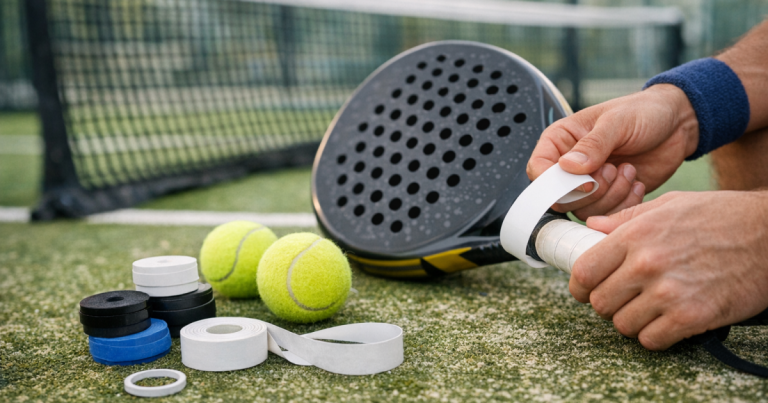
- Replaceable grip setup: You should be able to add or change overgrips as your hand size and preference become clearer.
Real starter-friendly examples include the Nox X-One Evo Padel Racket and the Babolat Contact Padel Racket. Treat these as examples of the kind of accessible, control-led racket to research rather than proof that one model is automatically right for everyone. Always verify the current version, weight range and return policy before ordering.
Shoes matter more than most beginners expect
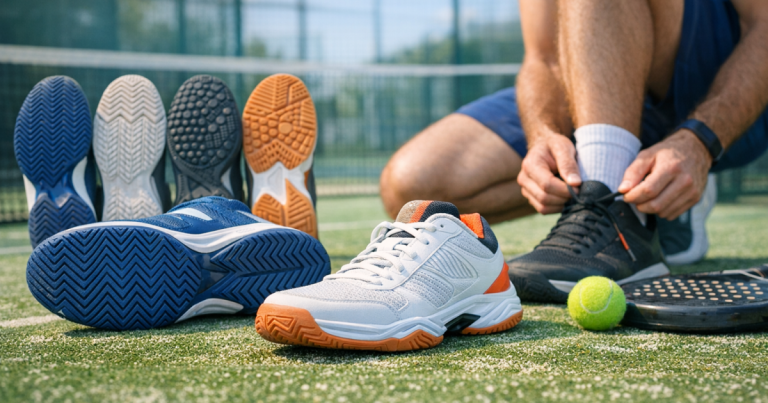
If you are going to buy one item before you buy your own racket, make it proper court shoes. Padel includes short sprints, side steps, pivots, quick stops and low defensive movements. Running shoes are built for forward motion, so they can feel unstable when you move laterally. They may also wear quickly on sandy artificial turf.
Padel-specific shoes or tennis shoes suitable for sand-based artificial courts are usually a safer choice. Look for lateral support, a sole pattern designed for grip and controlled sliding, and enough cushioning for repeated starts and stops. If you have wide feet, narrow heels or previous ankle issues, try shoes on where possible rather than guessing based on size alone.
The ASICS Gel-Dedicate Padel Shoes are a recognisable example of a padel-specific shoe line, but fit should lead the decision. The best shoe is the one that keeps your foot secure during side-to-side movement without rubbing, pinching or lifting at the heel.
Balls: buy sensible club balls, not novelty packs
Padel balls look similar to tennis balls, but they are not always identical in pressure and feel. Using proper padel balls gives you a more realistic bounce and makes practice more useful. For casual sessions, one fresh tube is often enough for a pair or a group, although regular players usually keep spares in their bag.
Beginners should not overthink ball choice, but they should avoid old, flat or unknown balls. Dead balls make rallies awkward because they drop too quickly and encourage poor timing. If a ball barely rebounds or feels lifeless during warm-up, swap it out.
For a deeper look at a popular club option, read the Head Padel Pro balls review. Another widely available example to research is Dunlop Pro Padel Balls. Whichever brand you choose, check that the packaging clearly states padel use and verify current availability in the UK.
Clothing should let you move freely
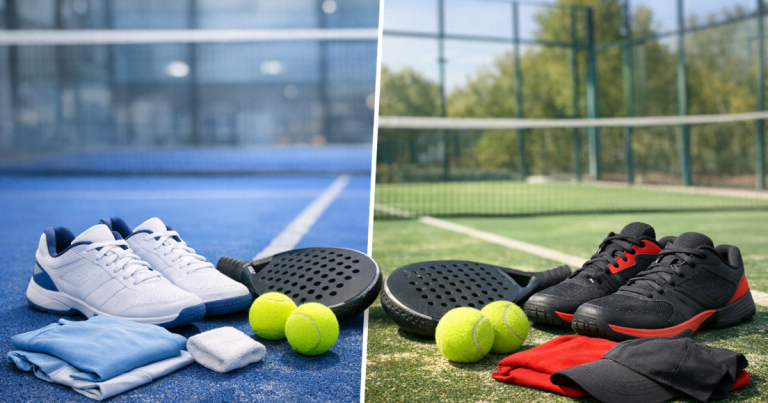
You do not need specialist padel clothing to start. Comfortable sportswear is fine as long as it allows lunges, twists, overhead shots and quick changes of direction. Lightweight tops, shorts, skorts, leggings or tracksuit bottoms can all work. The main issue is movement, not image.
On indoor courts, you may heat up quickly once rallies get going. On outdoor UK courts, conditions can change fast, so a light layer for warm-up and after play is useful. Avoid clothing with restrictive seams around the shoulders or hips. Padel involves more reaching, turning and crouching than many beginners expect.
Pockets are helpful if you like keeping a spare ball with you when serving, though not essential. If you are playing in cooler weather, choose layers you can remove easily between games rather than one heavy top that becomes uncomfortable after ten minutes.
A bag is useful, but it can wait
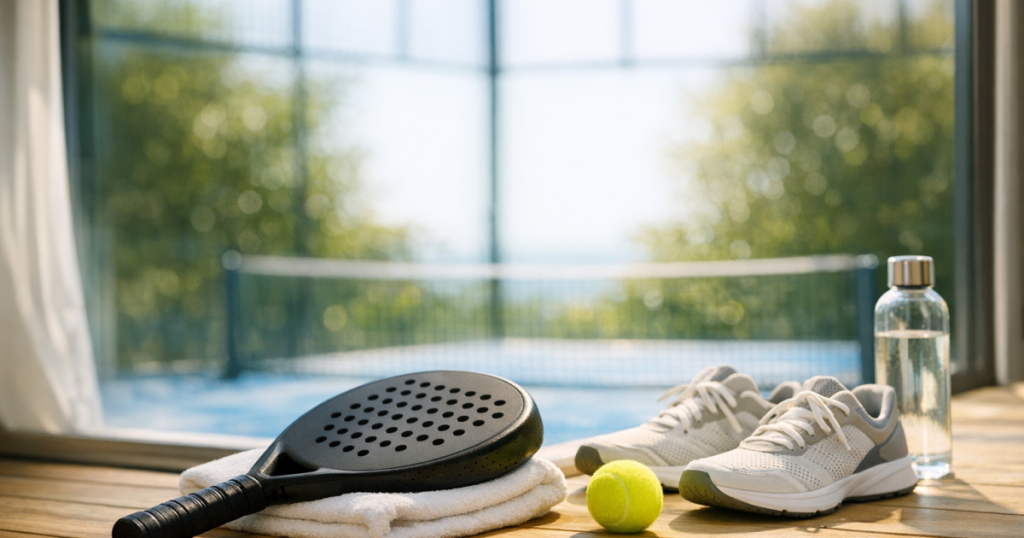
A dedicated padel bag is convenient once you own a racket, shoes, balls, towel, water bottle and spare grip. It protects your racket better than carrying it loose and keeps sandy shoes away from clean clothing. However, it is not a must-buy for your first few sessions.
If you already have a sports backpack, use that at first. Add a simple racket cover if your racket did not come with one, especially if you travel by public transport or leave kit in a car boot. When you are playing weekly, a padel backpack or compact racket bag becomes more worthwhile.
Small accessories that actually help
- Overgrips: These are cheap, useful and worth keeping in your bag. A fresh grip can stop the racket twisting in your hand.
- Water bottle: Padel rallies can be stop-start, but matches still become tiring quickly.
- Small towel: Helpful for hands, racket handle and wet outdoor conditions.
- Cap or visor: Useful on outdoor courts with low sun.
- Warm layer: Good for arriving, waiting between games and cooling down after outdoor sessions.
Accessories are where beginners can easily overspend. Buy the boring useful things first. Leave vibration gadgets, premium wristbands, multiple bags and specialised training aids until you know what problem you are trying to solve.
Two sensible starter setups
Not every new player has the same starting point. Someone playing one social game a month does not need the same kit as someone joining a weekly club night. Think in terms of commitment rather than chasing a perfect basket.
For your first few sessions
- Hire or borrow a racket from the venue.
- Wear supportive court shoes if you already own suitable tennis or padel shoes.
- Use comfortable sports clothing that lets you move freely.
- Bring water and a light layer.
- Use the club’s balls or buy one tube of proper padel balls if needed.
This setup keeps spending low while you learn whether you enjoy the pace, tactics and social side of padel. It also gives you a better sense of what you like before buying your own racket.
For regular weekly play
- Buy a control-focused racket with a forgiving sweet spot.
- Invest in padel or suitable tennis court shoes that fit securely.
- Keep at least one tube of padel balls in your bag.
- Add overgrips and a towel.
- Use a backpack or padel bag once you are carrying kit regularly.
This is the point where owning your own equipment becomes more than convenience. Consistent kit helps you build reliable technique, especially on volleys, returns and shots after the glass.
Common buying mistakes to avoid
The biggest mistake is buying for the player you want to look like rather than the player you are right now. A stiff, power-heavy racket may suit an advanced player who times the ball cleanly, but it can make a beginner tense up and miss more often. Choose control first, then add power as your technique improves.
Another common mistake is ignoring the rules of the game when thinking about gear. Serving style, wall rebounds and faults all affect the shots you practise, so your equipment should support control and repeatability. If you are still getting to grips with the basics, the guide to serving, walls and faults in padel will make your practice sessions more useful.
Beginners also sometimes buy too many balls, grips or accessories at once. Start with a small amount and replace items as you use them. You will soon learn whether your hands sweat a lot, whether outdoor play affects your grip, and how often your group needs fresh balls.
Finally, do not buy shoes purely because they match your racket or clothing. Grip, stability and fit are far more important. A good-looking shoe that slides unpredictably or rubs after half an hour is not a good padel shoe.
Where to spend first
If your budget is limited, prioritise shoes, then racket, then balls, then bag and extras. Shoes affect every movement on court and can make the game feel safer and more enjoyable. A racket matters too, but a borrowed racket is workable for a short time. Poor footwear is harder to work around.
Once you are ready for your own racket, avoid the cheapest unknown option if it gives no clear information about shape, weight, balance or materials. You do not need a premium model, but you do need a proper padel racket from a recognisable sports or padel brand with clear product details and a retailer you can return to if there is a problem.
A sensible beginner padel gear setup should feel simple: stable shoes, an easy racket, fresh balls and no clutter. As your game develops, your preferences will become more specific. You might decide you want a slightly firmer racket, a larger bag, more breathable clothing or shoes with a different fit. Those are good upgrades later, not essential purchases on day one.
Why it matters
Good starter kit does not make you instantly better, but it removes avoidable obstacles. Stable shoes help you move with confidence. A forgiving racket gives you more clean contacts. Fresh padel balls make rallies behave properly. Comfortable clothing lets you focus on the point rather than adjusting your kit.
The aim is not to own everything. It is to buy the first few things that make playing easier, more consistent and more enjoyable. Start with the essentials, learn what your local courts and playing style demand, and let your kit grow with your game.