Wet courts make small kit choices feel much bigger: your grip gets slick, balls feel heavier, and dry clothes disappear fast. If you pack a padel bag with a simple wet-weather routine, you can stay comfortable without dragging half your wardrobe to the club.
The aim is not to carry more; it is to separate wet from dry, protect the racket, and keep essentials easy to reach between games.
Main points
- Use separate zones for dry clothing, wet clothing, racket storage and small accessories.
- Keep at least one towel, spare overgrip and dry top easy to reach, not buried at the bottom.
- Pack a small waterproof pouch or dry bag for damp socks, wristbands and used towels.
- Protect your racket from standing water, wet walls and muddy court edges.
- After the match, unpack quickly so your bag, shoes and clothing do not stay damp overnight.
Start with the right bag layout
A wet-weather setup works best when your bag has a clear layout. You do not need an oversized tour bag for beginner club matches, but you do need enough separation to stop one soaked towel from spreading moisture through everything else.
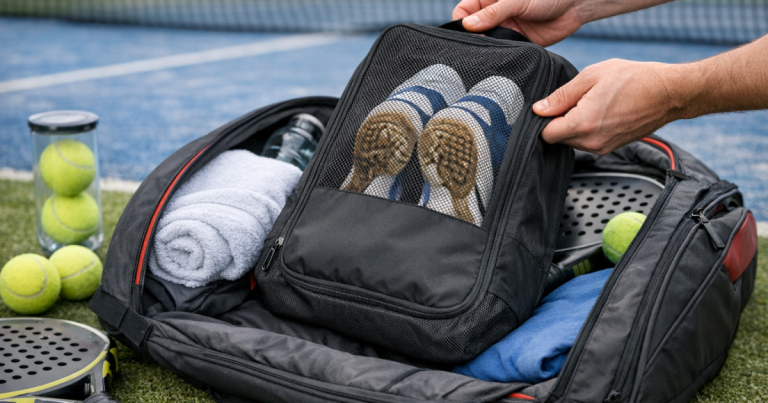
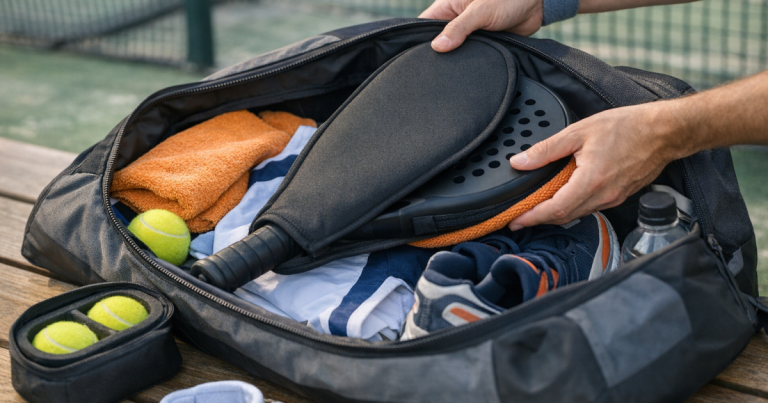
Use the largest main section for clothing and towels, a protected section for your racket, and a smaller pocket for grips, keys, phone, lip balm and other little items. If your bag has a shoe compartment, use it after the match rather than before, because wet soles and damp socks can make the rest of the bag smell quickly.
If you are still working out what bag style makes sense, the difference between a compact racket bag and a larger padel bag is explained well in this guide to padel bag shapes and beginner-friendly storage.
Step 1: Build a dry core
Your dry core is the part of the bag that should stay untouched by rain, wet clothing and court spray. Put these items inside a lightweight packing cube, tote liner or clean carrier bag before placing them in the main compartment.
- A dry top for after the match.
- A spare pair of socks, ideally not loose in the bag.
- A small towel for your face and hands.
- A clean layer for travelling home if you are not showering at the club.
Keep this section closed until you really need it. Many new players make the mistake of opening and rummaging through the whole bag between games, which lets moisture into the one area that should stay dry.
Step 2: Put wet items in their own zone
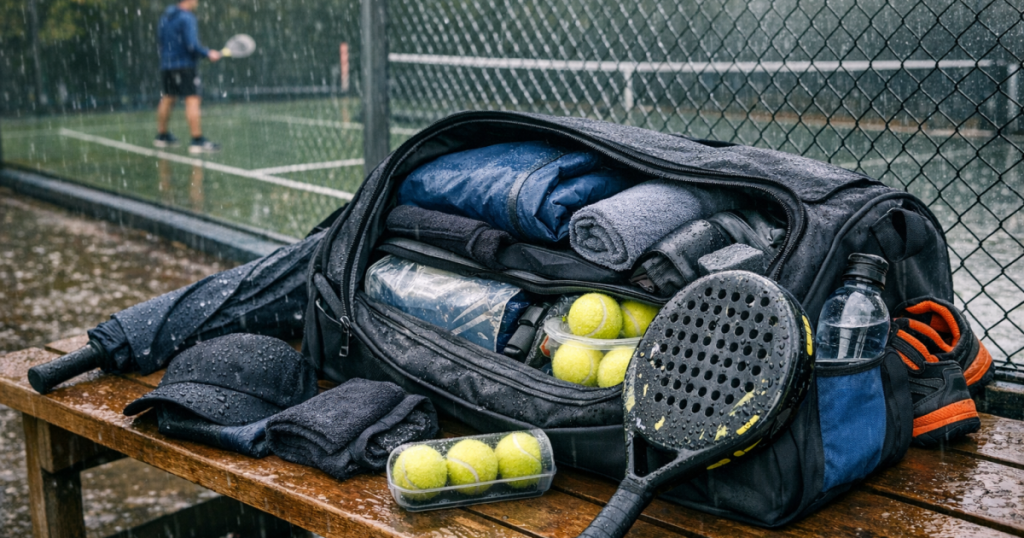
Wet kit needs somewhere to go before it happens. A small dry bag, waterproof pouch or zip-up plastic wash bag is enough for most club matches. Use it for sweaty wristbands, damp socks, used towels and any clothing you change out of after playing.
Avoid putting damp items straight into the main compartment, even for a short journey. Padel bags are often padded, and padding holds moisture longer than you might expect. That can leave a musty smell and make your next session feel less fresh before you have even reached the court.
Step 3: Protect your racket before and after play
Your racket does not need to be wrapped like a museum piece, but it should not be left on wet ground, against a puddled fence line or loose beside soaked clothing. Use the racket compartment if your bag has one. If it does not, slide the racket into a cover or keep it against the driest side of the bag.
Check the top edge of the frame after wet matches. Beginners often clip the glass, side mesh or low court edges while learning positioning, and damp gritty surfaces can make small scuffs worse over time. If you use protective tape, make sure it is fitted cleanly so water and dirt do not gather under lifted edges. The step-by-step advice on how to fit padel racket protector tape neatly is useful if you have not done it before.
Step 4: Keep grip items close to hand
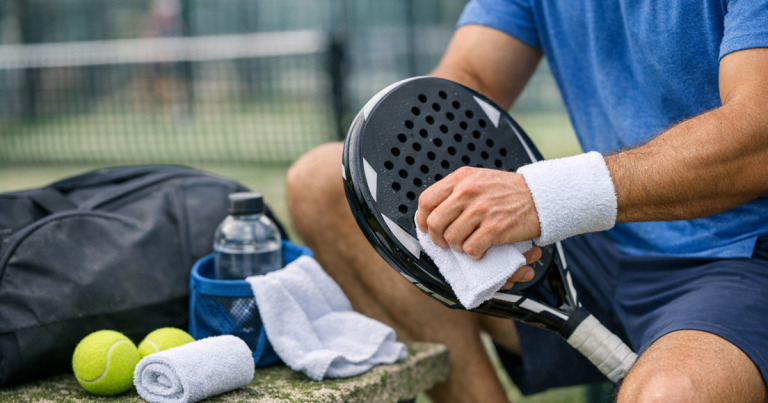
In wet conditions, grip comfort can change from game to game. Do not bury your overgrips, wristbands or hand towel under clothing. Put them in an outer pocket or at the top of the main section so you can reach them during a change of ends.
- Carry one spare overgrip if your current grip is already worn or shiny.
- Bring a small hand towel separate from your shower towel.
- Use wristbands if sweat runs down your forearm onto the handle.
- Keep a simple plastic bag for the used grip if you replace it after play.
You do not need to change grips every time it rains. The sign to act is loss of control: if the racket twists in your hand, your contact feels uncertain, or you start gripping too tightly to compensate, it is time to dry your hand, adjust your grip setup or switch to a fresh overgrip.
Step 5: Think about balls in damp conditions
Padel balls can feel different when the court is wet or the air is heavy. They may pick up moisture, dirt and grit, and long rallies can feel slower. You cannot fix the weather, but you can pack sensibly.
Bring balls in a closed tube rather than loose in the bag. After the match, do not leave damp balls sealed in with clean clothes. Let them dry at home before deciding whether they are still fine for drills or better kept as knockabout spares.
If you are unsure when balls are past their useful point, the beginner guide to padel ball speed, bounce and replacement timing explains the signs in plain terms.
Step 6: Add a simple weather layer
For outdoor courts, pack one light layer that can handle the walk to and from the court. It does not need to be a heavy coat. A packable water-resistant jacket or warm-up layer is usually enough for changeovers, arrival and the journey home.
Keep this layer near the top of the bag if rain is likely before play. If you put it underneath your towel and clothing, you will end up pulling everything out in the car park or club lobby, which is exactly when wet packing gets messy.
Step 7: Use a post-match reset routine
The most important wet-weather habit happens after the final point. Before leaving the club, spend one minute sorting the bag properly. Put wet clothing and towels into the wet zone, keep the racket away from damp fabric, and check that your dry clothes have not been opened unnecessarily.
When you get home, empty the bag rather than leaving it zipped up overnight. Take out shoes, towels, balls and wet clothing. Wipe any visible moisture from the racket frame and handle, then leave the bag open in a dry, ventilated room. This is not glamorous, but it is the difference between a bag that stays fresh and one that always smells like last week’s match.
A sensible wet-weather packing order
If you like a repeatable routine, load the bag in this order:
- First: dry clothing and spare socks inside a closed inner bag.
- Second: towel and hand towel, with the hand towel easiest to reach.
- Third: racket in its own section or sleeve.
- Fourth: overgrip, wristbands, keys and small items in an outer pocket.
- Fifth: empty dry bag or pouch ready for wet clothing after play.
- Last: water bottle upright in a side pocket if your bag has one.
This order helps you pack once, play, then repack without turning the whole bag inside out. It also makes it easier to notice what is missing before you leave home.
Common packing mistakes in wet weather
- Using one towel for everything: a face towel, racket-handle towel and shower towel should not all be the same wet item.
- Leaving clean socks loose: socks absorb moisture fast, so keep spares inside a closed bag or pocket.
- Storing the racket with wet kit: damp fabric against the grip and frame is easy to avoid with basic separation.
- Forgetting the journey home: you may be fine during play but uncomfortable on a cold, damp trip back.
- Not emptying the bag afterwards: wet-weather kit needs air as soon as practical.
Helpful questions
How should I pack a padel bag if I cycle or walk to the club?
Keep the dry core inside an extra waterproof liner and put your post-match layer near the top. If the bag has external racket storage, check that the racket is not exposed to direct rain for the whole journey.
Do I need a waterproof padel bag?
Not always. For most beginner club players, organised compartments plus a small dry bag are enough. A more weather-resistant bag helps if you regularly use outdoor courts or travel in heavy rain.
Should wet shoes go inside the bag?
Only if they have their own compartment or separate shoe bag. If the soles are muddy or soaked, keep them away from clothing and open the bag when you get home so moisture can escape.
How many towels should I bring for a wet match?
Two is a sensible minimum: one small towel for hands and face during play, and one larger towel or dry cloth for after the match. Add another if you know the club has limited changing space.
Can I leave balls in the bag after a rainy session?
Not sealed in with damp kit. Take them out at home, let the outside dry, then check the bounce and feel next time before using them for a proper match.
What to remember
Wet-weather packing is mostly about separation and access. Keep dry items genuinely dry, give wet items somewhere to go, protect the racket from damp fabric, and put grip essentials where you can reach them quickly.
Once the routine becomes familiar, it takes less than a minute to set up before leaving home. That small habit makes rainy padel feel less chaotic and helps you focus on playing better points rather than rescuing soggy kit.