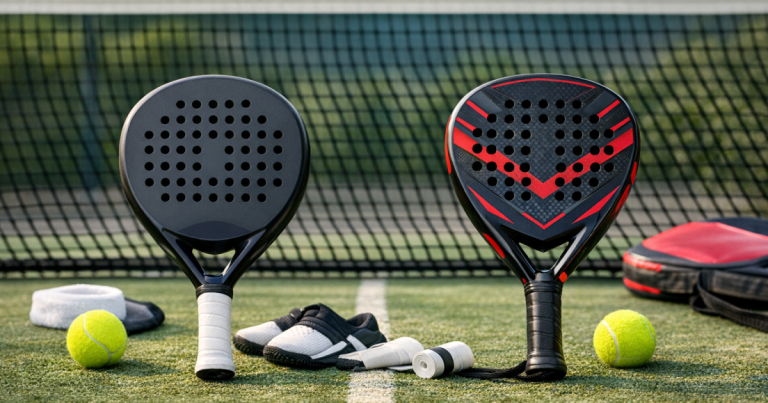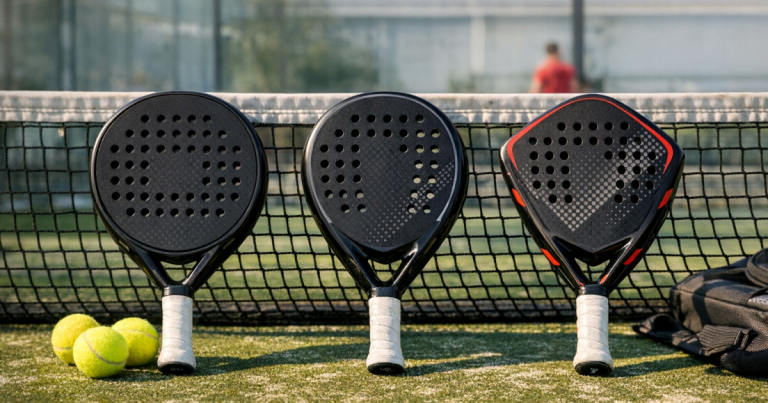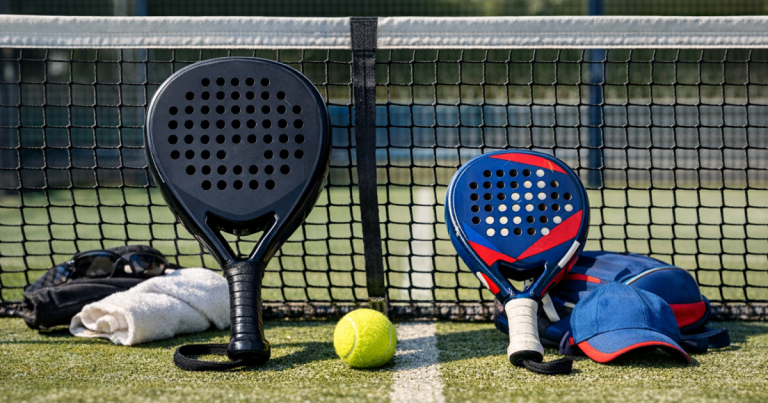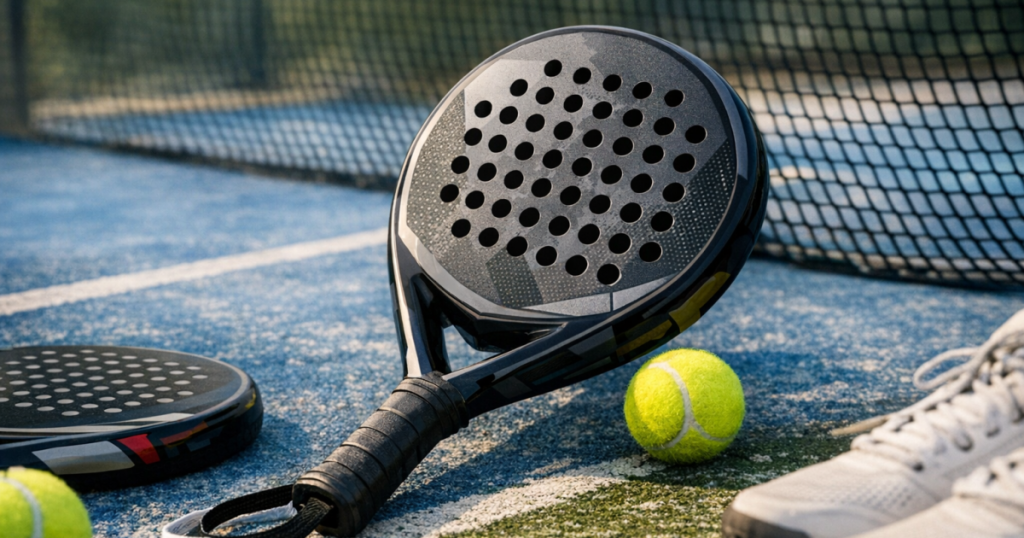
A padel racket can look simple until you start wondering why two models feel completely different in your hand. Understanding padel racket anatomy helps you connect the visible parts of the racket with how it behaves on court: how forgiving it feels, how easily it moves, how much control you have, and whether the grip feels secure.
For beginners, this is not about memorising technical terms. It is about knowing what you are holding, what each part does, and which details are worth checking before you borrow, demo or choose a racket for regular club play.
At a glance
- Frame: the outer structure that gives the racket its shape, strength and part of its feel.
- Face: the hitting surface, where ball feel, forgiveness and power transfer become most obvious.
- Holes: the drilled pattern through the face, which can affect balance, airflow and response.
- Handle: the grip area, where comfort, control and confidence in the hand matter most.
- Bridge or throat: the area between face and handle, which helps connect the head of the racket to the grip.
The frame: the racket’s outer structure
The frame is the solid outer rim around the racket. It helps the racket keep its shape and contributes to how stable it feels when you hit the ball away from the centre. A frame can feel firm, muted, lively or slightly harsh depending on its construction, thickness, shape and materials.
Most padel rackets use composite materials, commonly including carbon fibre, fibreglass or a mix of layers. You do not need to choose based on material alone, because the finished feel depends on the full build, not one label on the specification sheet. A racket with a softer face can still have a firm frame, and a carbon-labelled model is not automatically better for a new player.
The frame also affects durability in normal club use. Padel involves walls, low volleys and quick reactions near the glass, so beginners often clip the floor, side wall or fence while learning spacing. A sturdy frame is useful, but it is still worth using simple habits: avoid scraping the racket to pick up balls, do not throw it after missed shots, and use a protective strip if your racket has one or accepts one.
Shape matters here too. Round rackets usually place the easiest hitting area more centrally and are often more forgiving. Teardrop and diamond shapes can shift the balance and feel different through the swing. If you are unsure where you sit as a player, the site’s guide to padel skill levels can help you match racket feel to your current stage rather than your ambitions alone.
The face: where contact actually happens
The face is the broad hitting surface on each side of the racket. Unlike tennis rackets, padel rackets do not use strings. The ball meets a solid face with holes through it, usually over an inner core. This is why padel rackets have a distinctive short, compact feel at impact.
Beginners should think about the face in three practical ways: how forgiving it feels, how clearly it gives feedback, and how comfortable it is over a full session. A more forgiving face can make off-centre hits less punishing, which helps when you are still learning timing, positioning and wall rebounds. A very demanding face might feel exciting on clean shots but frustrating during longer rallies.
Surface finish is another visible detail. Some racket faces look smooth, while others have a textured or roughened finish. Texture can influence how the racket interacts with the ball, but it does not replace technique. For a new player, learning a steady contact point and simple swing path will matter far more than relying on surface texture for spin.
The face also works with the racket’s inner core. You may see terms such as soft EVA, medium EVA or similar descriptions from manufacturers. Treat these as clues, not guarantees. Two rackets can use similar wording and still feel different because the frame, face layers, weight and balance all work together. If you want to understand how published numbers relate to real-world feel, use the padel racket specifications guide alongside any product page you are reading.
The holes: more than a pattern
The holes are not decoration. They are part of how a padel racket is made legal, playable and responsive. They reduce the amount of solid material in the face and can influence how the racket moves through the air and responds on contact.
That does not mean you can judge a racket simply by counting holes. Hole size, placement and pattern all interact with the racket shape and construction. A dense central pattern may feel different from larger holes spread towards the edge, but the final result depends on the whole design. Be cautious with simple claims such as “more holes equals more power” or “smaller holes always mean more control”. Real feel is more nuanced.
For beginners, the most useful check is whether the racket feels predictable. When you hit slightly high, low or towards the side of the face, does the ball still come off in a manageable way? A racket that only feels good on perfect contact can slow your progress, because early-stage padel includes plenty of imperfect contact.
Hole edges should also look clean and well finished. Rough edges, chips or cracks around holes can be a sign of wear or damage, particularly on second-hand rackets. Minor cosmetic marks are common, but cracks spreading from holes or across the face deserve caution because they may affect feel and lifespan.
The handle: your connection to the racket
The handle is easy to overlook, but it is one of the first parts you notice during play. If the grip feels too thin, too bulky, too slippery or awkwardly shaped, your shots can feel less secure even if the racket head is suitable.
Most padel handles are shorter than tennis handles because padel is normally played with one hand on the racket. The handle includes the grip, butt cap and wrist cord. The wrist cord is part of normal padel use and should be worn during play, especially at clubs where it is expected for safety and etiquette.
Grip thickness is adjustable with overgrips. Many beginners start with the factory grip and then add one overgrip if the handle feels too small or if they want more tackiness. Adding several overgrips can make the handle more comfortable for larger hands, but it also changes the feel and can slightly affect balance. If the racket starts to feel slow to manoeuvre, the handle build-up may be part of the reason.
Sweaty hands are common in indoor and outdoor club sessions, even in cooler UK weather once rallies get going. A fresh overgrip can make a bigger difference than many new players expect. It is a small, low-cost habit that supports confidence on volleys, bandejas and quick defensive blocks.
The bridge and throat area
The bridge, sometimes called the throat, is the transition area between the racket face and handle. On padel rackets it is much more compact than on tennis rackets, but it still matters. This area helps transfer force between your hand and the head of the racket.
Some rackets have a more open-looking bridge, while others use a fuller, closed construction. You do not need to choose by appearance alone. Instead, pay attention to how the racket feels when changing direction quickly: at the net, when blocking a fast shot, or when turning after the ball comes off the back glass.
If a racket feels stable but not clumsy, the head, bridge and handle are probably working well together for you. If it feels powerful on one swing but tiring over a social match, it may be too head-heavy, too stiff or simply not matched to your current timing.
How these parts work together
No single part tells the whole story. The frame, face, holes and handle combine with weight, balance and shape to create the overall feel. This is why two rackets with similar published specifications can behave differently on court.
- Forgiveness: usually comes from a helpful sweet spot, manageable balance and a face that does not punish every small mistake.
- Control: depends on predictable response, comfortable grip and your ability to guide the ball without rushing the swing.
- Power: comes from technique, timing and racket response, not just a hard face or advanced shape.
- Comfort: is influenced by weight, stiffness, grip size and how much vibration you feel during longer sessions.
- Manoeuvrability: matters at the net, in defence and when reacting to wall rebounds under pressure.
When you are still building consistency, a forgiving and comfortable racket usually does more for your game than one designed mainly for maximum attacking output. The right racket should help you keep the ball in play, practise good habits and enjoy longer rallies.
Beginner checks before using or choosing a racket
You do not need a lab test to make a sensible judgement. A few simple checks can tell you whether a racket is likely to suit early club padel.
- Hold it at rest: it should not immediately feel heavy in the head or awkward in the hand.
- Shadow a few volleys: the racket should move easily without twisting your wrist.
- Check the face: look for cracks, soft spots, deep chips or damage around the holes.
- Assess the grip: it should feel secure without forcing you to squeeze too hard.
- Try controlled shots: blocks, lobs and simple volleys reveal more than one big smash.
- Notice fatigue: if your forearm tires quickly, the weight, balance or grip size may not be right for regular play.
If you are planning your first setup, avoid spending all your attention on the racket and forgetting the rest of the basics. Sensible shoes, balls and small accessories matter too. The guide on how much beginners should spend on padel gear puts the racket decision into a more realistic starter budget.
Helpful questions
Is the frame or face more important for beginners?
Both matter, but beginners usually feel the face more immediately because it affects contact, forgiveness and comfort. The frame becomes more noticeable when you hit off-centre or defend faster balls.
Do more holes make a padel racket better?
No. Hole pattern is only one part of the design. Shape, balance, face construction and overall weight all have a major effect on how the racket plays.
Can I change the handle if it feels too small?
You can usually add an overgrip to increase thickness and improve tackiness. Avoid adding so many layers that the racket becomes harder to manoeuvre or the handle loses its shape.
Should beginners use a hard or soft racket face?
Many beginners prefer a more forgiving feel, but labels vary between brands. If possible, test controlled shots and volleys rather than choosing from the word “soft” alone.
How do I know if a racket is damaged?
Look for cracks across the face, splits around holes, a loose butt cap or a frame that sounds unusual on impact. Cosmetic scuffs are common, but structural damage is a warning sign.
What stands out
Good padel racket anatomy is not about one magic feature. The frame gives structure, the face controls contact feel, the holes shape part of the response, and the handle determines how confidently you can use it. When those parts work together, the racket feels predictable rather than distracting.
For early-stage players, that predictability is the real win. Choose or borrow a racket that helps you rally, defend, volley and learn without fighting the equipment. As your timing improves, the details that matter most to you will become clearer naturally.