A padel ball can look almost new but feel strangely dead once rallies start. Knowing when padel balls need replacing helps you avoid slow points, awkward timing and frustration that looks like poor technique when the ball is actually the problem.
For beginners, the easiest approach is not to count every minute of use. Combine a few quick checks: bounce height, pressure, felt condition, sound, and how the ball behaves off the glass.
The short version
Replace a padel ball when it no longer bounces cleanly, feels soft when squeezed, sounds dull on contact, or makes rallies noticeably slower than usual. A slightly worn ball can still be fine for warm-ups, basket drills or casual practice, but a flat ball is not fair for proper games.
As a rough club-play habit, open a fresh tube for important matches, leagues, coaching assessments or when several players agree the current balls feel heavy. Keep older balls separate so they do not accidentally end up in your match tube.
- Use fresh balls for matches where scoring matters.
- Use lightly worn balls for drills, feeding and relaxed practice.
- Retire very flat balls when they barely bounce or make technique feel unnatural.
- Do not judge only by appearance; pressure loss is often the first real issue.
Step 1: Do a simple bounce test
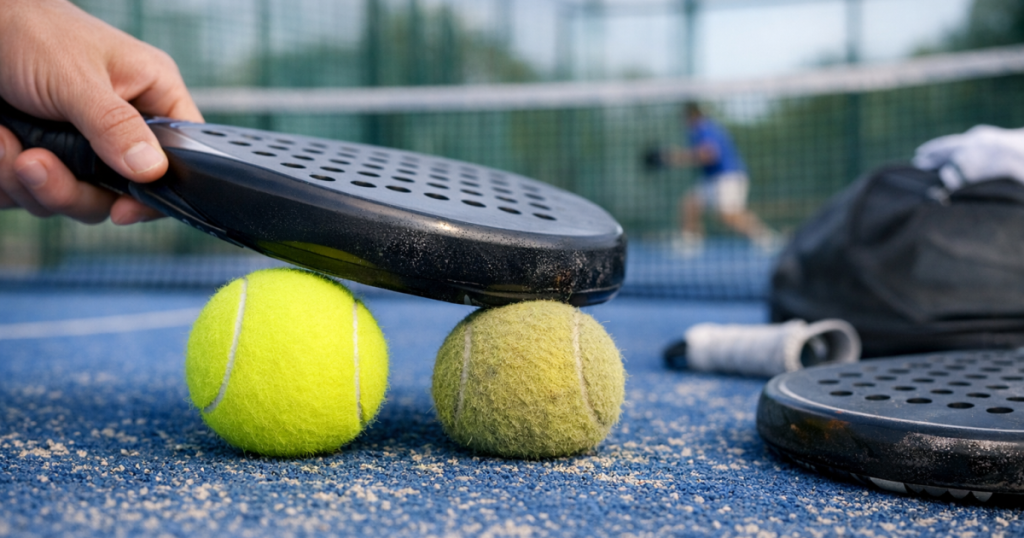
The bounce test is the quickest way to check whether your ball still has enough life for a normal game. Drop the ball from around shoulder height onto a firm, dry surface and watch how lively it comes back up. You are not trying to measure it like a lab test; you are looking for a clear difference between a lively ball and a tired one.
If you have a fresh ball from the same tube or brand, compare them side by side. A worn ball will usually rebound lower, feel less energetic, and may come up with a heavier, slower rhythm. If every ball in your bag behaves the same way, borrow a known fresh ball from a court mate and compare.
Try to test on a similar surface each time. A cold outdoor surface, damp conditions or a soft floor can all make the bounce look worse than it is. For padel, the best practical check is still how the ball behaves on court, but the drop test gives you a useful early warning before you start playing.
Step 2: Squeeze the ball and feel the pressure
Padel balls lose pressure over time, even when they still look presentable. Pick up the ball and press it gently between your thumb and fingers. A healthy ball should resist your squeeze and feel firm. A tired ball often feels easier to compress, almost as if the core has lost its spring.
Do not overdo this test. You are not trying to crush the ball or prove strength; you are checking whether it feels noticeably softer than a fresh one. If one ball in the set feels much softer than the others, remove it from match play because it will make rallies inconsistent.
This matters because beginners often blame themselves when timing goes wrong. A soft ball can make volleys sit up, lobs fall short, and groundstrokes feel underpowered. If the ball is not holding pressure, your technique feedback becomes less reliable.
Step 3: Listen to the sound at contact
Fresh or healthy balls usually make a crisp sound when struck cleanly. Worn balls tend to sound duller, flatter or more muted. This is easiest to notice during volleys, bandejas and controlled drives, where the ball spends less time travelling and the contact noise is clearer.
If a rally feels oddly quiet and slow even when both players are hitting cleanly, the ball may be past its best. One dull contact does not prove much; off-centre hits happen. But if every contact sounds heavy, the ball is worth checking.
Sound is also useful in group play. Ask another player to hit a few routine shots with the same ball. If they notice the same dead sound, it is probably not just your racket contact. For beginners, this shared check prevents overthinking and keeps the game flowing.
Step 4: Look at the felt, but do not rely on it alone
The felt tells part of the story. A ball with smooth, shiny, badly thinning or uneven felt may skid more, grip the surface less predictably, and lose some control through the air. Very fluffy felt can also make the ball feel slower, especially in damp indoor-outdoor conditions common at UK clubs.
However, felt can be misleading. A ball may look tidy while already losing pressure, particularly if it has not been used for many hard rallies. Equally, a slightly rough-looking ball might still bounce well enough for casual practice. Treat the felt as one clue, not the final decision.
Look for these signs together:
- Shiny patches where the nap has flattened.
- Felt coming away from the seam.
- One side looking much more worn than the other.
- Surface dirt or dampness that changes the way the ball travels.
- A ball that looks fine but fails the bounce or squeeze test.
Step 5: Notice how the ball behaves in real rallies
The best test is often a normal rally with players of similar level. If the ball is lively, you should be able to keep a steady rhythm without forcing every shot. If it is tired, rallies can become strangely slow, defensive lobs may not climb properly, and attacking shots may feel like they run out of energy too early.
Pay attention to the glass as well. A healthy ball should come off the back wall with enough pace to read and play. A worn ball can die after the bounce, making it harder for beginners to learn correct positioning. That can turn a normal defensive recovery into a rushed scoop or mistimed swing.
Serve practice is another useful moment to check. If your serve bounces flat or fails to travel as expected despite a correct motion, the ball could be affecting the result. If you are still learning the details of legal serving, refresh the basics with the padel serve rules for bounce, box, height and faults so you can separate a rule issue from a ball issue.
Signs padel balls need replacing during a session
Sometimes balls feel fine at the start and then drop off during play. This is normal, especially in a longer social session where the same set is used for warm-up, drills and several games. The key is to spot the moment the ball starts changing the quality of the padel rather than simply looking a bit used.
- The ball no longer reaches a comfortable hitting height after the bounce.
- Players start swinging harder but the rally pace does not increase.
- Lobs that are usually comfortable keep landing short.
- The ball feels heavy when volleyed or blocked.
- Returns off the glass become unusually low or unpredictable.
- Different balls from the same set behave noticeably differently.
If one ball is clearly worse than the others, take it out rather than replacing the whole set immediately. If all three feel dead, open a new tube or switch the session goal to lower-intensity practice where ball quality matters less.
Fresh, practice or retired: sort balls into three groups
A simple sorting system saves money and makes sessions more consistent. You do not need a complicated labelling method; one fresh tube, one practice pocket and one retired pile is enough for most beginner players.
Fresh balls
Use these for matches, box leagues, competitive club nights, coaching sessions where feedback matters, and any game where you want normal pace. Fresh does not always mean unopened, but it should mean lively, firm and consistent.
Practice balls
These are balls that have lost a little sparkle but still bounce evenly. They are useful for warm-ups, basket feeding, serve repetitions, volleys at the net and casual rallies. Practice balls help you get value from a tube without spoiling proper games.
Retired balls
These are too flat for meaningful padel. If a ball barely rebounds, feels very soft, or makes every shot behave oddly, retire it from play. Keeping very dead balls in your bag usually leads to them reappearing at the worst possible time.
How long should padel balls last?
There is no single answer because court surface, temperature, player level, shot speed and storage all matter. Harder hitters will wear balls faster. Damp conditions can make felt heavier. Long coaching drills can take life out of balls more quickly than a relaxed social set.
For many beginner club players, a tube might feel good for one or two proper sessions, then move into the practice category. That is a practical habit rather than a strict rule. If you want to understand how different beginner-friendly balls can feel in use, the Dunlop Padel Pro versus Head Padel Pro S comparison gives useful context on choosing balls for early-stage play.
The important point is consistency. If you always practise with very dead balls and then play matches with fresh ones, the pace will feel surprising. If you always use tired balls for games, you may develop habits that do not translate well when the ball is livelier.
Storage habits that help balls last longer
Once a pressurised tube is opened, the balls will gradually lose liveliness. You cannot stop that completely, but you can avoid making it worse. Store balls in a dry place at a stable temperature, away from damp kit and extreme heat. Do not leave them loose in the boot of a car for days if you can avoid it.
After a wet or sweaty session, let balls dry naturally before sealing them away with clothing or towels. Damp felt can change the way the ball plays and make it feel heavier next time. Keep match balls and practice balls in separate compartments so you know what you are taking onto court.
A small kit routine helps too. Before leaving for the club, check whether you have a playable tube, a spare grip, water and any basics you normally use. The simple match-day padel accessories kit is a handy next step if you want fewer last-minute bag surprises.
Common questions
Can I still use old padel balls for coaching drills?
Yes, if they still bounce consistently. Lightly worn balls are fine for feeding, warm-ups and repetition drills. Avoid very flat balls when the drill depends on realistic timing, height or glass rebounds.
Should all three balls in a tube be replaced together?
For matches, yes, it is usually better to use a consistent set. For practice, you can remove only the weakest ball and keep the others if they still behave similarly.
Do padel balls go flat if they are not used?
Unopened pressurised tubes are designed to preserve bounce, but once opened, balls gradually lose pressure even with light use. Storage conditions can speed up that decline.
Is a tennis ball a good substitute for padel?
No. Padel balls and tennis balls are not identical in feel or playing behaviour. For proper practice and club games, use balls intended for padel.
Why do balls feel worse in cold or damp weather?
Cold conditions can make balls feel less lively, and damp felt can feel heavier. Judge the ball after a few rallies as well as with a bounce test, especially at outdoor or semi-covered UK clubs.
The big picture
Replacing padel balls is less about following a fixed timetable and more about protecting the quality of your practice. When the ball bounces well, sounds crisp and comes off the glass predictably, you get better feedback from every shot. When it is flat, you may start adjusting your technique around a problem that should simply be removed.
Before your next session, test your balls quickly: bounce, squeeze, listen, inspect and rally. If they still feel lively, keep playing. If they feel slow, soft or inconsistent, move them to practice use or retire them. That small habit makes beginner padel more enjoyable, fairer and much easier to learn from.